
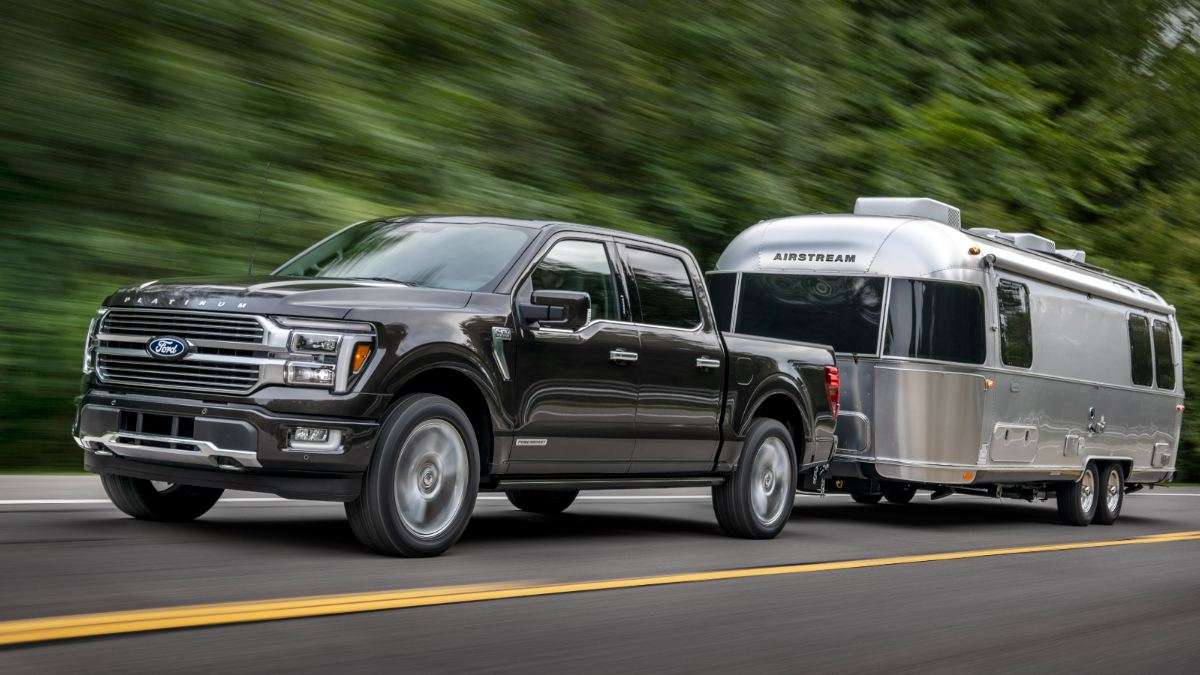

A warning label does not usually arrive in the form of burn marks.
Yet that is exactly how one 2022 Ford F-150 PowerBoost Platinum owner says he discovered a serious problem with his truck’s hybrid system, after the vehicle spent weeks in the shop and the dealer ultimately recommended replacing the hybrid battery at a quoted cost of $5,200.
With the odometer showing just over 103,000 miles, the timing could not have been worse.
The owner’s post in the Ford F-150 PowerBoost Owners group is understated, almost cautious. He is not accusing Ford of negligence or claiming catastrophic failure. He is simply asking if anyone else has seen this before. According to the dealer, the hybrid battery had been “compromised,” with visible burn marks on wiring and protective covers. That phrasing alone is enough to make any owner uneasy, particularly when it involves a high-voltage system designed to sit quietly in the background.
“Good morning, everyone. I was wondering if anyone else has run into this.
I have a 2022 PowerBoost Platinum that has been in the shop for the past few weeks. The shop is saying they recommend that the hybrid battery be replaced because it has been compromised, and you can see some burn marks on the wires/cover. The dealer quoted $5200 to replace.
Any help is much appreciated.
Thank you.
Advertising
Edit: truck is at 103k miles.”

What makes the situation immediately contentious is mileage. At 103,000 miles, the truck sits just outside Ford’s federally mandated hybrid component warranty, which covers hybrid batteries for eight years or 100,000 miles. Had this failure appeared a few thousand miles earlier, the conversation would likely be very different. Instead, the F-150 owner is staring at a four-figure repair estimate and wondering whether this is bad luck, a known issue, or something that should never happen at all.
Ford F-150 PowerBoost: Best-selling Pickup Truck
- The Ford F-150 has been the best-selling pickup truck in the United States for decades, largely due to its wide range of configurations and price points.
- Buyers can choose from multiple cab styles, bed lengths, and engine options, allowing the truck to serve work, family, or recreational roles.
- Aluminum body panels help reduce weight compared with older steel trucks, improving payload capacity and fuel economy.
- The F-150 is commonly used for towing trailers, boats, and campers, with capability depending heavily on engine choice and axle configuration.
Commenters quickly zeroed in on possible causes. One of the first questions asked was whether the truck had been run through car washes regularly, hinting at water intrusion or moisture-related damage. The owner responded that the truck was hardly ever washed, ruling out the most obvious environmental explanation. That response only deepened the mystery. Hybrid battery systems are sealed and engineered to survive years of exposure, vibration, and temperature swings. Burn marks suggest heat, resistance, or electrical arcing, not neglect.
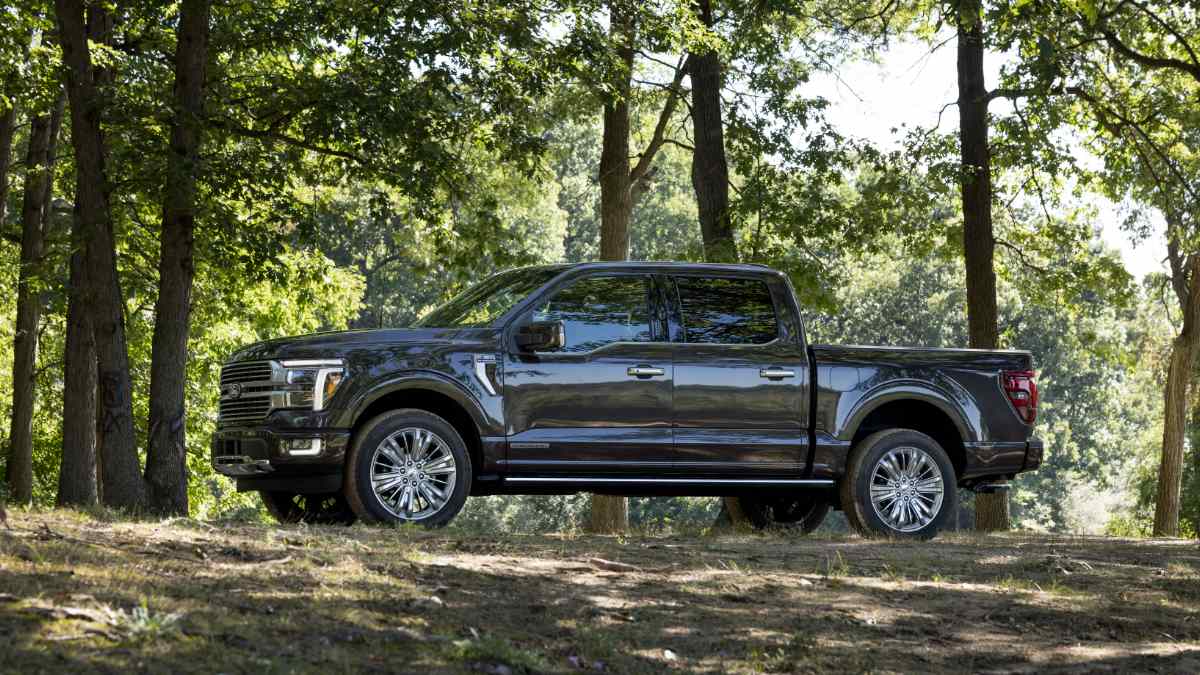
Another commenter pointed out the warranty reality bluntly. The hybrid system is covered to 100,000 miles, and this F-150 is past that threshold. From a contractual standpoint, the dealer’s position is straightforward. From an ownership standpoint, it feels far less reasonable. Hybrid batteries are not wear items in the traditional sense. Owners do not expect them to show visible heat damage barely past six figures, especially in a truck marketed around durability and long-term reliability.
This is where the PowerBoost’s complexity becomes relevant. Unlike a conventional F-150, the hybrid adds high-voltage cabling, cooling circuits, power electronics, and a battery pack that lives in close proximity to road spray, heat cycles, and heavy loads. When something goes wrong, diagnosis is rarely simple, and replacement often becomes the default recommendation. At $5,200, this quote is lower than full pack replacements seen in some hybrids, but it is still a sobering number for a truck that otherwise may be running fine.
The lack of clarity is what frustrates owners most in situations like this. “Compromised” is not a failure mode. Burn marks are not a root cause. Without a clear explanation of why the damage occurred, it is hard to know whether replacing the battery solves the problem permanently or merely resets the clock. Was there a manufacturing defect? A wiring issue upstream? A cooling failure? Those questions matter when the repair is coming out of pocket.
Another person went to the Facebook post to comment about it:
“Just got a call from the dealer, and my hybrid battery needs to be replaced as well.
My lesson is that I won’t buy another hybrid vehicle. In the last month, I’ve seen three of my neighbors' cars get towed to the dealer, and the vehicles were all hybrids from Jeep, Hyundai, and Toyota.
I've enjoyed my PB Platinum, but with the number of times it’s been in the shop, it’s not worth the headache. Plus, I have a long car fax history of service visits, which prob won’t help the resale.”
This post also lands in the shadow of other recent PowerBoost stories involving drivetrain and hybrid component failures just outside warranty coverage. Individually, each case can be dismissed as anecdotal. Taken together, they raise a quieter concern about what long-term ownership looks like once the hybrid warranty expires. The PowerBoost delivers impressive performance and efficiency, but it also introduces failure modes that traditional truck owners are still learning to navigate.
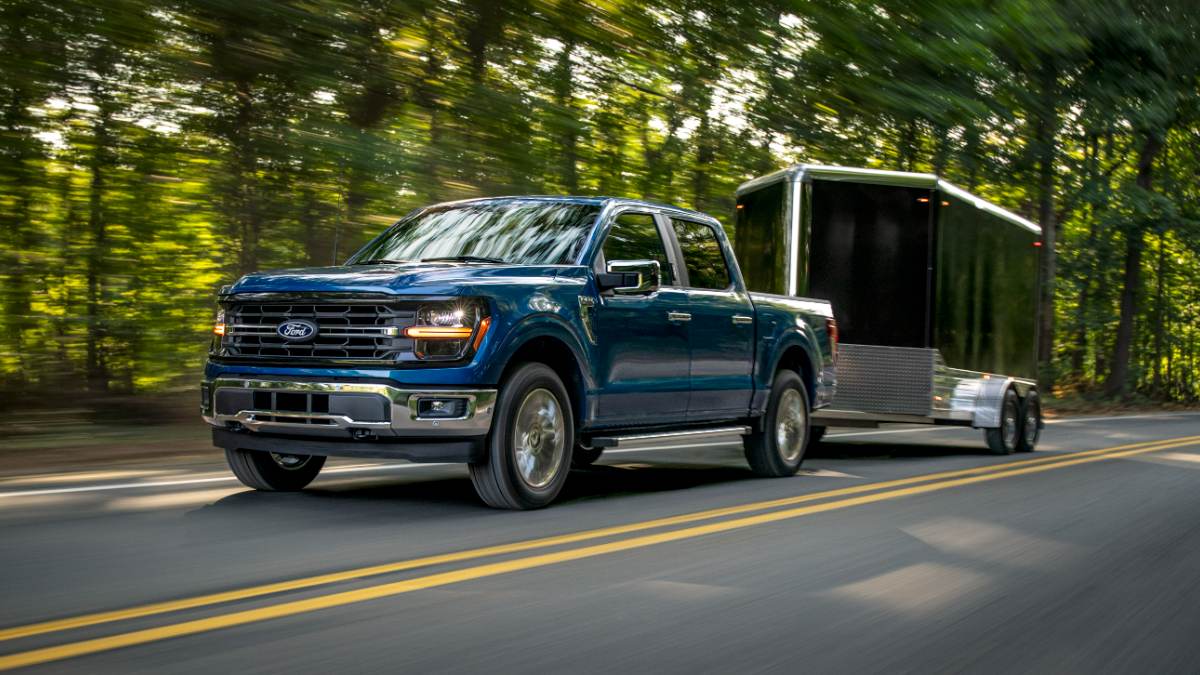
For now, the owner is doing what many do in this position: asking the community before writing the check. Sometimes that leads to goodwill repairs, partial coverage, or alternative diagnoses. Sometimes it simply confirms that you are unlucky. Either way, the post serves as a reminder that mileage cutoffs are unforgiving, and hybrid systems, while largely invisible when they work, become very real when they do not.
If nothing else, this case underscores a growing reality for hybrid truck owners. As these vehicles age out of warranty, the difference between routine maintenance and high-voltage repair becomes stark. A few thousand miles can separate “covered” from “out of pocket,” and the symptoms may arrive without warning, etched not into a dashboard message, but into scorched insulation where no owner ever expects to look.
Image Sources: Ford Media Center
Noah Washington is an automotive journalist based in Atlanta, Georgia. He enjoys covering the latest news in the automotive industry and conducting reviews on the latest cars. He has been in the automotive industry since 15 years old and has been featured in prominent automotive news sites. You can reach him on X and LinkedIn for tips and to follow his automotive coverage.
Set Torque News as Preferred Source on Google
Follow us today...






Comments
All warranties are designed…
Permalink
All warranties are designed to end right before the product fails. They were pretty spot on in this case.
Sometimes things fail Is…
Permalink
Sometimes things fail
Is this a one off problem?
I had to have my Hyundai…
Permalink
I had to have my Hyundai Elantra engine replaced at 169,000km. I always had it service by the dealer and had bought the extended warranty. They did not charge me a penny even though the warranty had expired .I am surprised Ford hasn't come to some kind of compromise for this.
This shows just how crap the…
Permalink
This shows just how crap the brand is ..Toyota have been making hybrids for over 20 years without these issues
Sorry but Toyota has had…
Permalink
In reply to This shows just how crap the… by Dad (not verified)
Sorry but Toyota has had issues with their hybrid systems too. I know because I used to work with the engineering group of power train. The biggest problems with these vehicles today is the cheap materials that they are using. Electronics made in China, materials being used for engine parts made in China.
This reminds me of my Ford…
Permalink
This reminds me of my Ford F150 2015 Ecoboost I was 1 2 weeks shy of my 63,000 mile warranty and Transmission hoes out Ford refused to fix so I told them to stick up there ass! And I will never buy another Ford I switched to Chevy! Ford lacks QC control!
$5300 for potentially…
Permalink
$5300 for potentially another 103k miles? Yes please.
It's another example of…
Permalink
It's another example of building a relationship with your dealer service department and doing all your maintenance with them. If you do that you have a better chance getting after warranty help from the manufacturer. It requires help from all 3 parties, factory, dealer and customer. In a situation like this it could cut cost by a third.
I take my cars to my trusted…
Permalink
I take my cars to my trusted local mechanic for an inspection right before any warranty milestones.
Just curious... Can you just…
Permalink
Just curious...
Can you just Unhook the battery and run the Truck without the Hybrid option?
This didn't just hit 103,000…
Permalink
This didn't just hit 103,000 and pop up with burn marks. This was going on way before 100,000.
Well there goes all that…
Permalink
Well there goes all that fuel money you thought you saved
Seems like every time I pick…
Permalink
Seems like every time I pick up my phone I read another story about a defective or a tall tale on how the #1 Truck in the country has another problem, recall or just isn't living up to it's number 1 standing. Can you say "Jealousy " Come on this is ridiculous. I keep reading them though and keep shaking my head. BTW, Have you driven a Ford lately?
$5200 buys a lot of gas,…
Permalink
$5200 buys a lot of gas, even at California gas prices. And the original purchase price is higher also. Makes the whole hybrid concept questionable. And like others have commented, it makes sense to do an inspection before the warranty runs out.
I own an 08 Highlander. At…
Permalink
I own an 08 Highlander. At 105k, it blew and oil line while on the highway, did not throw any warnings in the cabin relating to oil, and ran for another 40 mins with zero oil. It was towed to a dealership where Toyota warranteed the engine anyways, and the dealership hand built me a new motor.total bill was $13,700. My portion of that bill was $600 for fluids and rear end maintenance. I was outside of the window but they gave excellent customer service and took care of me. This is how this kind of thing should be handled by Companies.
Think your problem is more…
Permalink
Think your problem is more how you drive the vehicle, burn marks on the electrical is probably due to forcing the vehicle to perform beyond its capabilities ie towing more weight than rated for the vehicle. This simple action can cause the systems to strain and the result is overheating. Doesn't take much to place stain on electronic systems a mere 5% increase can result in catastrophic failure. The fact your exceeding the 100k mileage within 5 years seems excessive in itself.