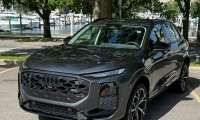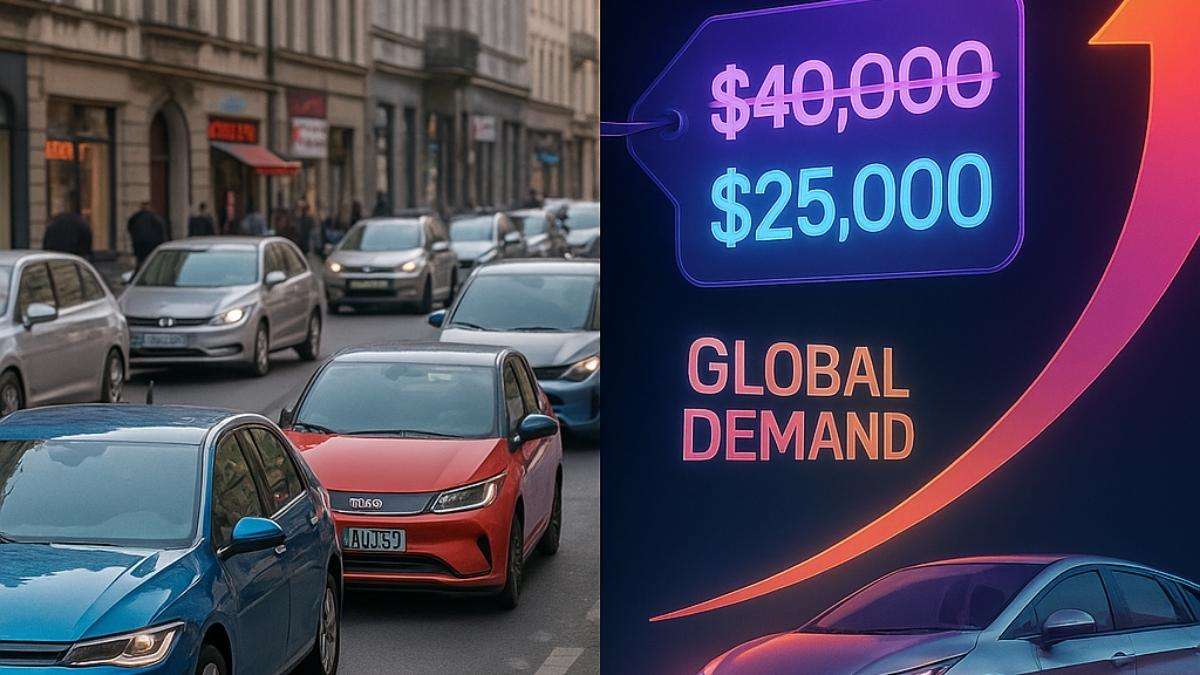

For years, it’s been the white whale of the EV world, the whispered-about unicorn in Tesla's product pipeline: a truly affordable, mass-market car. While CEO Elon Musk has juggled timelines, focused on Robotaxis, and launched the divisive Cybertruck, the drumbeat for a $25,000 Tesla has only grown louder. Now, with internal projects codenamed "Redwood" reportedly spinning up for a potential 2025 or 2026 debut, the industry is holding its breath.
Let’s call this car what the public has unofficially christened it: the Model C (for "Compact" or "Civic-killer"). On paper, it’s the final chapter of Musk’s original "Master Plan"—a high-volume, low-cost EV that finally makes electric transportation accessible to everyone.
But this move, as logical as it seems, is the single greatest gamble Tesla has ever taken. It’s a tightrope walk between global domination and catastrophic brand dilution. In the drive to put a Tesla in every driveway, the company risks trading the very "premium" cachet that got it here. It’s a classic automotive dilemma, one that nearly hobbled another iconic brand: Porsche.
The $25,000 Unicorn and the Tsunami of Demand
First, let's look at the upside, which is undeniably massive. The $25,000 price point isn’t just a target; it’s a thermal detonator aimed at the heart of the global auto industry. Tesla’s current cheapest car, the Model 3, still starts around $40,000 in the U.S. This prices out the vast majority of the car-buying public, especially in critical growth markets like Europe and Southeast Asia, where smaller, cheaper hatchbacks reign supreme.
A "Model C" would not just compete with other EVs; it would be a direct assault on the Toyota Corolla, the Honda Civic, and the Volkswagen Golf. More importantly, it would be Tesla's first real answer to the flood of low-cost, high-quality EVs from Chinese manufacturers like BYD, whose Seagull hatchback can be had for under $10,000 in its home market.
The demand would be unlike anything we’ve ever seen. Forget the lines for the Model 3; this would be a global stampede. Tesla wouldn’t be measuring preorders in the hundreds of thousands, but in the millions. This single product could theoretically double Tesla’s annual sales volume within a few years of scaling up. It's the key to unlocking the 20-million-vehicle-a-year future Musk has long promised.
The Porsche Problem: A 914 in Tesla's Clothing?
Herein lies the danger. Tesla built its brand on being an aspirational product. It’s the Apple of a automobiles—a premium, high-tech, high-performance status symbol. When you buy a Tesla, you’re not just buying a car; you’re buying into an ecosystem of innovation, speed, and cutting-edge cool.
What happens to that image when the car is suddenly everywhere? What happens when it’s the new Corolla?
Premium brands have to protect their exclusivity. When they "go downmarket," they risk alienating the high-margin customers who buy their flagship products. The most famous cautionary tale is the Porsche 914.
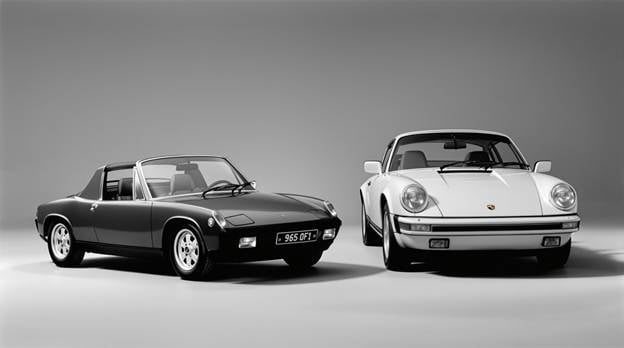
In the late 1960s, Porsche, like Tesla, wanted to expand its market. It partnered with Volkswagen to create the 914—a small, mid-engined sports car that was far cheaper than the iconic 911. It was a sales success, bringing new buyers to the brand. But among Porsche purists, it was a joke. Dubbed the "Volks-Porsche," it was sneered at for its VW-sourced four-cylinder engine and boxy, unconventional styling. It was seen by many as "not a real Porsche," and it’s taken decades for the 914 to shed that stigma and be appreciated as a classic. The earlier 912, which put a 4-cylinder engine in a 911 body, faced similar (though less severe) criticism.
This is the "Porsche 914 Problem" that Tesla’s "Model C" faces. Will a $25,000 Tesla built on a new, radically cheaper platform feel like a "real" Tesla? Or will it feel like a "Volks-Tesla"—a de-contented, compromised version built to a cost?
The risk is even higher for Tesla today. The brand is already showing signs of tarnish. Aggressive price cuts on the Model 3 and Y have frustrated existing owners, and the volatile secondary market for used Teslas suggests the "magic" is fading. If a "Model C" launches and is perceived as "cheap" rather than "an affordable Tesla," it could accelerate this trend. It could make the Model 3 and Y feel less special, and even damage the luster of the high-profit Model S and X.
Cybertruck vs. People's Car: A New Preorder King?
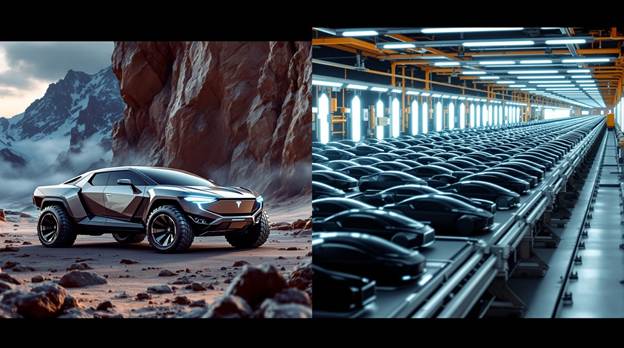
To understand the "Model C's" potential, one only needs to look at its bizarro-world sibling: the Cybertruck. The Cybertruck was a passion project, an angular, stainless-steel piece of performance art. It was designed to shock and awe, not to appeal to the masses. And yet, it managed to rack up a staggering 1.2 million-plus reservations (which, to be fair, were only $100 refundable deposits).
This tells us two things. First, the power of the Tesla brand to generate hype is unmatched. Second, the Cybertruck’s numbers, as big as they are, represent a niche. It’s a high-priced toy for enthusiasts and early adopters.
The "Model C" is the inverse of this. It’s not a niche product; it’s a volume product. The preorders for this car won't just be from Tesla fans. They will be from students, young families, ride-share drivers, and fleet-managing companies. The potential preorder numbers, even with a more substantial deposit, would likely make the Cybertruck’s initial haul look like a rounding error.
Where the Cybertruck was an exercise in what’s possible, the "Model C" will be an exercise in what’s necessary. The former is a halo car; the latter is a workhorse. The Cybertruck’s slow, problem-plagued rollout was frustrating for reservation holders but ultimately not fatal to the company. A botched rollout of the "Model C"—a car meant to be produced in the millions—would be an existential threat.
Wrapping Up
The "Model C" is not a question of "if," but "how." Tesla cannot achieve its goals without it. The company must expand or be consumed by its lower-cost rivals. The challenge is to execute this move without repeating the Porsche 914's mistake.
To succeed, the "Model C" cannot feel like a compromise. It must feel like a concentrated Tesla. It needs to retain the core DNA: a revolutionary manufacturing process (the "unboxed" model), a brilliant software experience, and class-leading efficiency. It must be the best $25,000 car on the market, full stop.
If Tesla can do that, the "Model C" won't be a 914. It will be the company's "Model T"—the car that changes the world, cements its legacy, and truly ushers in the electric age for everyone. If they get it wrong, they'll be just another car company, one that traded its magic for volume.
Disclosure: Images rendered by ChatGPT 5.0 and Artlist.io
Rob Enderle is a technology analyst at Torque News who covers automotive technology and battery developments. You can learn more about Rob on Wikipedia and follow his articles on Forbes, X, and LinkedIn.
Set Torque News as Preferred Source on Google
Follow us today...