
The 1980s were interesting times and this reflected the automotive industry. Everyone was imagining the future, and this resulted in unconventional engineering and design decisions. The Japanese car makers have their fair share of groundbreaking models.
Mazda is one of the car companies that likes to do things differently, especially when it comes to its flagship sports cars, and the Mazda MX-03 was one model that promised an exciting future for the future of sports cars.
Mazda was always about lightweight and balance, which is where the Miata shines. This philosophy carries on for the next-generation Mazda MX-5, which is getting a new engine. I recently wrote about another compact Japanese roadster that aimed to beat the Mazda Miata at its own game, and nowadays, even Toyota is taking a swing at the compact roadster formula, with the S-FR.
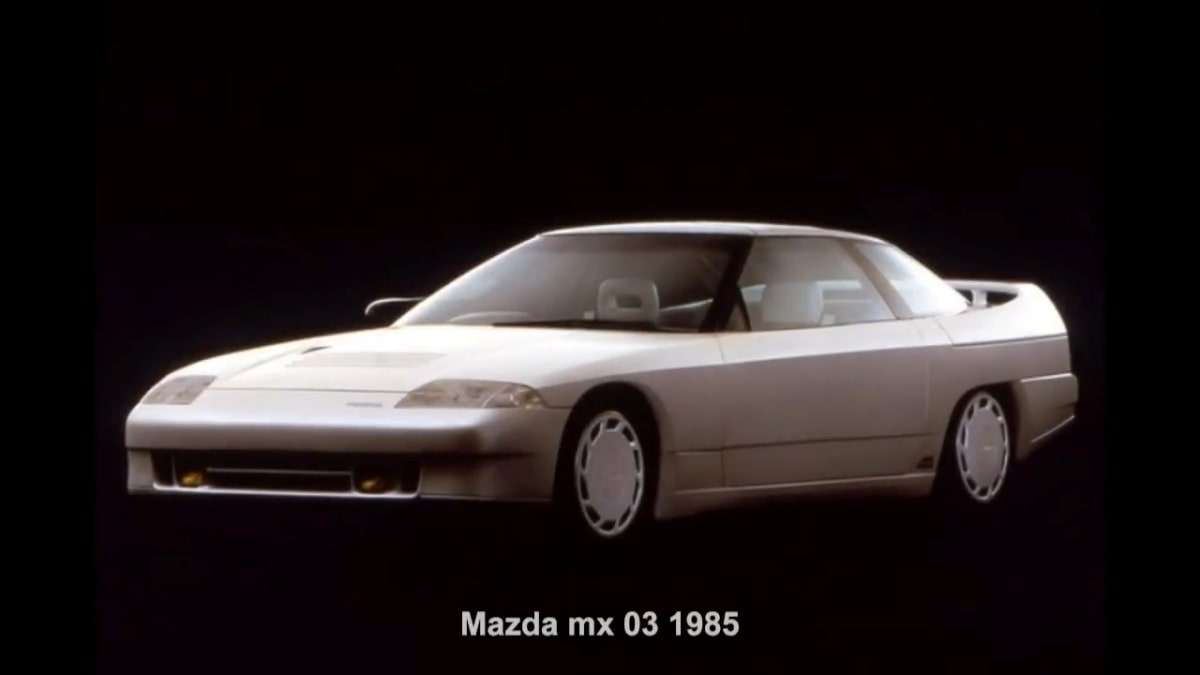
But while more carmakers are contributing to the resurgence of the lightweight roadster, Mazda is applying the philosophy of lightness and balance to all its performance models. The MX-03 is another great example, and in 1985, it was to be the company's flagship performance model, sitting above the RX-7.
Mazda MX-03 – Groundbreaking even by today's standards
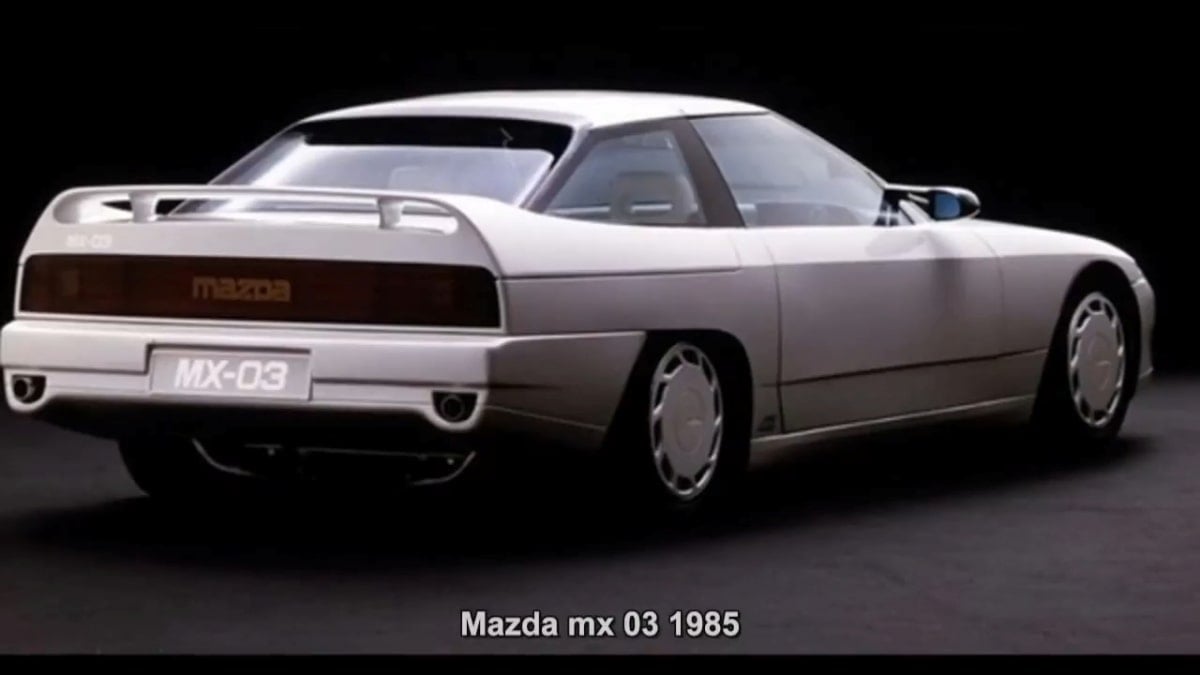
Looking at the 1985 MX-03 study, I think modern performance car builders should really look to it for inspiration. Some clever decisions have been made, which have led to substantial performance without resorting to big power.
The body was made from fiberglass, which contributed to a curb weight of 2,579 pounds (1,170 kg). This was despite the fact, the Mazda MX-03 featured advanced tech like all-wheel-drive and all-wheel-steering, which added complexity and weight.
The body itself was extremely streamlined, resulting in a drag coefficient of 0.25 Cd. To put things in perspective, a Nissan R35 GT-R has 0.26 Cd.
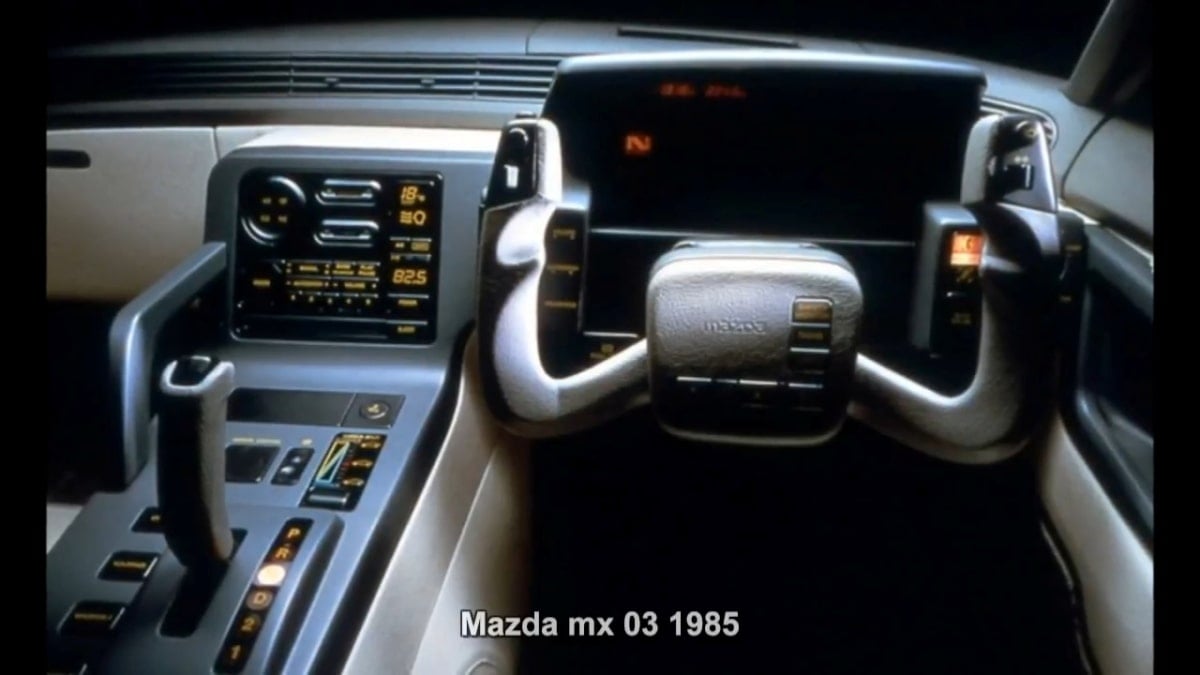
The Mazda MX-03 relied on a tri-rotor, 2.0-liter turbocharged engine producing 315 horsepower. The unit is believed to be a variant of the 1990 Mazda Eunos Cosmo's 20B-REW three-rotor engine, which was officially rated at 276 horsepower and 297 pound-feet, of which 280 were available from 1,800 RPM. The MX-03 was capable of a top speed of 180 mph (290 km/h) and could do the 0 to 62 mph sprint in 4.7 seconds, despite the four-speed automatic with torque converter.
Why the Mazda MX-03 did not happen and what we got instead
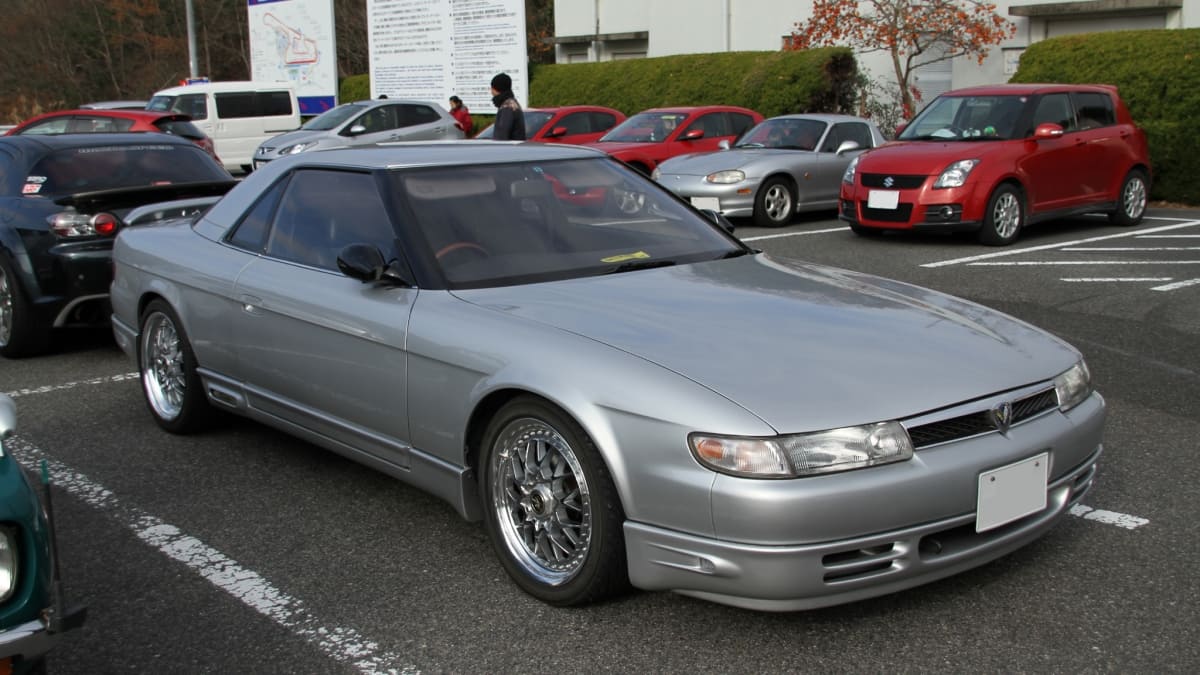
Like many concept cars, the 1985 Mazda MX-03 was meant to be a showcase of what the brand could do, as well as some of the tech that would be featured in future models. In 1990, we got the Mazda Eunos Cosmo (JC), which was loosely based on the MX-03. The luxury sports coupe shared some small resemblance with the MX-03 concept.
It also featured much of the tech showcased on the 1985 prototype, including the four-speed automatic, and a similar tri-rotor engine, although the base model relied on a two-rotor 13B-REW unit, similar to the one powering the Mazda RX-7. The all-wheel drive and all-wheel steering were not featured on the Eunos Cosmo. The range-topping Eunos Cosmo S could reach over 158 mph (255 km/h). The JC-series Cosmo was also substantially heavier than the MX-03 concept, tipping the scales at 3,285 to 3,616 pounds, depending on the version.
The future of Mazda performance cars
Mazda's electrification strategy does not rule out the internal combustion engine just yet. A recent partnership between Toyota, Mazda, and Subaru assured us that the car enthusiast is still taken into consideration in today's world of strict emissions regulations and carbon footprint reduction strategies.
The Mazda MX-5 will live on as an internal-combustion model with a small degree of electrification possibly included along the line. Meanwhile, the company's new flagship sports car, which will be an RX-7 successor, is coming along nicely and is said to share tech with Toyota's upcoming sports car.
What do you think of Mazda's current sports car developments? Do you think we should have seen more of the MX-03 luxury sports coupe? Feel free to share your thoughts in the comment section below.
Dimitar Angelov's automotive interests made him an expert in a wide variety of vehicles. Japanese brands like Toyota are closest to his heart, although performance cars in general are his favorite segment, which is why he is constantly on the lookout for the best deals on the market. Dimitar Angelov's car passion and knack for the written word led him to complete a Master of Arts in Media and Communications and classic car restoration. Dim is happy to get behind the wheel of any car and share his impressions. You can follow Dimitar on X, Linked-in, Instagram, and Facebook.
Image sources: Concept Car via YouTube, ゴリバー via Commons. wikimedia.org
Set Torque News as Preferred Source on Google
Follow us today...