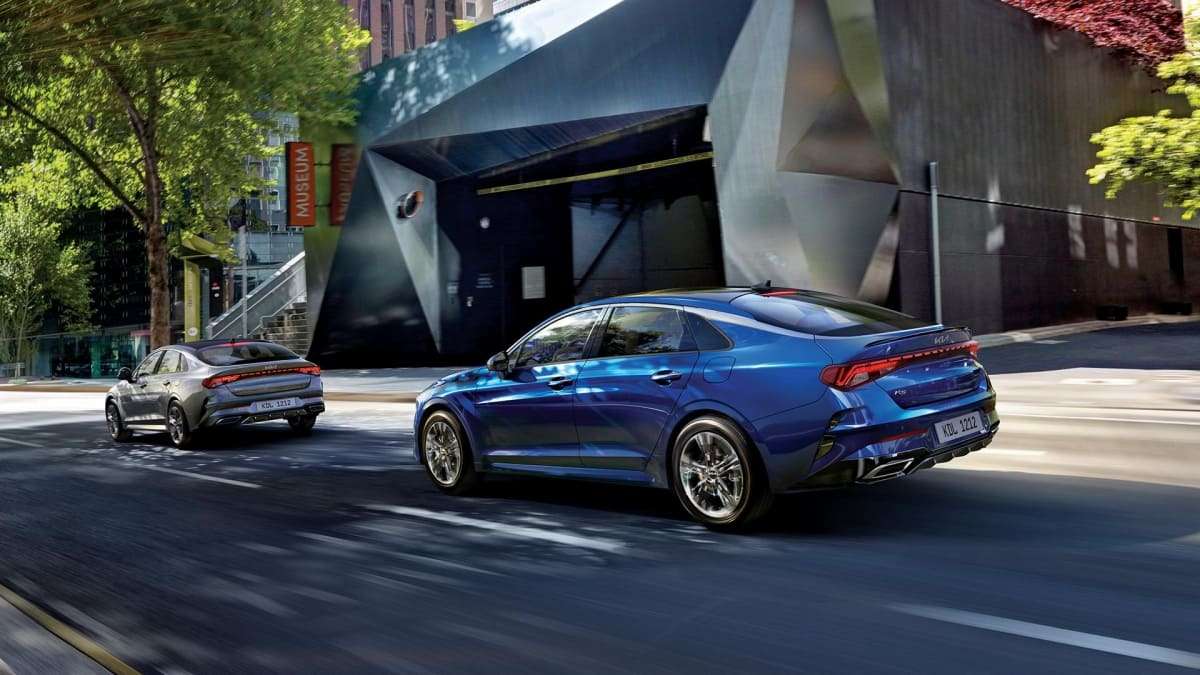

When it comes to midsize sedans from Asian carmakers, Toyota’s Camry is almost always the first to come to mind. American buyers love the perceived quality, reliability, and the car’s ability to retain value on the used market, despite there being some awesome alternatives to the Toyota Camry.
Over the past 15 years, the Koreans managed to achieve what the Japanese did some 50 years ago. Today, many Hyundai and Kia models are looked on as worthy alternatives to their competitors, but I think the Kia K5 goes further and is actually able to give the Camry a good spanking. I found out five things the K5 does better than its Japanese rival.
More car for less money
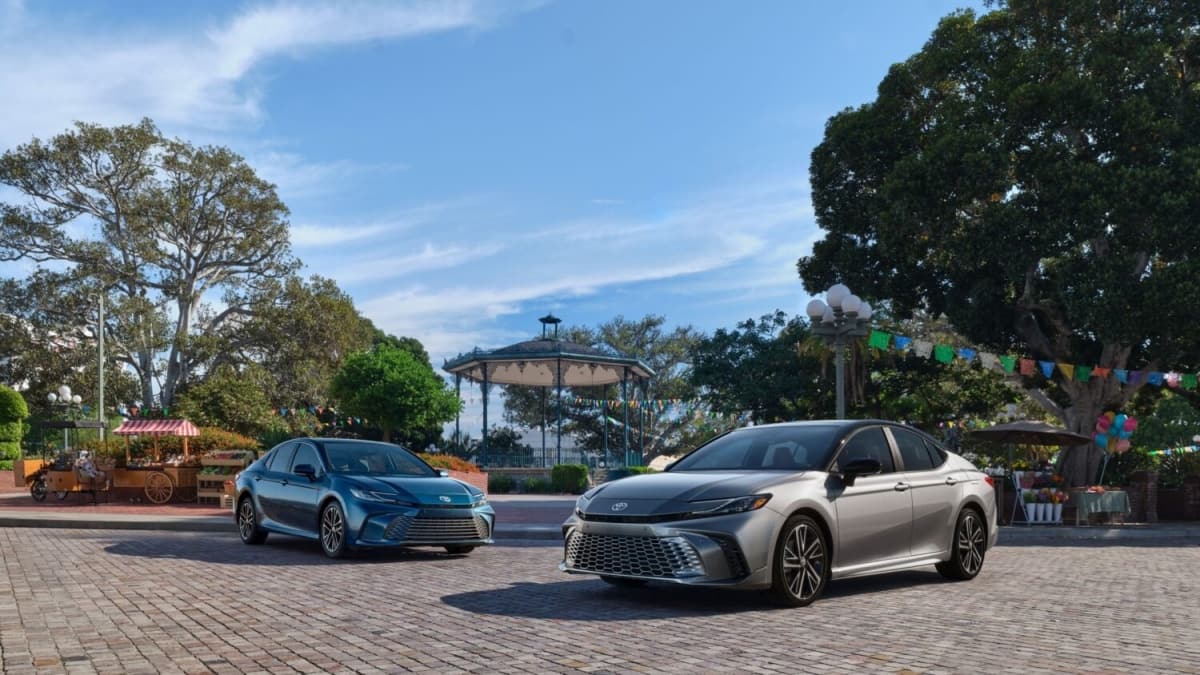
Korean carmakers are currently doing a very good job of selling you a lot of cars for the money. A few weeks ago, I was pleasantly surprised by the Kia K4’s effortless blend of some old-school and contemporary features, but the K5 takes this to another level. The Korean sedan wins the numbers game with the Toyota Camry, across almost all aspects.
While similarly priced, the base Kia K5’s $28,365 makes it $1,630 less expensive than the base Toyota Camry - $29,985. But almost nobody buys a base-model car. The 2025 Kia K5 tops out at $35,865 while the range-topping Camry will set you back $37,620. That said, there are currently great deals on both models for less.
Here’s how the two cars measure up against each other in terms of dimensions
2025 Kia K5 dimensions
-
Wheelbase - 112.2 inches
-
Length - 193.1 inches
-
Width - 73.2 inches
-
Height - 56.9 inches
-
Curb weight - 3,230-3.291 pounds (FWD)/ 3,463 pounds (AWD)
-
Headroom (front/rear) - 40.2/37.8 inches
-
Headroom (front/ rear) with panoramic sunroof - 38.4/37.4 inches
-
Legroom (front/rear) - 46.1/35.2 inches
-
Advertising
Hiproom - (front/rear) - 56.6/56.6 inches
-
Cargo capacity - 15.6 cubic feet
2025 Toyota Camry dimensions
-
Wheelbase - 111.2 inches
-
Length - 193.7 inches
-
Width - 72.4 inches
-
Height - 56.9 inches
-
Curb weight - 3,494 pounds
-
Headroom (front/rear) - 38.3/37.6 inches
-
Headroom (front/ rear) with panoramic sunroof - 37.5/37.6 inches
-
Legroom (front/rear) - 42.1/38 inches
-
Hiproom - (front/rear) - 55.4/54.6 inches
-
Cargo capacity - 15.1 cubic feet
Both models offer generous standard equipment, but the K5 gives you a larger infotainment screen for free
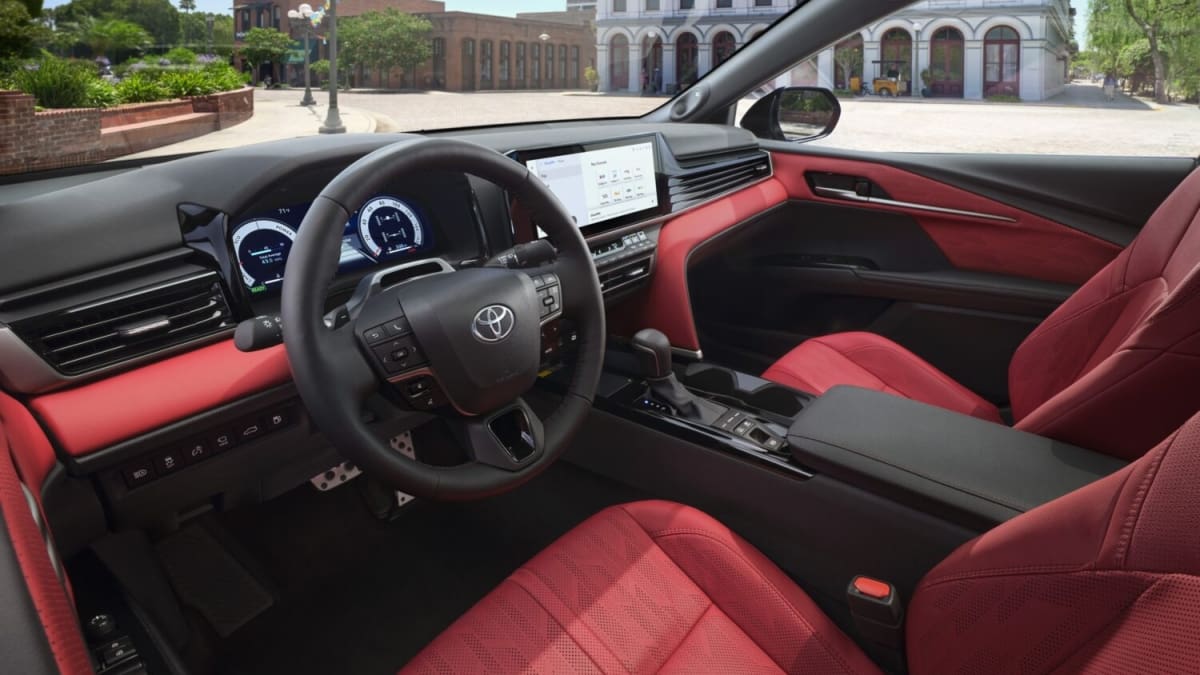
While standard equipment is comprehensive for both the Kia K5 and Toyota Camry, the Korean sedan is a bit more generous. For starters, you get a 12.3-inch infotainment touchscreen as standard on the K5. The Camry also offers a 12.3-inch screen, but unless you opt for it, you will have to settle for the standard 8.0-inch equivalent.
I am a firm believer that nothing ages a car quite like technology, but if you are going to have a screen sticking out of the dashboard, it might as well be a larger one. By the way, both sedans come with wireless Apple CarPlay and Android Auto.
Better warranty
Currently, the Korean carmakers are unbeatable in terms of warranty. In the case of the Kia K5, you are getting a basic warranty of five years or 60,000 miles (whichever comes first), accompanied by a 10-year drivetrain warranty, and a five-year or 100,000-mile rust warranty.
Meanwhile, Toyota offers a three-year or 36,000-mile basic warranty on the Camry, with a five-year or 60,000-mile drivetrain warranty, and since the 2025 Toyota Camry is now a hybrid-only model, an eight-year or 100,000-mile warranty for the hybrid components.
Superior performance in almost all aspects, but one
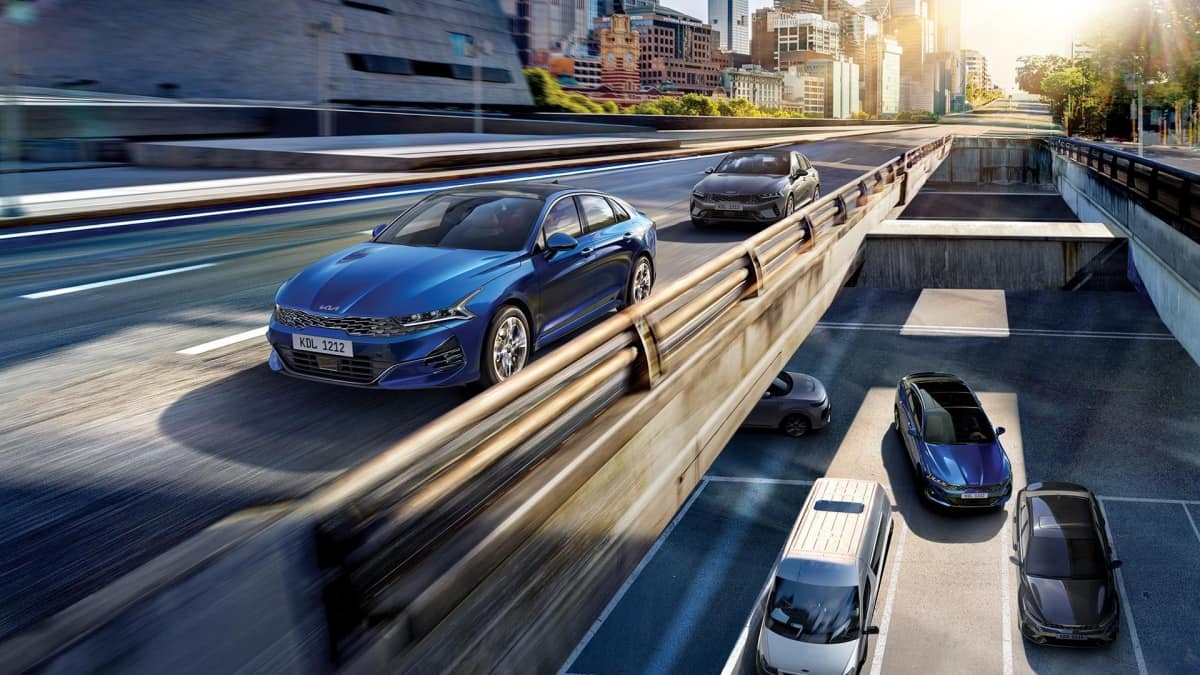
Toyota retired the Camry TRD in 2024, and despite the brand recently showing the motorsport-inspired Camry GT-S that one still has the model’s range-topping, 2.5-liter hybrid powertrain with 232 horsepower. Toyota Camry seems to, once again, cater only to the average commuter, leaving enthusiasts looking for a reliable sporty sedan somewhere else.
Meanwhile, Kia K5 offers two variants of its own 2.5-liter unit. The normally-aspirated version puts out 191 horsepower at 6,100 RPM and 181.5 pound-feet at 4,000 RPM, while the turbocharged version in the GT, packs 290 horsepower at 5,800 RPM and 311 pound-feet at 1,650-4,000 RPM.
While the most capable version of the 2025 Toyota Camry sprints to 60 mph in 6.8 seconds, the turbocharged Kia K5 takes as little as 5.2 seconds.
Where the Toyota Camry really steals the show from its Korean rival is in the fuel economy department. While the most frugal iteration of the Kia K5 gets 30 mpg combined according to the EPA cycle, the hybrid-only Toyota Camry can achieve up to 51 mpg combined.
Better transmission options
In my opinion, the transmission options on the Kia K5 are superior to what you get in the Camry, at least in terms of the feel. Whether you go for the 225 or 232-horsepower variant of the Japanese model, you always get the brand’s continuous variable transmission (CVT). Granted, it is the most refined CVT, currently made, but I never liked the feel of any of them. Unlike some other Toyota models, the transmission in the Camry doesn’t offer a manual model.
Meanwhile, the Kia K5 gives you options, and I think they are much better. The normally-aspirated engine is paired with a traditional, eight-speed automatic while the turbocharged Kia K5 GT comes with an eight-speed dual-clutch transmission (DCT). You are also given the option to shift the gears manually (either with the paddles or from the shifter).
Dimitar Angelov's automotive interests made him an expert in a wide variety of vehicles. Japanese brands like Toyota and Nissan are closest to his heart, although performance cars in general are his favorite segment, which is why he is constantly on the lookout for the best deals on the market. Dimitar Angelov's car passion and knack for the written word led him to complete a Master of Arts in Media and Communications, and classic car restoration. Dim is happy to get behind the wheel of any car and share his impressions. You can follow Dimitar on X, Linked-in, Instagram, and Facebook.
Image source: 2025 Kia K5, 2025 Toyota Camry
Set Torque News as Preferred Source on Google
Follow us today...