
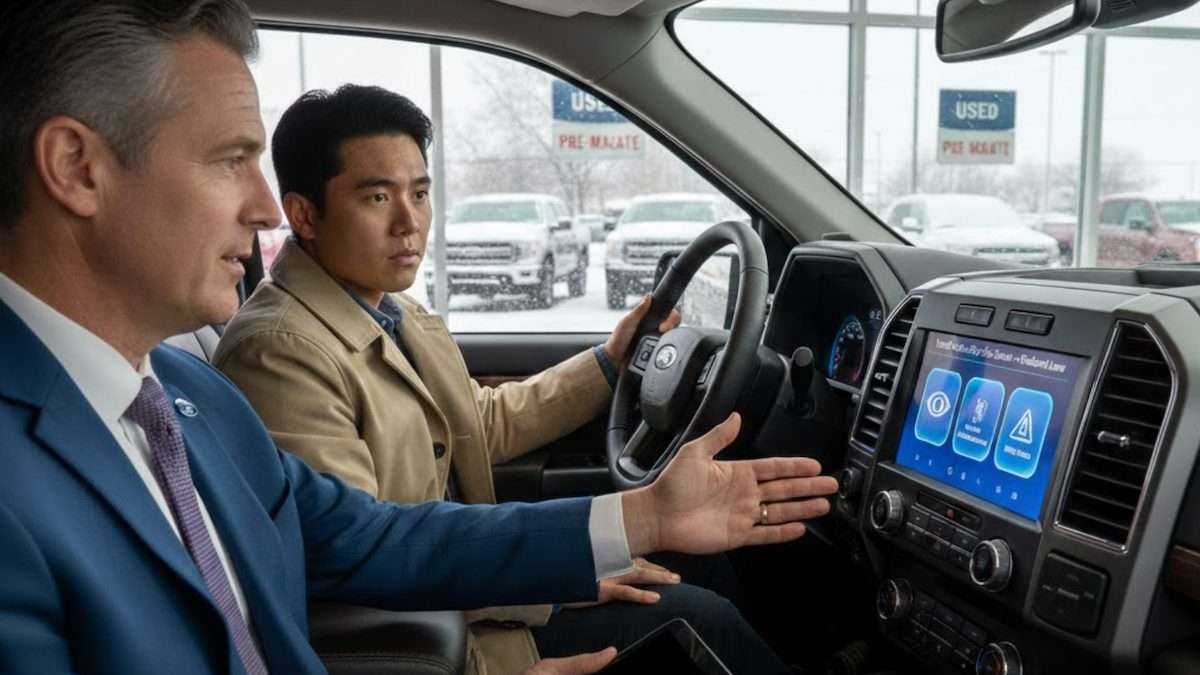

That 2026 Toyota or Ford car or truck might be programmed to 'bench' you mid-drive.
I’ve spent 30 years in the automotive industry, and I’ve seen everything from the introduction of airbags to the EV revolution. But what’s happening right now in 2026 is different. I’m sitting here in Parker, Colorado, watching the first wave of 2026 models hit the Cherry Creek area, and I can tell you: there is a quiet panic brewing.
Imagine you’re driving home after a long double shift, and your truck suddenly decides you’re too tired to continue, pulling you over against your will in a dark area. In my research on Ford and Toyota issues, I found a recent post shared in a Reddit community of automotive enthusiasts where users highlighted growing concerns about the reliability of these new monitoring systems and the steep personal costs of losing control over your own vehicle: New cars sold in 2026+ must include advanced impaired-driving prevention tech... How would this change affect your car-buying decisions?
If you’ve walked into a Ford or Toyota dealership lately, you might have noticed something. The sales talk focuses on "safety suites" and "passive monitoring." But behind the marketing jargon lies a federal mandate that is changing the DNA of the American car. Today, I’m breaking down the "Kill Switch" reality, who is behind it, how it actually works, and why long-time owners are suddenly looking for an exit strategy.
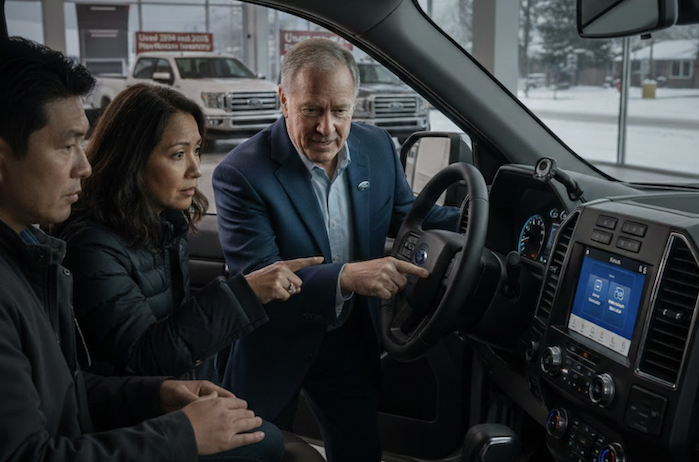
Who is Behind the 2026 Mandate?
Let's cut through the noise. This isn't a "conspiracy theory," it’s a legislative reality. The mandate originated from Section 24220 of the Infrastructure Investment and Jobs Act, signed back in 2021. It required the National Highway Traffic Safety Administration (NHTSA) to finalize a rule mandating that all new passenger vehicles be equipped with "advanced drunk and impaired driving prevention technology."
As we sit here in 2026, that "future" date has arrived. While safety is the goal, I've noted that for many owners, it isn't just the mechanical failure but the intrusive dealership experience that hurts; I recently reported on a similar frustration where a Ford F-150 owner's warranty repair became a nightmare, proving that complex tech often leaves owners stranded when things go wrong.
I’ve spoken with insiders at both Ford and Toyota, and they are in a difficult position. They aren't the villains here; they are manufacturers complying with federal law. However, it also includes privacy advocates and a growing number of "analogue" enthusiasts who feel the line between safety and surveillance has finally been crossed.
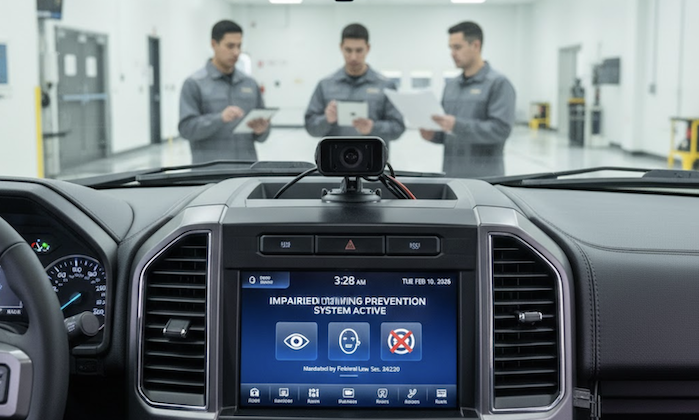
How Does the "Kill Switch" Actually Work?
I get asked this at least twice a day: "Denis, can the government just turn off my car while I'm on the highway?"
Based on the technical specifications I’ve reviewed for the 2026 Toyota Camry and the Ford F-150, the answer is more nuanced than a simple "yes" or "no." We aren't looking at a red button in a government office. Instead, we are seeing the integration of Passive Alcohol Detection and Advanced Driver Monitoring Systems (DMS).
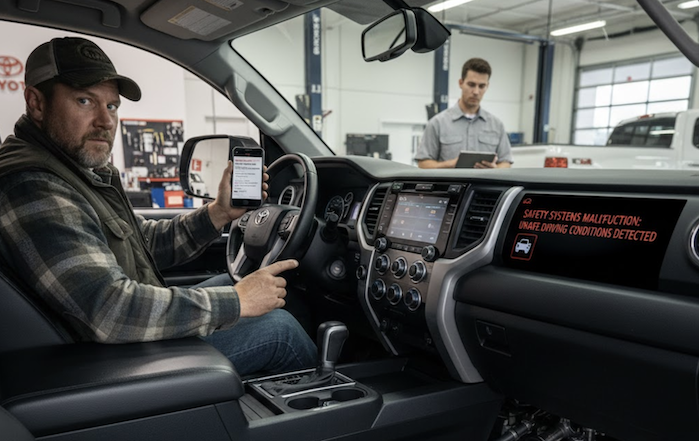
I’ve seen how Toyota’s latest Safety Sense and Ford’s BlueCruise are handling this. However, sophisticated software doesn't always play nice with the real world. As I detailed in my recent report, a 2026 Tundra owner found his safety tech "bricked" after installing a lift kit, indicating that these rolling computers are not well-suited to traditional truck modifications.
Substantiating these concerns, Kelley Blue Book expert Sean Tucker explains that the law creates a scenario in which the technology could cause a car to deactivate if a system determined that the driver was likely impaired, which naturally leaves many drivers wondering who ultimately has the final say over their mobility.
What Ford and Toyota Owners Are Saying
The community isn't just talking; they are acting. One user on Reddit noted the severity of the situation and the desire for simplicity, stating, “I hope I don't total my 2024. I don't want any more help. I want to go back to tech from the 1970s. Turn it on with a key and press the gas,” expressing a sentiment I'm seeing more every day in Colorado.
Another owner highlighted the vulnerability of the new design and why they are staying away from the newest lots, mentioning, “I’m gonna drive my 2020 until the wheels fall off. After that I’ll probably buy something else older. Cars have gotten markedly worse since the pandemic, and they’re expensive as hell,” which reflects the growing "Used Car Gold Rush" for pre-mandate models.
Why are Owners Looking for an Exit Strategy?
If the goal is to save lives, why are my readers so upset? After 30 years in this business, I’ve realized that for many of you, your car is the last bastion of true privacy. Adding biometric "impairment" data to the mix is the breaking point for many.
I've seen this cycle before, where owners reach a breaking point with corporate-driven tech. In fact, I recently highlighted a Toyota owner who felt his key fob remote start had become useless due to "corporate greed disguised as technology," which is exactly the kind of "pay-to-play" surveillance owners are trying to avoid.
This sentiment is echoed by the Competitive Enterprise Institute, which warned that the vehicle "kill-switch" is precisely the kind of overreach that will empower regulatory agencies to manage behavior without accountability, validating the fears I'm hearing from my readers every day.
My Recommendation
So, what should you do? If you’re a Ford or Toyota loyalist, you have three distinct paths today:
1: The "Gap Year" Strategy: Look for a Certified Pre-Owned (CPO) 2024 or 2025 model. These vehicles still offer modern creature comforts and advanced safety technology, but they lack the passive hardware mandated for the 2026 MY.
2: Demand Transparency: If you must buy a 2026, ask for the Data Privacy Disclosure. Ask specifically what happens to the DMS camera data. If they can't give you a straight answer, walk away.
The Verdict
As your Senior Reporter at Torque News, I have to be honest: the era of the "unplugged" car is over for new buyers. The 2026 mandate is a significant step toward zero-fatality roads, but it comes at a steep cost to personal autonomy. I trust the engineering behind Toyota and Ford, but I also trust the truth: these systems are in their infancy, and they will make mistakes.
You Best Friend For Now
The 2026 "Kill Switch" reality isn't about one single button; it's about a fundamental shift in control. Whether you see this as a life-saving miracle or a dystopian overreach, the used car market is your best friend this February.
Let’s Hear From You: Would you ever buy a car that has the power to "bench" you if it thinks you're too tired or impaired, or is this the moment you switch to older, "analogue" vehicles for good? Your voice matters to the community—share your thoughts on the 2026 mandate and whether you think the safety benefits outweigh the privacy costs. Please leave a comment in the red “Add new comment” link below.
Next Up: The Toyota Hybrid Struggle: Is Your 2026 Model Falling Short? If you think the "kill switch" is the only thing to worry about with new tech, think again. I recently took a deep dive into why some of the most popular new Toyota models are struggling with real-world efficiency during these February cold snaps. Click here to read: The 2026 Toyota Hybrid Reality Check - Why Your MPG is Dropping 30% This Winter.
Denis Flierl is a Senior Reporter at Torque News with over 30 years of hands-on experience in the automotive industry. Having served as a professional test driver and industry consultant for major automakers such as Chevrolet, Ford, Toyota, Honda, and Tesla, Denis provides a "boots-on-the-ground" perspective that goes beyond standard reporting. Since joining Torque News in 2012, he has specialized in cutting through market noise to deliver data-backed analysis and real-world owner stories. His work focuses on navigating the transition to EVs and the shifting automotive market.
Have a tip or question for Denis? > Engage with him directly on LinkedIn for industry analysis, or follow his latest updates on X @DenisFlierl and @WorldsCoolestRides. You can also find his latest car features on Facebook and Instagram.
Photo credit: Denis Flierl via Toyota, Ford
Set Torque News as Preferred Source on Google
Follow us today...


Comments
So, you'll be able to sue…
Permalink
So, you'll be able to sue the manufacturer if you get pulled over for a DUI because it failed to disable the vehicle.
I was not told of any of…
Permalink
I was not told of any of this when I bought my new F150 raptor. I don’t have blue cruise now do I trust a car to drive me. If my car impedes on my freedom I will sue. You can’t do that without consent.