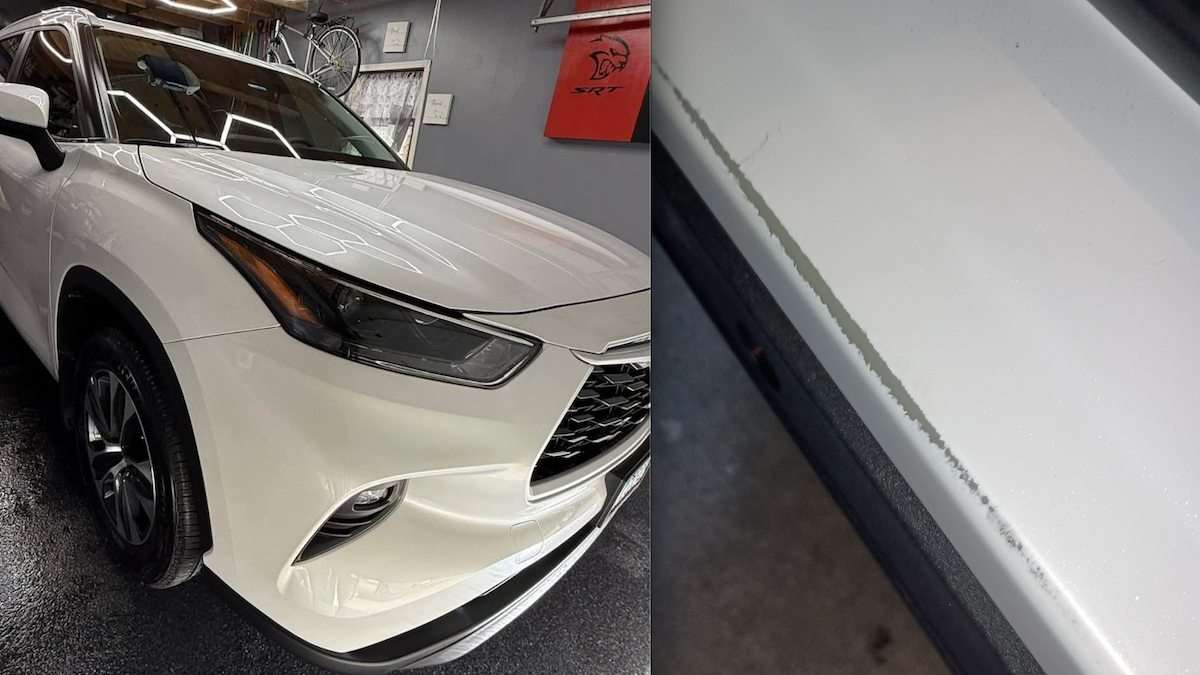

The 2024 Toyota Highlander might be losing its luster: an owner reports paint wearing off at just 1,600 miles—is this a widespread warranty nightmare?
Curt Barth on the Toyota Highlander Owners Club Facebook page says,
"My 2024 Toyota Highlander XLE with only 1,600 miles has the driver's side door paint already wearing off. Is anybody having this problem? Will Toyota take care of it?"
When a loyal Toyota owner like Curt Barth posts about paint wearing off his new 2024 Toyota Highlander XLE driver's side door with only 1,600 miles, it sends ripples through the Highlander community. As a reporter who has tracked Toyota's quality control for years, my immediate response is clear: this is a defect that must be addressed immediately by the manufacturer.
This isn't just about a scuff; it's about paint delamination on a vehicle barely out of the showroom, threatening the owner's peace of mind and the vehicle's long-term value. What is the problem and the solution?
1. The Highlander's Premature Failure Point
The specifics of Curt's complaint—the 2024 Toyota Highlander XLE door paint wearing off at extremely low mileage—are unusual. While the company has a well-documented history regarding certain white and pearl paint adhesion failures on older models (often related to prolonged UV exposure degrading the bond between the primer and base coat), this failure on a 2024 model suggests a different, more localized issue.
Given the door location, we must first look for mechanical friction. Is the wear point where the door edge touches the body when fully open, or is it where the door seal meets the paint surface? If the wear pattern is long and narrow, it strongly suggests a contact point issue, meaning the door alignment or the door seal itself is causing abrasion. However, if the paint is peeling or flaking away from the base, this indicates an apparent adhesion failure, suggesting localized manufacturing contamination or poor application.
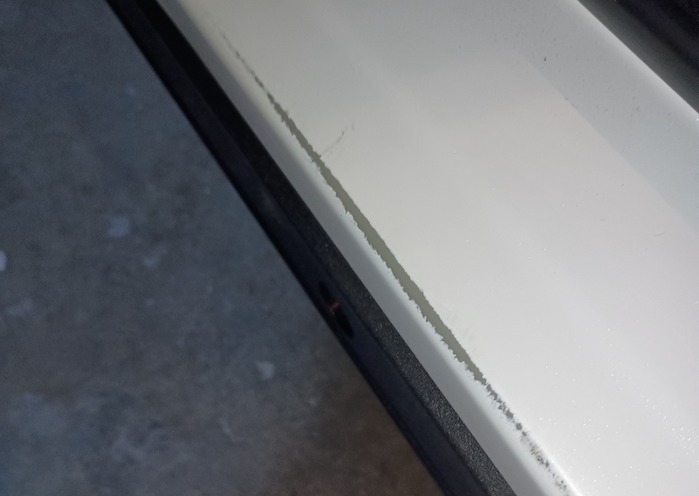
Whether it's friction or adhesion, seeing this damage so early is certainly an alarming sign that contributes to concerns about common paint defects on the 2024 Toyota Highlander production. While overall build quality remains high, a flaw this significant requires an aggressive response.
2. Why Toyota Will Fix It
The core question Curt asked is: "Will Toyota take care of it?" The answer is unequivocally yes.
This type of failure falls squarely under Toyota's Basic New Vehicle Limited Warranty, which covers the Highlander for 3 years or 36,000 miles, whichever comes first. The language of the warranty covers "any repair or adjustment needed to correct defects in materials or workmanship of any part supplied by Toyota." Paint that wears off or delaminates at 1,600 miles is the literal definition of a defect in workmanship or materials.
Do not accept any attempt to classify this as "external damage" (like a random rock chip). This situation is a failure of the factory finish itself, making it essential to enforce the Toyota Highlander paint warranty coverage for premature wear. Owners pay a premium for a new Toyota, expecting flawless fit and finish.
3. Durability and Quality Control
When owners ask, Is Toyota paint durable on newer models like the Highlander?, I generally say yes, but with a caveat. Modern automotive paint, while complex, is often thinner and more environmentally friendly than coatings of decades past. This makes the surface extremely sensitive to proper preparation. A single microscopic contaminant in the paint booth or an incorrect flash time between coats is enough to cause localized adhesion failure.
The fact that this issue is isolated to a new model suggests it is not a systemic problem like the older "Super White" issue, but rather an isolated quality control lapse. Your Highlander's chassis and powertrain will likely deliver years of flawless service, but the visible flaw must be corrected professionally to protect the resale value and prevent corrosion.
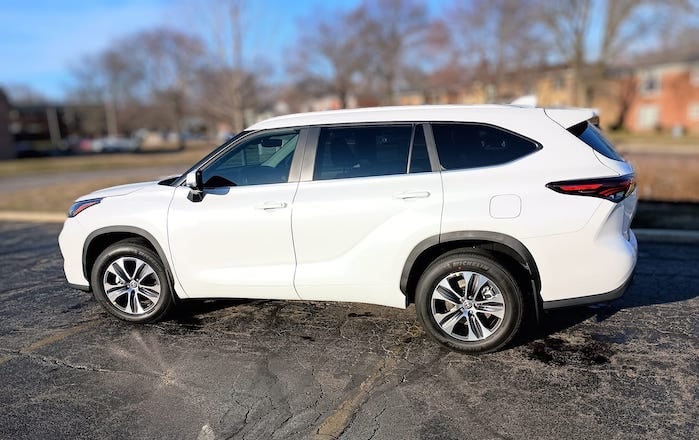
4. Getting the Highlander Paint Repair
For Curt and any other owner facing this issue, here are the essential steps to report a new Toyota paint quality issue:
- Preparation is Key: Gather all photos and the original sales documentation.
- The Dealership Appointment: Schedule a service appointment specifically for a "warranty paint defect inspection." Ask the Service Advisor to contact the Toyota dealership's body shop repair team for the paint defects, as they are the certified experts who assess and submit these claims.
- Insist on Claim Submission: Ensure the dealer takes photos and submits a formal claim to Toyota Technical Assistance (TTA). The dealer needs TTA approval to proceed with a no-cost repair.
- Confirm the Scope of Work: The repair should involve preparing the surface correctly and repainting the entire door panel to ensure a perfect color match and proper clear coat blending. A competent body shop will blend the color into the adjacent panels (fender and rear door) to ensure the repair is invisible.
5. Protecting the High-Risk Area
After the repair is completed, you need to protect the area. Since "wearing off" often indicates friction, applying a thin layer of protective film is the best long-term solution.
If the damage was on a door edge, which is a common failure point for accidental contact, you need to know how to fix Toyota door edge protector paint chip issues permanently. The answer is simple: install a transparent, durable Paint Protection Film (PPF) wrap around the door edges. This clear film is sacrificial, absorbing impacts and friction, allowing the factory-spec paint underneath to remain perfect. I highly recommend this inexpensive solution to every owner after a paint correction or on any new vehicle.
Final Word:
The Highlander is a great vehicle, and this paint defect is a solvable issue. Given Toyota's dedication to quality, they should make this right quickly. However, experience tells me that modern paint processes are facing new durability challenges.
A Question For Highlander Owners
Given Toyota's previous widespread paint issues, has seeing a defect like this on a brand-new 2024 model changed your perception of Toyota's legendary build quality, and if so, what model would you consider next? Click the red Add New Comment link below and let us know.
Check out my Toyota Highlander story: I Bought a 2016 Toyota Highlander with 129K, and the Prior Owner Must Have Been a Toyota Dealer’s Nightmare, Or Maybe I’m Dreaming?
I am Denis Flierl, a Senior Torque News Reporter since 2012. My 30+ year tenure in the automotive industry, initially in a consulting role with every major car brand and later as a freelance journalist test-driving new vehicles, has equipped me with a wealth of knowledge. I specialize in reporting the latest automotive news, covering owner stories, and providing expert analysis, ensuring that you are always well-informed and up-to-date. Follow me on X @DenisFlierl, @WorldsCoolestRides, Facebook, and Instagram
Photo credit: Denis Flierl via Curt Barth
Set Torque News as Preferred Source on Google
Follow us today...