
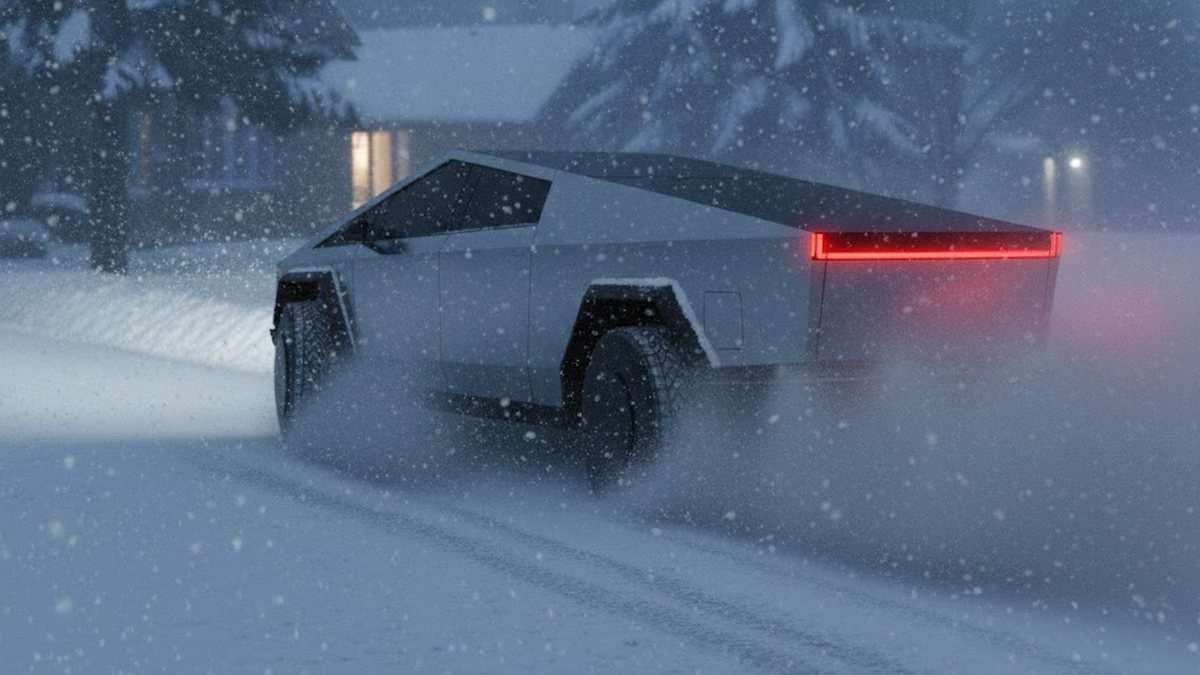

What happened when this Cybertruck’s FSD met a real-world blizzard proves that even 'superior' engineering has a terrifying breaking point.
Imagine that you are behind the wheel of a $100,000 high-tech marvel, but as the blizzard intensifies, your "self-driving" truck begins actively hunting for deep, unplowed drifts instead of staying on the cleared pavement. It is a terrifying role reversal where the vehicle’s AI ignores basic winter survival tactics, forcing you to fight the controls as the cameras go blind in the whiteout.
In my research on Tesla FSD safety and winter reliability issues, I found a recent post shared in a Facebook community of Cybertruck enthusiasts. It happened to Nicholas Brownell, and his experience highlighted growing concerns about the limitations of vision-only self-driving tech and the scary reality of relying on AI in a blizzard. Nicholas says,
“This wasn’t an issue so much with my Tesla Cybertruck’s tires and sliding, although I did slide out on a bend. It was more than the vehicle wasn't using basic snow-driving tactics, like staying off the shoulder and driving where the road is clear. Snow was covering the camera, and I had to take control of the truck multiple times because it was taking back roads that weren’t plowed, rather than the main road that was. FSD didn’t know how to avoid the deep snow whenever possible. My Cybertruck has AWD for the record.”
I've spent three decades testing vehicles in the Colorado Rockies, and I've been one of the first to defend the Cybertruck's tech. But what happened last night in a whiteout blizzard changed my perspective on Tesla's vision-only FSD.
The reality of vision-only systems is that they lack the multi-sensor redundancy found in competitors, and, as noted by experts at Futurism, these camera-only setups can be easily stunlocked or blinded by environmental factors such as direct sunlight or heavy precipitation.
During my 30 years in the automotive industry, I have seen how quickly a high-tech "starship" can turn into a liability when the software loses its eyes. I recently discussed how trust evaporates quickly when the steering wheel starts acting like it has opinions of its own during unexpected system shifts in my recent reporting on FSD erraticism.
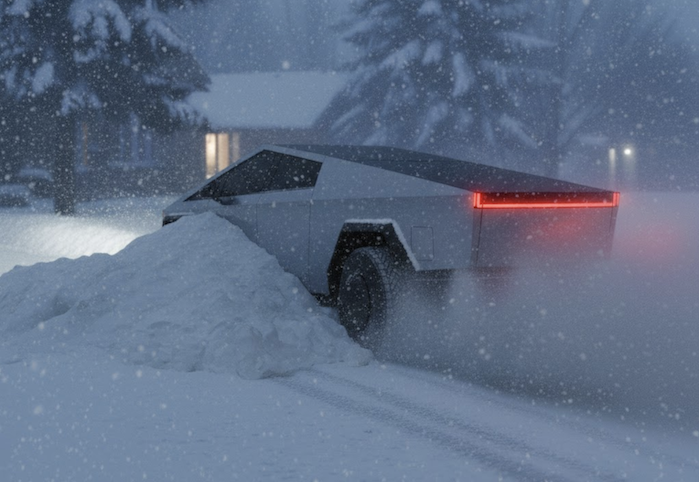
Even with the latest updates, the lack of hardware redundancy remains a sticking point for safety advocates. EVhype testers have highlighted that eliminating additional sensors, such as LiDAR, compromises safety in complex scenarios where cameras alone cannot provide sufficient depth perception.
In my own analysis of the Cybertruck's cold-weather performance, I've noted that heavy, wet snow can accumulate and block vital external components, such as the headlights and sensors, effectively rendering the truck "blind" during a nighttime storm.
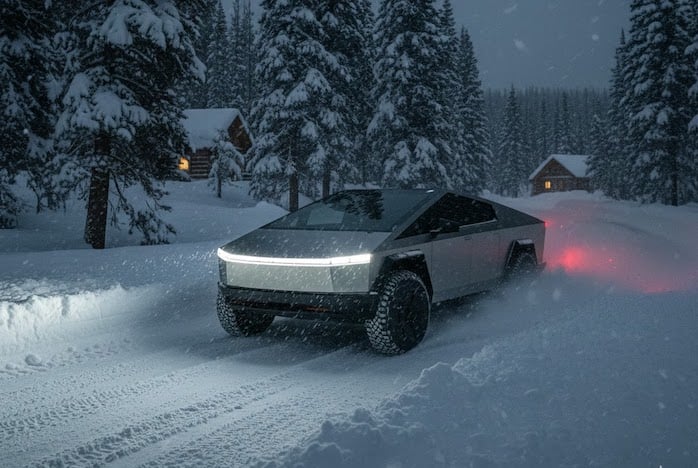
What I Tested
As a Senior Reporter who has spent decades evaluating 4WD and AWD systems on the icy passes of the Continental Divide, I understand the technical "why" behind this failure. Tesla's FSD relies on Neural Nets that are trained on millions of miles of video data. However, when Camera Occlusion occurs, meaning snow physically covers the lens, the AI essentially loses the "ground truth" of the road.
Unlike a human driver who looks for tire tracks or the subtle rise of a snow-covered shoulder, the current FSD logic often fails to prioritize "plowed" vs. "unplowed" surfaces. It tries to find lane lines that no longer exist, leading it to steer toward the deep powder on the shoulder. This is a classic "Edge Case" that the AI hasn't fully mastered.
Why This Failed for Us
The reason this experience felt so "scary" for Nicholas is simple: the truck was making decisions that were fundamentally anti-survival. In 30 years of auto reporting, I’ve learned that a vehicle's computer should never be more aggressive than the conditions allow.
1. Logic Failure: The FSD didn't recognize that a "shorter" back road is a death trap if it isn't plowed.
2. Sensor Blindness: Without heated camera housings or a cleaning mechanism, the vision-only system becomes a "fair weather" tool.
3. AWD vs. Intelligence: Having All-Wheel Drive helps you move, but it doesn't help the AI decide where to move.
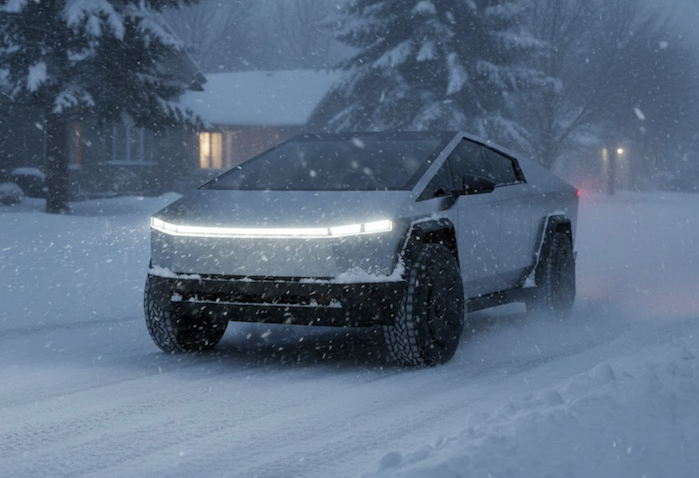
Winter Driving Tips for Tesla Cybertruck Owners
As a veteran reporter with decades of experience navigating the high-altitude passes of the Colorado Rockies, I have learned that the best winter tech is only as good as the driver using it. While the Cybertruck is an absolute beast in terms of torque and traction, its reliance on vision-only software means you must change your approach when the white stuff starts to fly. In my 30 years of testing, I’ve found that high-tech systems can provide a false sense of security, and that is exactly where the trouble begins.
The most critical advice I can offer is to treat FSD as a fair-weather companion. When lane lines are obscured or the road is covered in a layer of slush, you need to be the one making the decisions. I’ve seen far too many drivers trust the "Neural Net" to find a path that simply isn't there. If the plow hasn't been through yet, do not let the AI choose your line; it doesn't have the decades of "road feel" that you do.
Additionally, you must be proactive about sensor maintenance. Because the Cybertruck lacks heated camera housings or a dedicated cleaning system, a microfiber cloth is your best friend. I recommend a quick wipe of the side and front cameras every time you stop. In my research on cold-weather performance, I have seen how even a thin film of road salt can "blind" the truck’s perception.
Finally, remember that All-Wheel Drive helps you go, but it doesn't help you stop or turn if the software is miscalculating the surface. My expert recommendation is to switch to manual steering and use Chill Mode to smooth out the torque delivery on ice. Your human instincts are your most valuable safety features during a blizzard.
Key Takeaways for Owners
- FSD is for Dry Pavement: Do not rely on FSD for navigation or steering when lane lines are obscured.
- Manual Intervention is Mandatory: Be prepared for "Instant Disengagement" if a camera gets covered by road salt or slush.
- Heated Elements Matter: Check your camera lenses before a trip and apply a hydrophobic coating to help shed moisture.
What Cybertruck Owners Are Saying
The community feedback on Reddit mirrors these concerns. One Reddit user noted the severity of the situation, stating, "FSD doesn’t understand traction in the snow... It has no concept of appropriate cornering in the snow and will get you in an accident easily," highlighting the danger of trusting the AI to handle turns.
Another owner highlighted the vulnerability of the vision-only approach, noting, "FSD is not programmed to handle bad weather conditions... I damn near went off the road because it couldn't see the lane marking," which can be found in this full discussion.
Mother Nature Wins
The Tesla Cybertruck is an incredible piece of technology, but Nicholas Brownell’s experience is a sobering reminder that "Full Self-Driving" is still a misnomer in the face of Mother Nature. Until Tesla solves the issue of camera occlusion and trains its neural networks to understand the "common sense" of winter survival, the safest sensor in the truck remains the person in the driver's seat.
How About You? Have you experienced FSD "blindness" in the snow? Report your experience in the comments below.
Next Up: Think the Cybertruck is the only one facing reliability hurdles? Check out my report on the Tesla Cybertruck owner who has owned 4 Rams and F-150s and says the CT is still the king of reliability despite the skeptics.
Denis Flierl is a Senior Reporter at Torque News with over 30 years of hands-on experience in the automotive industry. Having served as a professional test driver and industry consultant for major automakers such as Chevrolet, Ford, Toyota, Honda, and Tesla, Denis provides a "boots-on-the-ground" perspective that goes beyond standard reporting. Since joining Torque News in 2012, he has specialized in cutting through market noise to deliver data-backed analysis and real-world owner stories. His work focuses on navigating the transition to EVs and the shifting automotive market.
Have a tip or question for Denis? > Engage with him directly on LinkedIn for industry analysis, or follow his latest updates on X @DenisFlierl and @WorldsCoolestRides. You can also find his latest car features on Facebook and Instagram.
Photo credit: Denis Flierl via Nicholas Brownell
Set Torque News as Preferred Source on Google
Follow us today...


Comments
Yeah, we can agree that most…
Permalink
Yeah, we can agree that most anyone who is relying on FSD today is a couple standard deviations to the left on the IQ curve.
Just curious, but what did…
Permalink
Just curious, but what did you think was going to happen?