
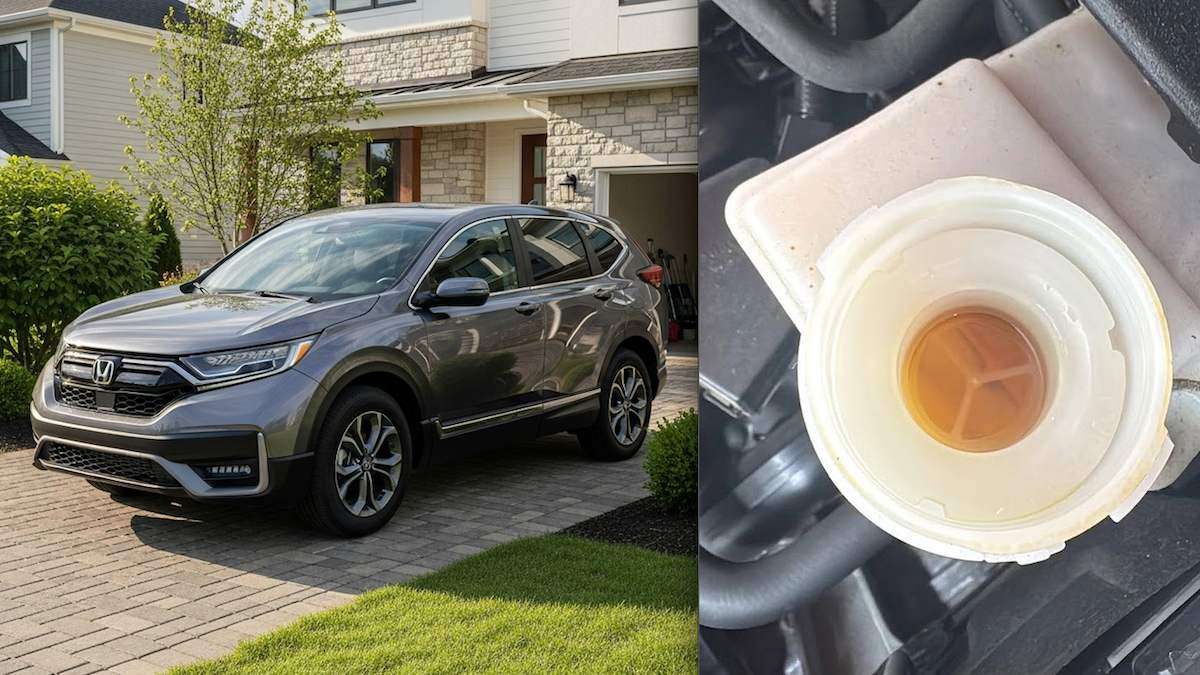

Is That Honda CR-V Brake Fluid Change a Scam?
Bryan thought he knew a scam when he saw one, and the Honda dealer's recommendation to flush his brake fluid reeked of it. What's the truth?
I want to talk about something that's probably on a lot of your minds. It's a question I hear all the time, and it was just posted on the Tuned4spd Facebook page by Bryan, who drives a 2023 Honda CR-V. He said:
"The Honda dealer says that I need my brake fluid changed in my 2023 Honda CR-V. Is it dirty? It looks clean to me. I think it's a dealer scam and not legitimate."
It's a perfectly logical question, and Bryan is not alone in his skepticism. I've not just been a journalist for years; I've also worked in the shop as a tech advisor, and I've learned that when a service recommendation sounds off, it could be a dealer's way of generating extra revenue for the service department.
So let's see why not doing this Honda service might be the biggest danger to your vehicle.
Does Bryan Really Need a Brake Fluid Service?
When you look at your brake fluid reservoir, it's easy to dismiss a dealer's recommendation if the fluid looks like golden-brown honey. It doesn't have the visible grit or sludge you might see in old motor oil. That's because the problem with brake fluid isn't dirt—it's water. Here's the critical, often misunderstood detail: brake fluid is "hygroscopic." This is a fancy word for something simple: it loves to absorb moisture from the air.
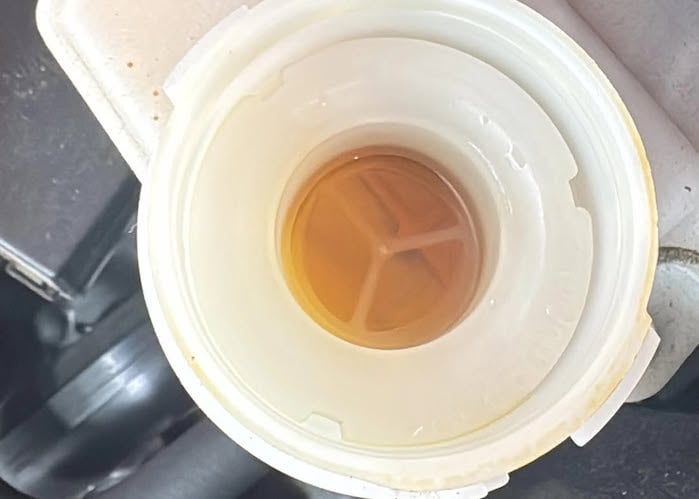
Over time, moisture slowly seeps into your brake lines through the microscopic pores in the rubber hoses, the seals, and even just from condensation in the reservoir. A brand new, sealed bottle of brake fluid is pure. But the moment it's exposed to the air in your car's system, the clock starts ticking. This is the fundamental reason why a brake fluid change is a crucial maintenance item, not a scam. No matter how clean the fluid appears, its effectiveness diminishes with every drop of water it absorbs.
This brings us to a key point that addresses a common concern: Is a brake fluid change a dealer scam? The short answer is no, it's a necessary safety service. The dealer is following a manufacturer-recommended maintenance schedule designed to keep you and your passengers safe.
Why Your Brakes Could Fail
So, what's the big deal about a little water? The problem lies in the physics of your braking system. When you press the brake pedal, you're relying on a hydraulic system. Fluid is non-compressible, so the pressure you apply at the pedal is transferred through the fluid to the calipers, which squeeze the pads onto the rotors, slowing you down. Water, on the other hand, boils at a much lower temperature than brake fluid.
Braking creates an immense amount of friction and heat. Under heavy or prolonged braking (such as coming down a mountain pass or making repeated stops in heavy traffic), the brake fluid can reach temperatures of several hundred degrees Fahrenheit. If your fluid is saturated with water, the water can boil, creating vapor pockets.
Unlike fluid, vapor is highly compressible. When you press the brake pedal, instead of transferring pressure, you're just compressing these gas bubbles. The result? Your pedal goes to the floor without any braking effect. This is what we call "brake fade," and it is an extremely dangerous scenario. It's a perfect example of what happens if you don't change brake fluid—it's not a hypothetical risk, but a very real threat to your safety.
How Often Should You Change Brake Fluid in a Honda CR-V?
A quick check of your Honda CR-V owner's manual confirms what the dealer is telling Bryan. Honda recommends changing the brake fluid every three years, regardless of mileage. For high-mileage drivers, the recommendation is typically every 36,000 miles.
Why such a specific interval?
It's because Honda has done the research and determined that after this amount of time or mileage, the fluid will have absorbed enough moisture to compromise the safety and performance of the braking system.
This isn't just about basic safety, either. Honda's modern braking systems, including the anti-lock brake system (ABS) and vehicle stability assist (VSA), are sophisticated and sensitive to the quality of the fluid. Corroded components, a direct result of moisture in the system, can lead to expensive repairs down the road. You can trust that the hygroscopic nature of brake fluid, as explained in your owner's manual, is the foundation of this crucial maintenance schedule.
Can You Do This Service Yourself?
Now, let's consider your options. Can you do this yourself? Absolutely. But be warned, it's a messy and precise job that requires the right tools and knowledge. A proper DIY brake fluid flush vs a professional brake fluid change is a debate worth having.
A simple "bleed" will only remove the old fluid from the lines, but a full "flush" is necessary to purge the system completely. This is a job that many mechanics prefer to do with a specialized pressure bleeder to ensure every last bit of old fluid is removed, a task that can be difficult to replicate with a manual, two-person pump method.
I've seen many DIYers end up with air in the lines, which can lead to a spongy brake pedal and reduced braking effectiveness. It's one of those services where the peace of mind that comes with a professional doing it correctly is well worth the cost. The 2023 Honda CR-V brake fluid change scam you might fear is actually a cost-effective way to prevent a much more expensive repair down the line, such as a master cylinder replacement or an ABS pump failure due to corrosion.
The Bottom Line: Trust Your Manual, Not Your Eyes
Bryan's question is legitimate. It's natural to question a service that seems unnecessary. But in this case, the truth of the matter lies in the science of brake fluid and the engineering behind Honda's safety systems. The clean appearance of your brake fluid doesn't tell the whole story. As the fluid ages and absorbs water, its boiling point drops, and it becomes a breeding ground for rust and corrosion.
You can't simply tell if the Honda CR-V brake fluid is bad by looking at it. The best indicator is the calendar and the odometer. Your dealer's recommendation is a legitimate safety measure that protects not only your braking performance but the long-term health of your entire braking system. This is a classic example of preventive maintenance that pays for itself in the long run by helping you avoid costly and potentially dangerous brake failure.
Here's my final word of advice: don't see it as a scam. See it as a small investment in your car's longevity and, most importantly, your family's safety. It's a proactive step that every responsible vehicle owner should take.
Here's my question to Honda CR-V owners:
What other car maintenance "mysteries" have you encountered that seemed like a scam at first, but turned out to be a critical service? Let me know in the red Add New Comment link below!
Check out my Honda CR-V story: My Honda CR-V’s Brakes Suddenly Slammed On, and the Car Wouldn’t Move, Everyone Told Me To Get A Honda, Because They’re Great Cars, I Totally Disagree
I am Denis Flierl, a Senior Torque News Reporter since 2012. My 30+ year tenure in the automotive industry, initially in a consulting role with every major car brand and later as a freelance journalist test-driving new vehicles, has equipped me with a wealth of knowledge. I specialize in reporting the latest automotive news, covering owner stories, and providing expert analysis, ensuring that you are always well-informed and up-to-date. Follow me on X @DenisFlierl, @WorldsCoolestRides, Facebook, and Instagram
Photo credit: Denis Flierl via Bryan
Set Torque News as Preferred Source on Google
Follow us today...






Comments
I had a 78 Cutless with…
Permalink
I had a 78 Cutless with 297000 miles, never a bake fluid change. Is the fluid in older cars less likely to go bad. PS I maintain my cars well and always keep them 10 years and longer !
How many brake jobs have you…
Permalink
In reply to I had a 78 Cutless with… by John Nixon (not verified)
How many brake jobs have you done over the years where you have had to bleed the lines and add new fluid? I know what you mean I never totally bleed the brakes in all my years of driving but I do now because of the ABS brake system. It really doesn't cost much and the factory recommends it.
Leaving the cap off gawking…
Permalink
Leaving the cap off gawking at it is a great way to let humidity in. Smh.
If you need to test, use a strip that will show the amount of water.
These days? Never take a shop at their word. Get a second opinion unless obvious.
Todays brake fuild must be…
Permalink
Todays brake fuild must be alot less good than back in the 50's and 60's
We never changed brake fluid unless there was air in the lines. For that mater we did not change automatic transmission fluid, power brake fuild, rear end fluid. NOW they want that ALL changed
It is easy to test the water…
Permalink
It is easy to test the water in brake fluid with a cheap tester or test strip. Changing at three years may be late or early depending on environmental conditions.
2 year old car = scam No way…
Permalink
2 year old car = scam
No way that brake system picked up enough moisture in 2 years unless the cap was left off
You can buy a brake fluid…
Permalink
You can buy a brake fluid moisture tester for $15 and test it yourself. Most dealers don’t recommend brake fluid changes at frequent intervals
The article does address…
Permalink
The article does address contaminated brake fluid but fails to mention a common result...rusted caliper pistons and bored.
Older calipers featured 2 bleeders which allowed the calipers to be installed on either side. The bottom bleeder would or could be utilized to remove the water that naturally would accumulate at the lowest level of your brakes system.
Not sure exactly what procedure Honda utilizes but ideally you remove the caliper and invert it for proper flush. Probably best done when you change front pads or so.
The article does address…
Permalink
The article does address contaminated brake fluid but fails to mention a common result...rusted caliper pistons and bore.
Older calipers featured 2 bleeders which allowed the calipers to be installed on either side. The bottom bleeder would or could be utilized to remove the water that naturally would accumulate at the lowest level of your brakes system.
Not sure exactly what procedure Honda utilizes but ideally you remove the caliper and invert it for proper flush. Probably best done when you change front pads or so.
I have an infinity twenty…
Permalink
I have an infinity twenty thousand kilometers they had to replace pads and rotors which thankfully was covered with waranty but then they want and recommend a brake flush. Neighbor thinks I was scammed. Dealership should we really be trusting
I have specialized In…
Permalink
I have specialized In repairing brake systems since 1982 My shop has repaired over 100,000 brake systems.in the late 90s GM Ford and Chrysler said brake fluid in cars does not absorb moisture in a brake system because it is a sealed system.They since then say to change brake fluid because tiny particles from the metal brake lines could collect in a screen in the abs unit. I have never seen old brake fluid cause a problem with a vehicle's brakes.I have never recommended changing it.Because I think it's BS and I would feel like I was cheating my customers I have never done it to my own vehicles either.
The one thing is is yes you…
Permalink
The one thing is is yes you should change your brake fluid but even though it looks like it's not dirty it's not that brake fluid gets dirty it's a sealed system the only reason it turns color is because of the rubber cups that are in the master cylinder and that are in the wheel cylinders and the calipers that's what makes the break fluid black in that causes wear.. so for a good rule of thumb get a syringe and every third oil change suck out all the fluid from the master cylinder and refill it to the height that it was at when you sucked it out because remember when you take out the fluid now the float doesn't know when to turn on the light that tells you the wear of the amount of the brake pads that's how it works...
The biggest joke in the world is is they keep refilling your master cylinder when you get a service and that's totally wrong because how is the master cylinder float supposed to warn you that the brakes are wore out.... Capiche
Most manufacturers recommend…
Permalink
Most manufacturers recommend a brake flush every two years. It's an easy job with the right tools.
I have a 2014 CR-V, never…
Permalink
In reply to Most manufacturers recommend… by Knyte (not verified)
I have a 2014 CR-V, never flushed the brake fluid just like the other cars I had owned for at least 10 yrs. Never had any problem.
On Amazon for $6 you can buy…
Permalink
On Amazon for $6 you can buy a Brake Fluid Liquid Tester Pen that measures the water in the brake fluid.
Why wouldn't one replace the…
Permalink
Why wouldn't one replace the brake fluid that came with the car with silicone brake fluid which is not corrosive, helps the seals and is DOT 5 as I recall.
Use the maintenance schedule…
Permalink
Use the maintenance schedule. That 3 year brake line flush should be done in 2026 NOT 2025. Some dealerships do push an accelerated maintenance schedule.
a newer car garaged l doubt…
Permalink
a newer car garaged l doubt it needs replacing that soon .maybe left outside in humid climates like florida possible but in AZ forget about it . Ive owned over 20 vehicles never changed brake fluid in any unless caliper stuck or line failed .
"It looks fine" Often said…
Permalink
"It looks fine" Often said by those not actually knowing what they're talking about folks.. So many people think dealerships or even us mechanics at service shops or used car lots are out to rip them off as we me that extra job or revenue when in reality we are. Blows my mind how some people act. Every fluid in your car has a life-span and needs to have that system flushed or cleaned out and replaced with new clean fluid.
Correct, Honda says change…
Permalink
Correct, Honda says change it every 3 years/36k miles. You can get some test strips to check the quality of the fluid, but honestly just change it on schedule and you never have to worry about it. If the dealer is charging too much and you don't want to do it yourself, any reputable repair shop can change it easily.
100% it's brake fluid month…
Permalink
100% it's brake fluid month and everyone will get the same generic photo of dirty brake fluid,so I went and got it done at another place probably; not saying anything, went back and they mentioned again with the same photo that my brake fluid was dirty and needed change