
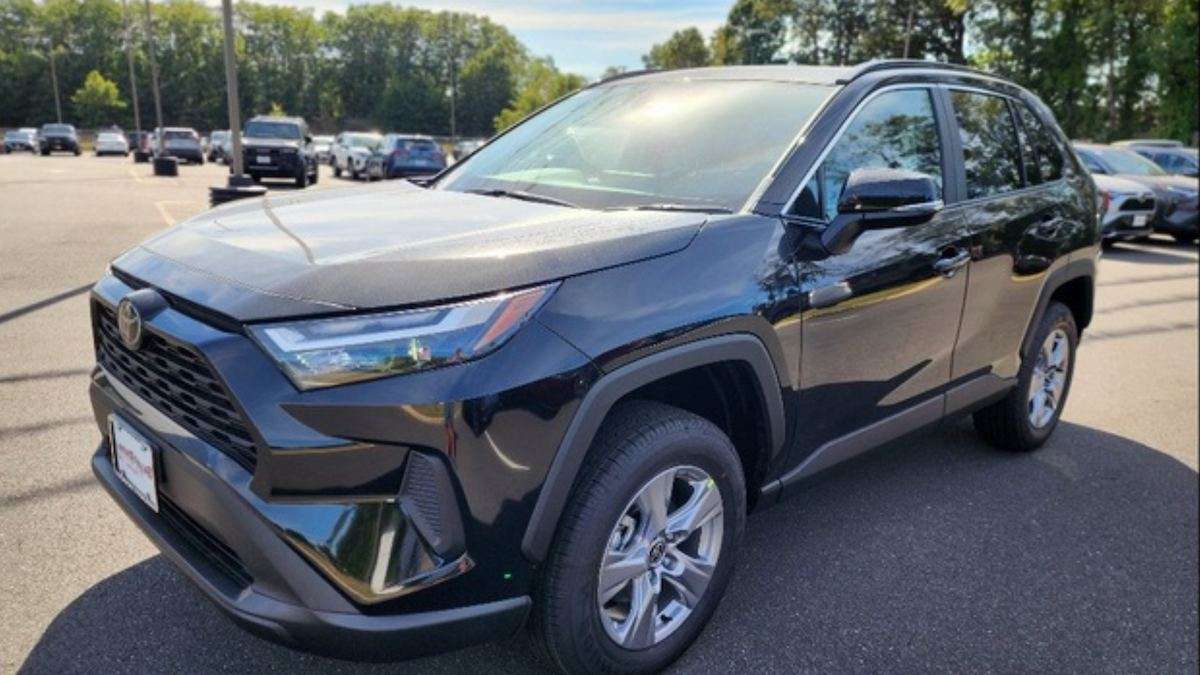

110K miles on an original 2020 Toyota RAV4 battery? What are Sandra's secrets, and find out why she's keeping her trusty Toyota for the long haul.
I found this report from Sandra Crrl on the Toyota RAV4 Discussion Group 2019-2025 - Gas + Hybrid + Prime Facebook page. Her 2020 Toyota RAV4 reached 110,000 miles before needing its first 12V battery replacement and is now "due soon" for brakes. This vehicle is proving to be an exceptional long-term investment.
She says, "The original 12V battery in my 2020 Toyota RAV4 had to be replaced today. It made it to 110k miles. Next, I'm due for brakes soon. I will keep this vehicle for as long as I can."
What's the secret to this RAV4's longevity? Here is what all RAV4 owners should know.
Decoding the 12V Battery Success Story
Sandra's original 12V battery lasted 110,000 miles, an excellent lifespan for any standard internal combustion engine (ICE) vehicle.
The 12V Paradox
In a gas-only RAV4, the 12V battery is constantly recharged by the alternator. In the Hybrid and Prime models, the 12V battery is primarily charged by a DC-to-DC converter that draws power from the large high-voltage traction battery.
Because the gas engine doesn't run continuously, and the converter only activates when the 12V voltage drops significantly, these batteries often experience a chronic low state of charge. This is a common root cause of early failure for many owners.
Sandra's 110,000-mile experience provides valuable insight for every other owner seeking the maximum lifespan of a 12V battery in a Toyota RAV4. Let's also check out the Hybrid technology.
Advice for RAV4 Hybrid Owners:
- Switch to AGM: It is highly recommended to install an AGM (Absorbent Glass Mat) battery for the replacement. AGM batteries are better suited to handle deep cycling and vibration than traditional lead-acid, making them more tolerant of the hybrid charging cycle.
- Consider a Maintainer: If Sandra ever leaves the vehicle sitting for extended periods (e.g., more than three days), a smart 12V battery maintainer plugged into the hood jump points can keep the new battery topped off, proactively fighting the chronic low-charge state. This is critical longevity advice for 2019-2025 Toyota RAV4 12V batteries (KP1).
Conquering the 110K Brake Service
The fact that the brakes are only now "due soon" at 110,000 miles strongly suggests Sandra owns a gas RAV4 and is on her second set of brakes. A gas model requires a front pad and rotor replacement at least once, likely between the 40,000 and 60,000-mile mark.
This difference highlights a key feature of Toyota's electrified platform for those considering a RAV4 hybrid trim level.
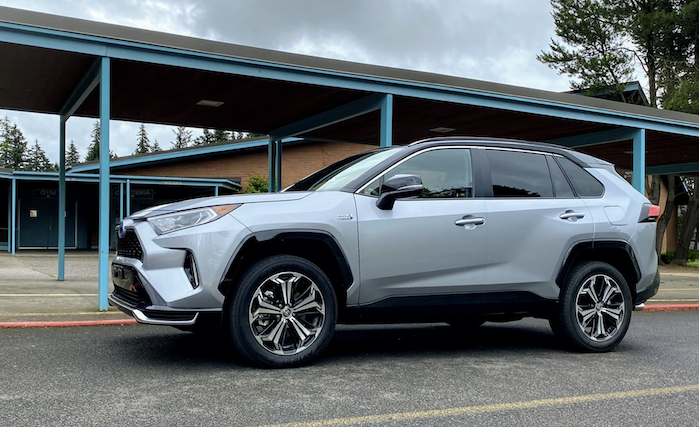
Understanding Regenerative Braking
The hybrid system uses the electric motor to slow the vehicle down, a process called regenerative braking, which captures kinetic energy and sends it back to the high-voltage battery. The conventional friction brakes (pads and rotors) are only heavily engaged at very low speeds or during emergency stops. This is the core reason why Toyota RAV4 gas model brakes wear faster than hybrid models (KP5).
For hybrid and Prime owners, this longevity is standard—many see over 150,000 miles on original pads. The biggest risk here isn't wear, but seizing.
The Complete Brake Solution:
- The Inspection Imperative: Before replacing anything, the most critical service is inspecting the brake caliper slide pin. Because the friction brakes are used so infrequently, the caliper slide pins are susceptible to seizing due to corrosion and rust, especially in regions that use road salt or experience harsh winters. A seized pin causes the pad to stick, leading to uneven wear and potential noise.
- Action: The shop must remove the calipers, inspect the pins, clean them thoroughly, and apply high-temperature silicone brake lubricant (synthetic) to ensure smooth, free movement. This is non-negotiable for longevity.
- Component Recommendation: Since she plans to keep the vehicle long-term, investing in quality components makes sense. For the best brake pad recommendations for high-mileage Toyota RAV4 (KP4), ceramic pads are suggested.
- Pads: Ceramic brake pads offer excellent stopping power, reduce brake dust (keeping wheels cleaner), and operate quietly.
- Rotors: If the rotors are still within minimum thickness specs (often true due to regen braking), they can be resurfaced if there's no deep scoring. If replacement is necessary, choose a coated rotor (like Geomet or similar corrosion-resistant coating) for better defense against rust, which is common when braking components aren't heavily used.
What the Community is Saying
The experience is echoed across the RAV4 community:
Hilary Herbert - I had to replace the battery in my 2020 XLE at about 15K! I came home from a 2-week vacation, and it was dead. I didn't leave anything on. Toyota said it was due to a software update issue, but I don't believe that—there haven't been any issues since, so who knows.
Jennifer Harrell - I have a 2019 Rav, and it had the original Japanese battery, which I got replaced this past June! I had about 77k miles. There were no battery issues, but I took a road trip to Vegas and had it replaced during a check-up and oil change. It was recommended to replace it, so I did.
Elijah Armas - My 2019 XSE Hybrid made it over 170k miles before the battery went. Unfortunately, I had to pay to have it towed to our nearest Toyota because it broke down at our gas station. But all in all, it's been by far the most reliable vehicle we've ever owned.
I recently wrote a story of one owner, initially a Honda loyalist, who was so impressed with his wife's RAV4 that he traded his own vehicle for a new model: "When My Wife Got a Toyota RAV4 I Was Skeptical, But I Was So Impressed, I Traded My Babied 2020 Honda Civic in For This 2025 RAV4 LE."
Another owner praised his 2024 RAV4 Hybrid XLE as a "keeper" after one year and 15,000 miles, citing real-world fuel economy (37 mpg in winter, 42 mpg in summer) as superior to the Prius wagon it replaced. Gary says, "One Year and 15K Miles In, My 2024 Toyota RAV4 Hybrid XLE Is a Keeper, It's Better Than the Prius Wagon It Replaced."
Essential Service Tips and Keeping that RAV4 Running
The secret to maximizing that 4th and 5th generation RAV4 lifespan lies in proactive, targeted maintenance, not just reactive fixes.
Beyond the battery and brakes, use this opportunity to review these essential service tips for keeping a Toyota RAV4 running past 150,000 miles (KP7):
- Differential and Transfer Case Fluid: If your RAV4 is All-Wheel Drive (AWD), the differential and transfer case fluids should be changed every 60,000 miles, or ideally closer to 30,000–50,000 miles if you tow or drive aggressively. This is often overlooked and is cheap insurance for the AWD system.
- Transmission Fluid (Drain and Fill): While Toyota calls the transmission fluid "lifetime," no fluid is truly permanent. A simple drain and fill (not a full flush) of the transmission fluid is strongly recommended between 80,000 and 100,000 miles.
- Coolant Flush: The engine and hybrid inverter cooling systems are critical. Ensure the coolant is flushed per Toyota's schedule (typically around 100k or longer for the first time, then more frequently).
These steps protect the expensive components that actually enable the longevity owners are seeking. The quality issues owners have reported on newer models (I've Been a Toyota RAV4 Enthusiast Since 2015, I Needed an Upgrade and Bought a 2024 RAV4, I Have a Laundry List of Problems) only make keeping a well-maintained earlier model like Sandras even more valuable.
The future of the RAV4's powertrain is a topic of close watch, but if you treat your 2020 right, you might bypass the need for a new model entirely.
Now, It's Your Turn
Given Sandra's goal to keep her RAV4 "for as long as I can," what single, non-fluid, non-tire maintenance item do you think is most critical for guaranteeing the reliability of a 5th Generation RAV4 past 150,000 miles? Is it the PCV valve, the spark plugs, or something else entirely? Click the red Add New Comment link below and let us know.
I'm Denis Flierl, a Senior Torque News Reporter since 2012, bringing over 30 years of automotive expertise to every story. My career began with a consulting role for every major car brand, followed by years as a freelance journalist test-driving new vehicles—equipping me with a wealth of insider knowledge. I specialize in delivering the latest auto news, sharing compelling owner stories, and providing expert, up-to-date analysis to keep you fully informed.
Follow me on X @DenisFlierl, @WorldsCoolestRides, Facebook, and Instagram
Photo credit: Denis Flierl
Set Torque News as Preferred Source on Google
Follow us today...






Comments
Own a 2020 Rav 4 very good…
Permalink
Own a 2020 Rav 4 very good vehicle it is a XLE model put my first set of brake pads on at 110 KLM have 150klm on it now and possibly brakes soon. My biggest concern is the humming noise at certain speeds it roars through the whole vehicle Toyota can't seem to find the problem. Contacted the Toyota service center to see if they could help me their solution for the problem was to turn the radio up louder so it would drown out the noise. That is a slap in the face . Outside of that it is a excellent auto.
Own a 2020 Rav 4 very good…
Permalink
Own a 2020 Rav 4 very good vehicle it is a XLE model put my first set of brake pads on at 110 KLM have 150klm on it now and possibly brakes soon. My biggest concern is the humming noise at certain speeds it roars through the whole vehicle Toyota can't seem to find the problem. Contacted the Toyota service center to see if they could help me their solution for the problem was to turn the radio up louder so it would drown out the noise. That is a slap in the face . Outside of that it is a excellent auto.