
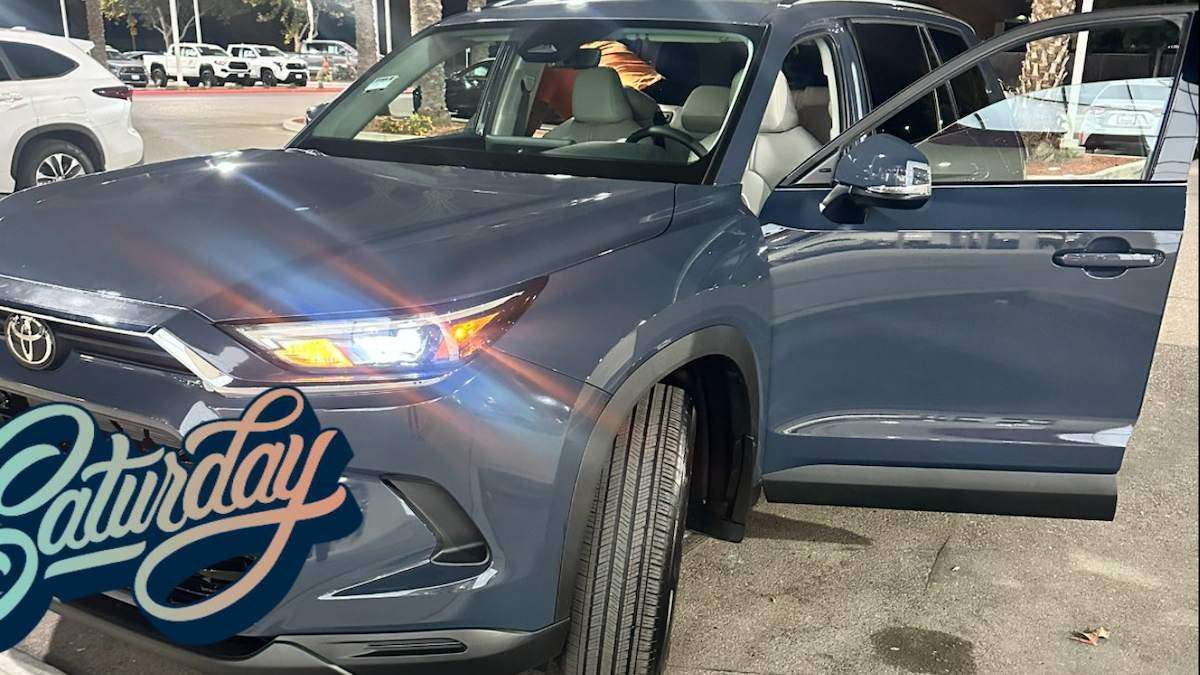

Is this the real-world fuel economy nightmare for the Toyota Grand Highlander non-hybrid, or is there a trick this owner is missing?
While researching the common issues new Grand Highlander owners face, I came across this highly relatable post from Toyota Highlander Owners Club Facebook member Angelina Rodriguez. She recently upgraded from a Camry Hybrid to a 2026 Grand Highlander for her growing family, but is now dealing with shocking fuel consumption—filling up every 3-4 days. Despite trying both 87- and 91-octane top-tier gas, she's unable to close the massive gap between her old car's MPG and her new SUV's thirst for fuel.
Let's check out what Angelina says, and then I'll answer her questions.
"Seriously, what can I do to make my brand new 2026 Toyota Grand Highlander spend less money on gas. It's been just top-tier gas I've used so far. I just bought my Grand Highlander because I'm adding another baby to our family. I was so used to my Toyota Camry hybrid's fuel mileage. I wish I could afford the Grand Highlander Hybrid, but I went with this option because I couldn't afford the $300 more in payment on a GH Hybrid."
"I've been using 87 octane and have now 2050 miles on it. I know I won't get close to my hybrid Camry, but omg I'm filling it up every 3-4 days. I would think at least 4-6 days with no out-of-town driving. I've also used 91 octane, and it still doesn't give me more miles per gallon. I don't use Costco, and other cheap gas. I don't mind the price of the gas as long as I'm not having to fill up every 2-3 days."
Angela Wants Her Camry Back
As a Senior Reporter covering Toyota for Torque News for over a decade, I understand the frustration that comes with a new vehicle not meeting expectations, especially when you're anticipating the costs of a growing family. Angelina's experience is a painful case study in the switch from a Toyota Camry Hybrid to an SUV: an MPG shock. She's not alone. This issue isn't a defect; it's a harsh collision between modern turbocharging, vehicle mass, and real-world urban driving habits.
Understanding the Grand Highlander's Thirst
Angelina was driving one of the most efficient vehicles Toyota has ever built—the Camry Hybrid. That vehicle uses a highly efficient naturally aspirated engine paired with a sophisticated electric motor, prioritizing city MPG. Her new Grand Highlander, however, is an entirely different beast designed for a very different job: moving more people and more cargo.
The non-hybrid Grand Highlander is powered by the 2.4L turbocharged four-cylinder engine. This engine is great for towing and merging, as it delivers torque quickly and reliably. But that turbocharger is a double-edged sword. In stop-and-go driving or when quickly accelerating a large vehicle, the turbo spools up, forcing more air into the engine. To prevent detonation, the fuel system injects more gasoline, which crushes her fuel economy.
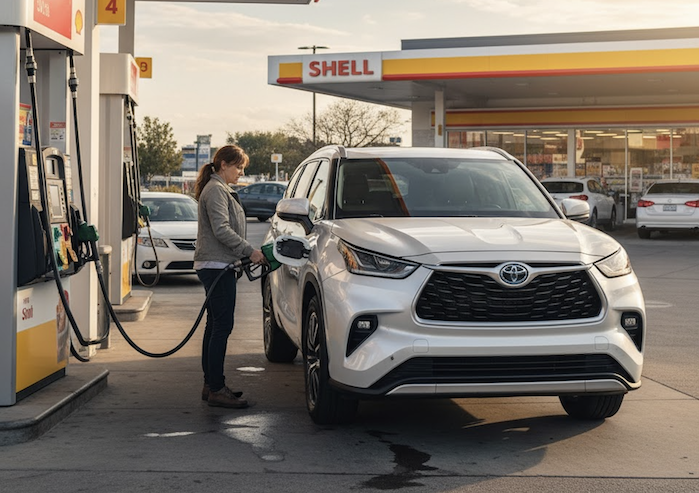
This is why many owners, as I noted in a previous report, feel immediate buyer's remorse, leading to quick trade-ins. I'm Shocked That A Customer Just Traded A 2024 Toyota Grand Highlander With Only 3,300 Miles For A 2025 Nissan Rogue.
She mentioned trying 91-octane fuel, but unfortunately, that won't improve her gas mileage. The non-hybrid 2.4L turbo is designed and tuned by Toyota to run optimally on regular 87 octane gasoline. Using premium fuel in an engine not specifically designed for it (like the Grand Highlander), which achieves power and efficiency through its turbo setup, wastes money.
You are getting zero value and zero extra miles for that added cost.
This is a crucial point when understanding the Grand Highlander turbo engine fuel consumption. The non-hybrid model doesn't have the electrical assists that make the Hybrid or the Hybrid Max shine. In fact, in my piece about the top-tier efficient model, Help, I Bought a 2025 Toyota Grand Highlander.' and I'm Having Bad Buyer's Remorse, I Just Looked at a Nissan Pathfinder, I Should Have Bought It Instead, it was clear that the hybridization is what elevates the vehicle's efficiency above its physical size.
Now For the Good News
Since the issue is primarily driving dynamics and physics, we can tackle it with behavioral and maintenance adjustments. Here are my recommendations for how to improve the Toyota Grand Highlander non-hybrid gas mileage:
- Stop Wasting Fuel with Premium Gas: Stick strictly to 87 octane top-tier fuel. Angelina noted that the higher grade hasn't helped, and my analysis confirms that premium 91-octane gas doesn't improve the Toyota Highlander's MPG. The answer is definitely no for this specific engine tune.
- Monitor Tire Pressure Religiously: This is the cheapest and fastest fix. Check your tire pressure at least once a month. Under-inflated tires increase rolling resistance, forcing the turbo engine to work harder. Aim for the pressure listed on the driver's side door jamb (not the max pressure on the tire wall).
As I've advised readers dealing with similar issues in older models, managing the rolling resistance is vital. See my report: I Have a 2016 Toyota Highlander, and My Gas Mileage is Terrible. I Use 89 or 91 Octane, But I Don't Need Anyone Telling Me What Grade of Gas To Use
- Master the "Pulse and Glide" Technique: Since you do mostly city driving, your acceleration is your biggest gas killer. The turbo needs fuel to build boost. The solution is to accelerate gently up to speed (the "pulse") and then coast (the "glide") as much as possible before the next stop. Think of the gas pedal like a volume knob, not an on/off switch. These are the best driving techniques for better Grand Highlander fuel economy.
- Deactivate Proactive Driving Assist (PDA): Many owners are finding that Toyota's new PDA feature, which automatically applies mild braking in curves or when approaching another car, inadvertently hurts MPG. Why? Because the vehicle is braking unnecessarily, and you then have to accelerate back to cruising speed to re-engage the turbo. Turn this feature off in the infotainment system and see if your MPG improves.
- Re-evaluate the Financial Trade-Off: I want to address the $300 difference in her monthly payment. Given Angelina's frequent fill-ups (every 3-4 days), she may now be spending more on fuel than she would have on the hybrid payment. This points to the long-term cost of ownership, which I often cover.
You can run a calculation to determine if the $300 in savings is being swallowed up by fuel costs. This is why it's important to consider reliability, as I wrote in my report here: Often, the hybrid's reliability and lower running costs offset the higher payments over five years.
What Grand Highlander Owners Are Saying
Angelina's pain is being echoed across owner forums, where drivers are realizing the difference between the EPA rating and the real-world MPG for the gas model, especially in the city:
- Reddit (Grand Highlander Limited Gas): "I've been disappointed with the gas mileage with our GH Plat. My wife can't seem to average more than 20 mpg per tank. I've had some people show they've made 23-27 and I've never been able to get there, but I've tried not to complain cause I love the space."
- Reddit (GH Gas XLE): "Gas mileage sucks at 21 mpg highway... I can assure you those numbers are inflated. I do mostly city driving, and the most I can get is 18-19."
- YouTube (OffTheShelfRides Comment Section): "I have 3000 miles on my Grand Highlander Hybrid and am only averaging 31 mpg... highway, I can get 30, but you can't go over 65. Above 65, you'll get more like 22-25 as it rarely uses the electric system."
(Note: This Hybrid owner's highway experience mirrors Angelina's frustration with the non-hybrid. Grand Highlander Hybrid - Real World MPG
Conclusion
Angelina's transition from a Camry Hybrid to a large, non-hybrid Grand Highlander is stark. Still, by focusing on correct fuel usage, meticulous tire maintenance, and, most importantly, smoothing out her acceleration habits, you can chip away at that frustrating fuel cost and extend the time between fill-ups.
The space she needs for your growing family is the Grand Highlander's greatest asset. While the 2.4T engine is doing the heavy lifting, these small adjustments can make a big difference in the long-term ownership satisfaction.
It's Your Turn
If you own a non-hybrid Grand Highlander, what real-world MPG are you actually seeing in city driving, and what is your best "secret" tip for maximizing its fuel economy? If so, click the red Add New Comment link below and let us know.
I'm Denis Flierl, a Senior Torque News Reporter since 2012, bringing over 30 years of automotive expertise to every story. My career began with a consulting role for every major car brand, followed by years as a freelance journalist test-driving new vehicles—equipping me with a wealth of insider knowledge. I specialize in delivering the latest auto news, sharing compelling owner stories, and providing expert, up-to-date analysis to keep you fully informed.
Follow me on X @DenisFlierl, @WorldsCoolestRides, Facebook, Instagram and LinkedIn
Photo credit: Denis Flierl via Angelina Rodriguez
Set Torque News as Preferred Source on Google
Follow us today...




Comments
You bought a large suv with…
Permalink
You bought a large suv with a turbo 4 cylinder engine.... duh....
I have a 2035 Highlander…
Permalink
I have a 2035 Highlander hybrid and I am getting 40 MPG . It’s not the Grand Highlander but it’s the hybrid which I believe is the same engine and transmission. I drive with a light pedal and check the mileage religiously
How long have you been a bot?
Permalink
In reply to I have a 2035 Highlander… by Art Miller (not verified)
How long have you been a bot?
Costco gas is top tier,…
Permalink
Costco gas is top tier, since you are including her comment about Costco gas, it'd be fair to address that. You even use the word top tier in a different context
You should have done your…
Permalink
You should have done your research. The new Toyotas are not known to get any decent gas mileage whatsoever. What were you thinking?
Forget the turbo vs non…
Permalink
Forget the turbo vs non turbo. In City driving most fuel is burned accelerating. Quantity is function of speed*speed and weight of vehicle and load. Rate of accel doesn't matter; keep up with traffic. Brakes waste that fuel, so coast to half speed before braking. Time lights, so accelerate less. Don't defeat idle stop, you spend a lot of time sitting in traffic.
One peculiar thing to note…
Permalink
One peculiar thing to note here with the grand Highlander is how conservative the gas tank measurement is. Car and driver notes this in their review of the vehicle. They were able to get a ton of mileage after the meter hit 0. I’ve noticed this as well in my GH. It says it only has 300 miles in on a full tank, and then the math doesn’t add up when I fill up with 100 miles left in the tank.