
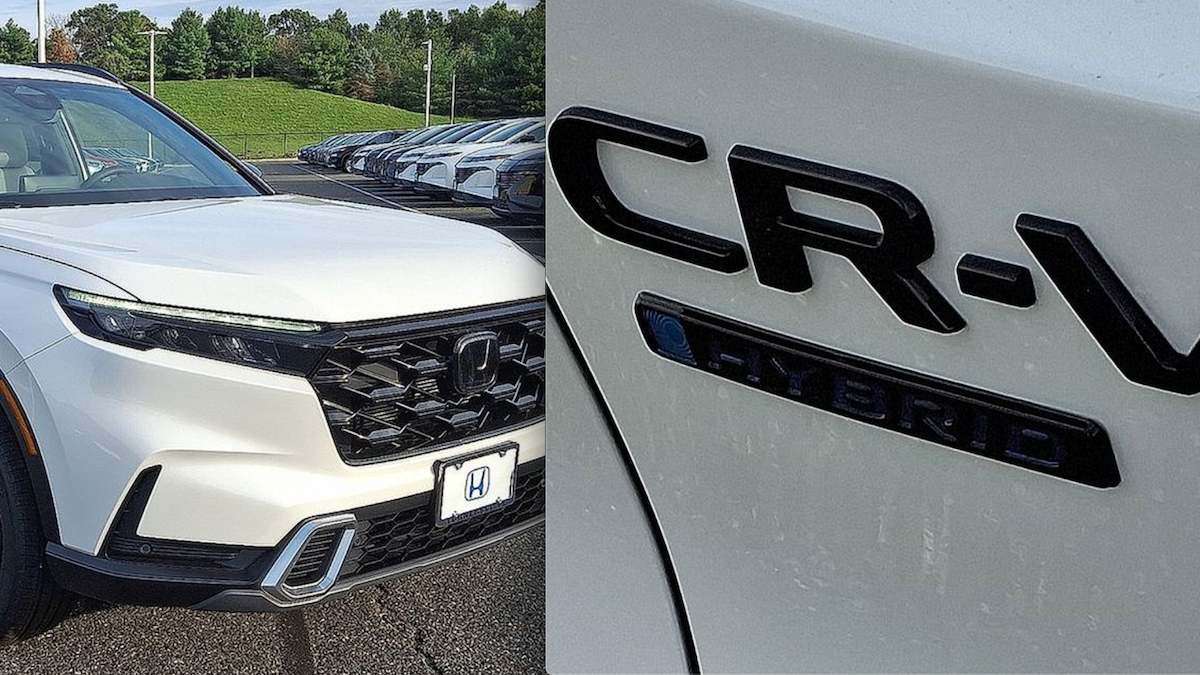

One 2015 Honda CR-V proved bulletproof, but its high-tech hybrid successor has this owner playing it safe.
Imagine this: you’ve spent a decade driving a Honda vehicle so reliable that your extended warranty gathered nothing but dust in the glovebox. Now, you’re trading up to the most advanced version of that same SUV, but instead of feeling confident, you’re feeling cautious because the high-tech complexity of a hybrid system has shifted the goalposts on long-term reliability.
Brenda Whiting Lowe on the Honda CR-V 2023-2026 Discussion Club - 6th Generation Facebook page says,
“Here's the decision I have to make. I’m trying to decide which extended warranty coverage for my 2026 Honda CR-V Hybrid Sport Touring. I have kept my last two CR-Vs for 10 years. I never used the extended warranty on my 2015 CR-V Touring, but with a hybrid, I imagine there's a lot more that can go wrong. Here are the quotes I got: Honda Care $0 deductible, 8/100,000 - $ 1,065; Allstate Premier Care $0 deductible, 8/100,000 - $ 1,690. I chose this 2026 CR-V Hybrid Sport Touring in Platinum White Pearl because I feel it is easiest to keep clean while looking nice. This will be my 6th Honda and 3rd CR-V, but my first hybrid.”

The Hybrid Reliability Dilemma: Is the 2026 Honda CR-V Warranty a Must?
With 30 years in the automotive industry, I’ve seen brands rise and fall, but few stories are as telling as the "Honda Loyalist" facing a new era of technology. Brenda’s situation is one I hear often. She is a 6th-time Honda owner who knows the brand’s history of "bulletproof" engineering. However, the move to the 2026 Honda CR-V Hybrid Sport Touring represents a massive leap in complexity from her trusty 2015 model.
When you look at the Honda CR-V Hybrid vs gas model reliability, you aren't just comparing fuel economy. You are comparing a traditional internal combustion setup to a dual-motor system that manages power in real-time. My advice? Brenda is right to be cautious. While Honda remains a leader in build quality, the "set it and forget it" nature of the 2015 era has been replaced by sophisticated electronics and high-voltage components.
In a recent report, I explored a similar shift in owner sentiment: I Just Traded My 2018 Honda CR-V For a 2026 CR-V Hybrid, But Now, People Say 'Don't Get a Hybrid, the Cost to Replace the Battery Isn't Worth What I'll Save In Gas'.
Why the 2026 CR-V Hybrid Changes the Game
For decades, we recommended Hondas because their mechanical simplicity was their greatest strength. The 2015 CR-V was a peak example of this. But the 2026 Honda CR-V Hybrid Sport Touring features a 2.0-liter engine paired with two electric motors. This system eliminates the traditional starter and alternator, which is a plus for maintenance, but it adds an expensive Lithium-ion battery pack and a Power Control Unit.
If you are wondering about the long-term costs of replacing a hybrid battery, you are asking the right questions. While these batteries are designed to last, a failure outside of the 8-year/100,000-mile factory warranty can cost upwards of $4,000. For an owner like Brenda, who keeps cars for 10 years, the two-year gap after factory coverage expires is the "danger zone" where an extended warranty pays for itself.
I’ve seen how even minor defects can cause major headaches for those without extra coverage. For instance, check out my report on the 2023-2025 Honda CR-V "Sticky Steering" Nightmare: Why Owners Are Terrified and Filing Lawsuits. These are the types of unforeseen mechanical glitches that make a $1,065 Honda Care plan look like a bargain.
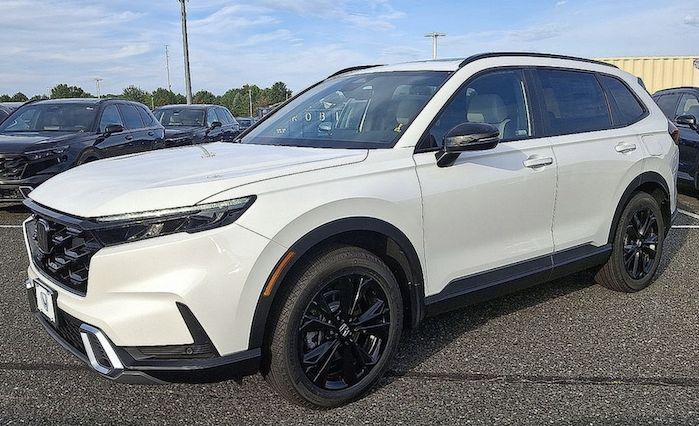
Honda Care vs. Third-Party
Brenda shared two quotes:
- Honda Care: $1,065 (8 years/100k miles, $0 deductible)
- Allstate Premier: $1,690 (8 years/100k miles, $0 deductible)
From my 30 years of experience, choosing between Honda Care and third-party warranties is a no-brainer. Always go with the manufacturer-backed plan. Honda Care is integrated into the dealership's service system nationwide. There are no "claims adjusters" to call and no debates over which parts are covered. If a sensor in your 2026 Honda CR-V infotainment system fails, a Honda tech fixes it.
Furthermore, $1,065 for eight years of peace of mind on a $40,000+ vehicle is incredibly reasonable. That breaks down to about $133 per year. One single repair to the advanced Honda Sensing safety suite or the hybrid cooling system would likely exceed that total cost.
Real-World Concerns and "Gremlins"
Readers often ask me, "Aren't hybrids more reliable because they have fewer moving parts?" In some ways, yes. There is no CVT belt to snap, and regenerative braking saves your pads. But we are seeing new issues emerge. I recently covered a story about a 2023 Honda CR-V Hybrid Owner Who Says His SUV Blew a Head Gasket at Just 65K Miles. It serves as a stark reminder that even the best brands can have "Friday afternoon" cars.
If you are looking for the best 2026 Honda CR-V Hybrid maintenance tips, my top recommendation is to stay proactive. Hybrids hate sitting for long periods, and their battery cooling vents must stay clear. But for the things you can't control, like a failed inverter or a glitchy digital dash, that warranty is your safety net.
Key Takeaways for 2026 CR-V Owners and Buyers
- Factory Warranty vs. Extended: Honda provides 8 years/100,000 miles on hybrid components, but the "bumper-to-bumper" electronics coverage usually ends at 3 years/36,000 miles.
- The Electronics Risk: Modern CR-Vs have more sensors and chips than a 2015 model had in its entire powertrain. An extended warranty is now more about the "tech" than the "engine."
- Price Shopping: Honda Care prices are not set in stone. You can often buy them from different dealers online for significantly less than your local showroom might quote.
- Resale Value: A transferable Honda Care warranty adds significant value if you decide to sell the car at the 7-year mark.
What CR-V Owners Are Saying
The community is deeply divided on whether the extra cost is worth it, especially given Honda's legendary past. Here is what some owners are sharing on Reddit:
"I just got the 2026, and I regret not getting the hybrid because I'm worried about the 1.5L turbo reliability, but then I see people reporting blown head gaskets on the hybrids too. It feels like you can't win without a warranty." Reddit User, r/carbuying
"My 2025 CR-V Hybrid lit up like a Christmas tree at 430 miles. The brakes basically failed. They had the car for a week and a half. If this is the 'new' Honda reliability, I'm glad I have the coverage." Reddit User, r/crv
"I have an 18 CR-V with the 1.5L. I was so worried, but in 7 years, I've only spent $35 on a purge valve. Maintenance is everything." Reddit User, r/crv
Conclusion
Brenda’s decision to move from a 2015 to a 2026 Hybrid marks a transition from mechanical simplicity to digital complexity. While the 2015 CR-V was a vehicle you could almost ignore, the 2026 model is a rolling computer. Given the $1,065 price point for Honda Care, the protection it offers for the hybrid battery, the e:HEV powertrain, and the sophisticated Sport Touring electronics make it a smart investment for anyone planning to keep their vehicle for a decade.
What Would You Do? Would you bank on Honda’s reputation and skip the warranty, or does the hybrid tech make you too nervous to drive unprotected? Click the red link below to write your comment and join the community in sharing experiences.
Next Up: Is the Honda CR-V really the best choice for your retirement? One longtime owner recently made a "shock move" by ditching his CR-V for a competitor after researching reliability scores. Read why he believes Honda might be losing its edge in A Honda Owner Is Ditching His CR-V For a Subaru Forester, Because It’s the Last Car He Buys.
With over 30 years of industry experience, Denis Flierl brings an insider’s perspective to Torque News, where he has been a Senior Reporter since 2012. Before picking up the pen, Denis consulted for the automotive industry's biggest brands and honed his skills as a test driver. He cuts through the noise to deliver the latest auto news, compelling owner stories, and the expert analysis necessary to navigate today's changing automotive market.
Have a tip or question? Follow me on X @DenisFlierl and @WorldsCoolestRides, or connect with me on Facebook, Instagram, and LinkedIn.
Photo credit: Denis Flierl via Brenda Whiting Lowe
Set Torque News as Preferred Source on Google
Follow us today...





Comments
Sadly, my brother also got…
Permalink
Sadly, my brother also got taken for the cost of an extended warranty on his 2026 CR-V. The sales folks definitely see you coming.
I’ve had 13 Honda’s (entire…
Permalink
I’ve had 13 Honda’s (entire family) over the last 25 years and they’ve always been the best in terms of quality and reliability. I’ve had other family members and friends who bought Subaru’s and although they are decent vehicles, they’re cheaply built which is why they are on the most expensive list to keep on the road for 10 years. One Outback lasted less than two years and then had major issues. Honda has one of the best reliability ratings of all.
I'm a Honda technician for…
Permalink
In reply to I’ve had 13 Honda’s (entire… by Jerry Ryan (not verified)
I'm a Honda technician for the past 34 years unfortunately the good old days which a Honda vehicle would reach 250 -350 miles on the odometer are over.
Today's vehicle aren't made to last, i still drive my 2004 civic built like a tank.
I agree with you 100% on…
Permalink
In reply to I'm a Honda technician for… by A.T.F (not verified)
I agree with you 100% on that my daily driver is a 2000 V6 Accord with 400,000 mi
2013 cr-v touring. Bought…
Permalink
2013 CR-V touring. Bought extended warranty, one claim. 5+ months to get repaired. Service department said , no warranty $3000 to repair. My research said <$500 at a commercial drive train shop. New car is a Kia.
My '07 CRV @156k miles (used…
Permalink
In reply to 2013 cr-v touring. Bought… by Henry Drew (not verified)
My '07 CRV @156k miles (used mainly for highway trips from day 1) still gets 29+ mpg, has never been in the shop for a repair. Getting scheduled maintenance and sensible driving, no squeaks, rattles... original brakes replaced at 142k. Daily driver is a '05 Tacoma still going strong. No hurry for the new tech-laden vehicles with stickers north of $40k.
Im having nothing but…
Permalink
Im having nothing but trouble with my 2018 CRV, it kept dying on me, Honda would take a look and find nothing. I had to reach out to Gonda via Twitter to get them to do anything about it, but they still did t really know, they threw a bunch of parts at it until a fuel pump recall a year later.
Fuel pumps in the tank…
Permalink
In reply to Im having nothing but… by Ricky (not verified)
Fuel pumps in the tank generally fail and do not come back. The ones that I've seen that were recalled usually just failed out right and never started again I have a feeling something else is wrong with your car
I wouldn't waste one penny…
Permalink
I wouldn't waste one penny on the extended warranty know what I buy this vehicle I would lease it. This car is not going to last even with an extended the warranty.