
This investigative report compares real-world towing performance between the 2018 Ford F-150 3.5L EcoBoost and the 2025 Ford F-150 5.0L V8. Leveraging my years of towing experience in the mountains of Colorado, I examine why the older twin-turbo platform outperformed the modern naturally aspirated V8 in high-demand, steep-grade scenarios. The report integrates owner testimonials, technical torque-curve data, and field observations to provide a definitive guide for truck buyers who prioritize mountain towing performance.
I have spent nearly two decades testing trucks in the thin air of the Colorado Rockies, and if there is one thing I have learned, it is that displacement does not always equal dominance. In a shocking side-by-side towing discovery that is currently rocking Ford owner circles, a direct comparison has proven that the 2018 Ford F-150 equipped with the 3.5L EcoBoost engine significantly outperformed the brand-new 2025 F-150 5.0L V8. While the 2025 V8 is a marvel of modern engineering, it simply could not match the raw, low-end mountain-climbing grunt of the eight-year-old twin-turbo V6. When faced with steep highway grades, the 3.5L EcoBoost maintained 65 MPH with "pedal to spare," while the 2025 5.0L V8 was forced into a high-RPM scream, requiring a floored accelerator just to keep pace.
We are seeing a definitive shift in how truck buyers are navigating the 2026 automotive market. Buyers are no longer looking at glossy brochures; they are looking for the gritty reality of how these rigs handle 7,000-pound campers at elevation. The 3.5L EcoBoost engine delivers a massive 500 lb-ft of torque, which is vital for smooth towing, especially on those challenging high-country hills where naturally aspirated engines lose their breath. This isn't just a minor difference in "feel." It is a fundamental gap in power delivery that left a seasoned owner feeling like his brand-new 2025 truck was "about to explode" while his old 2018 model "flew up the grades effortlessly."
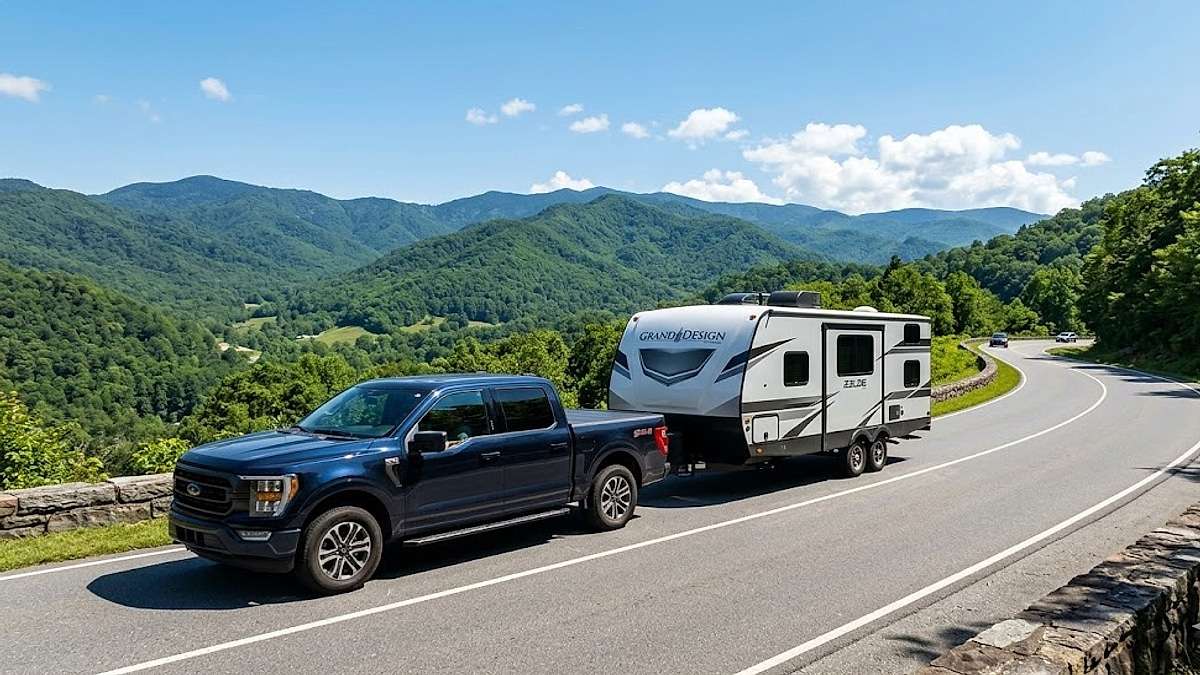
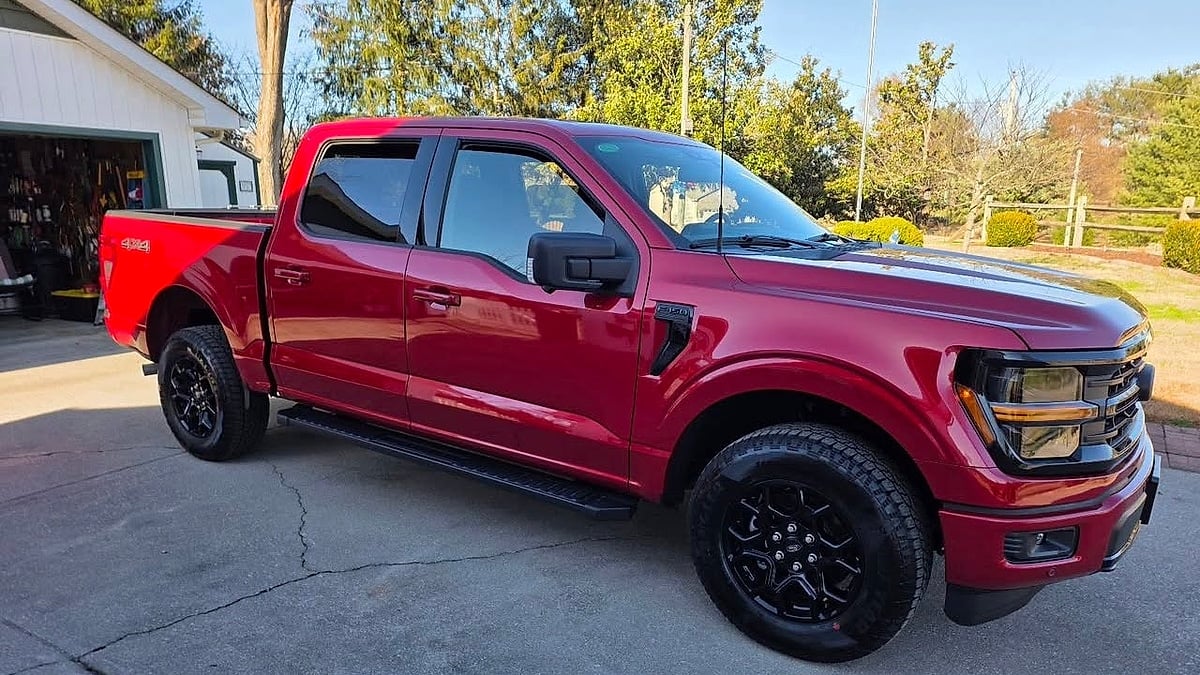
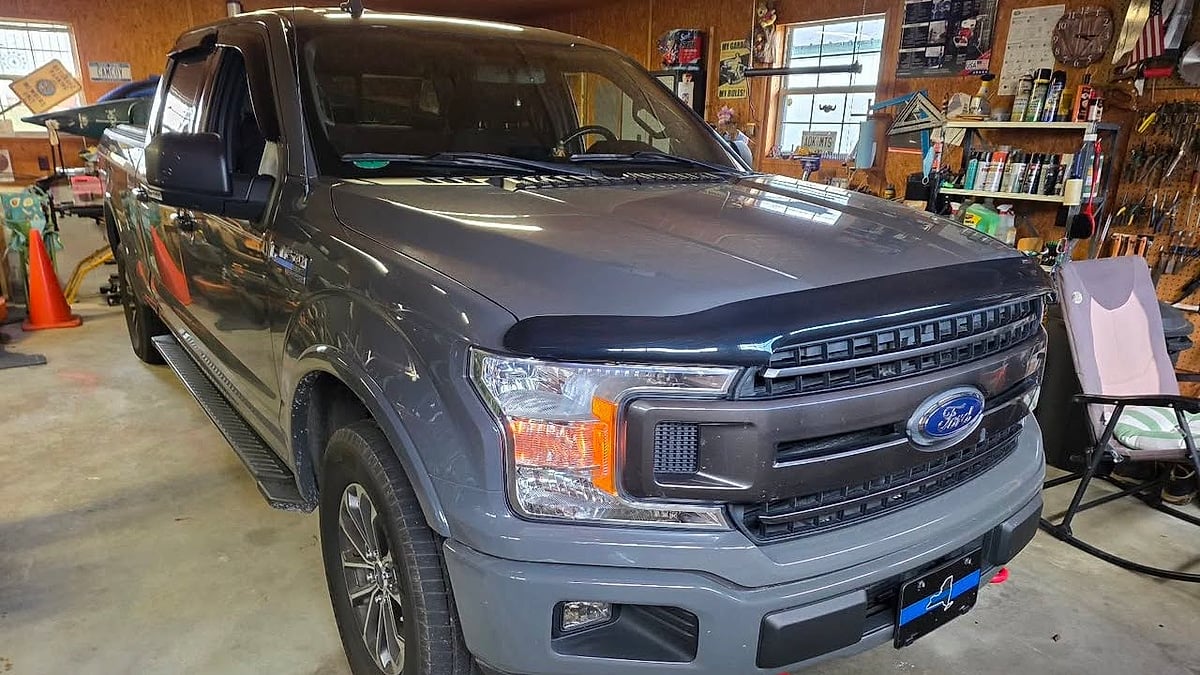
Mac McCoy from Kingsport, Tennessee, recently shared his experience on the Ford F-150 Owners Facebook page: “I've now had the chance to compare towing our 2024 23LDE Grand Design camper, dry weight, 5997, 6,995 GVWR, with both my 2018 F-150 XLT Crew 3.5L twin turbo and my 2025 F-150 F-150 XLT Crew 5.0L. I bought both new, both w/Max Tow packages. I was really surprised that the 5.0L did not tow as well as the 3.5L! The 3.5 flew up the steep grades effortlessly, kept it at 65 MPH with plenty of pedal to spare. The 5.0L needed all of the pedal, even had to floor it a few times, and whined like it wanted to explode. Not a pleasant experience. Before you ask, both loads were just about the same - wife, two dogs, and me. Trailer tanks empty, propane full, same WD hitch, Blue Ox. Used 93 octane for both.”

Technical Dissection of the Torque Gap
To understand why this happened, we have to look at how these engines breathe. The 3.5L EcoBoost is designed to peak its torque at a much lower RPM than the V8. According to a technical analysis by Cecil Atkission Ford, the 3.5L EcoBoost is the star of the lineup because its strong torque, around 500 lb-ft, is vital for smooth towing on steep grades. In contrast, the 5.0L V8, while pushing 400 horsepower, only offers about 410 lb-ft of torque and requires much higher revolutions to find that power. When you are pulling a 7,000-pound "sail" behind you, you don't want to wait until 4,500 RPM to find your muscle.
My investigative work on Ford reliability has previously noted that many buyers experience "buyer's remorse" when moving from a turbocharged platform back to a naturally aspirated V8 for towing duties. I have found that this particular issue strikes right at the core of Ford's reliability reputation because the V8's constant high-RPM hunting can lead to increased wear and owner anxiety. As I detailed in my previous report on V8 engine oil consumption, even legendary engines like the 5.0L Coyote have flaws that become magnified under heavy stress.
The Elevation Factor and Air Density
The owner's report mentioned the truck "whined like it wanted to explode." From my 30 years in the field, I can tell you exactly what he was hearing: an engine pushed to its atmospheric limit. Naturally aspirated engines like the Coyote V8 rely on atmospheric pressure to fill their cylinders. At higher elevations or on steep grades where the air is thinner, the 5.0L loses roughly 3% of its power for every 1,000 feet of climb. The 3.5L EcoBoost, however, uses its twin-turbos to force-feed the engine, effectively "leveling" the mountain.
Expert testing from Kelley Blue Book confirms that the F-150 remains a leader in tech, but the driving experience varies wildly between these two powertrains. Their evaluations show that while the 5.0L offers a traditional "V8 feel," the EcoBoost engines are better suited for those who need "quick bursts of power and strong low-end torque." This technical reality explains why the 2018 truck felt like it had "plenty of pedal to spare" while the 2025 was gasping for air.
Technical Observations from Owner Communities
The owner's experience isn't an isolated incident. In a recent technical discussion on r/f150, one experienced hauler noted, "The 3.5 makes more torque at a lower rpm, so it towed at a lower rpm and ‘felt’ like it wasn't working as hard... the 3.5 tows more like a diesel," which can be read in the full Reddit discussion here.
Another owner, specifically discussing mountain performance, highlighted the V8's vulnerability at high elevations: "High elevation is the 5.0 V8's kryptonite... If you are looking to go 6-8000lbs you are gonna have a really bad time at elevation with a V8," as found in this Reddit thread.
My Analysis: These community insights perfectly align with my years of towing in the mountains of Colorado. The reason owners feel the 5.0L is "struggling" is due to the torque curve. The EcoBoost provides peak torque as low as 2,500 RPM, whereas the V8 needs to sing to nearly 4,000-5,000 RPM to find its peak. To an owner, that high-pitched scream sounds like mechanical distress, even if the engine is technically within its operating range. It creates a stressful towing environment that the 2018 turbo truck simply avoids.
Recommendations for Ford Owners
If you are currently driving a 2018-2020 3.5L EcoBoost and thinking of "upgrading" to a 2025 5.0L V8 for the sound or the perceived simplicity of a non-turbo engine, you need to pause. Unless you are towing exclusively on flat ground at sea level, you will likely experience a significant drop in towing confidence. For those who have already made the switch to the 5.0L, I recommend ensuring you have the 3.73 rear axle ratio. Gearing is the only way to help that V8 stay in its power band without feeling like you are punishing the internals.
Key Takeaways
- Analyze the torque curves before switching engines; the 3.5L EcoBoost offers nearly 100 lb-ft more torque at lower RPMs than the 5.0L V8.
- Prioritize forced induction (turbos) if your towing routes involve mountain passes or elevations above 3,000 feet.
- Validate your axle ratio; a 3.73 ratio is essential for the 5.0L V8 to maintain any semblance of "effortless" towing with a 7,000-pound load.
- Recognize that a newer model year does not always guarantee better performance in specialized tasks like heavy towing.
Does the 2026 Hybrid PowerBoost Fix This?
The next question you might have is whether the new PowerBoost Hybrid addresses the V8's torque deficit while maintaining the efficiency you want. The answer is a resounding yes. The PowerBoost takes the already dominant 3.5L EcoBoost platform and adds an electric motor, delivering a staggering 570 lb-ft of torque. This hybrid system effectively amplified the towing capacity to a best-in-class 13,500-14,000 pounds. If you want the reliability of the 2018 experience with 2026 technology, the PowerBoost is the logical successor, not the 5.0L V8.
A Final Word on the Towing Power Shift
We have entered an era where "old" tech, specifically the early-gen EcoBoost, is proving to be a high-water mark for mechanical capability. While the 2025 F-150 brings incredible cabin technology and safety features, the heart of the truck's utility still lies in its torque delivery. Seeing an eight-year-old truck walk away from a brand-new one on a mountain pass is a sobering reminder that we must choose our tools based on the job, not just the model year. My advice is to hold onto those high-torque 3.5L rigs if you spend your summers in the mountains.
It's Your Turn: If you had to choose between the scream of a new V8 or the quiet confidence of an older twin-turbo, which would you pick for your family's next camping trip? Tell us what you think and share your own towing stories in the Add new comment link below.
Next Up: The 5.0L V8 Mountain Towing Action Plan: How to Fix the Ford Torque Gap (The Solution): This investigative report serves as the practical Action Plan for owners struggling with the F-150 torque deficit. Check here for this definitive guide to recovering your truck's mountain-climbing grunt.
About The Author
Denis Flierl is a 14-year Senior Reporter at Torque News and a member of the Rocky Mountain Automotive Press (RMAP) with 30+ years of industry experience. Explore his full investigative reporting archives and technical guides at DenisFlierl.com. Based in Parker, Colorado, Denis leverages the Rockies' high-altitude terrain as a rigorous testing ground to provide "boots-on-the-ground" analysis for readers across the Rocky Mountain region, California EV corridors, the Northeast, Texas truck markets, and Midwest agricultural zones. A former professional test driver and consultant for Ford, GM, Ram, Toyota, and Tesla, he delivers data-backed insights on reliability and market shifts. Denis cuts through the noise to provide national audiences with the real-world reporting today’s landscape demands. Connect with Denis: Find him on LinkedIn, X @DenisFlierl, @WorldsCoolestRides, Facebook, and Instagram.
Photo credit: Denis Flierl via Mac McCoy
Set Torque News as Preferred Source on Google
Follow us today...