

As a senior reporter with 30 years in the trenches of the automotive industry, I’ve seen my share of "bulletproof" engines fall from grace. Today, the spotlight is back on the Ford F-150 5.0L Coyote V8. We are seeing a fascinating yet troubling trend in which Ford Master Technicians are now "dropping" these massive V8 engines in as little as 40 minutes to address persistent oil consumption issues. This report investigates the Who (Master Techs like Bright Kim), the How (the "cab-off" service hack), and the Why (underlying mechanical and software triggers). I provide an active investigator's look into whether your F-150 is a ticking time bomb or if these rapid swaps are finally the solution owners have waited for.
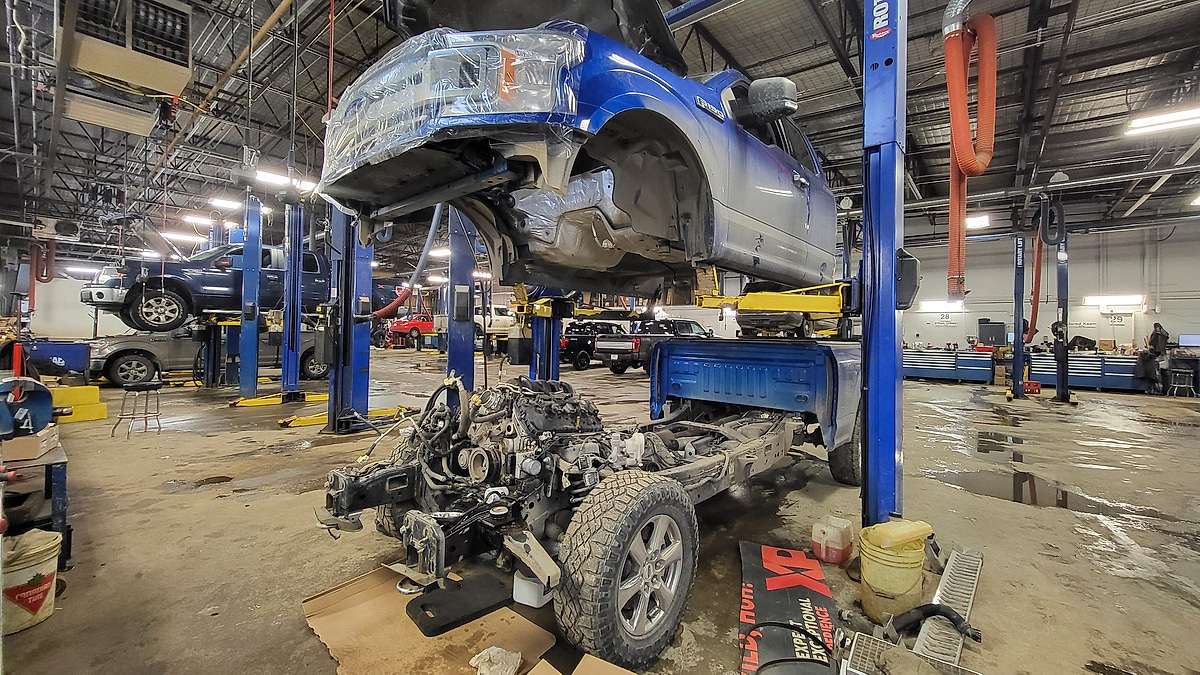
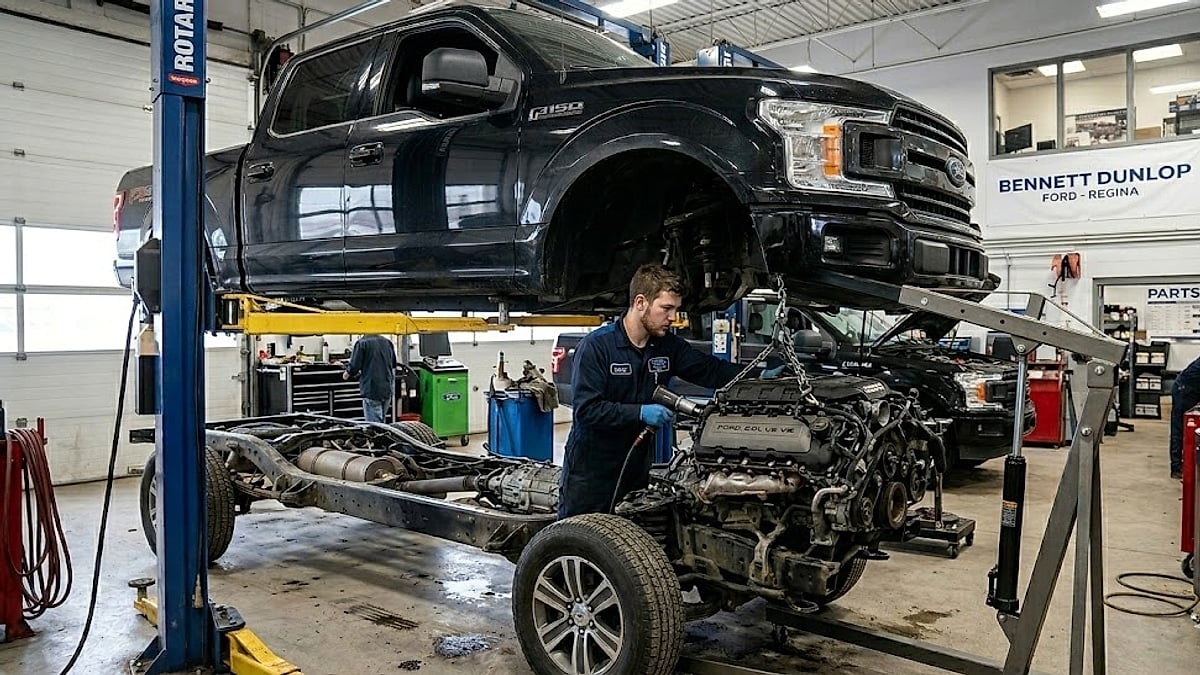
I’ve been tracking the Ford F-150 for three decades, and let me tell you, what’s happening in service bays right now is nothing short of a mechanical evolution born out of necessity. Imagine walking into a dealership and seeing the entire cab of a truck lifted into the air just to get to the heart of the machine. That is exactly what Bright Kim, a Ford Master Tech at Bennett Dunlop Ford in Regina, SK, is doing with alarming efficiency. Kim recently shared a staggering data point on the Ford F-150 Owners Facebook page: he can have an F-150 cab off in 40 minutes and the engine out in another 40.
This isn't just a "fast repair" story; it's a window into a systemic issue. Bright Kim says, “Another day, dropping a Ford F-150 5.0L engine and tearing down for oil consumption.” When a fellow tech commented on the ease of 360-degree access, Kim agreed it makes the grueling work worth it. But for you, the owner, seeing your truck split in half is a jarring reminder of the oil consumption saga that has plagued the Gen 3 Coyote.
As I recently noted, when an F-150 owner's engine was already down a quart in 1,800 miles, this excessive vacuum literally sucks oil past the piston rings. I’ve found that this particular issue strikes right at the core of Ford’s reliability reputation. In another of my investigative reports, I highlighted how serious buyer's remorse stems from these underpowered, oil-burning engines that leave owners upside down on their loans.
From My View
I want to be clear with you: a 40-minute engine drop is a feat of professional expertise, but it also signals that these technicians are getting too much practice. The Who in this story isn't just the frustrated owner; it’s the elite Master Techs who are now treating an engine pull like a routine oil change.
The How is the "cab-off" method. While traditionalists might prefer working over the fenders, Kim and his peers have realized that the modern F-150 chassis is designed for modular assembly. By lifting the cab, they gain 360-degree access to the 5.0L Coyote. This is vital because diagnosing oil consumption often requires a full teardown to inspect the Plasma Transferred Wire Arc (PTWA) cylinder liners.
According to a report by Autoguide, owners are currently suing Ford because these engines burn through oil so quickly that it saps performance and causes lasting internal carbon buildup. This legal pressure aligns with what I've seen in the field: software "fixes" often feel like a band-aid on a surgical wound. Even the official Technical Service Bulletin 19-2365 admits that high intake manifold vacuum during deceleration is pulling oil into the combustion chamber.
My Take: Why Is This Still Happening in 2026?
The "why" is the most complex part of the puzzle. It’s a perfect storm of low-tension piston rings, thin 5W-20 oil required for CAFE fuel economy standards, and that high-vacuum deceleration issue.
I’ve spent 30 years talking to engineers and backyard mechanics alike. My unique insight here is that Ford is caught between a rock and a hard place. They need the 5.0L to be efficient to meet regulations, but the very tech that makes it efficient, like the PTWA coating, makes it sensitive to how the rings seat. If they don't seat perfectly in the first few thousand miles, you’re looking at a lifetime of carrying a quart of oil in your truck bed.

The 360-Degree Advantage
From where I sit, the most significant information for an owner isn't just knowing the engine is being replaced; it's understanding the precision of the process. When Bright Kim mentions "360 degrees of access," he’s referring to a critical advantage in modern engine diagnostics.
In my 30 years of covering these bays, I’ve learned that a "cab-off" service is actually the most transparent way to handle a 5.0L Coyote. Here is why I recommend this approach if your tech suggests it:
- Fuel Line and Harness Integrity: By lifting the cab, technicians avoid the "blind reach" behind the cylinder heads, which often leads to pinched wiring harnesses or strained fuel lines during a standard pull.
- Torque Accuracy: Critical bellhousing bolts and motor mounts are fully visible. As I’ve always said, if you can see the bolt head clearly, you can torque it to factory spec perfectly.
- Leak Detection: With the engine "dropped" and the cab up, your tech can inspect the steering rack, front differential, and transmission seals for secondary issues that would otherwise be invisible.
- Investigator’s Note: If your shop claims they can do a "long-block" swap without pulling the cab or the front clip, ask them how they plan to verify the torque on the upper bellhousing bolts. In my experience, the "shortcut" often leads to a vibration issue 5,000 miles down the road.
What You Need To Know
I’ve compiled this analysis to give you the raw facts you need to protect your investment.
- The 3,000-Mile Myth: While Ford suggests longer intervals, its Intelligent Oil Life Monitor may trigger an early change as soon as 3,000 miles if consumption is high.
- PCM Reprogramming: The TSB 19-2365 update changes how the throttle plate behaves during deceleration to reduce vacuum. If you haven't had this reflash, it's your first line of defense.
- The Dipstick Swap: Early 5.0L models had an incorrectly calibrated dipstick. Part of the "fix" was literally a new stick with a wider "normal" range.
- Viscosity Secret: Many in the community have found that switching from 5W-20 to a slightly thicker 5W-30 (which Ford began recommending in 2021) can mitigate some consumption.
Field Observations from Owner Communities
I don't just sit in an office; I'm active in the forums where the real work gets discussed. In a recent technical discussion on r/f150, one owner expressed the frustration of being told their consumption was normal, noting, "Mine sucks down 3 qts in 5k miles, and Ford tells me it's 'normal.' It has 65k miles," which you can read in the full discussion here.
Another owner highlighted the mixed results of Ford's attempts to solve the issue, stating, "Software update to fix excessive oil consumption is a joke, don't believe that. I had to have my cylinders replaced due to oil consumption," found in this Reddit thread. From my experience, these polarized reports show that while the software helps some, mechanical defects in the cylinder lining often require the "Kim Method," a total engine drop.
Key Takeaways for F-150 Owners
- Monitor Your Levels: Check your oil every 1,000 miles. Don't wait for a light on the dashboard.
- Document Everything: If you're adding oil, keep a log. This is your only leverage for a warranty-covered engine replacement.
- The "Cab-Off" is a Good Sign: If your tech suggests lifting the cab, don't panic. It actually means they are following the most efficient and thorough path to a repair.
- Consider the 5W-30 Switch: Consult with a trusted mechanic about moving to the heavier oil weight used in the 2021+ models.
Even Legends Have Flaws
The 5.0L Coyote is a legendary engine, but even legends have their flaws. Watching a Master Tech like Bright Kim drop an engine in 40 minutes is a testament to human ingenuity in the face of a persistent manufacturing challenge. If you own a 2018-2020 (and even some newer) F-150, you need to be an active participant in your truck’s maintenance. Don't let the "Built Ford Tough" badge give you a false sense of security. Keep your eyes on that dipstick.
Tell Us What You Think: Have you experienced high oil consumption with your Coyote V8, and has your dealer offered a software fix or a full engine swap? Please leave a comment in the red "Add new comment" link below, and let's start a conversation.
About The Author
Denis Flierl is a 14-year Senior Reporter at Torque News and a member of the Rocky Mountain Automotive Press (RMAP) with 30+ years of industry experience. Based in Parker, Colorado, Denis leverages the Rockies' high-altitude terrain as a rigorous testing ground to provide "boots-on-the-ground" analysis for readers across the Rocky Mountain region, California EV corridors, the Northeast, Texas truck markets, and Midwest agricultural zones. A former professional test driver and consultant for Ford, GM, Ram, Toyota, and Tesla, he delivers data-backed insights on reliability and market shifts. Denis cuts through the noise to provide national audiences with the real-world reporting today’s landscape demands. Connect with Denis: Find him on LinkedIn, X @DenisFlierl, @WorldsCoolestRides, Facebook, and Instagram.
Photo credit: Denis Flierl via Bright Kim
Set Torque News as Preferred Source on Google
Follow us today...







Comments
Well written article! …
Permalink
Well written article! Appreciate your attention to details. You are an effective, clear technical writer.
Regarding the Gen3 5.0L oil consumption, I was told adding a "catch-can" would reduce the internal oil vapor, thus reduced carbon buildup.