
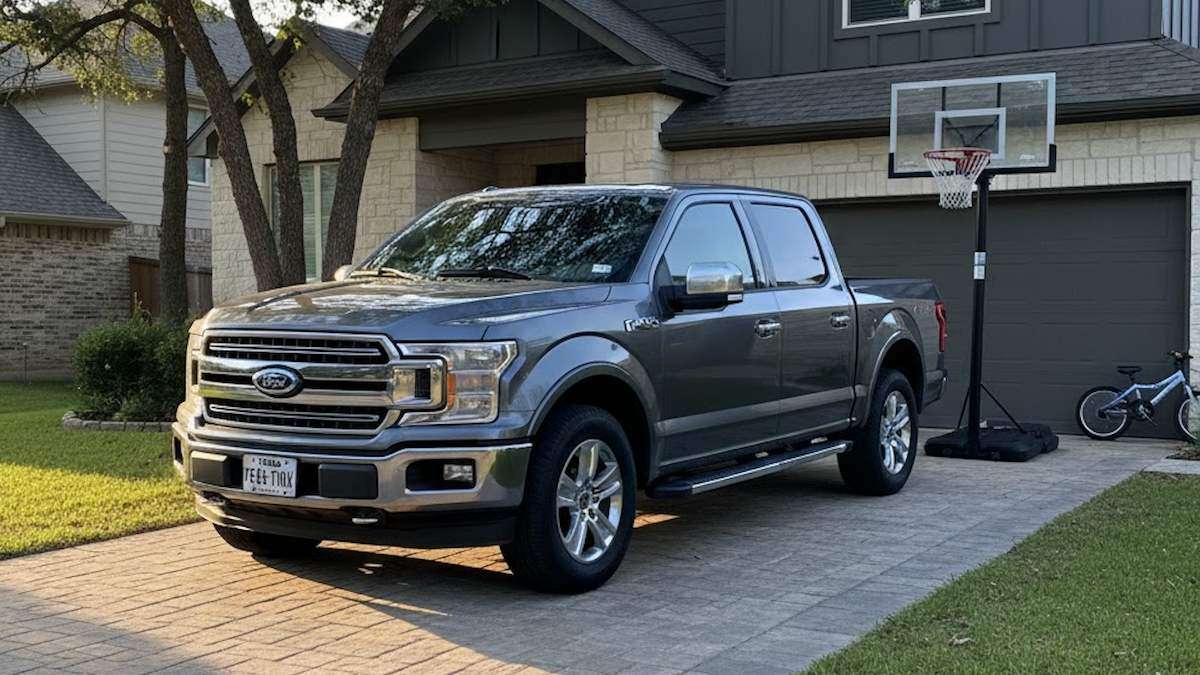

Is 1,863 miles and a quart of oil the start of another engine failure for this Ford F-150 owner, or is this "acceptable" consumption for the notorious 5.0L?
Jack Stack on the Ford F-150 Owners Facebook page says,
"It's been 1,863 miles since the last oil change on my 2020 Ford F-150 with the 5.0L engine. It's already over one quart of oil low. I had an engine replacement about 10,000 miles ago, and I have a bumper-to-bumper warranty. Does anyone think it's something to worry about, and should I try to get a second engine installed and go through all that hassle? How much oil consumption is acceptable on the 5.0L? I really don't wanna trade the truck in and get a bigger payment."
The Truth About the Coyote 5.0L V8
Jack stated that his 2020 Ford F-150—which had an engine replacement only 10,000 miles ago—is already over a quart low in just 1,863 miles. My initial assessment is this: Yes, this is definitely something to worry about, and your truck is well outside of what Ford considers "acceptable" consumption.
This particular issue has plagued the 2018, 2019, and 2020 model years of the F-150 equipped with the third-generation 5.0-liter Coyote V8. We've covered this extensively because it strikes right at the core of Ford's reliability reputation. This isn't a leak; it's consumption, meaning the oil is getting past the rings and being burned off in the combustion chamber.
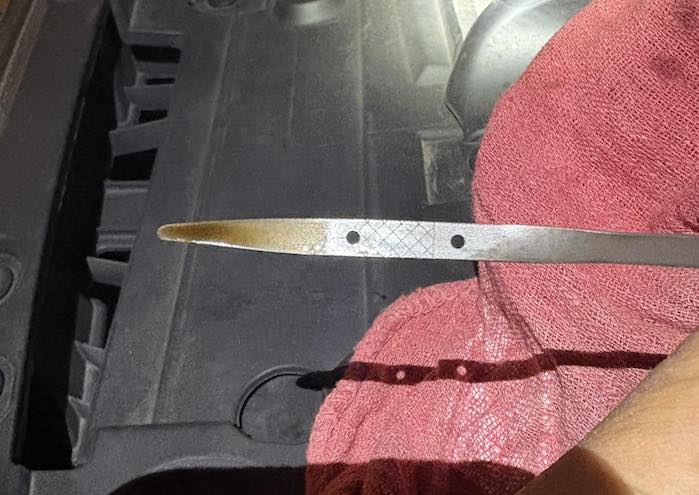
The root cause of this oil consumption saga can be traced to two primary design elements working against each other.
First, Ford introduced new cylinder lining technology, called Plasma Transferred Wire Arc (PTWA) coating, which is incredibly strong but is more sensitive to ring seating than traditional sleeves.
Second, and more critically, the engine's calibration involves a process called Deceleration Fuel Shut Off (DFSO). When you coast, the fuel injectors shut off, but the high-compression Coyote engine creates a strong vacuum in the intake manifold. This excessive vacuum—specifically the answer to why the 2018 to 2020 F-150 5.0L engine burns oil on deceleration—literally sucks oil past the piston rings, often during highway driving or long downhill stretches.
Your situation is particularly frustrating because you had an engine replacement. This suggests that the replacement long block was likely built using the same factory specifications and may not have included the latest fixes applied to the 2021+ engines. It's frustrating, but it's a known systemic issue tied to the engineering of that specific production run.
Your Path to a Complete Solution: Warranty and Actionable Step
Now for the good news: you have a bumper-to-bumper warranty, which is your absolute shield here. Based on internal Technical Service Bulletins (TSBs) and years of owner feedback, Ford typically defines excessive consumption as more than 1 quart every 3,000 miles. Since your truck is exceeding that rate by a significant margin (losing one quart in under 2,000 miles), you have a strong, documented case for action.
Your first step is critical: you must initiate Ford's official oil consumption test immediately. Don't add oil yet. Take the truck to the dealership, note the exact mileage (1,863 miles since the last change, one quart low), and demand they start the documented test procedure.
This is the warranty process for the Ford F-150 5.0L engine replacement due to oil consumption. They will top it off, seal the fill cap and drain plug, and instruct you to return after 1,000 to 1,500 miles. Document everything—every date, every mileage reading, and every service writer's name. This paper trail is your leverage.
You want to avoid the hassle of a second replacement and find a practical solution. Let's discuss how to fix the Ford F-150 5.0L V8's oil consumption without trading in the truck. There are two key practical takeaways:
- PCM Reprogramming: The TSB (e.g., TSB 19-2365) addresses the vacuum issue by reprogramming the Powertrain Control Module (PCM). This calibration keeps the throttle plate from closing completely during DFSO, reducing the severe vacuum pull. You need to verify that the PCM in your replaced engine has the latest calibration fix.
- Oil Viscosity: A unique insight we've learned from the F-150 community is the benefit of switching to a thicker oil. The 2018-2020 models call for 5W-20, but starting in 2021, Ford switched the Coyote to 5W-30. If your replacement engine is out of the short break-in period, consider switching to 5W-30 oil in my high-mileage F-150 5.0L V8. The slightly thicker oil film often helps mitigate the high-vacuum pull. This is a simple, proactive step that can often significantly reduce oil consumption. Always verify this change with your dealer, especially while under warranty, to ensure compliance.
What the Community is Saying
Your concern echoes thousands of posts across forums.
The sentiment in the community is clear: this level of consumption is unacceptable, despite Ford's technical defense. Many owners have been through the same gauntlet. Some have had success simply by getting the PCM reflash (the heart of understanding Ford's technical service bulletin for 5.0L Coyote oil consumption). Others, like you, have required a complete long-block replacement.
In The End
The key takeaway from the community is that the replacement engine often resolves the issue entirely, but some owners report they must be diligent about checking the oil. I suggest using that warranty to get the best possible fix. Don't settle for being told, "It's normal."
Your consumption rate means it is not normal by their own metric. If you let it run dry, you risk engine failure, which is the last thing we want for the Gen 3 Coyote (an engine I've often compared to its rivals, as I did in my piece, As a GMC Sierra Guy, It Hurts to Say It, But I'm Done with GM, and Now I'm Conflicted Between the Ford F-150, Ram 1500, and Toyota Tundra.
Final Word: Take Control of Your Truck's Health
- Document & Test: Immediately start the official dealer oil consumption test while your warranty is active.
- Demand PCM Update: Insist on verifying the latest PCM calibration update—the core fix for deceleration oil burn (DFSO issue).
- Explore 5W-30: After warranty action, or if denied mechanical action, consider switching to 5W-30 synthetic oil (check warranty compliance first) and monitor closely.
- Push for Replacement: If the consumption test fails (loses a quart under 3,000 miles), you must push for the second engine replacement—the only definitive fix for a major internal issue.
You are currently outside acceptable oil consumption limits. Use this information with your service advisor to get this known issue fully addressed.
My goal is to give you—and all my readers—the confidence to walk into the dealership with authority, armed with the knowledge you need.
Question For You
For those of you who successfully resolved this 5.0L consumption issue on a 2018-2020 F-150, what was the single most effective solution that finally ended the oil-topping routine for you? Was it the TSB reflash, the engine swap, or the switch to a thicker oil? Click the red Add New Comment link below and let us know.
I'm Denis Flierl, a Senior Torque News Reporter since 2012, bringing over 30 years of automotive expertise to every story. My career began with a consulting role for every major car brand, followed by years as a freelance journalist test-driving new vehicles—equipping me with a wealth of insider knowledge. I specialize in delivering the latest auto news, sharing compelling owner stories, and providing expert, up-to-date analysis to keep you fully informed.
Follow me on X @DenisFlierl, @WorldsCoolestRides, Facebook, and Instagram
Photo credit: Denis Flierl via Jack Stack
Set Torque News as Preferred Source on Google
Follow us today...






Comments
I have a 2020 f150 5.0. It…
Permalink
I have a 2020 f150 5.0. It started consuming oil after 66k. We did the test and it failed, I got a reconditioned 5.0 with a 3 year warranty and unlimited mileage. I picked it up April 2025 drove it 4 months oil level was good. I put on around 2,625 miles.I decided to have dealership change the oil and filter. I drove it for 2 months and I am a half a quart down. We are starting a new consumption test again. We will see what happens next.
Who first filled it? Sounds…
Permalink
Who first filled it? Sounds like they didn’t account for filter capacity to me, put oil in until dipstick read full. Another article mentioned the tire air sensor. Spare in use will do that.
Cancel previous
Permalink
Cancel previous
I got a new engine in 2023…
Permalink
I got a new engine in 2023. Problem solved