
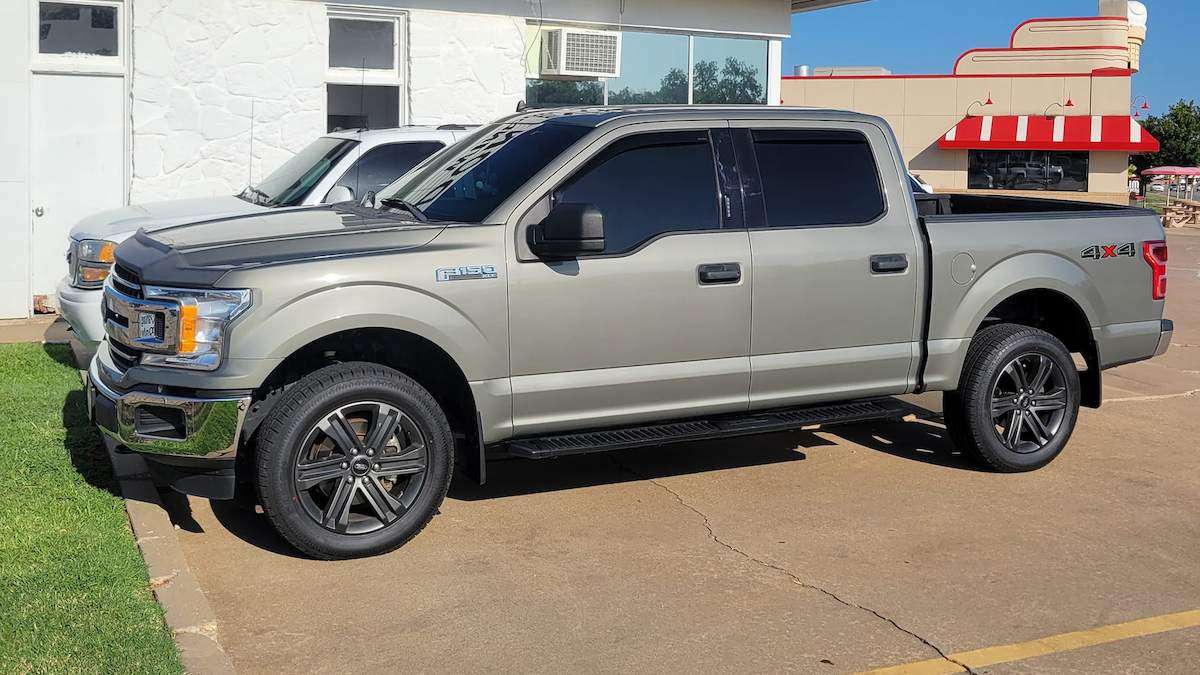

The Ford F-150 has long stood as the unwavering symbol of American automotive capability, a perpetual best-seller that anchors the entire Ford Motor Company lineup. For decades, this rugged pickup has defined the half-ton segment, celebrated for its innovative use of military-grade aluminum and a wide array of powertrains designed to suit everyone from the construction worker to the weekend adventurer.
However, recent reports filtering through online owner communities suggest that not every F-150 experience lives up to the promise of "Built Ford Tough." While sales remain robust, a concerning pattern of mechanical issues related to the key components of the 2019 F-150, specifically the 5.0L V8 and the 10-speed automatic, is generating significant frustration among its user base.
We are now seeing the financial and emotional fallout from these alleged defects, exemplified by a candid, deeply dissatisfied owner who recently aired their grievances in a dedicated social media group, summarizing a year of ownership as nothing short of a regrettable mistake.
Here is what Joe Saunders posted on the Ford F-150 5.0 Owners Facebook group page says: "I'm having 2019 Ford F-150 serious buyer's remorse. Between the transmission that slips and the underpowered oil-burning engine. I'm not liking this POS. I've had it for a year, and now I owe more than it's worth. I'm never buying a Ford again."
What Happened to Ford's Durability and Reliability?
The thirteenth generation, encompassing the 2019 model year, was particularly lauded for pushing the envelope in technology, towing capacity, and class-exclusive features, especially the integration of the efficient yet powerful 5.0-liter V8, or "Coyote," engine coupled with the advanced 10-speed automatic transmission. These vehicles are purchased not just as transportation, but as trusted tools engineered for durability and reliability.
What's Worse: Repair Bills or Being Upside Down?
Joe Saunders' sharp critique, while emotionally charged, cuts right to the heart of two known, highly publicized, and often legally contested issues plaguing the 2018-2020 generation of the F-150 equipped with the Coyote 5.0-liter V8: the excessive oil consumption defect and the inconsistent performance of the 10R80 automatic transmission. The frustration is clearly compounded by the financial predicament he faces, being upside down on his loan after just one year of ownership. This scenario highlights the painful reality when mechanical issues devalue a vehicle faster than expected, trapping the owner in a cycle of payments and expensive, unresolved repairs.
The Dissatisfaction Comes In Bunches
It is critical to note that Saunders is far from an isolated voice. A quick review of the thread where he posted, and various other forums, including NHTSA complaints, reveals dozens of other users echoing similar concerns. Reports frequently describe the 10-speed transmission's behavior as "skipping," "lurching," and "slamming" between gears, especially during cold starts or low-speed acceleration. Concurrently, the 5.0L V8's tendency to "burn oil" at an alarming rate, sometimes consuming several quarts between recommended change intervals, has led to class-action lawsuits and Ford Technical Service Bulletins (TSBs), confirming these are systemic rather than anecdotal problems.
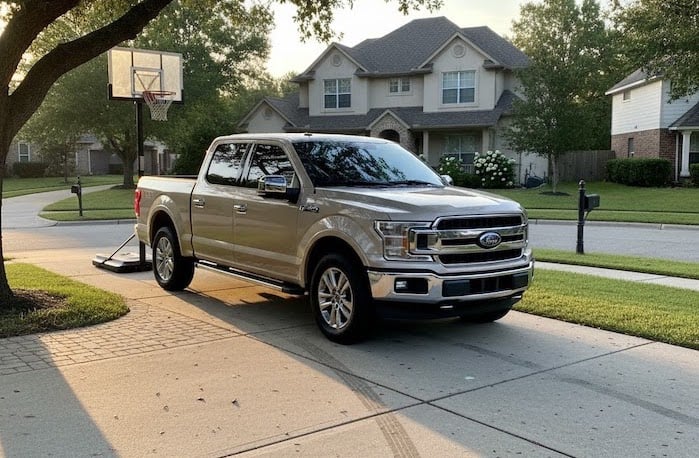
Why Buyers Choose the F-150 Truck
The irony in these quality-control issues is that the F-150 is designed to deliver on its core promises of utility and dependability. The platform and its associated engines were engineered with specific, demanding goals in mind. The F-150 was fundamentally designed to provide:
- Best-in-Class Capability: The F-150's military-grade aluminum-alloy body on a high-strength steel frame was introduced to maximize payload and towing capacities, often leading the segment.
- Engine Versatility and Power: To offer a wide range of engine options (including the powerful 5.0L V8) that balance raw power for heavy work with reasonable fuel efficiency.
- Daily Driving Comfort and Technology: To successfully transition the pickup truck from a pure workhorse to a comfortable, connected family vehicle with advanced safety and infotainment features (like SYNC and driver-assist technologies).
- Durability and Longevity: To be a tough, reliable vehicle capable of withstanding years of hard use on job sites, reinforcing the "Built Ford Tough" brand image.
What Can We Learn?
Joe Saunders' specific combination of complaints is instructive because the two issues, transmission skipping and excessive oil consumption, can be related through the vehicle's powertrain control module (PCM). Ford has, in the past, attempted to address the V8's oil consumption via a TSB (such as TSB 19-2365), reprogramming the PCM to limit how much the throttle plate closes during deceleration (Deceleration Fuel Shut Off, or DFSO). This was an attempt to reduce the high intake manifold vacuum that allegedly pulls oil into the combustion chamber.
However, many owners report that these software updates are insufficient or that the re-flash negatively affects the transmission's shift characteristics, potentially exacerbating the "skipping" Saunders mentions. One other member in that Facebook thread, identified only as WindowsXP-sp2, noted that after multiple dealer visits, he was told the issue lay with the plasma cylinder liners in the 5.0L V8, which, coupled with the transmission problems, made his truck "unfixable," leading him to trade it in. The prevalence of these stories creates a difficult landscape for current owners who must decide between costly, potentially temporary fixes and trading in a depreciating asset.
On Top Of That
I recently reported that a Ford F-150 owner says the dealer botched a warranty repair, snapping turbo bolts inside the manifold. Now they want him to pay $1,500 for the new part. Is this standard practice, or a repair scam?
For Saunders, being underwater on his loan after only a year adds a major financial burden to his mechanical woes. When a vehicle suffers known defects that result in TSBs, its resale value often plummets, creating what is known as "negative equity." This situation forces owners to continue making payments on a problematic truck while also dealing with the stress and cost of maintenance (such as continually topping off oil). His decision to "never buy a Ford again" is a clear sign that the damage to brand loyalty is severe, driven by the perceived lack of a definitive, lasting factory fix for widespread powertrain problems.
Wait, There's More
The widespread nature of these F-150 issues highlights a critical challenge for mass-market manufacturers: balancing rapid innovation (like the 10-speed transmission developed jointly with GM) with long-term reliability. When the vehicle is America's best-selling truck, any systemic flaw impacts hundreds of thousands of customers, transforming individual complaints into a corporate reputation crisis.
For owners like Saunders, the only viable recourse may ultimately be the lemon law or participating in one of the existing class-action suits seeking accountability for alleged concealment of the excessive oil burn and subsequent engine damage. This is a story of great expectations set against the backdrop of troubling mechanical realities, and one we will continue to monitor closely for the sake of all F-150 owners.
The experience of this F-150 owner illustrates the profound breakdown of trust that occurs when a flagship product fails to meet the basic expectations of reliability, turning a utility vehicle into a financial liability. The complexity of the issues, combined with inconsistent dealer responses, has fostered a feeling of abandonment among a dedicated group of Ford enthusiasts. For the company, regaining this trust will require more than technical service bulletins; it will demand transparency, definitive fixes, and, perhaps most importantly, honoring the warranties of customers who bought the promise of the 5.0L V8 and the durability of the F-Series line.
What Say You?
Given Joe Saunders' experience with a 2019 Ford F-150 5.0L, citing transmission slipping and an underpowered, oil-burning engine leading to serious buyer's remorse:
- For other Ford F-150 5.0L owners (especially 2018-2020 models), what has been your long-term experience with the 10-speed transmission and the reliability/oil consumption of the 5.0L engine?
- Specifically, have you experienced any consistent issues with the transmission's shifting quality (like slipping, hesitation, or harsh shifts)?
- Have you noticed significant, unusual oil consumption? If so, what was the dealer's or a reliable mechanic's diagnosis/fix?
If so, click the red Add New Comment link below and let us know.
I'm Denis Flierl, a Senior Torque News Reporter since 2012, bringing over 30 years of automotive expertise to every story. My career began with a consulting role for every major car brand, followed by years as a freelance journalist test-driving new vehicles, equipping me with a wealth of insider knowledge. I specialize in delivering the latest auto news, sharing compelling owner stories, and providing expert, up-to-date analysis to keep you fully informed.
Follow me on X @DenisFlierl, @WorldsCoolestRides, Facebook, Instagram and LinkedIn
Photo credit: Denis Flierl
Set Torque News as Preferred Source on Google
Follow us today...







Comments
100% opposite for me, 2020 F…
Permalink
100% opposite for me, 2020 F-150 5.0 with no issues. Just hit 100,000 and have never used a drop of oil, transmission works as it should. I live in Colorado and drive over the mountain passes towing a trailer with a SxS, plenty of power and does very good on fuel economy too. Vehicle was purchased used, previously a fleet vehicle but was maintained properly previously and also by myself. So not all are bad.
Excessive oil consumption…
Permalink
Excessive oil consumption and shutting off at stops plus transmission jerks
Excessive oil consumption…
Permalink
Excessive oil consumption and shutting off at stops plus transmission jerks