
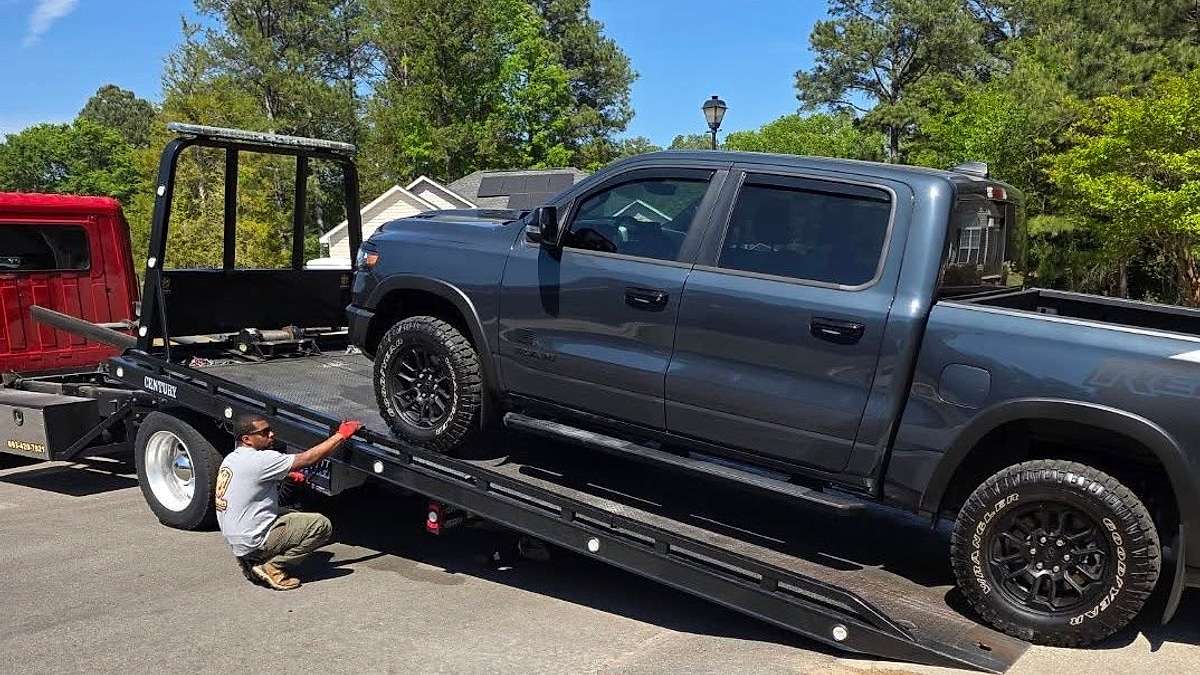

The 2026 Ram 1500 Rebel was supposed to be the pinnacle of off-road utility and high-tech luxury, but for many early adopters, it is becoming a recurring technical nightmare. This investigative report highlights a systemic electrical failure pattern that is leaving brand-new trucks stranded with as few as 1,400 miles on the odometer. Through my 30 years of automotive reporting, I have identified that these issues are not isolated "lemon" cases but are rooted in a clash between the vehicle’s "always-on" software architecture and its physical hardware.
I have seen a lot of truck drama in my three decades on the auto beat, but what is happening with the 2026 Ram 1500 is reaching a boiling point. Imagine spending $70,000 on a pickup only to have it towed out of your driveway twice before the first oil change is even due. This is the reality for Darrin Williams, a loyal truck owner from Lancaster, South Carolina, whose 2026 Ram Rebel just suffered a total electrical collapse at exactly 1,451 miles.
From my view, this is not an isolated "lemon" story; I have been tracking similar reports in which a brand-new Ram 1500 failed an owner just 10k miles in due to major electrical issues, leading to a total loss of confidence in the brand. You can read more about these systemic patterns in my previous investigation, "2025 Ram Rebel Owner Reports 8 Service Visits in 11 Months."
Williams is beyond frustrated, and frankly, I don’t blame him. He recently shared his story on the Ram Rebel Facebook page:
“I am beyond upset with this situation. I got out of a ‘2025 Ram Laramie because of repeated electrical issues. I have owned many Dodge and RAM trucks, but that Laramie was a piece of crap. Now this. This is the second time this 2026 Ram Rebel has been completely dead, just like the Laramie, and towed out of my driveway. The first time, they said it was a burned fuse block. But that was a lie. For the first 2 days in the shop, they said they couldn't make it repeat the failure, so they had to come up with something and provide a 2nd set of batteries. The first new set was put in on the day I bought it. Two headache trucks in a row. Same damn issues. 1,451 miles on it.”

My investigation reveals that even Watertown, New York, owners are seeing similar "infant mortality" issues with semiconductor components, where an ECU failure caused the alternator to stop charging the battery, leading to a "death spiral" of electrical issues that can trigger a cascade of no-start conditions, as reported by National Today's Watertown Automotive report.
Who, How, and Why?
To understand why these $70,000 machines are turning into lawn ornaments, we have to look at the "Who, How, and Why" of the 2026 Ram electrical crisis.
Who: Primarily owners of the 2025 and 2026 Ram 1500 models, particularly those in the Rebel and Laramie trims equipped with high-end infotainment and the 12-inch Instrument Panel Cluster (IPC).
How: The failure typically manifests as a "parasitic drain." The truck’s various computer modules, the "brains," refuse to enter "sleep mode" when the ignition is turned off. This keeps the CAN bus system active, which pulls power until the battery voltage drops below the threshold required to crank the engine.
Why: My research into current recalls shows that many 2025 and 2026 MY RAM 1500 pickups may have been built or serviced with a 12-inch IPC containing software that causes the cluster to go blank or fail to shut down properly, as detailed in the NHTSA Safety Recall Report 25V826.
My Take: The Dealer Diagnosis Dilemma
In my years of reporting, I have seen growing pains with new engine launches, but the transition to the Hurricane Twin Turbo powertrain has brought a unique set of electrical challenges that dealerships seem ill-equipped to handle.
When a dealer tells you they "can't make it repeat the failure," they are often following a scripted diagnostic path that doesn't account for software loops. As I noted in a recent report, these high-tech machines refuse to enter "sleep mode" properly, a point substantiated by technical reports showing that some owners are finding their batteries failing between 7,000 and 9,000 miles. You can find that full breakdown here: 2025 Ram 1500 Owner Says One Week In, It Joined the Dead Battery Club.

What You Need To Know
If you own or are considering a 2026 Ram 1500, here is my professional breakdown of the situation:
- Software Over Hardware: Most "dead battery" issues aren't actually bad batteries; they are software bugs that prevent the truck from "sleeping."
- The 30-Foot Rule: Keeping your key fob too close to the truck can trigger proximity lighting and repeatedly wake up the ECU, draining power.
- Module "Glitching": A single faulty module, such as the trailer tow module or the 12-inch screen, can remain active and kill a brand-new battery in under 48 hours.
- Recall Reality: Check your VIN for NHTSA Recall 25V826 regarding the instrument cluster software.
Field Observations from Owner Communities
I spend a lot of time in the trenches of owner forums, and Darrin’s complaints are echoed across the web. In a recent technical discussion on r/ram_trucks, several owners noted that the electrical architecture seems prone to "glitching" during simple tasks. One owner shared their frustration with the battery system, saying, "The shit factory ones in mine were causing janky electrical issues. Not an issue since replacing them," which you can read in this full discussion.
Another owner highlighted the vulnerability of the always-on 12V system, noting, "I had mine on all the time, and it fucked up my battery, parasitic draw. It takes a while, but if your truck sits for days at a time, it may not start," as found in this Reddit thread.
From my 30 years of experience, this aligns with how sensitive modern Mopar Power Control Modules are to voltage drops. Even a slight dip can cause the truck to throw "ghost codes" or refuse to acknowledge the key fob.
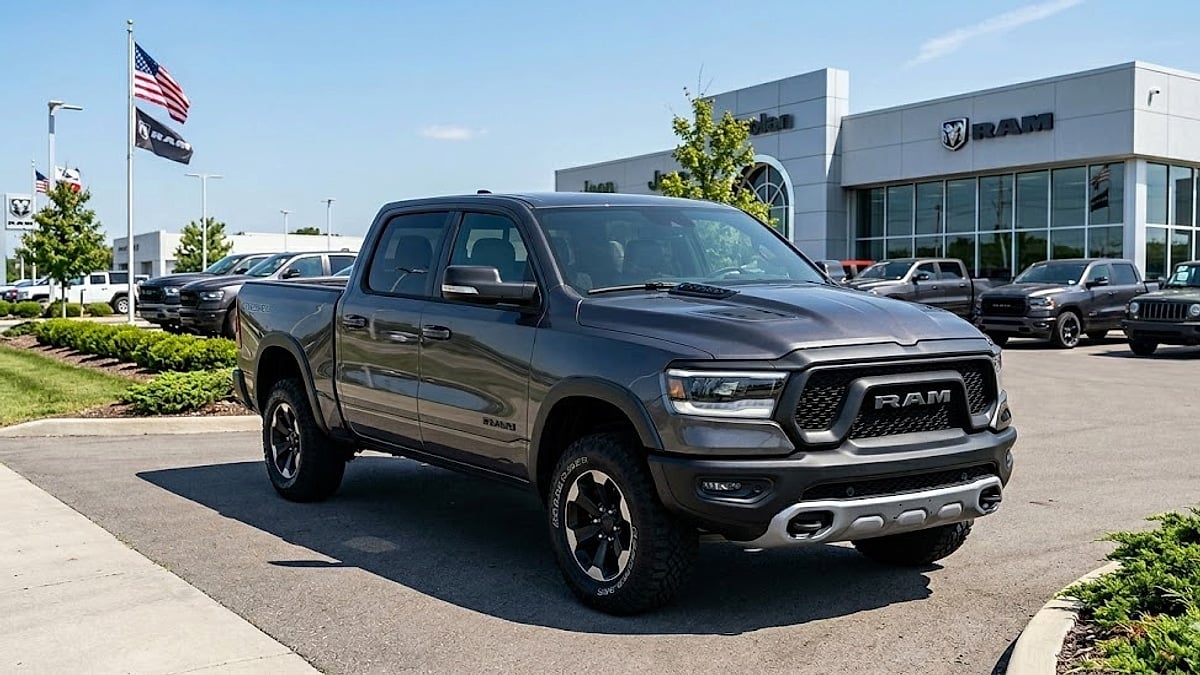
The 11.7V ‘Death Spiral’ and the Hardware-Software Clash
Here is the net-new data you won't find on a standard spec sheet: the 2026 Ram 1500’s electrical architecture operates on a high-speed CAN bus system that is hypersensitive to voltage drops.
My analysis of recent data shows that when a truck like Darrin’s hits an 11.7V threshold, the Engine Control Unit (ECU) can enter a "limp-state" where it fails to properly handshake with the alternator. This creates a "death spiral" where the truck technically has a new battery, but the software refuses to charge it because it detects a microscopic "thermal cycling" flaw in the circuit board. As I’ve observed, even a brand-new Bighorn can suffer total ECU failure at just 90 miles, leading to flickering dash lights and a complete system shutdown.
This isn't just "lot rot" from sitting at a dealership; it is a fundamental conflict between the Hurricane engine's high-draw cooling requirements and the truck's "always-on" connectivity. Stellantis must address the infant mortality of these semiconductor components. If your digital dash flickers or your voltage stays below 12.2V while driving, you aren't looking at a "bad fuse," you are witnessing a systemic architectural failure.
Key Takeaways for My Readers
- Audit the Software: If your truck dies, demand the dealer check for Rapid Service Updates (RSUs) rather than just swapping the battery.
- Document Everything: If you have two "dead" events within 2,000 miles, you are entering Lemon Law territory. Keep every tow receipt.
- Proximity Check: Store your keys in a Faraday box or at least 30 feet away from the vehicle to ensure the truck's "always listening" features shut down.
Next Question: Is the Hurricane Engine to Blame?
The next logical question you might have is: Does this electrical chaos stem from the new Hurricane Twin-Turbo engine? While the engine itself is a mechanical powerhouse, the high-voltage requirements of its cooling and management systems put a massive strain on the electrical bus. If the software isn't perfect, the hardware pays the price.
In The End
The 2026 Ram Rebel should be a source of satisfaction, not a source of upset Facebook posts and tow truck sightings. When a loyal owner like Darrin Williams, who has owned many Dodge and Ram trucks, says he is done, Stellantis needs to listen. These aren't just trucks; they are major investments that need to work every time the button is pushed.
What Would You Do? If you were in Darrin's shoes, would you give Ram a third chance, or is it time to look at the competition? Tell Us What You Think by leaving a comment in the red Add new comment link below.
About The Author
Denis Flierl is a 14-year Senior Reporter at Torque News and a member of the Rocky Mountain Automotive Press (RMAP) with 30+ years of industry experience. Based in Parker, Colorado, Denis leverages the Rockies' high-altitude terrain as a rigorous testing ground to provide "boots-on-the-ground" analysis for readers across the Rocky Mountain region, California EV corridors, the Northeast, Texas truck markets, and Midwest agricultural zones. A former professional test driver and consultant for Ford, GM, Ram, Toyota, and Tesla, he delivers data-backed insights on reliability and market shifts. Denis cuts through the noise to provide national audiences with the real-world reporting today’s landscape demands. Connect with Denis: Find him on LinkedIn, X @DenisFlierl, @WorldsCoolestRides, Facebook, and Instagram.
Photo credit: Denis Flierl via Darrin Williams
Set Torque News as Preferred Source on Google
Follow us today...






Comments
I have no proof of this, but…
Permalink
I have no proof of this, but these issues seem to be similar to what went wrong with the Daytona EV that killed it's chances of being successful.
In the Rebel ECU-alternator handshake case with the PWB thermal cycling problem this is something that should have been caught during architecture testing way before production started using a "low voltage margin" test technique that tests what happens when the 12V battery gets low.
But Remember the previous CEO of Stellantis fired beaucoup workforce under the deduction that any engineer in Brazil or Africa at a quarter of the salary could do the same job as US engineers and procurement people with centuries of combined experience.
Nobody checked for this fault condition, so I'd tell the owner to get a Silverado EV instead, mine's been running fine.
I have two friends, one with…
Permalink
I have two friends, one with a 2025 Ram 1500 and one with a 2026 Ram 1500. When contemplating buying one I of course asked each of them about their experiences. Both of them said that they love the way it drives and the comfort of the vehicle but given the number of trips to the dealer and the fact the ability to connect their phones to the the infotainment system and maintain connection for calls and music is practically impossible they would not ever recommend someone to buy these trucks. Given other 1/2 ton trucks having more serious mechanical issues in those same model years I have decided to wait another year and see as I don't feel comfortable spending 70K-90K on a vehicle the seems to have gone backwards significantly in reliablility.