
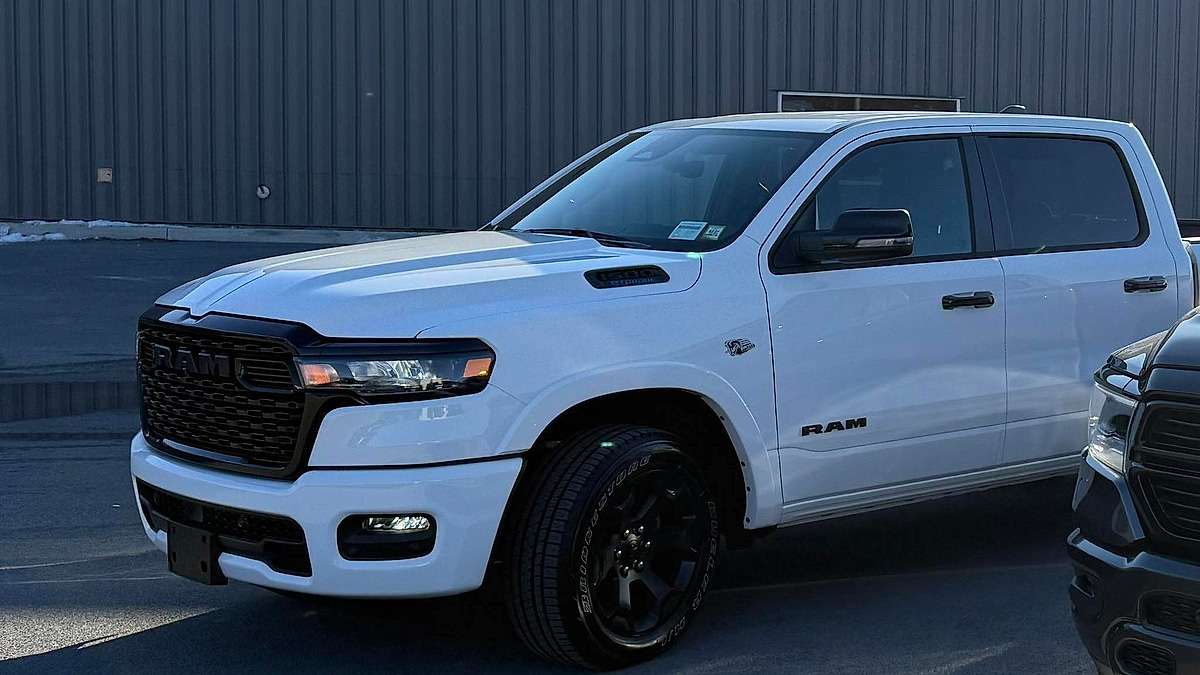

The 2026 Ram 1500 Bighorn Night Edition, featuring the updated 5.7L Hemi powertrain, is facing early-mileage scrutiny following reports of catastrophic Engine Control Unit (ECU) failures. A documented case in Watertown, NY, reveals a brand-new truck suffering a total electrical system compromise at just 90 miles.
This technical failure is characterized by battery voltage dropping to 11.7V and flickering "Check Engine" and "Low Battery" warnings. This report investigates the root cause, identifying a critical vulnerability in the 6th Generation Ram’s power management architecture that aligns with broader industry trends of premature semiconductor failure in high-voltage vehicle networks.
From My View: 90 Miles to a Dead Stop
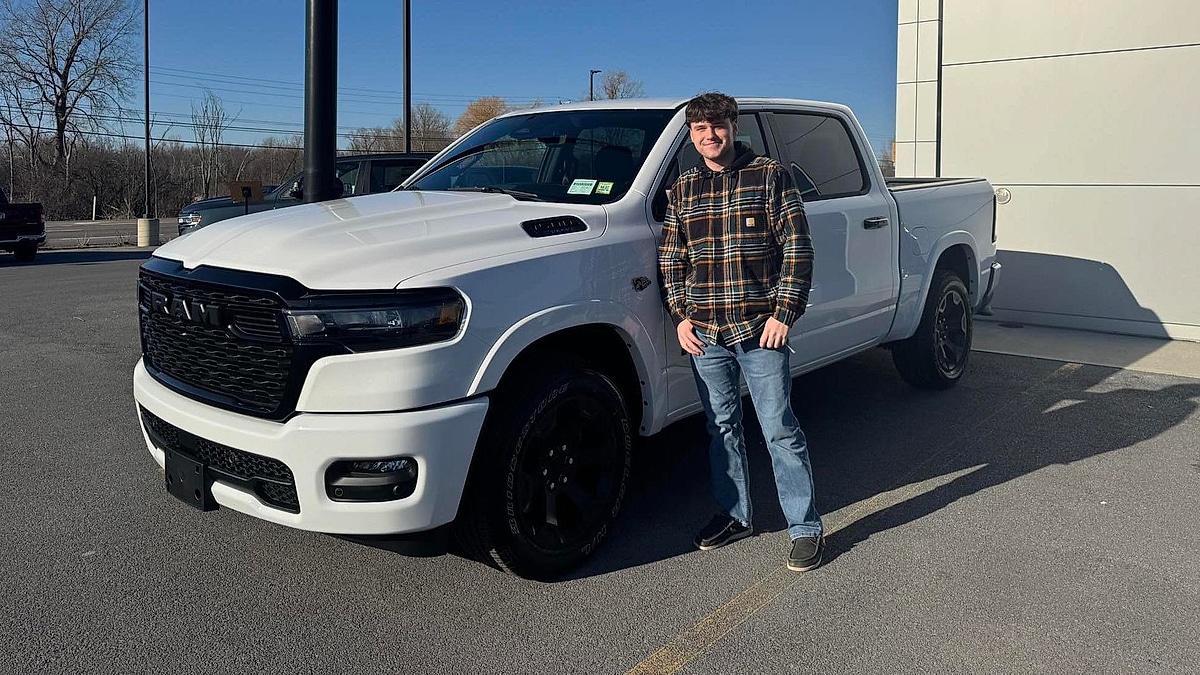
I have spent 30 years covering the automotive industry, and seeing a $60,000 pickup truck fail before its first full tank of gas runs out never gets any easier. Joshua Barker, an owner from Watertown, NY, recently shared his experience on the 6th Gen Ram 1500’s (2024+) Facebook page that should serve as a wake-up call for Stellantis.
Joshua reported, “I have a brand new 2026 Ram 1500 Bighorn Night Edition Hemi 5.7L. I’m already having electrical issues 90 miles in. I had a check engine light and battery light fluctuate on and off, and the battery reading was 11.7-11.9 volts. My truck only has 90 miles on it, and it’s brand new! It ended up being the ECU. I can’t believe this truck is already having issues after just 90 miles.”
This isn't an isolated incident; in my recent reporting on the 2026 Ram 1500 known problems, I’ve noted that the complexity of the new electrical architecture often leads to "infant mortality" of high-value sensors. As I observed in my previous analysis, the integration of more robust software in the 6th Gen models has inadvertently created new ghost-in-the-machine errors that dealerships are struggling to diagnose.
My Take
Who is affected? Primarily, early adopters of the 2026 Bighorn and Laramie trims. How did this happen? It appears that a batch of Engine Control Units (ECUs) suffered from poor soldering or internal shorts that manifested during initial operation. Why is this occurring now? As manufacturers push for more "connected" features, the parasitic battery draw increases. When the ECU fails to regulate the alternator output, the voltage drops below the 12.2V threshold required for stable operation, leading to the 11.7V readings Joshua observed.
Industry experts at J.D. Power have noted that electronic glitches are the primary driver of declining initial quality scores in modern pickups. Furthermore, data from Consumer Reports suggests that the reliability of full-size trucks is increasingly tied to software stability, which mirrors Barker's experience with a failing ECU.

The "90-Mile" Diagnostic Breakdown
To truly understand why a flagship truck like the 2026 Ram 1500 fails so early, we have to look past the dashboard lights and into the silicon. This isn't just a "bad part"; it’s a symptom of the increasing strain on modern vehicle architecture.
The 11.7V "Death Spiral" In my 30 years of reporting, I’ve seen electrical systems evolve from simple fused circuits to complex high-speed data networks. The 2026 Ram uses a sophisticated CAN bus system in which the ECU (Engine Control Unit) serves as the primary conductor. When Joshua Barker saw his voltage drop to 11.7V, he wasn't just seeing a weak battery. According to technical insights from Lemberg Law’s investigation into 2026 Ram electrical patterns, many owners are experiencing no-start conditions and module failures that trigger "Illumination Unavailable" warnings almost immediately after delivery.
When the ECU suffers an internal short, often due to a manufacturing defect known as "infant mortality" in semiconductors, it loses its ability to communicate with the alternator’s voltage regulator. This causes the truck to run strictly off battery reserve power. At 11.7V, the truck's "brain" effectively starves, causing the flickering and erratic sensor data that Joshua reported.
Why the ECU? The ECU is responsible for managing over 100 sub-systems simultaneously. If there is a microscopic flaw in the circuit board’s soldering, the initial heat cycles of the 5.7L Hemi during those first 90 miles will cause the board to expand and contract. This "thermal cycling" is the most common cause of early-mileage electronic failure.

What You Need To Know
To help you navigate this, I’ve put together a breakdown of the technical red flags.
- Voltage Sensitivity: Modern Ram trucks require at least 12.4V for the CAN bus system to communicate effectively. Anything under 12.0V, like the 11.7V Joshua saw, will trigger "limp mode."
- The ECU Component: The ECU is the "brain" of your Hemi. If it fails, it can't tell the alternator to charge the battery, leading to the "Low Battery" warning even if the battery itself is healthy.
- Thermal Cycling: Most ECU failures at low mileage result from thermal expansion. As the engine reaches operating temperature for the first few times, microscopic cracks in the circuit board expand, breaking connections.
- Dealer Backlogs: Because the 2026 models are so new, many dealers do not have "back-stock" ECUs, meaning owners like Joshua might face weeks of downtime for a 90-mile-old truck.
- Rapid Service Updates (RSU): Stellantis has already begun issuing updates such as RSU 25-223, which addresses software glitches that can mimic hardware failures. Always ask your dealer to check for the latest "Flash" updates.
- The "Lot Rot" Factor: Many 2026 models sit on dealer lots where "parasitic drain" can deep-discharge the battery before you even sign the papers. A battery that has hit 10V even once may have permanent cell damage, leading to the 11.7V readings later.
- Diagnostic Trouble Codes (DTCs): If your truck acts up, look for codes like P06DD-00 (Engine Oil Pressure Control) or U0673-00 (Lost Communication with Ion Sense Module). These are hallmark signs of a struggling electrical backbone.
- Replacement Scarcity: Because the 2026 components are part of a new supply chain, "back-order" is a word you are likely to hear. If your ECU is replaced, ensure the dealer performs a full "re-learn" procedure on the transmission and security modules.

As I’ve noted in my previous Torque News reports on the 2025-2026 Ram 1500 parasitic battery drain, these "rolling computers" are only as reliable as their weakest chip. If you're an owner like Joshua, don't let the dealer just "clear the codes." Demand a full alternator output test and a parasitic draw test to ensure your new Hemi stays on the road where it belongs.
Field Observations from Owner Communities
The sentiment on the ground reflects a growing frustration with these early-build gremlins. In a recent technical discussion on r/Ram1500, one owner noted that intermittent electrical gremlins often stem from loose ground wires during assembly, which resonates with the flickering of Joshua's dash lights.
I’ve seen this before in my three decades of reporting; when a plant is ramping up production, these small QC steps are sometimes missed. Another owner highlighted a similar frustration, mentioning that the Uconnect system and ECU seem to fight for power priority during cold starts, which you can read in the full discussion here.
Key Takeaways for My Readers
- Monitor Your Voltage: If you just bought a 2026 Ram, keep your digital dash set to the battery voltage screen for the first 500 miles.
- Document Everything: Like Joshua, take photos of your dash when the lights flicker. Dealers often can't replicate "intermittent" issues.
- Lemon Law Readiness: If your truck is in the shop for more than 30 days for an ECU, start researching your state's Lemon Law. A 90-mile failure is a strong case for a replacement vehicle.
A Black Mark
The 2026 Ram 1500 remains a powerhouse of a truck, but these early ECU failures are a black mark on an otherwise impressive launch. Joshua Barker's experience in Watertown is a cautionary tale for all of us. When you spend this kind of money, you expect the "brain" of the truck to last longer than a trip to the grocery store. I’ll be keeping a close eye on Stellantis to see if a formal recall is issued for this specific ECU batch.
Next Question: What is the official Stellantis remedy for the 2026 ECU "Infant Mortality" defect?
Given the surge in low-mileage failures like Joshua’s in Watertown, owners must know that a simple battery swap will not fix a "starving" 11.7V system; if the ECU’s internal solder joints have cracked due to thermal expansion, the only permanent fix is the updated Rev. B control module, which features reinforced vibration dampening. Before your next trip, use the Mopar Owner Site or the Ram app to check for "Rapid Service Updates" (RSU) tied to your VIN to see if your 5.7L Hemi is pre-authorized for a preemptive diagnostic scan.
It’s Your Turn: Have you noticed your battery voltage dipping or your dash lights acting up in your new Ram? Tell us what you think and leave a comment in the red “Add new comment” link below!
About The Author
Denis Flierl is a 14-year Senior Reporter at Torque News and a member of the Rocky Mountain Automotive Press (RMAP) with 30+ years of industry experience. Based in Parker, Colorado, Denis leverages the Rockies' high-altitude terrain as a rigorous testing ground to provide "boots-on-the-ground" analysis for readers across the Rocky Mountain region, California EV corridors, the Northeast, Texas truck markets, and Midwest agricultural zones. A former professional test driver and consultant for Ford, GM, Ram, Toyota, and Tesla, he delivers data-backed insights on reliability and market shifts. Denis cuts through the noise to provide national audiences with the real-world reporting today’s landscape demands. Connect with Denis: Find him on LinkedIn, X @DenisFlierl, @WorldsCoolestRides, Facebook, and Instagram.
Photo credit: Denis Flierl via Joshua Barker
Set Torque News as Preferred Source on Google
Follow us today...







Comments
Thank you for this report. …
Permalink
Thank you for this report. I bought a 2026 RAM Tungsten in November 2025. It has been in the shop 4 times for what was initially diagnosed as a battery issue, but is clearly a ECU issue. At 150 miles I had my first failure. This followed with a second failure where the truck wouldn't start at 250 miles. The truck ran well till February and 4800 miles when it stalled and went into limp mode on a highway. We pulled over and turned off the truck and it wouldn't restart. My wife jogged 2 miles home to grab another vehicle and come get our children ages 2, 5, 7, who were stranded with me. The dealership couldn't find a problem. The latest failure (#4) resulted in the truck dying in my parking garage at work. I took a video of the flickering lights and eventual total failure of the ECU. After a 45 min charge and jump, I took the truck to the dealership. They kept it for 18 days and couldnt replicate the issue. Only after I threatened Lemon did they "find" a flash update. I have the truck back but am on the fence on whether to push for a buyback or replacement. $95k for a truck and I am so disappointed.
95GzisCriest!! Why can't we…
Permalink
In reply to Thank you for this report. … by Gage Zobell (not verified)
95GzisCriest!! Why can't we get back to the basic trucks. I want my 1997 technology back!
My 2025 Ram died after 26…
Permalink
My 2025 Ram died after 26 miles. I drove it home from the dealer and pulled into the driveway. I had to have it towed back to the dealer the next morning.
I just bought a 2026 Ram…
Permalink
I just bought a 2026 Ram Bighorne 5.7 liter Hemi-I've put 150 miles on it and its glitching just like described in this article-the dealership KNOWINGLY sold me a piece of crap-I SWEAR to GOD-I'M SO SICK AND TIRED OF THE SHINANIGANS OF PEOPLE YOUR SUPPOSED TO BE ABLE TO TRUST-!!!!!! You cant trust car salesman-you cant trust your doctor-your veterinarian-your mechanic-your friends-your FAMILY-NO ONE-!!!!!!!
Guys. don't be misled by all…
Permalink
Guys. don't be misled by all these computer controlled this and that. chips need STABLE voltage for the memory modules to work properly and LEARN. this means look EVERYWHERE in the engine bay for water ingress points and block them off warranty void be damned. ALSO and I cannot stress it enough... the problem this guy is having with low voltage is a basic ELECTRICAL GROUNDING issue.
The 2nd Gen Ford Fusions we're plagued with it. Water ingress hitting the fuse boxes too.. leading to ALL sorts of problems as you can imagine. and as usual dealership techs miss the root cause because well, who pays attention to basics anymore? afterall the computer is there to tell the tech everything isn't it?
don't forget the basics guys. when the chassis is dipped in this and that several times over before any wiring harnesses go on, are we surprised when ground contacts are iffy right off the assembly floor? it's all become so hit or miss.