
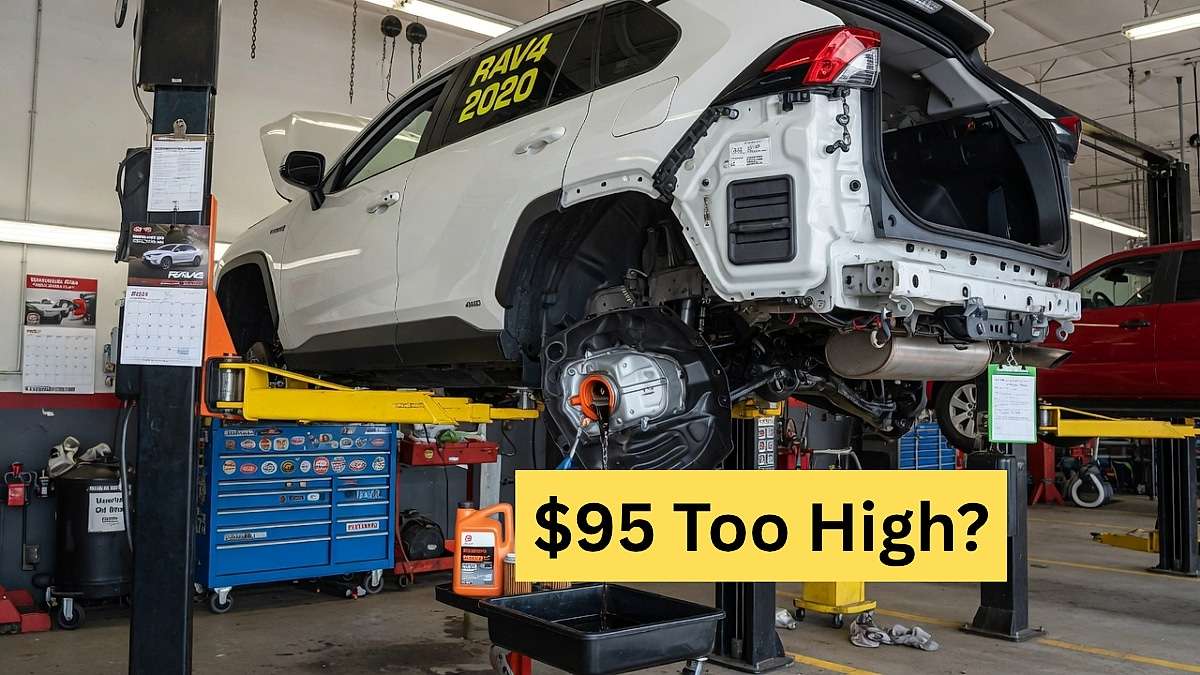

Just moments ago I read a post on Toyota RAV4 Hybrid owners group on Facebook and it got my attention. I wanted to share it with our Torque News readers and check to see how reasonable is the dealership fee, which the dealer wanted to charge this RAV4 owner for just checking out the struts.
Don writes:
I think it is completely understandable why the Don felt blindsided by a $95 diagnostic fee: especially since the car was already on the lift for an oil change. It feels like they should just be able to "take a quick look" while they’re under there. And I think it should have been done by this dealership. You would gain a happy customer who would not only return to you, but also recommend another Toyota owner to your dealership.
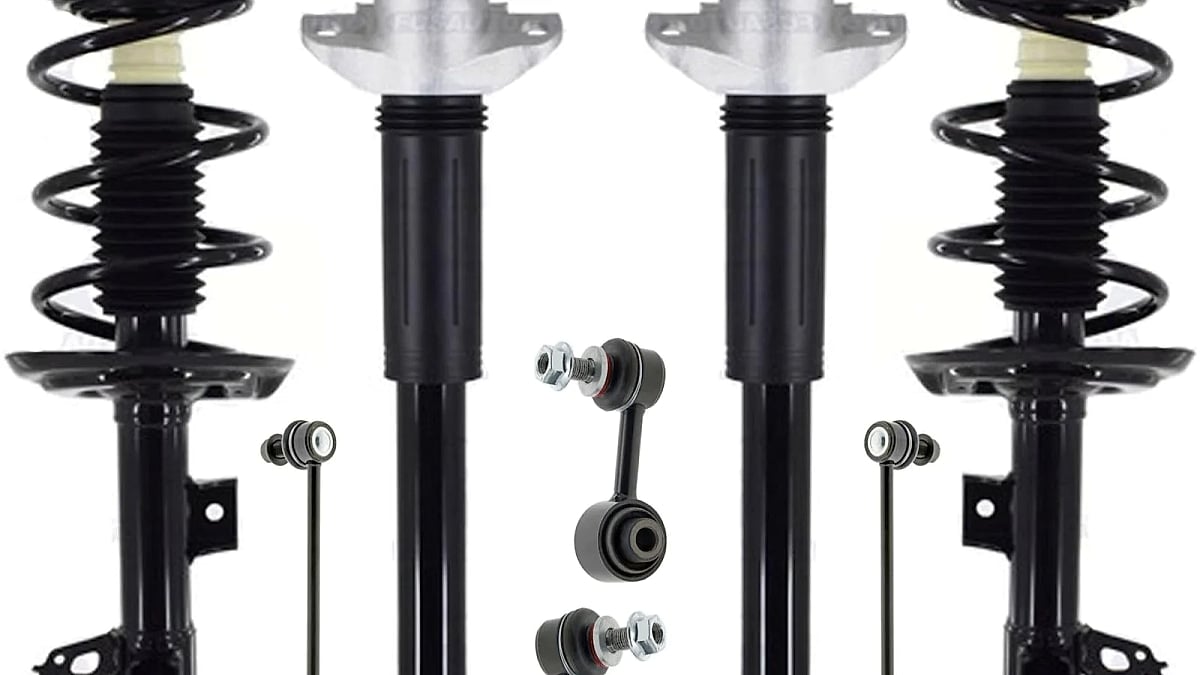
Lanny, a group member, kind of supported my point writing:
However, based on standard automotive industry practices and real-world data, Don actually got a pretty good deal, even if it doesn't feel like it.
Here is a breakdown of why this happens and what the norm is for a 2020 Toyota RAV4:
1. $95 is Actually Below Average
While a surprise fee is never fun, $95 is on the lower end for a dealership diagnostic fee.
- Data from automotive sources like RepairPal and various Toyota dealership menus show that standard diagnostic fees typically range from $120 to $189 (equivalent to roughly one hour of shop labor).
- Some dealerships charge upwards of $200+ just to inspect a suspension or look into a vague issue like a "creak."
2. "Checking the Struts" Takes Real Labor
Many drivers assume the technician just needs to glance at the struts. However, a suspension noise (like creaking) usually requires a multi-step investigation:
- The Test Drive: A technician usually has to drive the car over bumps or turn the wheel to replicate and isolate the specific creak.
- The Inspection: They have to check multiple components. Creaking could be the struts themselves, but it could also be worn sway bar links, control arm bushings, or ball joints.
- The Payoff: Technicians are paid by the job (flat-rate). If they spend 30–45 minutes diagnosing a noise for free, they aren't making money during that time.
This is where I would like to side with the dealership's technician. If the guy just looked at it and said everything is OK, Don would think everything is good and drive like that. However, who knows, may be a more detailed inspection of the RAV4's struts would have revealed a bigger underlying problem? So in this regard I would understand the technician.
3. The "Roll-Forward" Standard
What the service advisor might have failed to explain well is how diagnostic fees usually work. At most dealerships and independent shops, if you agree to have them fix the problem, the diagnostic fee is waived or applied toward the repair cost.
The fee is primarily there to protect the shop in case they spend an hour figuring out exactly what is wrong, only for the customer to say, "Thanks, I'll go buy the parts and fix it in my driveway."
This also reminds me a story Torque News published in November 2025. In that story a Toyota dealer quoted $174 for a fuel injection service, but a friend to him that a $15 bottle of Royal Purple can possibly do the same job.
The Reality Check
The poster’s reaction is very common, but the dealership wasn't ripping them off. Instead, it seems to me that they were following standard protocol, and at a lower rate than many other places.
If you were responding to a person like this, the best advice would be to ask the dealer if that $95 will be deducted from the final bill if they choose to get the struts repaired there. If not, or if they still feel uncomfortable with the price, a highly-rated independent local mechanic will often diagnose suspension noises for a bit less (or occasionally for free if it's an obvious fix).
On the other hand, the dealership could say "we will look at it, but it will be a general quick look. We can't freely to into details. If you want, we can charge you $95 and spend time on it making sure your RAV4 isn't having a safety issue in that area."
Have you been in a similar situation? If yes, how did you handle it?
About The Author
Armen Hareyan is the founder and Editor-in-Chief of Torque News and an automotive journalist with over 15 years of experience writing car reviews and industry news. Now based in the Charlotte region (Indian Land, SC, he founded Torque News in 2010, which since then has been publishing expert news and analysis about the automotive industry. He can be reached at Torque News on X, Linkedin, Facebook, and Youtube. Armen holds three Masters Degrees, including an MBA, and has become one of the known voices in the industry, specializing in the landscape of electric vehicles and real-world stories of actual car owners. Armen focuses on providing readers with transparent, data-backed analysis bridging the gap of complex engineering and car buyer practicality. Armen frequently participates in automotive events throughout the United States, national and local car reveals and personally test-drives new vehicles every week. Armen has also been published as an automotive expert in publications like the Transit Tomorrow, discussing how will autonomous vehicles reshape the supply chain, and emerging technologies in vehicle maintenance.
Set Torque News as Preferred Source on Google
Follow us today...






Comments
I understand both sides of…
Permalink
I understand both sides of this issue.
Unfortunately most times it is the tech that pays.
The dealership wants their time paid. The customer wants to know if it’s a safety issue. But has issue with paying the part to hour fee for the check.
A quick push on the bumper for each side will give a quick basic check if the strut is worn out and possibly leaking. AKA my mechanic called it the bounce test. More than 2-3 bounces there is an issue.
Anything beyond that needs a tech independent or dealership to investigate and repair.
I do agree and like your comment about seeing if there is an issue, asking if the fee could be applied to the cost of the repair.
I think the tech doing the…
Permalink
I think the tech doing the oil change was lazy. As the oil drains, they could have visually inspected the suspension. As a former flat rate mechanic you make the most of your time. If you sit and watch the oil drains, you are part of what is wrong with shops today.
As some who has been in the…
Permalink
As some who has been in the business for over 45 years. Free safety inspections have been the norm and still are. It’s called an “Up sell”. That is if I find anything worn or unusual.