
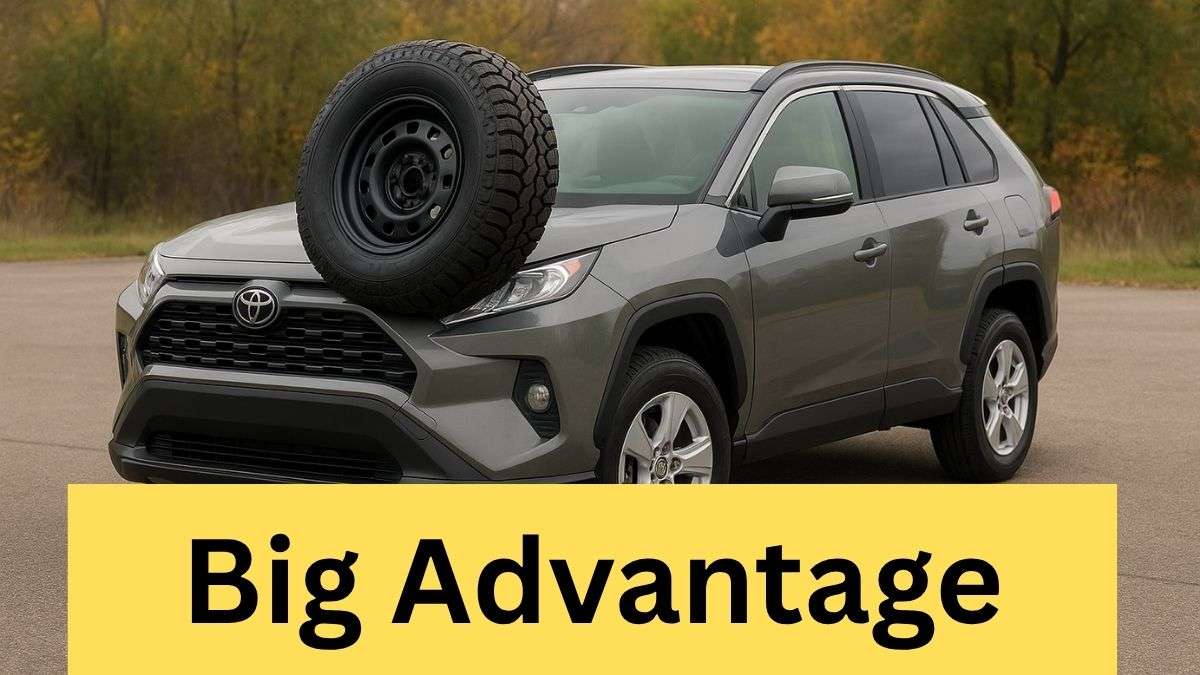

If you’ve ever sat in a dealership parking lot torn between two keys in your hand, you already know how emotional car buying can get, especially when the finalists are two giants like the Toyota RAV4 and the Honda CR-V. In this follow-up to Denis Flierl’s report, I’m revisiting that exact tug-of-war. His original story - I Was Determined To Get a New Toyota RAV4, But After Driving the 2026 Honda CR-V, the RAV4 is Not as Smooth and Not as Quiet Like the CR-V - hit a nerve with readers.
That article sparked a wave of passionate comments from actual owners, and their stories reveal something surprisingly consistent: the spare tire, or lack of one, is influencing CR-V and RAV4 carbuyers of buying decisions. And in a segment where Toyota vs. Honda debates already dominate Google searches like “2025 Toyota RAV4 vs 2026 CR-V reliability” and “Which hybrid SUV still includes a spare tire?”, this detail matters more than the automakers want to admit.
Today, I’m diving into those comments, fully quoting them, analyzing them, and connecting the dots to broader market behavior. And yes, this will likely matter even more as Toyota prepares its next-generation RAV4, while Honda continues pushing hybrid CR-V sales upward.
Spare Tires: The Emotional Deal Breaker No One Expected
Let’s start with the most direct comment, the kind automakers should print out and tape to their product planning walls.
"The only reason why I would buy a Toyota RAV4 over Honda CRV is the spare tire. Honda doesn’t have one. I’ve had at least 6 times over the years when a spare tire saved me. For me, this is a deal breaker. Honda could be better but without the spare tire I can’t choose it. I understand that the Kia also doesn’t have a spare tire but the Hyundai does," wrote Thomas.
Notice what Thomas didn’t talk about.
Not ride quality. Not technology. Not MPG. Not even price.
This is a purely practical, safety-driven concern, and he’s far from alone. If you read articles like “Every Top-Selling Vehicle in America Has a Spare Tire Available - Except One,” you’ll see how often this topic surfaces across the industry. American buyers still value a physical spare because they’ve depended on them multiple times in the real world.
Mike Doubled Down and He’s Delaying His Purchase Because of It
"No spare tire was the deal breaker for me also. I'm waiting on a 2026 RAV4, but would already be driving a CRV if it had a spare tire," Mike wrote.
This is huge.
Mike didn’t just prefer a spare tire, he postponed buying a Honda CR-V entirely because it lacks one. He’s literally delaying a purchase, waiting for Toyota’s next RAV4 model year instead of choosing a Honda today.
For context, buyers like Mike are exactly why stories such as “Two-Thirds of Owners Say They May Not Buy the 2026 RAV4 If the Standard Spare Tire Goes Away” have been gaining traction. There is a real, measurable consumer reaction to this trend, especially among long-distance drivers, rural owners, and commuters without roadside assistance.
Automakers know flat tires happen everywhere from construction zones to winter pothole corridors. Some drivers simply refuse to roll the dice.
John M. Brings the Engineering Perspective, and It’s a Big One
While most commenters focused on the spare, John brought the deeper technical reasoning many long-term owners consider.
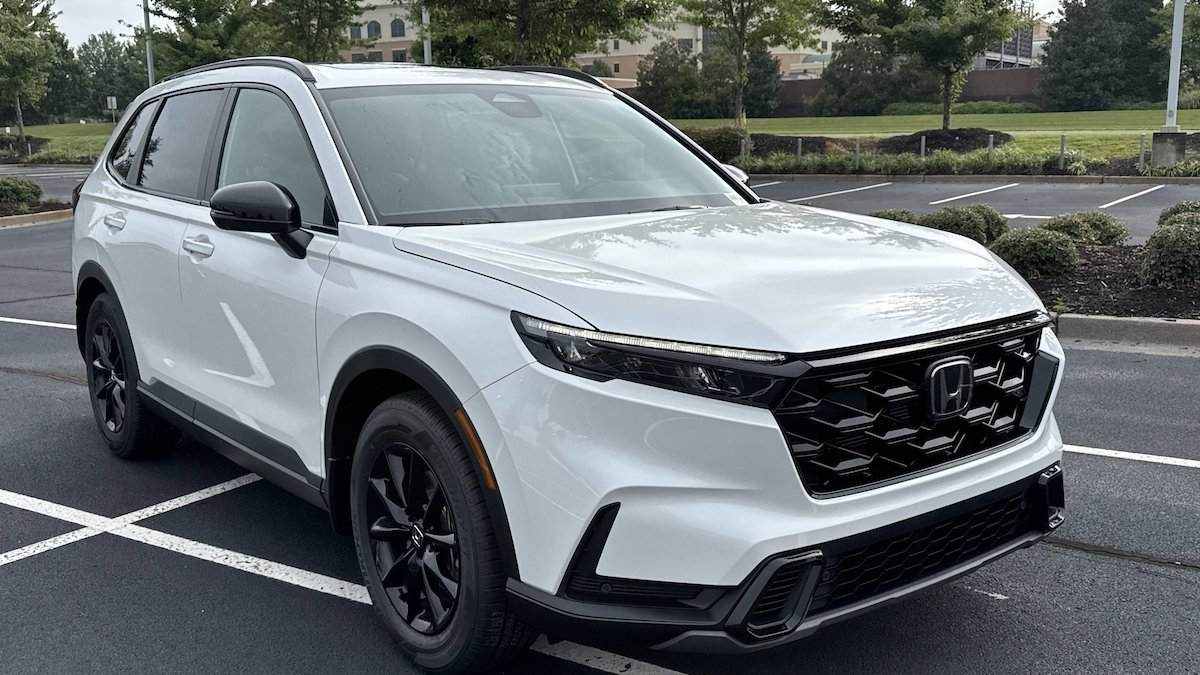
"I have two 5th-generation Toyota RAV4 SUVs, one hybrid and one not. I chose the RAV4 hybrid over the Honda because it has both port and direct fuel injection; the Honda only has direct. Direct only injection leads to carbon buildup on the intake valves because of the EGR system. I chose my non-hybrid RAV4 over the non-hybrid CR-V because the 2.5L engine is a superior non-turbo to the 1.5L turbo in the Honda. The 1.5L CR-V engine has had gasoline/oil dilution problems, head gasket failures, and turbocharger issues," wrote John.
This is exactly the sort of first-hand technical insight that has been pushing many buyers toward Toyota.
His concerns mirror what we discussed in articles like “Toyota Must Be Crazy to Replace the 2025 RAV4 Hybrid - It’s Clearly at the Top of Its Segment” and "I Chose the 2025 RAV4 Hybrid Over the Honda CR-V Due to Toyota’s Attention to One Specific Part."
Toyota’s naturally aspirated 2.5L A25A-FKS engine, plus its dual-injection design, is beloved for long-term durability, especially among owners who want to drive 200,000+ miles without worrying about carbon buildup or fuel dilution.
Ferlob Adds a Balancing Experience: CR-V Is Smoother… but the Spare Still Matters
I, too, wanted a Rav4 but chose the 2025 CR-V. My husband has the 2024 Rav4. The CR-V is a smoother ride but not as good on ga,s and it does not have a spare tire (both are hybrids). I traded my 2025 CRV in after just 5 months for a 2025 Corolla Cross Hybrid," commented Ferlob.
This comment is fascinating because it represents the full cycle:
- Wanted RAV4
- Bought a CR-V for comfort
- Got frustrated by a combination of fuel economy + no spare
- Traded out entirely for a Corolla Cross Hybrid
That’s a real ownership arc, not theory, not fan talk.
Actual money spent. Actual dissatisfaction. Actual switching.
If you look at articles like “I Drove 150 Miles on My 2020 RAV4’s Donut Spare,” you’ll see why Toyota owners place such high value on having a backup solution. When a flat tire happens in the real world, a can of sealant or a pump simply isn’t enough.
The Real-World Value of a Spare Tire vs. Modern Tire Repair Kits
Most shoppers don’t think about flat tires until they’re stuck on the shoulder, half a battery on their phone, and a slow leak hissing in the dark. That moment - the one every long-distance driver fears - is exactly why so many RAV4 owners said the spare tire was their final deciding factor. Modern automakers often delete the spare to save weight, improve hybrid packaging, or increase cargo room. But as multiple commenters in your article reinforced, sealant kits and inflators simply don’t cover major tire failures: shredded sidewalls, nail clusters, curb blowouts, or pothole tears. These are the situations where a physical spare tire can determine whether you get home safely or wait two hours for a tow truck that may not even reach rural or mountain areas quickly.
For buyers comparing the Toyota RAV4 and Honda CR-V today, the decision comes down to understanding how and where you actually drive. If your daily routes include highway construction corridors, long stretches of commuting, road-trip mileage, or rural roads, skipping the spare increases your risk. If you’re genuinely drawn to the CR-V for comfort or interior refinement but the missing spare is a dealbreaker, your best move is to check whether the dealership offers an optional spare-tire retrofit kit, and whether your local shop can mount it under the cargo floor. It won’t be as convenient as Toyota’s factory solution, but it’s a practical workaround that some CR-V owners have already implemented. Before you buy, ask about storage space, jack compatibility, and whether the hybrid model’s battery layout even allows it.
Understanding Engine Longevity: Turbocharged vs. Naturally Aspirated Choices
Many readers, like John M., brought up the long-term reliability differences between Honda’s 1.5L turbo and Toyota’s 2.5L naturally aspirated engine. This topic deserves more daylight because it’s a major, often overlooked decision-making factor. Honda’s 1.5L turbo is smooth, efficient, and responsive, but it has a documented history of fuel dilution, carbon buildup, and temperature-sensitive behavior in cold climates. While Honda has resolved many of these issues in newer model years, the reputation lingers in owner circles and heavily influences purchase decisions for drivers planning to keep their SUV past 150,000 miles. Toyota’s A25A-FKS 2.5L, by comparison, uses both port and direct injection, meaning carbon accumulation is significantly reduced over time, and avoids the complexity of turbocharging, resulting in simpler long-term maintenance.
If you’re a buyer deciding between these engines, your best move is to assess how long you plan to keep the vehicle. If you trade every three to five years, a modern turbocharged engine poses almost zero risk. But if you’re a long-hauler, road tripper, or someone who treats a vehicle as an 8–12-year investment, Toyota’s design philosophy may give you more peace of mind. Another practical step: request the dealership’s maintenance history on older trade-ins of both models. The number of gasket repairs, injector cleanings, or turbo service records can tell you more about real-life reliability than any brochure. Engines are lifestyle choices, and matching the engine to your driving habits is one of the best ways to avoid costly surprises later.
Ride Comfort vs. Durability: Why the CR-V Feels Smoother but the RAV4 Often Ages Better
Many owners, like Ferlob, said the Honda CR-V rides smoother than the Toyota RAV4, and that’s absolutely true. Honda tunes its suspension for comfort and refined road isolation, which makes the CR-V immediately impressive during test drives. Toyota, meanwhile, tunes the RAV4 toward firmer, more controlled dynamics that prioritize body stability, load-bearing durability, and long-term suspension robustness. The trade-off is predictable: Honda shines on suburban roads and highway comfort, while Toyota feels more rugged on rougher pavement or long-term ownership. If you’re constantly driving passengers, or value plush daily commuting, Honda might initially feel like the better fit.
That said, suspension feel shouldn’t be the sole deciding factor. If you routinely travel on uneven roads, gravel, winter-chipped pavement, or longer touring routes, the RAV4’s firmer tuning generally wears better over time and maintains its handling character as the miles accumulate. For CR-V buyers concerned about ride quality but frustrated by the missing spare tire, there’s a useful workaround: test both wheel sizes. Choosing a CR-V with smaller wheels and higher-profile tires can soften impacts and reduce road harshness. Meanwhile, RAV4 shoppers who want comfort can test the XLE or Limited trims, which often feel more compliant than the Adventure or TRD Off-Road variants. Matching trim and tire profile to your daily environment is an underrated way to fine-tune comfort without giving up long-term durability.
So What’s the Bigger Picture?
After reading these comments collectively, several insights emerge:
1. The spare tire issue is no longer niche, it’s mainstream. Buyers are openly rejecting models without them. This is unusual in modern car-buying patterns, where tech, screens, and MPG usually dominate discussions.
2. Honda is losing customers over the missing spare. Even buyers who prefer the CR-V's smoother ride (which Denis highlighted) are choosing Toyota specifically for the spare.
3. Toyota’s resilience in this segment is tied to long-term trust. Technical reliability concerns - like Honda’s past oil dilution issues - still echo loudly in owner communities.
4. Ride comfort matter, but only until a flat tire leaves you stranded. It’s a “convenience vs. security” trade-off, and security is winning.
The comments under Denis Flierl’s original article show that the compact SUV battle is shifting. Yes, the 2026 Honda CR-V may be smoother and quieter, but the Toyota RAV4 is winning customers for reasons rooted in trust, practicality, long-term reliability, and yes, something as old-fashioned as a spare tire.
As Toyota moves toward its next-generation RAV4, buyers are watching carefully. And if Toyota ever deletes the spare?
Well… readers already told us what would happen.
Now two questions for you.
- Would the lack of a spare tire stop you from buying a Honda CR-V, even if the ride quality feels superior?
- Do you think automakers are underestimating how much buyers still value real-world practicality over packaging efficiency?
Armen Hareyan is the founder and Editor-in-Chief of Torque News. He founded TorqueNews.com in 2010, which since then has been publishing expert news and analysis about the automotive industry. He can be reached at Torque News Twitter, Linkedin, and Youtube. He has more than a decade of expertise in the automotive industry with a special interest in Tesla and electric vehicles.
Set Torque News as Preferred Source on Google
Follow us today...







Comments
Doing a Google search shows…
Permalink
Doing a Google search shows that approximately 60% of today's cars come without a spare tire. It's a trend that's been going on for some time.
I believe the hybrid version comes with a 2.0 L engine.
The Rav 4 is cheaply made…
Permalink
In reply to Doing a Google search shows… by Kosta Achin (not verified)
The Rav 4 is cheaply made and way less smooth of a ride. Toyota makes you buy a lexus if you want any quality. If you choose it over a CR-V for any other reason than being cheaper, you're a potato.
I just traded 2 Hondas, CRV…
Permalink
I just traded 2 Hondas, CRV and Accord. The new Honda CRV hybrid I wanted had no spare and the Accord had low profile tires that potholed out on a very regular basis.
Sorry Honda but as long as…
Permalink
Sorry Honda but as long as other options exist I will not drive any vehicle with a 1.5l turbo or a vehicle with no spare tire. Just yesterday I test drove a Toyota Crown Signia comparing it to the Totyota Rav4. I discovered that the Crown has an inflator kit instead of a spare tire so I'm waiting for the 2026 RAV4 thank you very much.
The 2025 Corolla Cross…
Permalink
The 2025 Corolla Cross Hybrid in the article also doesn't have a spare tire, but an aftermarket solution is available. Surprised the couple didn't check since they listed having a spare is important.
It's a good article that…
Permalink
It's a good article that shows how a segment of users is more focused on a minimal factor in deciding which vehicle to purchase. Granted, things like engine construction and such would not be something you can change once you buy a car, but with the missing spare, that's not the case. There are aftermarket options that can be factored into the vehicle purchase price if you want the peace of mind of a spare in the CR-V. The problem is that people want the convenience of having it included with their purchase rather than sourcing it themselves.
This is exactly the reason I…
Permalink
This is exactly the reason I just bought my 2025 RAV 4. I evaluated and drove the Subaru Forester, Honda CRV and the RAV4 and the only one that had the spare tire was the RAV4. I actually thought the Subaru was superior but the absence of a spare tire in the Honda and Subaru was a deal breaker. We drive up to see friends in Minnesota several times a year and I've had two flat over the last several years that a repair kit would not have worked on. I would have been stuck in northern Iowa in the middle of a very rural area waiting on a truck to find and bring me a suitable spare. No thanks.
CRV 2026 is far and away the…
Permalink
CRV 2026 is far and away the better choice. A consistent winner in every way. No spare tire is not an issue. You can get by with the repair kit if the need arises. I’ve never had a flat tire in my life and I’m 72. And the CRV is actually fun to drive! Every single day.
At 78, the spare tire is a…
Permalink
In reply to CRV 2026 is far and away the… by Dean Morse (not verified)
At 78, the spare tire is a major issue for me (see my comments below). If you get a blowout or sidewall damage, the cheap inflator kit Honda gave me is useless. Even on a simple flat, if you dare use it, you risk damaging the sensors in the tire you inject with the goo. Maybe because I'm older, but waiting hours to be towed in 115+ heat is not really an option..even with A/C and water. You are right...if it is a simple flat, the repair kit will get you to a tire shop, but for anything else, you're stuck. I think Toyota realized that and wisely kept their spare tire in the new RAV4. No temp gauge and no TPMS are lesser faults but still irritating. Thanks.
I've commented on this…
Permalink
I've commented on this numerously on other sites. I'm 78, and have a 2024 Sport L CRV Hybrid. Here in Las Vegas, riding in the desert with no spare is risky. A blowout means you better have bottled water to drink and A/C while you're waiting two or more hours for a tow. So, I had to buy a spare tire kit for $500. If you lay it in the cargo area, it takes up room. So, I stand it up between the cargo cover mechanism and the back seats to save room...but it impacts visibility...every day and every minute I'm driving I'm reminded this vehicle does not have a spare where it should be...under the cargo area. Getting towed is wasteful of time and potentially damages your vehicle too. Honda Roadside Assistance WOULD change my tire since I now have one. But that isn't all...no temp gauge either...so I guess when it is warm enough to put on the heater which we sometimes use here. Now, no Individual Tire Pressure Monitoring System anymore, so at my age, I have to go out and check each tire if I get a general low pressure warning. Now, only one complimentary maintenance compared to Toyota. All the new 2026 RAV4s have spares, temp gauge, Individual TPMS, two complimentary maintenance visits...plus a longer hybrid battery warranty....the only negative...they only offer cloth or plastic seats. Honda's genuine leather hold up well in the heat here, so I would probably get cloth. Honda would have to do more than just add the spare for me to trade this in on another CRV Hybrid. I had a 2020 gas only model and it was great...spare, temp gauge, individual TPMS, but the CRV hybrid is a dealbreaker for me if it doesn't get better.