
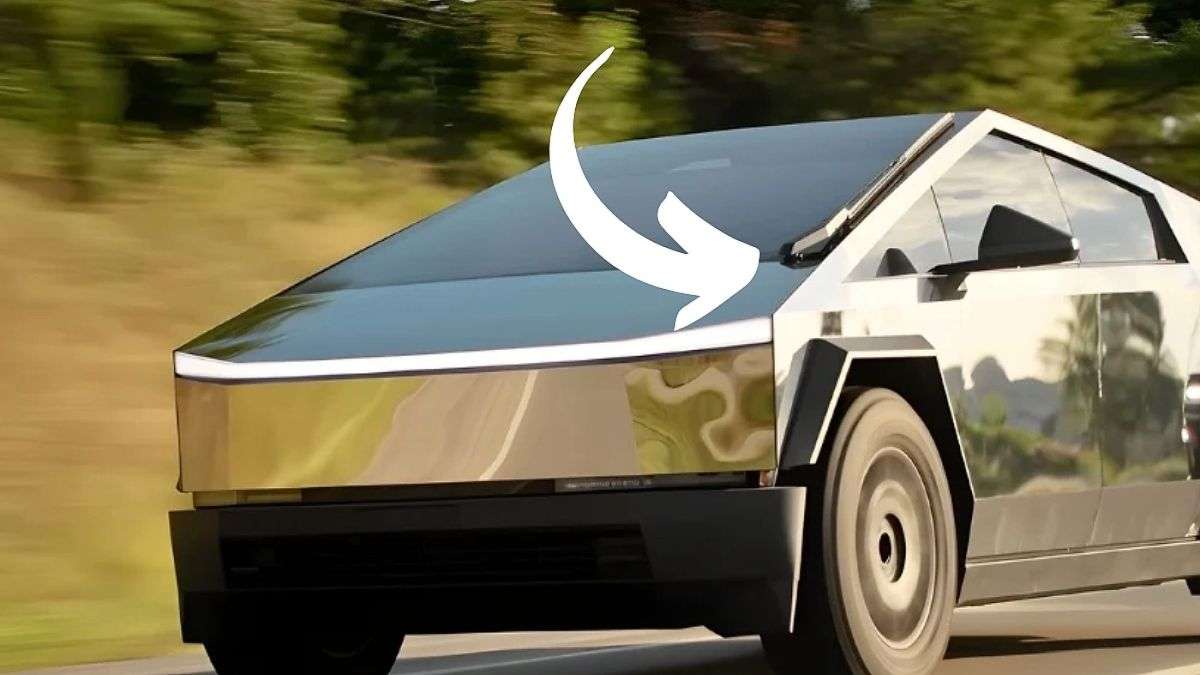

There is something oddly revealing when a brand new vehicle, especially one as hyped as the Cybertruck, develops a small unexpected flaw that owners cannot easily ignore. It is not a drivetrain failure or a battery concern. It is a piece of rubber trim. And yet the way this issue is being handled is raising bigger questions about Tesla's design choices, service approach, and whether small problems are being left unchecked until they become something more frustrating. We have covered this pattern before in our story about a Cybertruck owner who took his truck in for minor trim issues and left with more questions than answers, where a seemingly simple fit and finish concern turned into repeated service visits. And another case involving a Cybertruck owner who turned down delivery over panel gaps shows how small details can shape long-term ownership perception before you even drive the truck off the lot.
The owner who brought this to the community's attention, Richard, posted about a piece of rubber molding that has been loose since the day he took delivery. It sits underneath the wiper control and becomes visible when he opens the frunk. He described the problem clearly for anyone in the group who had not seen his photos. "There is a piece of rubber molding that has been loose since delivery underneath the wiper control, that's visible when I open frunk. It keeps coming dislodged and I can't get it to stay in place. Is anyone else's loose like this or do I need to get service to fix it? It's loose and moves sort of falling down. I moved it back, but it's not secured into place."

Why Is the Tesla Cybertruck Rubber Trim Coming Loose?
The issue seems simple at first glance, a loose rubber molding under the frunk near the wiper assembly, but the underlying question is more complex. Why is this happening at all on a new vehicle? The answer appears to be tied to how Tesla integrates trim into larger modular components. This is the same production philosophy we saw in our coverage of how inconsistent panel gaps became a recurring concern before Cybertruck deliveries even began, where a manufacturing approach optimized for speed can leave individual trim components without adequate retention. The stainless steel body that makes the Cybertruck visually distinctive also makes even minor trim misalignments far more noticeable than they would be on a conventional painted truck.
Owners like Andrew Jala report that Tesla's solution is not to reattach or replace the trim, but to install an entirely new windshield assembly. That is a surprisingly heavy response for what some owners describe as a component that should cost around $25 to replace. It echoes what we explored in our story about the owner who was quoted $2,500 to replace a rubber seal around his Cybertruck windshield, where the cost of fixing a minor rubber component ballooned because of how deeply integrated it is within the larger assembly. The pressing problem here is not the loose trim itself. It is that Tesla's modular design philosophy turns a $25 fix into a multi-hour service visit, and that has real consequences for owners both inside and outside of warranty coverage.
Does This Require a Full Windshield Replacement?
In many cases, yes, and that is where things start to feel frustrating for owners expecting a quick fix. Multiple Cybertruck owners say Tesla service centers are opting to replace entire assemblies rather than individual components. Richard Perry explained that the rubber is attached to a larger plastic piece, meaning if it detaches, the whole unit has to be replaced. This is not a unique situation within Tesla's service history. Our reporting on the warning Tesla issued about Cybertruck windshield replacement being invasive surgery explains exactly why a small cosmetic defect near the wiper assembly can trigger such a large repair procedure. The Cybertruck's windshield is the largest in the automotive industry, and the surrounding trim and seals are deeply integrated into the structural assembly, meaning there is no surgical way to address a single component without disturbing the whole system.
Is This a Widespread Cybertruck Build Quality Issue?
Yes, early reports suggest this is not an isolated case, and that is what makes it more than a one-off annoyance. Connor Castleman confirmed Tesla replaced his under warranty, while Olav Anderson noted he had already scheduled service for what he described as a low-cost part. The fact that multiple owners are reporting the same loose trim in the same location points to a production or design oversight rather than random chance. This pattern is consistent with what we documented in our coverage of a Cybertruck owner who received a bi-color truck after recall work, where a small service visit created a bigger problem. And it connects directly to the broader adhesive and panel retention issues that led Tesla to recall tens of thousands of Cybertrucks, because once you understand that the cantrail trim recall was rooted in the same fundamental integration approach, the loose wiper molding starts looking less like a random flaw and more like a systemic one.
Can You Fix the Loose Trim Yourself?
Technically yes, but whether you should is a different question entirely. Some owners, like Steve Dallas, suggest using silicone or automotive adhesive to secure the trim temporarily. For a DIY-minded owner who wants a quick fix while waiting on a service appointment, that approach can work in the short term. But here is the catch. Touching the trim yourself could complicate warranty claims down the road. Tesla may argue that any owner modification interfered with the original design, which gives the service center grounds to deny coverage on related components. This concern is not theoretical. Our story about a Cybertruck owner who discovered sharp edges on early trim pieces shows how trim related problems on the Cybertruck can escalate from cosmetic nuisances into genuine safety and liability questions when owners attempt to manage them on their own.
Why Tesla's Service Strategy Is Becoming the Bigger Story
The real issue here is not the rubber trim. It is the service philosophy behind fixing it. Replacing an entire windshield assembly for a loose piece of molding feels disproportionate, both in cost and time, and it raises a serious question about what ownership looks like once the factory warranty expires. MotorTrend, in its review of the 2024 Cybertruck Foundation Series, noted that Tesla's design often prioritizes manufacturing efficiency, and Cybertruck owners are now experiencing exactly what that means at the service level. This is the same tension we explored in our piece on a Cybertruck owner dealing with costly failures after crossing the warranty mileage limit, where the integration choices that made the truck easy to build make individual repairs expensive and complicated once the clock runs out on coverage.
What Should Cybertruck Owners Do Right Now?
The best move is to document the issue early and schedule a service appointment while the vehicle is still under warranty. Photograph the loose trim clearly, note when it first appeared, and ask Tesla to document it in the service record even if you are not ready to bring it in immediately. That paper trail matters more than most owners realize, particularly if the issue worsens or leads to a secondary problem. This is exactly the lesson from our report on a Cybertruck owner whose doors came back from service misaligned, where consistent documentation before and after service visits was the only thing that gave the owner leverage to push back on Tesla's response. If you own one of the early build trucks and have not yet had your trim and adhesion points inspected, our owner guide on what to check for regarding Cybertruck glue and panel retention is worth reading before your next service appointment.
The Bigger Problem: Small Issues Becoming Trust Issues
The pressing problem here is not the cost of a rubber trim. It is the erosion of confidence that happens when small problems are not handled proportionally. When a $25 part leads to a full assembly replacement, it creates a disconnect between what customers expect from a six-figure vehicle and what they actually experience at the service center. Tesla built its reputation on innovation, and the Cybertruck represents its most ambitious engineering statement yet. But stories like this one highlight a gap between that ambition and everyday serviceability, and that gap, if left unaddressed, shapes how buyers feel about the brand long after the initial excitement of ownership fades.
Small problems deserve thoughtful solutions. Whether you are designing a vehicle or managing an ownership issue on your own, addressing things proportionally and early almost always prevents bigger complications later. The rubber trim is a small thing. But the question it raises about how Tesla handles small things is not small at all.
Have you experienced a minor but persistent issue with your Cybertruck that turned into a bigger frustration at the service center? If you own a Cybertruck, would you accept a full component replacement for a minor defect, or would you push back and ask for a simpler fix? Share your experience in the comments below.
Images by Richard Cornelison and Torque News.
About The Author
Armen Hareyan is the founder and Editor-in-Chief of Torque News and an automotive journalist with over 15 years of experience writing car reviews and industry news. Now based in the Charlotte region (Indian Land, SC, he founded Torque News in 2010, which since then has been publishing expert news and analysis about the automotive industry. He can be reached at Torque News on X, Linkedin, Facebook, and Youtube. Armen holds three Masters Degrees, including an MBA, and has become one of the known voices in the industry, specializing in the landscape of electric vehicles and real-world stories of actual car owners. Armen focuses on providing readers with transparent, data-backed analysis bridging the gap of complex engineering and car buyer practicality. Armen frequently participates in automotive events throughout the United States, national and local car reveals and personally test-drives new vehicles every week. Armen has also been published as an automotive expert in publications like the Transit Tomorrow, discussing how will autonomous vehicles reshape the supply chain, and emerging technologies in vehicle maintenance.
Set Torque News as Preferred Source on Google
Follow us today...






