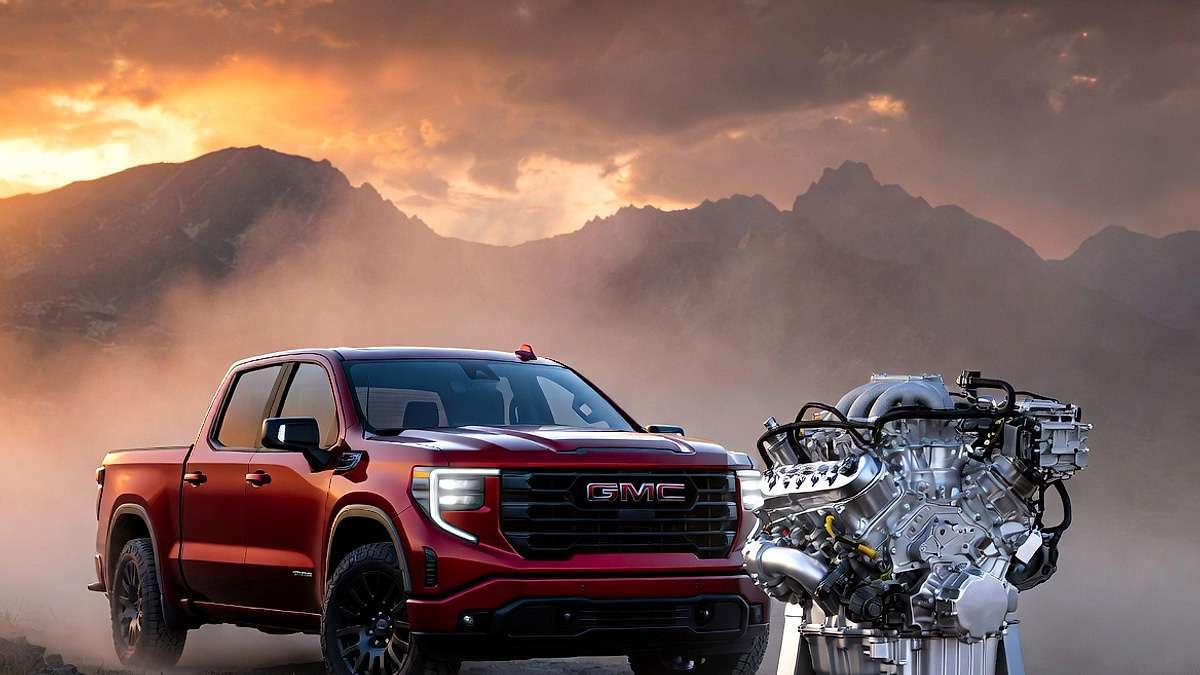

When TorqueNews senior reporter Denis Flierl published his article warning Silverado buyers to skip the 6.2L and the 3.0L Duramax diesel and stick with the 5.3L V8 as the only truly reliable engine option left in the GM half ton lineup, the response was immediate and intense. Readers on Facebook and LinkedIn did not hold back. They showed up with decades of real world ownership data, engineering credentials, and six digit mileage stories that collectively paint a far bigger picture than any single truck owner's experience. If you are sitting on the fence about which GM engine to trust with your hard earned money, what these readers are saying about GM engine reliability in the Silverado lineup is worth reading carefully. And if you are already deep into the 6.2L drama, you already know that the Silverado and Sierra 6.2L recall saga has left thousands of owners feeling stranded with no fix in sight.
"A Truck That Isn't Making Money Doesn't Do Its Owner Any Good"
The comment that stopped the scroll came from Patrick Burke, a working truck owner who cuts straight to the point in a way that no press release ever will. Here is what Patrick said, in his own words:
"Half ton trucks don't get a lot of love. As I look around parking lots I see mostly three quarter ton trucks and they don't have a scratch in the bed. So who's buying these half ton and sometimes two wheel drive trucks? Well, to be honest, first time truck owners and folks like me. I use my truck for truck things. It hauls everything from compost to car engines. My point being, the running gear needs to be hammer and nail. If the first truck is good, I'll buy another. I was never a big 350 fan. At 210 hp it barely was capable of towing. Yes you got there, but your mileage was terrible. So I became a big fan of the 4.8. I've had two in trucks, they lasted 25 plus years. Other than when the tech didn't tighten the oil filter and when the dealer dropped my last one off the lift, I've had no problems. A couple years ago I worked at a rental place and I heard all kinds of complaints about the new stuff. So I don't know how they expect me to spend $80,000 on a new one. A truck that isn't making money doesn't do its owner any good, no matter how pretty it is."
That last line right there. Read it again. A truck that isn't making money doesn't do its owner any good, no matter how pretty it is. That is the entire conversation in one sentence. Patrick is not a guy who buys a truck to impress anyone in the parking lot. He buys one to haul compost and car engines, and he needs it to start every single morning without drama. His loyalty went to the 4.8L V8, an engine that GM discontinued back in 2013, and the fact that he is still talking about it in 2026 tells you something powerful about what owners actually value when they spend their own money.
The 4.8L Vortec is worth a moment of respect here. It never had Active Fuel Management. It never had Dynamic Fuel Management. It was a simpler, iron block engine that just did the job for hundreds of thousands of miles without the complexity that has come to define GM's modern reliability headaches. The current 5.3L owner community dealing with oil consumption and DFM failures would look at a 4.8L owner's 25 year story and feel something close to envy.
The Engineer Who Asked the Most Important Question in the Room
Michael Noll, a senior engineering manager and former engine designer, posted a comment that cuts deeper than most. He is not angry. He is not ranting. He is genuinely puzzled. Here is what Michael said:
"I'm not trying to be negative, but as a former engine designer and test engineer, I really wonder how much physical testing these engines ever saw on a dyno. You can't anticipate real world testing on a computer."
That comment deserves to be hung on the wall at GM's engineering center in Warren, Michigan. Michael is touching on something that the automotive industry has been wrestling with for years. Modern engine development has shifted dramatically toward simulation and computer modeling, and those tools are extraordinary. But as any honest engineer will tell you, a computer simulation of how a DFM lifter behaves in a lab setting is not the same thing as 80,000 miles of Texas heat, towing a horse trailer, or sitting at idle in Colorado winter traffic. The pattern of DFM failures showing up across 2019 through 2026 Silverado and Sierra owners suggests that something in the real world testing loop was either missed or inadequately weighted. When a retired engine designer publicly wonders if a product was properly tested, that is not a casual observation. That is a professional with decades of pattern recognition telling you something worth hearing.
The 6.0L Golden Era and What GM Left Behind
Greg McMeekin brought a piece of the conversation that resonates with anyone who has driven a work truck for more than a decade. Greg's take is simple:
"The best engine GM ever made was the 6.0L for the 2500 series trucks. It's built like a tank. So any new engine should be based off that engine's success."
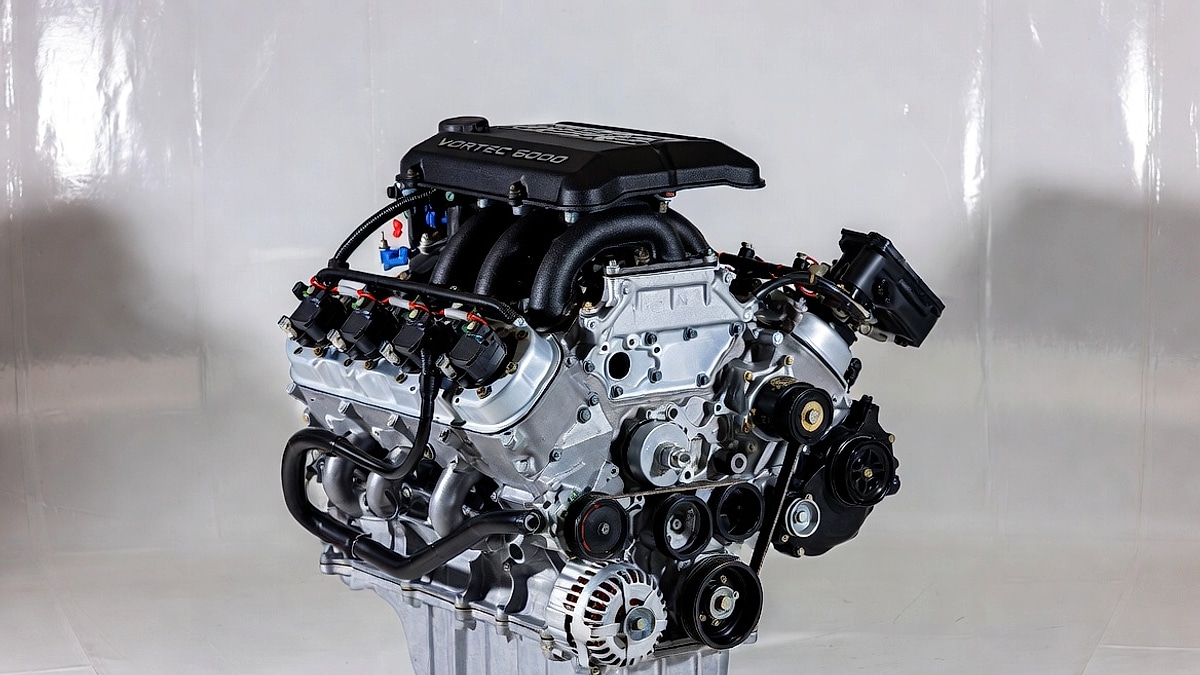
Greg is not wrong. The 6.0L LQ4 and its successor variants powered HD trucks through enormous abuse for years and developed a reputation for cast iron durability that owners still talk about today. The current 6.2L L87 recall crisis affecting thousands of half ton Silverado and Sierra owners stands in stark contrast to that legacy. The 6.2L was supposed to be the premium choice, the upgrade, the engine you paid extra for. Instead, it became the one Denis Flierl and now a growing chorus of owners are warning buyers to skip entirely.
The lesson Greg is pointing toward is one that automotive engineers and marketing teams sometimes forget: consumer confidence is built over generations, not over model years. The 6.0L earned its reputation through years of doing what truck owners asked of it without complaint. When GM moved away from that engineering philosophy in pursuit of fuel economy regulations and cylinder deactivation credits, something was lost. And right now, the company is paying the price in owner trust.
255,000 Miles and Counting: The 5.3L That Proves Maintenance Is Everything
Evo Panayotov jumped into the conversation with a data point that every 5.3L owner needs to read. Evo said:
"I am driving a 5.3L in a 2020 Suburban with 255,000 miles, all original. Maintenance is the key. Too bad the 6.2 have such problems and can't be saved with good maintenance. The 5.3 is a nice balance of good power and fuel economy but it lacks the punch of the 6.2."
Two hundred fifty five thousand miles on a 2020 Suburban with the original 5.3L engine. All original. That sentence alone is the most powerful argument for the engine that Denis Flierl recommended, and it is also the most honest endorsement of disciplined maintenance you will read in any truck community this year. How 2026 Silverado buyers are now hunting for the VIN code that confirms a DFM free 5.3L V8 tells you that buyers understand this distinction now, even if GM was slow to make it official. Evo's Suburban is proof that the 5.3L block itself is not fundamentally broken. What breaks is the fuel saving technology layered on top of it when it is not serviced correctly, or when it cycles too aggressively.
Evo also makes a gracious concession: the 5.3L lacks the punch of the 6.2L. That is true. But here is the question every buyer has to answer honestly: is that extra punch worth the anxiety of wondering when your $75,000 truck is going to leave you stranded on the highway with a seized engine and no clear fix from the dealer? A growing number of owners who took their 6.2L Silverados in for recall work were told by dealers that no fix was available yet. That is a real scenario, not a forum rumor.
500,000 Miles on a 4.8L Van: The Comment That Silenced the Room
If you want to talk about a truck doing its job, Jeff Melville shut down every argument about modern engineering being superior with this comment:
"I have a 2004 GMC Savana 2500 with a 4.8 engine, and a 4L80 transmission with over 500,000 miles. Still running strong. I have only had to put in one alternator and two water pumps. It still has 45 pounds of oil pressure at an idle, and runs like the day I bought it. Maintenance is the key. Oil changed every 5,000 miles with synthetic oil. Differential service, transmission service, radiator, and power steering fluid changed every 50,000 miles. No leaks whatsoever. Best van I ever owned. Never left me stranded, always fires right up every time I use it for flooring installs. Only had two brake jobs, one at 250,000 miles and another at 500,000 miles."
Half a million miles. One alternator. Two water pumps. Two brake jobs. Jeff is doing flooring installs with that van. He is working it hard every single day. And his bill of maintenance over that distance is arguably less than what some 2022 Silverado owners are spending trying to keep a DFM equipped 5.3L alive past 100,000 miles. The stories of Silverados throwing lifters and requiring engine replacements costing between $8,000 and $15,000 are a brutal contrast to Jeff's van story. The core ingredients of Jeff's success are not glamorous: discipline, consistency, and a refusal to let the oil monitor run the show. He changed his oil every 5,000 miles. He flushed his fluids on schedule. He treated the machine like a partner, not a given.
512,000 Miles and an Engine That Will Outlast the Newer Trucks Around It
Thom W brought the final word that made everyone pause:
"I think I'll keep my 2002 6.0L LQ4 as long as I can. 512,000 miles and counting. It ain't pretty, but it will likely outlast most of these newer model trucks today."
Thom's 2002 truck with 512,000 miles on the original 6.0L LQ4. When you read the comments under articles about 2020 GMC Sierra owners facing complete engine failure at 77,000 miles with a $15,000 repair bill, Thom's story lands with a different kind of weight. Greg McMeekin called the 6.0L built like a tank, and Thom is living proof. The LQ4 generation had no Active Fuel Management, no Dynamic Fuel Management, no cylinder deactivation of any kind. It was an honest, hard working engine that rewarded maintenance with longevity. Automotive journalist Tim Esterdahl over at PickupTruckTalk has covered the 2023 through 2025 Silverado 1500 known problems in depth and noted that the lifter failure issues on the 5.3L come in waves, appearing for a few months, going quiet, then returning. The pattern is inconsistent in a way that makes planning around it nearly impossible for a working owner.
The Moral That Runs Through All of These Stories
There is a through line in every single comment above, from Patrick's 4.8L that lasted 25 years, to Jeff's van at 500,000 miles, to Thom's LQ4 at 512,000 miles. It is not luck. It is not brand loyalty. It is a decision to treat a machine with intentional care, and to make purchasing decisions based on what a tool needs to do rather than what a sticker says it can do. The most expensive truck in the parking lot is not automatically the most capable working tool. In fact, owners who have lost faith in newer GM trucks are increasingly looking at what 2026 options remain truly reliable, and the answer keeps coming back to simplicity: fewer moving parts, consistent oil changes, and honest mechanical design.
The moral here is one that applies far beyond trucks. When you are making a major purchase decision, the wisest move is to listen to the people who are already two hundred thousand miles down the road, not the people standing at the dealership door. Their lived experience is worth more than any brochure.
Two Questions for You
Now it is your turn. Do you own a GM truck or SUV with one of these older V8 engines, the 4.8L, the 5.3L without DFM, or the 6.0L LQ4, and how many miles have you put on it without major mechanical issues? And if you are shopping for a new or used Silverado or Sierra today, are you avoiding the 6.2L entirely based on what you have heard, or do you believe proper maintenance can still make it a reliable long term choice? Share your personal experience in the comments section below.
Armen Hareyan is the founder and Editor-in-Chief of Torque News and an automotive journalist with over 15 years of experience writing car reviews and industry news. Now based in the Charlotte region (Indian Land, SC, he founded Torque News in 2010, which since then has been publishing expert news and analysis about the automotive industry. He can be reached at Torque News on X, Linkedin, Facebook, and Youtube. Armen holds three Masters Degrees, including an MBA, and has become one of the known voices in the industry, specializing in the landscape of electric vehicles and real-world stories of actual car owners. Armen focuses on providing readers with transparent, data-backed analysis bridging the gap of complex engineering and car buyer practicality. Armen frequently participates in automotive events throughout the United States, national and local car reveals and personally test-drives new vehicles every week. Armen has also been published as an automotive expert in publications like the Transit Tomorrow, discussing how will autonomous vehicles reshape the supply chain, and emerging technologies in vehicle maintenance.
Set Torque News as Preferred Source on Google
Follow us today...