

Key Takeaways Before You Read:
- Hundreds of Tesla Model Y owners respond to a hesitant spouse's commute concerns with real numbers on range and charging costs.
- Owners report that an 80-mile daily commute sits well within the Model Y's comfort zone, with one key home-charging habit making all the difference.
- Insurance costs vary widely, and one owner's surprising annual premium challenges the assumption that Teslas always cost more to insure.
- Scroll to see the comments or be the first to voice your opinion.
One question posted to a Tesla Facebook group this week stopped hundreds of owners in their tracks. It was not a question about performance or charging speed. It was about something far more relatable: one spouse ready to buy, and one spouse pumping the brakes.
Luke Lampros from St. Louis wrote in the Tesla Model 3 and Model Y Owners Club on Facebook: "My wife and I have been discussing getting a Model Y. I am all in on them, she is hesitant. She will be driving it to work. About 80 miles a day. Is anyone here upset with the purchase of their Tesla? We will have one gas car, for longer trips. Let me know if you feel you made the wrong choice. Also is your insurance a lot more?"
The post ignited a debate. Dozens of owners jumped in. And after 15 years of covering the automotive industry, I can tell you this: the answers reveal something the car commercials never show you.
The Real Question Behind the Model Y Purchase Hesitation
Let us name the problem that Luke is actually facing. His wife is not necessarily worried about the car. She is worried about committing to something unfamiliar, something that depends on a new routine, a new way of fueling up, and a new relationship with technology. That hesitation is valid. And it is exactly the kind of thing that gets ignored in the sales process.
The good news is that an 80-mile daily commute is genuinely one of the strongest use cases for a Tesla Model Y. The Tesla Model Y Long Range carries an EPA-rated range that far exceeds what she would use in a day, and real-world owners confirm this repeatedly. Eighty miles a day is simply not a stretch for this vehicle. Not even close.
What Actual Owners Say About Daily Driving With a Tesla Model Y
The owner replies to Luke's post cut straight to the point. One commenter said their gas car now has cobwebs on it. They kept it as a backup, just like Luke and his wife plan to, but they simply stopped needing it. That is a pattern you see constantly once a family adds a Tesla to the garage.
John Perkins offered one of the most practical answers in the thread. He said the Model Y handles 80 miles a day with ease. His advice was simple: get a Tesla Wall Charger at home and treat the car like a cell phone. Plug it in before bed. Wake up to a full charge. Never visit a gas station again for your daily driving.
That one habit shift changes everything. Owners who are experienced with the Tesla Model Y as a daily driver over thousands of miles consistently report that home charging transforms the ownership experience. You stop thinking about fuel. The car is always ready. And the savings add up fast.
Christina Taylor, a Tesla Model 3 owner who jumped in to support the thread, said she did not realize how much she was spending on gas until the Model Y made it visible. She put 1,200 miles on her car and realized that would have been four full tanks of gas in her old vehicle. The math hits differently when you see it in your own life.
Ashley's Story Speaks Directly to Luke's Wife
This is the reply that I think Luke needs to show his wife directly. Ashley Jaros shared her experience. She got her Model Y when her workplace called everyone back to the office. She drives 40 or more miles each way and says she absolutely loves it. She specifically called out how well the car handles stop-and-go traffic, and how the FSD system makes the commute far less exhausting.
That detail matters enormously. An 80-mile daily commute is tiring. It is not just about range. It is about the physical and mental toll of sitting in traffic for an hour or more each way. Tesla's driver assistance features address that directly. Owners who have put 30,000 to 60,000 miles on their Tesla Model Y often highlight the commute-fatigue reduction as one of the most underrated benefits of ownership.
Roderick Dryden gave an answer that was sharp and honest. He compared hesitating on a Tesla to hesitating on a smartphone versus a landline. He has owned his Tesla for seven years. He says he has nothing but positive things to report. He also addressed the common objection about charging time, pointing out that most people would rather spend a few extra minutes charging occasionally than pay three or four times more to fuel a gas car.
The FSD Factor and the Safety Angle No One Talks About Enough
Then there was Meagan Singleton's reply. She got her Model Y the day before she posted. She is an insurance agent. She drives through Costco parking lots hands-free and says the capability sold her on the spot. But the most important part of her story is personal.
Meagan had a seizure six months ago. She was diagnosed with brain cancer. Her husband was terrified of her driving alone. She wrote that the Model Y's driver assistance technology eases his anxiety when she is behind the wheel. That is a dimension of this technology that the industry almost never discusses. For families dealing with medical uncertainty, this kind of system carries meaning that goes far beyond convenience.
Kathy Graves offered a similarly practical suggestion for Luke. She said to have his wife rent a Tesla Model Y first. Try it for a day or a weekend. Experience it before committing. That is genuinely the right approach when a spouse is hesitant. Let the car make the case. Nobody buys a cell phone by reading the manual. First-time EV road trips and daily use tend to convert the skeptical driver far faster than any conversation can.
What About Tesla Model Y Insurance? Let Us Be Honest.
Luke asked a direct question about insurance. The answers were mixed, which is exactly what the data shows.
Roger Lewis said he pays about $3,500 a year for two Teslas combined. That works out to roughly $1,750 per car per year, which is significant but not shocking for a vehicle in this price range. Studies have shown the Tesla Model Y tends to carry higher average insurance costs than mainstream crossovers, largely because parts and repairs cost more when something goes wrong.
But Coty Kelly offered a more nuanced view. His long-range Model Y insurance went up about 10 percent compared to his previous vehicle. For an 80-mile daily commute, he said he felt completely comfortable with 180 miles of range at 80 percent charge, with plenty of cushion built in.
And Meagan, the insurance agent, said her annual premium for a 2026 Model Y came in at just over $1,200. She called it reasonable for a brand-new car. The variation is real. Your insurance rate depends heavily on your location, driving record, and credit profile, not just the car itself. And some owners have switched from one insurer to another and found dramatically better rates, so always shop around before you accept the first number.
Do get quotes from multiple carriers before you buy. Get them before, not after. That is a mistake too many buyers make.
How to Handle the Battery Charging Correctly for 80 Miles a Day
There is one practical tip that every new Tesla owner needs to hear. Do not charge to 100 percent every night for daily use. If your Model Y uses an NCA or NMC battery, setting your daily charge limit to 80 percent extends battery longevity significantly without leaving you short on range. Eighty miles a day on 80 percent charge leaves generous headroom, and the battery will thank you for it over time.
For an 80-mile daily commute, a standard charge to 80 percent on a Long Range Model Y gives you more than enough buffer. You are not even approaching the range ceiling. You are operating right in the middle of the battery's comfort zone. This is precisely the kind of commute the Model Y was engineered to handle without stress.
One Concern Worth Flagging Before You Buy
Cold weather can reduce Tesla Model Y range meaningfully, sometimes by 20 to 30 percent in extreme temperatures. If Luke's wife faces a Missouri winter and her commute stretches toward the 80-mile upper boundary, there may be occasional cold mornings where charging strategy matters more. The solution is the same: charge at home overnight, precondition the battery from the app before departure, and keep the daily limit slightly higher in winter months. With a Long Range trim, even a 25 percent range reduction still leaves comfortable headroom for an 80-mile commute.
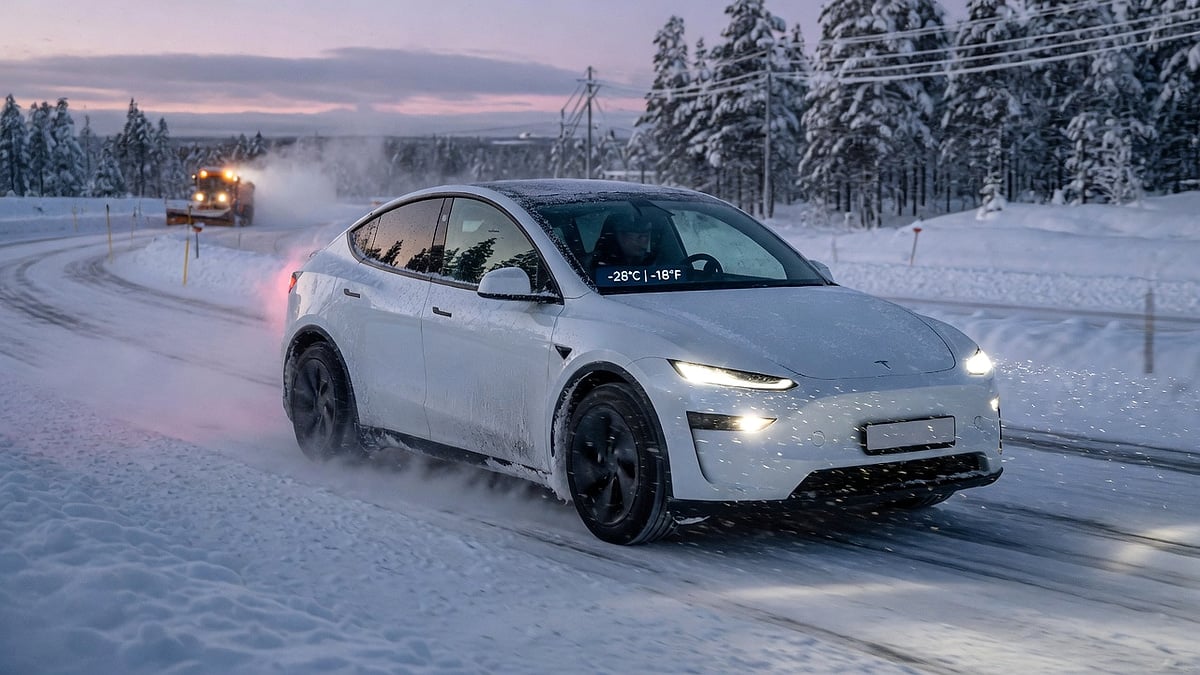
The Model Y is equipped with a heat pump, which makes it significantly more efficient in cold conditions than earlier EVs or competitors without the technology. That matters for a year-round commuter.
The Moral of This Story
Here is what the collective experience of these owners actually teaches us. The hesitation most people feel before buying an electric vehicle is not really about the car. It is about the fear of changing a habit. We fill up with gas because we always have. We know how long it takes. We know where to go. The routine feels safe.
But every owner in that Facebook thread reported the same thing after the switch: they did not miss the old routine at all. They missed the cost of gas. They missed the maintenance appointments. They did not miss anything about the experience of owning a gas car for daily driving.
The lesson is this: the best decisions in life often live on the other side of our hesitation. Luke's wife is asking the right questions. She is being careful. That is not a flaw. But the data, the range, the charging math, the fuel savings, the driver assistance technology, and the voices of hundreds of owners all point in the same direction. An 80-mile daily commute in a Tesla Model Y is not a stretch. It is the exact scenario this car was built for.
Take it for a test drive. Rent one for a weekend if you can. Let the car make the argument that no article, no YouTube video, and no well-meaning husband can make alone.
I have spent 15 years covering the automotive industry at TorqueNews. I have seen a lot of vehicles come and go. The Model Y is not without its quirks. Insurance repair costs can surprise new owners, and there are occasional issues worth knowing about before you buy. But for a two-car household where one vehicle handles a daily commute and the other handles road trips, the Model Y fits that role better than almost any other vehicle on the market today.
The question is not whether this car can handle 80 miles a day. It can, easily. The question is whether you are ready to let go of a routine that costs you more than it has to.
Have you or your spouse ever hesitated before buying an EV and later regretted waiting, or are you glad you took the time to think it through? And if you drive a Tesla Model Y for your daily commute, how has the reality compared to what you expected when you first got behind the wheel? Share your personal experience in the comments section below.
About The Author
Armen Hareyan is the founder and Editor-in-Chief of Torque News and an automotive journalist with over 15 years of experience writing car reviews and industry news. Now based in the Charlotte region (Indian Land, SC, he founded Torque News in 2010, which since then has been publishing expert news and analysis about the automotive industry. He can be reached at Torque News on X, Linkedin, Facebook, and Youtube. Armen holds three Masters Degrees, including an MBA, and has become one of the known voices in the industry, specializing in the landscape of electric vehicles and real-world stories of actual car owners. Armen focuses on providing readers with transparent, data-backed analysis bridging the gap of complex engineering and car buyer practicality. Armen frequently participates in automotive events throughout the United States, national and local car reveals and personally test-drives new vehicles every week. Armen has also been published as an automotive expert in publications like the Transit Tomorrow, discussing how will autonomous vehicles reshape the supply chain, and emerging technologies in vehicle maintenance.
Set Torque News as Preferred Source on Google
Follow us today...




Comments
My commute is 66 miles each…
Permalink
My commute is 66 miles each way, I leave the house at the recommended 80% and get home with 50%, charge for 3 hours at a leisurely 32 amps and repeat the next day. This is a 22 MY LR. I honestly don't even think around the range any more.
The 132-mile daily round…
Permalink
In reply to My commute is 66 miles each… by Ed Simmons (not verified)
The 132-mile daily round trip is the solid proof of concept for the 2022 Model Y Long Range, especially since you’re operating right in the "battery health sweet spot." By starting at 80% and ending at 50%, you’re only using about 30% of your usable capacity - roughly 22.5 kWh, which keeps the cell voltage low and significantly slows down long-term degradation compared to deeper discharge cycles. Your 32-amp home setup is perfectly matched for this routine, as it adds back about 30 miles of range per hour, meaning you’re fully recovered and ready to go before you’ve even finished dinner. This is the "set it and forget it" reality that completely eliminates range anxiety; you’ve turned a massive 66-mile commute into a minor background task that costs a fraction of what you’d be spending on premium gas for a luxury SUV.
Model 3, 125 mile daily…
Permalink
Model 3, 125 mile daily commute, average about 15% when I get home.150K on the car
Hitting 150k miles on a…
Permalink
In reply to Model 3, 125 mile daily… by Steven Riddle (not verified)
Hitting 150k miles on a Model 3 with a 125-mile daily grind is a massive testament to Tesla's drivetrain longevity. Ending the day at 15% suggests you're using about 70-75% of your usable capacity daily, which is a heavy workout for the cells, but clearly, the car is taking it in stride. At this mileage, you've likely saved enough in fuel and maintenance costs to have paid for the car twice over. It's the perfect real-world example that EVs aren't just "city cars"—they’re high-mileage workhorses that actually get better the more you drive them.
Electric vehicles do quite…
Permalink
Electric vehicles do quite well on flat surface roads, your mileage meter will usually be accurate. You must understand energy over work though. 235 miles across Kansas is one thing. It takes a whole lot more energy driving up a cutback mountain road.
Larry, You are correct about…
Permalink
In reply to Electric vehicles do quite… by Larry Crossley (not verified)
Larry, You are correct about the physics. Climbing a mountain pass is the ultimate test of "potential energy." While an EV can easily consume 2-3 times its normal energy rate on a steep ascent, the real thing happens on the way down. Unlike a gas truck that just turns that potential energy into heat and brake dust, an EV’s regenerative braking can recapture 60-70% of the energy used for the climb. It’s a wild feeling to crest a summit with 40% battery and arrive at the base of the mountain with 45%. Indeed, Kansas is predictable, I have studied there, but in the mountains, the "mileage meter" is just a guess until you factor in gravity!
80mi round trip? Many EVs…
Permalink
80mi round trip? Many EVs can do three days of that without charging... no problem unless you have original Nissan Leaf!
Even long road trips are easy these days. Charge at potty/food stops every couple hours.
Collin the "pioneer" days of…
Permalink
In reply to 80mi round trip? Many EVs… by Collin Cook (not verified)
Collin the "pioneer" days of range anxiety are officially in the rearview mirror. You're right that an 80-mile round trip is now a "once-every-three-days" task for almost any modern EV, especially since the average range for mid-tier models has climbed past 300 miles. Even the new 2026 Nissan Leaf has finally ditched its "short-range" reputation, offering over 300 miles and a NACS port to access the Supercharger network.
With over 70,000 DC fast-charging ports now dotting the U.S. and the "potty/food stop" strategy becoming the standard, road trips have evolved from a challenge into a simple routine. We’ve traded the stress of "will I make it?" for the much better problem of "which restaurant has the fastest charger?" It’s a great time to be driving electric.
I’ve been driving a Tesla…
Permalink
I’ve been driving a Tesla Model 3 Long Range for about 6.5 years as a road sales rep, and have 175K so far. It’s easily the best car I’ve owned. Aside from tires and occasional brake cleaning (still ~80% original), I haven’t spent anything on maintenance.
For an 80-mile daily commute, it’s a great fit. Going electric has been one of the best decisions I’ve made.
Patrick, 175k miles with 80%…
Permalink
In reply to I’ve been driving a Tesla… by Patrick Girard (not verified)
Patrick, 175k miles with 80% of your original brakes is a good "Tesla flex." For me it illustrates how regenerative braking transforms a high-mileage road sales role from a maintenance nightmare into a massive cost-saving advantage. At that mileage, a comparable gas sedan would have likely cost you $15k–$20k in fuel and service alone, not to mention the downtime for oil changes and timing belts.
For an 80-mile commute, you're essentially in the "sweet spot" where you're saving money every single mile without ever having to think about range. You've basically proven that for professional drivers, the Model 3 isn't just a car. 175k is just the break-in period!
Regarding the commute…
Permalink
Regarding the commute involving places like Colorado and the mountains. I drove last year from Colorado Springs to our local 14teener, Pikes Peak. It is true that the energy drain going up was very high. On the way down gravity recharged the batteries and the final result was nearly break even.