
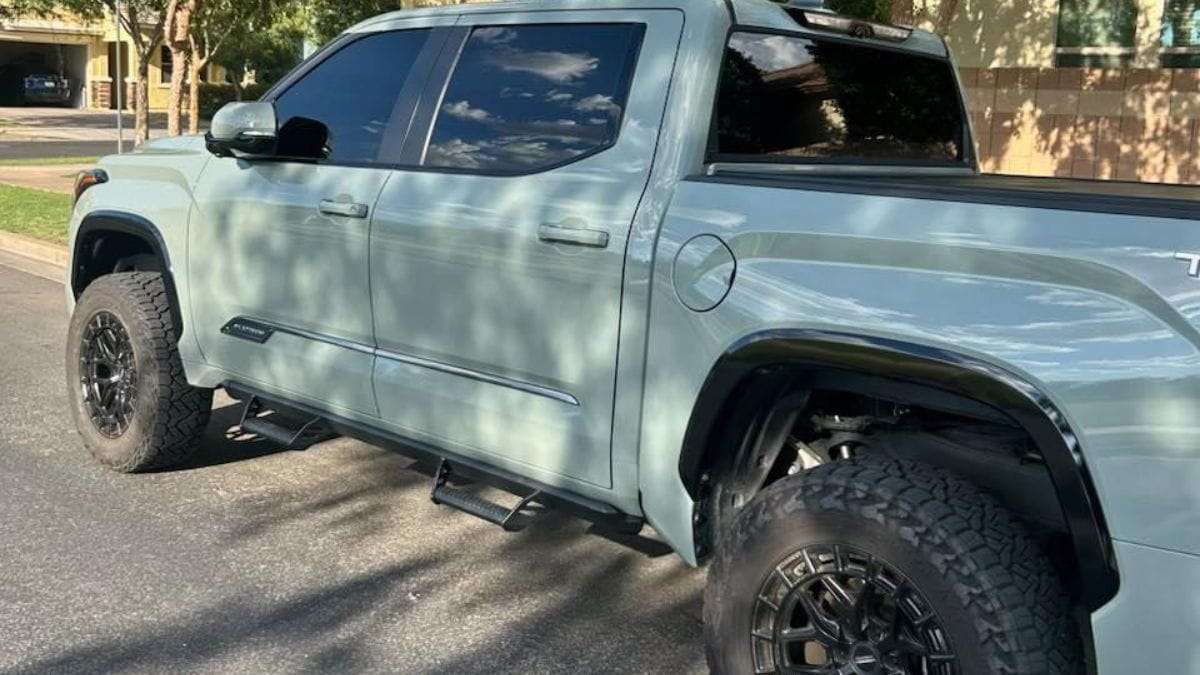

If you’ve ever bought a new truck that wasn’t exactly “new,” you know that uneasy feeling when something unexpected pops up later, something that makes you question whether the deal was really as clean as it looked. That’s what happened this week when a post from Keli Tena in the 2023–2026 Toyota Tundra Owners public group on Facebook caught my attention. It’s one of those situations that sound small at first, but it opens a surprisingly big question about how Toyota handles technology subscriptions on demo vehicles and whether buyers of those trucks should be treated differently.
“I bought my 2025 Toyota Tundra Platinum in April. It was a dealer demo so the general manager drove it a few months before it went up for sale. It was still considered new so I got the 2.99% financing. Last week I got a message that the Toyota Drive Connect expires in November. The dealer said they can’t do anything about it. I am upset! I was supposed to have it for free for 12 months. I am thinking of going straight to the dealership’s general manager and see if he will help, he never should have activated it. Any thoughts?”
That post sparked a wave of responses, and the conversation that followed revealed an interesting layer in how Toyota’s Drive Connect works, and how dealerships may not be explaining it clearly to customers.
When “New” Doesn’t Always Mean Brand New
Keli’s case feels like a trap a lot of buyers could fall into without even realizing it. The truck was listed as “new.” It came with the same financing rate as new models. But that little phrase, “dealer demo,” hides a few realities most buyers never think about. When a dealership puts a car into demo service, even if only for the general manager’s commute, the factory warranty clock starts ticking at that very moment. What Keli didn’t expect was that the same applies to technology trials, like Toyota’s Drive Connect subscription.
Chris Stoddard, one of the members in the group, explained it perfectly in the comments: “It gets activated at the date of first use unless it's put in waived status. If you waive it then you forfeit the trial period, so there really is nothing they could do to stop it. I wouldn't go in accusing them, not really their fault. Just explain it and ask if they'd be willing to cover a year’s subscription. It’s like 80 dollars, I think.”
That’s one of those answers that is both surprisingly pleasant and slightly unlikeable at the same time. Pleasant because it clarifies the process, unlikeable because it reminds us how complicated these tech-based ownership perks have become. It’s not Toyota’s navigation system that’s broken, it’s the communication between what the manufacturer offers and what the buyer actually receives.
If you think this problem sounds familiar, you’re right. At Torque News wrote about a similar case in “My 2024 Toyota RAV4 Holding Me Ransom, Toyota’s Drive Connect Was Free Now They Want Me To Pay It,” where owners faced almost identical confusion when their free period ended earlier than expected. That story highlighted how Toyota’s tech ecosystem can sometimes leave owners feeling misled, especially when the word “free” turns into “renew now” months sooner than promised.
How Toyota Drive Connect Actually Works and Why It Matters
For those unfamiliar, Toyota Drive Connect is the brand’s connected technology suite available on models like the Tundra, Sequoia, and some RAV4 trims. It’s a cloud-based navigation and assistant service that uses live data to update routes, traffic, and weather. It even provides a virtual assistant that understands voice commands like, “Find me the closest coffee shop,” and a “Destination Assist” feature with a live human agent to help you route your trip.
In other words, it’s Toyota’s answer to Tesla’s live navigation and over-the-air services. The main difference is that Toyota bundles Drive Connect as a subscription. Buyers usually get a free 12-month trial on new vehicles, but if that trial was activated months earlier - say, when the truck was used by a dealership manager - it keeps running even while the truck sits on the lot.
That is where the ethical question comes in. If the dealership sells the vehicle as “new,” shouldn’t all benefits restart at the time of sale? Paul Kelleher, another group member, thought so. “If the truck is classed as new, then you should receive all the benefits that came with it as new.” And honestly, that feels like a reasonable expectation. When a customer pays the “new” price, every feature, from the warranty to the Drive Connect subscription, should align with that purchase date.
But here’s where the system gets tricky. William Christy explained it more technically: “It's a dealer Demo. Everything (including the warranty) starts from the date of first use which in your case (and mine) is the day they turned it into a dealer demo. You may get them to extend it, but it's unlikely unless it was in writing that the subscription started the day you purchased it, not the day of first use.”
This isn’t just a Toyota thing. It’s an industry-wide practice. When a car is placed in demo service, manufacturers treat it as if it’s officially on the road. The Drive Connect, warranty, and even service intervals begin counting down from that first ignition. The dealer may still call it new, but the clock has already started ticking in Toyota’s database.
The Real Lesson Behind Demo Vehicle Purchases
Buying a demo vehicle can be a surprisingly pleasant deal at first glance. You get a “new” truck with a few thousand miles and often a small discount. It’s still clean, under warranty, and sometimes even qualifies for new-car financing. But as Keli’s story shows, that deal hides an unchecked risk — that some of your ownership perks may have already been partially used.
Shaun Williams, another commenter, put it simply: “I bought the same type of truck from the dealer that the general manager drove before being sold to me as ‘new.’ So far no issue, but never thought about the accounts expiring etc. If that’s the case with me then it is what it is for me.”
That casual acceptance reflects how most people see demo vehicles — a gray area between used and new. And maybe that’s fine, as long as the buyer knows exactly what they’re getting. The real issue is transparency. Dealerships should clearly state, in writing, when connected services were activated, so buyers can decide if the deal still feels fair.
This kind of transparency could also prevent misunderstandings like Keli’s. If the dealer had told her upfront that the Drive Connect was already running since the GM first synced his phone to the system, she might have asked for a one-year subscription credit or even negotiated it into the final price.
Interestingly, this entire debate connects with another story we recently covered: “I Purchased 2025 Toyota Tundra SR Double Cab 4x4 Under $40,000 And Found The Base Model Offers,” where we explored how Toyota’s latest Tundra models deliver more tech value even at lower trims. That piece dives into what makes the Tundra lineup competitive and how Toyota’s tech strategy has become both a strength and a source of buyer confusion.
How to Protect Yourself and Still Enjoy the Ride
So what can owners do if they find themselves in the same situation as Keli? The answer starts with communication. As Chris suggested, going back to the dealer calmly and asking for goodwill compensation is usually more effective than accusing them of wrongdoing. If the general manager drove the truck, he would know exactly when the subscription began. Sometimes, dealerships can call Toyota corporate and request a courtesy reset of the trial. It’s not guaranteed, but worth trying.
For many owners, though, it might make more sense to skip the frustration entirely. Drive Connect costs around $80 a year. If you are already paying for a truck north of $60,000, the subscription is minor compared to the time and stress of arguing about it. And let’s be honest, with modern smartphone integration, you can get the same functionality using Apple CarPlay or Android Auto for free. The built-in system might offer some nice-to-have features, but your phone can handle navigation, voice commands, and real-time traffic just as efficiently.
That’s something we discussed in detail at Torque News in “I Tried to Use My Toyota Tundra Remote Start Five Times and It Still Won’t Work, It’s Perfect,” where I argued that modern connected features should complement ownership, not complicate it.
Another takeaway from this case is how connected services reflect a larger trend in the auto industry. We’re moving toward a subscription-based car ownership model. What used to be one-time features are now pay-as-you-go perks. From BMW’s heated seat subscriptions to Toyota’s cloud navigation, automakers are turning services into microtransactions. It’s not inherently bad, but it challenges how we think about value. Should something like navigation, which has been a basic function for years, really expire on a timer?
That question points to the ethical heart of this story. Technology should enhance ownership, not gatekeep it. When free trials end early due to internal dealership usage, it erodes trust. And in a world where automakers are competing for long-term loyalty, trust might be worth more than any $80 subscription fee.
Finding Perspective in a Small Problem
Alana Williams had the lightest response in the thread: “I’d say … let it go. Let it goooo … There are worse problems.” And maybe that’s the healthy view here. The Drive Connect issue won’t affect how the Tundra drives or tows. It won’t change the fact that the 2025 Tundra remains one of the most powerful and refined trucks in its class, something we explored in detail in “I Used to Drive Dodge, Just After 1000 Miles in My Toyota Tundra TRD Pro I Finally Understand the Love,” which I recommend reading as well.
So yes, the Drive Connect glitch is unlikeable, but it’s also a reminder to focus on the bigger picture. You bought a great truck. You have technology that works beautifully even without the subscription. And if you’re really curious, you can explore the system’s full potential again by renewing the service later. The moral here is that sometimes, the best decision is to not let small frustrations overshadow the enjoyment of what you already have.
And there’s a practical moral too. Always verify the start date of every subscription and warranty before you sign. Ask the dealer directly when the clock started ticking. If they can’t answer, make them check with Toyota’s system before you finalize the purchase. That one step can save a lot of confusion later.
One more thing that might surprise new owners: Toyota’s hidden features. In “My 2025 Toyota Tundra’s Hidden Features Blew My Mind, Secret Sunroof Mode, Hidden Door Lock,” Torque News uncovered several lesser-known functions that make living with this truck even more enjoyable. If you have not read that yet, you’ll love discovering those tricks in the referenced article.
Understanding How Toyota Connected Services Affect Resale Value
Here’s a side of the conversation that almost no one talks about: how Toyota Connected Services like Drive Connect can influence your resale value. When a buyer looks at a used or demo Tundra, they’re not just evaluating mileage and condition anymore, they’re also checking how “connected” the truck still is. If the subscriptions have expired or been inactive for months, the new owner might face setup complications or missing software updates that affect the perception of value. Dealers know this, which is why some quietly reactivate systems before putting demo vehicles back on the market. It’s not dishonest, but it creates a gray area that buyers need to understand before making decisions based on digital features.
If you are planning to sell your Tundra in the future, it’s smart to keep your Toyota Drive Connect active or at least document its activation history. Buyers increasingly look for vehicles that have consistent software support, especially since Toyota continues rolling out cloud-based navigation improvements. It’s similar to maintaining digital service records, which now play a bigger role in private resale pricing. In this sense, paying that yearly Drive Connect fee could actually be an investment that keeps your truck’s connected profile current and desirable in the used market. It’s not about chasing a subscription trend, it’s about protecting your ownership record in an age where technology is part of the truck’s identity.
Why Buying a Dealer Demo Vehicle Can Be Both Smart and Risky
Let’s talk more deeply about the pros and cons of buying a Toyota dealer demo vehicle. Many shoppers see demo models as a way to save a few thousand dollars on a nearly new truck. They often come loaded with higher trims, like the Platinum or TRD Pro, and with only a few thousand miles. On paper, that’s a win. You get the new car financing, full warranty coverage, and all the new model year updates. But the reality, as Keli’s story shows, is that you’re also buying a truck whose warranty and subscription clocks started months earlier. And unless you double-check those activation dates, you may lose valuable time without realizing it.
The smart move before buying any dealer demo is to ask the dealership for the Toyota Vehicle Inquiry Report (VIR). This report shows exactly when the warranty started and what services have been activated. It’s not something most buyers know to ask for, but it can make a big difference in understanding your real coverage. A lot of owners in online groups later discover that their “12-month trial” or “5-year powertrain warranty” started back when the manager first synced his phone to the infotainment system. That is why the VIR can help you decide if the deal is truly worth it. The extra step may take five minutes, but it can save you from months of confusion later.
Learning to Use Toyota Connected Tech Without Paying Extra
Here’s a practical question that many new Tundra owners search for: how to use Toyota navigation and voice control features without Drive Connect. The good news is, you still can. Even if your Drive Connect trial expires, Apple CarPlay and Android Auto remain fully functional. You can still use Google Maps, Waze, or Apple Maps through the truck’s infotainment screen. These apps deliver real-time traffic updates, route optimization, and even voice control that’s often faster and more accurate than Toyota’s built-in assistant.
This is also where the idea of “digital minimalism in modern vehicles” comes into play. You don’t have to pay for every subscription to enjoy a connected experience. Instead, think of your Tundra’s infotainment system as a flexible platform. Use Toyota’s services for over-the-air updates and emergency support, but rely on your phone for navigation and streaming. Many tech-savvy owners actually prefer this hybrid approach, which balances convenience with cost savings. It’s a reminder that the smartest driver isn’t the one who pays for every connected feature, but the one who learns to use what’s already available.
Would you agree that Toyota should better explain how demo status affects Drive Connect and warranties before selling a vehicle? And have you found clever ways to get more value from your Tundra’s tech features without paying for every subscription? Share your thoughts and experiences in the comments section below.
In the end, Keli’s story is not about the $80 subscription. It’s about expectations, clarity, and the little things that shape how we feel about our expensive purchases. It’s about a customer’s trust in the word “new,” and how even a small technical oversight can lead to an unlikeable ownership surprise.
So if you ever buy a demo vehicle, ask when the connected services were activated. And if the dealership says “we’ll check,” make sure they do, in writing. That’s how you stay one step ahead in an increasingly connected, subscription-filled automotive world.
And now I’ll turn it to you. Have you ever bought a demo or “new” car that turned out to have services or warranties already ticking away? Would you push the dealer to make it right, or let it go like Alana suggested? Share your story in the comments below, because this one might hit closer to home than most of us realize.
Armen Hareyan is the founder and Editor-in-Chief of Torque News. He founded TorqueNews.com in 2010, which since then has been publishing expert news and analysis about the automotive industry. He can be reached at Torque News Twitter, Linkedin, and Youtube. He has more than a decade of expertise in the automotive industry with a special interest in Tesla and electric vehicles.
Images by Keli Tena and AI.
Set Torque News as Preferred Source on Google
Follow us today...







Comments
I bought my Tundra with 10k…
Permalink
I bought my Tundra with 10k on it. It was 6 months old. Previous owner paid for the full boat extended warranty. When I bought the truck, they said the warranty is non-transferable. I fought this all the way up to Toyota Canada and in the end, I just wasted my time.
Toyota Platinum warranty’s…
Permalink
Toyota Platinum warranty’s are fully transferable here in the US. Your seller may have cashed it out. You should be able to buy one through Toyota as well as long as your under factory warranty. That's also in the US.
Indeed. When we buy a truck…
Permalink
Indeed. When we buy a truck or any vehicle, we should realize that certain services or subscriptions aren't transferable.
I bought a Toyota Grand…
Permalink
I bought a Toyota Grand Highlander in November 2024. I thought that fancy IT /Navigation package was great. When I got the notice that my trial subscription was up, I was very disappointed. When I saw the cost to continue, I said Forget It! I’ve got all that on my iPhone. I’m saving my money for things I don’t already have, and I’m happy.
It’s frustrating when…
Permalink
It’s frustrating when expectations aren’t met. Directly speaking to the general manager could yield a solution.
What if those are…
Permalink
In reply to It’s frustrating when… by Ishu Bansal (not verified)
What if those are unrealistic expectations, such as seemingly in this case?