

Key Takeaways Before You Read:
- A dealer diagnosis without supporting electrical symptoms points to a deeper, more documented problem in the 2019 Highlander that owners at 70,000 miles need to know.
- One free 15-minute test at any auto parts store can confirm or eliminate the most expensive repair on Rachel's list before she commits to anything.
- The Toyota Highlander community reaches near-unanimous agreement on the $1,300 monthly payment question, and their reasoning applies to every owner facing a similar crossroads.
- Scroll to see the comments or be the first.
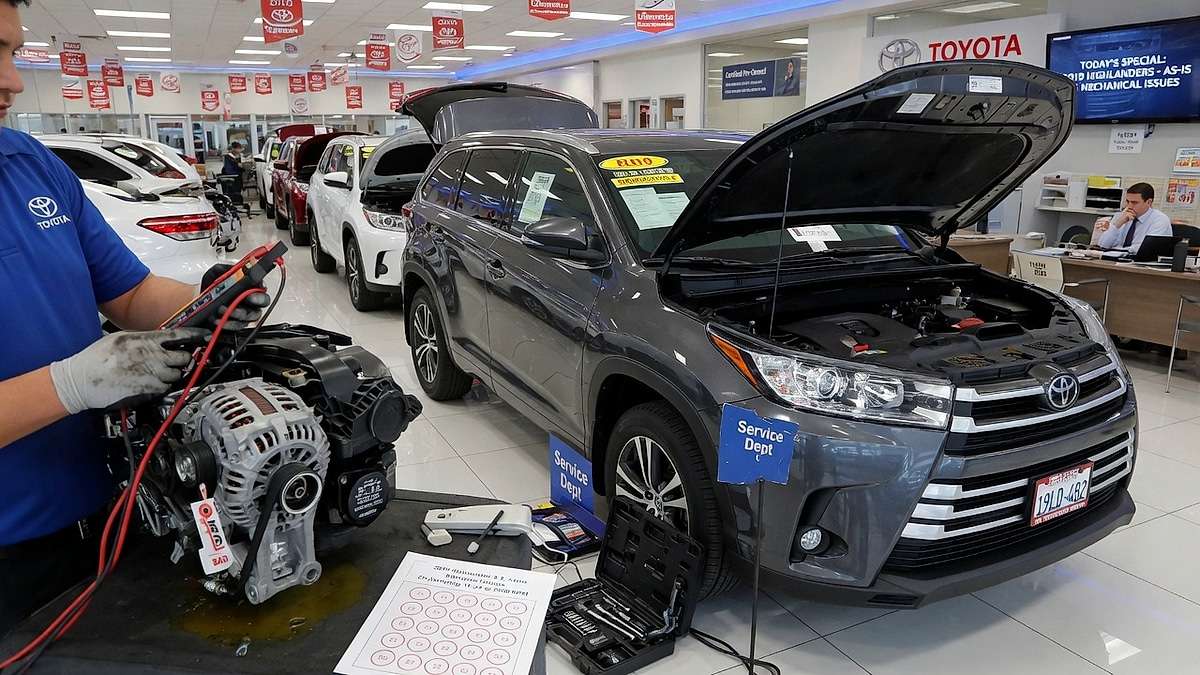
A 2019 Toyota Highlander owner faces a confusing dealer diagnosis, a second mechanic who disagrees, and a financial crossroads that thousands of SUV owners recognize immediately. With 77,000 miles on the clock and symptoms that are easy to dismiss, Rachel's situation exposes a pressing problem in automotive ownership: how do you know when to trust a diagnosis, and when to push back? After 15 years covering automotive news at Torque News, I can tell you this story hits every nerve. The decisions Rachel makes in the next few weeks could mean the difference between a smart $400 repair and a catastrophically unnecessary $1,300 monthly payment. And the Toyota Highlander community has spoken loudly about what she should do.
Here is Rachel's full post from the Toyota Highlander Owners Club on Facebook:
"What would you do? I have a 2019 Highlander SE with 77k miles. Dealership says my alternator is failing, but I have no issues other than a noise that apparently only I can hear (it sounds like a faint whine) and sometimes it kinda jumps shifting into gear (not every time, maybe a couple times a week). I do not have any electrical issues. The car starts without hesitation, lights never dim or flicker, doesn't stall out. Dealership also recommended a transmission flush and 2 new control arms on the front.
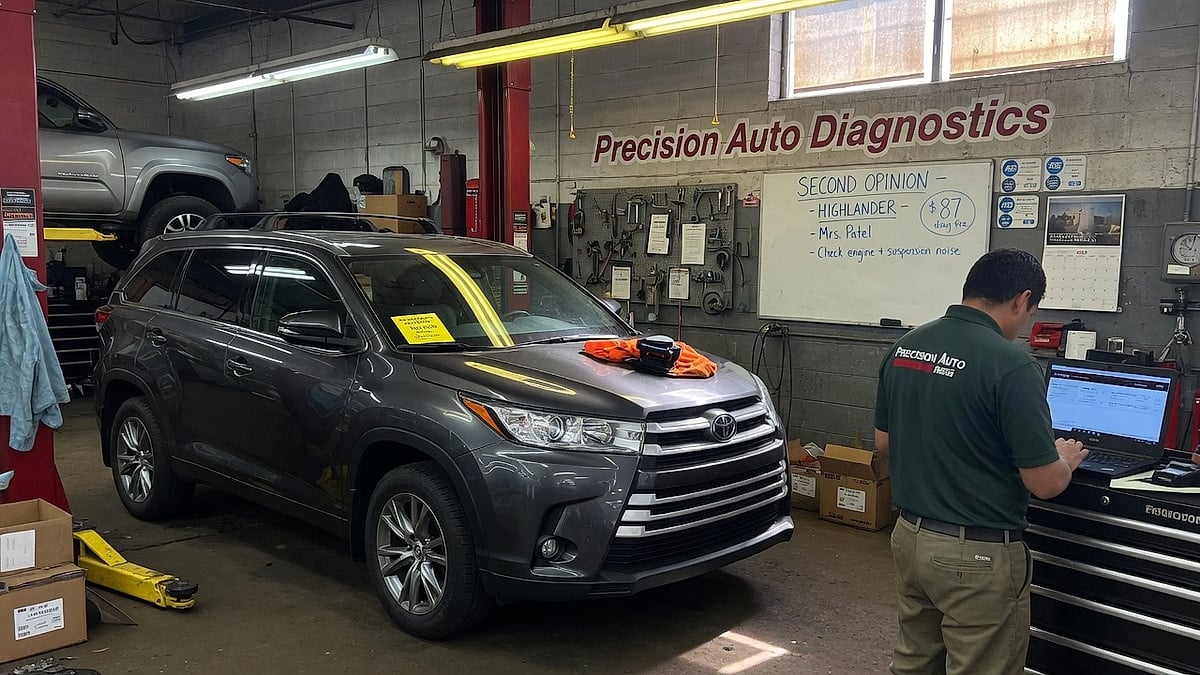
"I took my Highlander to another mechanic and he couldn't find anything with the alternator and didn't seem to think there's an issue with the alternator. And they also couldn't hear the noise (dealership couldn't either).
"Would you keep driving it until something definitively happens or get out from under it before something goes wrong and they give you $17 for trade-in?
"Also, my car payment is less than $700, and if I traded it for the only vehicle I even remotely like, it'd probably jump my payment to $1300. Please, help me, what to do?"
That is a remarkably clear, honest account of a genuinely confusing situation. And the response from the community was just as honest.
Why the Alternator Diagnosis Does Not Add Up for This 2019 Toyota Highlander
Let's start with what a failing alternator actually looks like. A failing alternator typically causes dimming or flickering headlights, a battery warning light on the dashboard, electronics behaving erratically, and difficulty starting the vehicle. Rachel reports none of these. Her car starts without hesitation every time. Her lights never flicker. There is no warning light. There is no stall. The classic hallmarks of alternator failure are completely absent from her story.
The community picked up on this fast. I also commented and proposed her to ask the dealership to substantiate their position. What makes them think the alternator is failing? A diagnosis without supporting evidence is not a diagnosis. It is a guess. And in Rachel's case, a second independent mechanic found nothing wrong with the alternator either. Two mechanics, zero confirmation. That tells you something.
Our own TorqueNews reporting on the real-world costs to maintain a Toyota Highlander for 100,000 miles found that alternator failures do happen on Highlanders, but they present with clear, measurable electrical symptoms. Rachel has none of those symptoms. The alternator diagnosis, as it stands, is not supported by her reported experience.
The Transmission Whine in a Toyota Highlander at 77K Miles Is the Real Story
Here is where the community really zeroed in, and where the facts start to build a different picture entirely. A significant portion of the commenters concluded that Rachel's faint whine and occasional rough shifting have nothing to do with the alternator.
Commenter Jenna proposed a practical test most people miss: "Press the gas, then let go, and see if the whine goes away." That is a smart, real-world method to distinguish between noise that is RPM-dependent, which points toward the engine or alternator, and noise that is load-dependent, which points toward the transmission. If the whine fades when Rachel lifts her foot off the gas, the alternator is almost certainly not the culprit.
Group member Sammy brought in direct personal experience: "They told me alternator but it was actually the transmission. Got the transmission replaced." Commenter Alan confirmed a nearly identical story with his 2021 Highlander at 67,000 miles. These are not random guesses. These are owners drawing from pattern recognition.
And the pattern is documented. Our investigative coverage of Toyota Highlander transmission failure explaining the $8,000 repair affecting 2020 to 2024 models found that Toyota issued Technical Service Bulletin T-SB-0008-21 acknowledging a documented mechanical defect involving the front carrier assembly pinion shafts. The primary symptom described in that bulletin is a whine or grinding noise under drive conditions. Rachel is describing exactly that.
Now, Rachel drives a 2019 model. The TSB primarily covers 2020 to 2022 Highlanders. But the 8-speed UA80 transmission family has a documented history stretching back through the 2017 model year. Federal complaint data on CarComplaints.com shows multiple 2019 Highlander owners reporting whining noises at around 60,000 to 70,000 miles, with mechanics ultimately diagnosing transmission failure. One NHTSA complaint filed in March 2025 describes a 2019 Highlander at exactly 70,000 miles, whining noise with no warning lights, and a transmission replacement diagnosis from an independent mechanic. That is Rachel's situation, almost to the mile.
Our coverage of why a 2021 Toyota Highlander owner at 65,000 miles needs a new transmission reinforces the pattern: the noise often starts subtly, shifts become slightly rough, and the transmission eventually fails without a dramatic warning event. The early symptoms are easily dismissed, and some dealers even call it normal operating noise.
What the Toyota Highlander Community Says Rachel Should Actually Do Right Now
The most credible and consistent advice in the thread points in one clear direction: slow down and verify before acting.
Commenter Nathan made the most technically sound recommendation in the thread. He suggested inspecting the transmission fluid first, noting that a reputable shop can determine a lot from the condition of the fluid alone. Dark fluid with a burnt smell signals serious internal wear. Clean, clear fluid suggests the gearbox may still be healthy enough to address with a drain and fill. That single inspection step could tell Rachel more than all the noise-chasing combined.
Commenter Alex seconded this approach with specific steps: check the alternator through a proper voltage test at a separate shop, and if the transmission fluid looks bad, do a drain and fill, not a flush. That distinction matters enormously. Our reporting on the sealed automatic transmission flush deception revealed by a mechanic explains why a full flush can actually harm a transmission that already shows early wear. The high pressure of a machine flush can dislodge debris and force it through passages that the transmission was managing to live with. A simple drain and fill is almost always the correct first step.
Commenter Mike offered the most direct opinion in the thread: "Failing transmission. Not alternator." No hedging, no qualifiers. And his confidence is backed by community pattern recognition from dozens of similar Highlander posts over the past several years.
Our investigation into what happens when a Toyota Highlander owner is charged $190 for a 45-minute ghost transmission diagnosis shows that intermittent transmission symptoms are notoriously hard to replicate on demand in a service bay. The fact that neither mechanic could hear the noise does not mean the noise does not exist. Intermittent early-stage transmission issues frequently disappear under controlled conditions and return during normal driving.
The $1,300 Monthly Payment Question Every Owner in Rachel's Position Needs to Answer
This is where the conversation got loud and clear. There is no meaningful dissent on this point anywhere in the thread.
Commenter Michael said it plainly: "No car is worth $1,300 a month." Another group member Logan ran the math: "$1,300 a month is $15,000 a year. You are paying close to $20,000 a year for a car." Commenter Taylor added: "$1,300 car payment is honestly not worth it." Commenter Anthony gave the simplest version of the consensus: "Don't get a $1,300 month car note."
Rachel already knows this. Her current payment is under $700, which is not cheap, but it is a known quantity attached to a vehicle she already owns and understands. Jumping to a $1,300 payment because a mechanic suspects a failing part that a second mechanic cannot confirm would be one of the most expensive overreactions in automotive ownership.
Our coverage of how a Toyota Highlander owner with two failed transmissions said goodbye and bought a Ford Explorer makes the point that there are situations where trading out makes sense. Two documented transmission failures in one year qualifies. An ambiguous whine that two mechanics cannot confirm does not.
The only real counter-argument in the thread came from commenter Randy, who said peace of mind has value. He suggested spending the day buying a new car. That is not unreasonable advice for a person who cannot tolerate uncertainty. But even Randy acknowledged that the new vehicle should not be a $1,300 payment. He is making a psychological argument, not a mechanical one.
How to Properly Test a Toyota Highlander Alternator Without Relying on a Dealer Estimate
Rachel needs a voltage test, and she needs it done independently. Any auto parts store, including AutoZone, O'Reilly, or Advance Auto Parts, will test the alternator output for free while the car is running. A healthy alternator on a 2019 Highlander should produce between 13.5 and 14.8 volts at the battery terminals. Anything below 13 volts while the engine is running confirms a charging problem.
The key symptom that separates a truly failing alternator from one that merely sounds unhappy is electrical behavior. A whining sound in an alternator can come from worn bearings or a failing diode, and sometimes that noise is present even when the charging output is still within spec. Rachel reports no electrical symptoms at all. That means even if the alternator makes some noise, it may still be functioning correctly and may not need replacement yet.
Getting a free voltage test takes 15 minutes and costs nothing. It produces hard evidence. Hard evidence is the only basis on which Rachel should spend money on her 2019 Highlander, or spend money on a new vehicle to replace it.
Our coverage of the 2021 Toyota Highlander owner whose transmission died at 40,000 miles and faced a three-month wait for a backordered replacement shows how fast things can escalate when owners wait too long on confirmed transmission symptoms. Rachel's situation is not confirmed yet. That is actually good news. She still has time to act methodically.
What Rachel's 2019 Highlander Control Arm Recommendation Means
The dealership also recommended two new front control arms. This is worth addressing separately because it is easy to dismiss as upselling, but control arm wear is a real concern on higher-mileage SUVs.
At 77,000 miles, front control arm bushings can begin to degrade, particularly if the vehicle has been driven on rough roads. The symptoms of worn control arms include a clunking noise from the front suspension, pulling to one side, and uneven tire wear. Rachel did not mention any of these. She described a whine and occasional rough shifting. Those are not control arm symptoms.
The recommendation for control arms, combined with the unconfirmed alternator diagnosis and the transmission flush recommendation, does suggest a pattern of recommend-first, verify-later service writing. That pattern is common at dealerships, and it is something every owner should question before authorizing any repair. The community's skepticism, summarized by commenter Jon as "never listen to the dealer, known as stealers," may be harsh in its language, but it reflects a real dynamic that owners of higher-mileage vehicles encounter regularly.
Motor Biscuit has covered this broader Toyota transmission pattern, noting that a class action lawsuit filed in 2020 against Toyota alleged loss of power, transmissions stuck in gear, rough shifting, and early transmission failures across the 2017 to 2020 Highlander generation, with over a million Toyota vehicles named in the suit.
The Moral Lesson Every Toyota Highlander Owner Needs to Hear Right Now
Rachel's situation teaches something that goes beyond mechanics and monthly payments. The wisest decision-makers in any domain, automotive ownership included, are the ones who insist on evidence before they act. They do not panic at the first sign of a potential problem. They do not dismiss a potential problem out of hand. They gather facts. They ask for substantiation. They get a second opinion. They run a cheap diagnostic before committing to an expensive repair.
Rachel has already done the right thing by seeking a second mechanic. That instinct is correct. The community is affirming it. The next step is to get a free voltage test on the alternator, inspect the transmission fluid, and document all of it in writing on every service invoice. Documentation creates the paper trail that protects owners if a warranty claim or goodwill repair negotiation becomes necessary later.
Our reporting on the 2019 Toyota Highlander owner warning for owners and used car shoppers makes a point that applies directly here: small problems on a Highlander at 77,000 miles do not automatically mean disaster. But unverified small problems, left to fester without documentation, can become large problems that the owner has to pay for entirely out of pocket.
The biggest mistake is not ignoring a real problem. It is overreacting to an unconfirmed one and doing something financially catastrophic in response to a faint whine that two mechanics cannot yet reproduce.
Rachel has a 2019 Highlander that starts reliably, drives mostly without drama, and costs her under $700 a month. That is not a vehicle to abandon without evidence. That is a vehicle worth fighting for, with the right information in hand.
Have you faced a similar situation where a dealer gave you a diagnosis that a second mechanic could not confirm? And if you own a 2019 Toyota Highlander and have experienced a faint whine or occasional rough shifting, did your repair turn out to be the alternator, the transmission, or something else entirely? Share your experience in the comments section below, because your story may help Rachel and thousands of other Highlander owners make a smarter decision.
About The Author
Armen Hareyan is the founder and Editor-in-Chief of Torque News and an automotive journalist with over 15 years of experience writing car reviews and industry news. Now based in the Charlotte region (Indian Land, SC, he founded Torque News in 2010, which since then has been publishing expert news and analysis about the automotive industry. He can be reached at Torque News on X, Linkedin, Facebook, and Youtube. Armen holds three Masters Degrees, including an MBA, and has become one of the known voices in the industry, specializing in the landscape of electric vehicles and real-world stories of actual car owners. Armen focuses on providing readers with transparent, data-backed analysis bridging the gap of complex engineering and car buyer practicality. Armen frequently participates in automotive events throughout the United States, national and local car reveals and personally test-drives new vehicles every week. Armen has also been published as an automotive expert in publications like the Transit Tomorrow, discussing how will autonomous vehicles reshape the supply chain, and emerging technologies in vehicle maintenance.
Set Torque News as Preferred Source on Google
Follow us today...







Comments
Automotive repair shop owner…
Permalink
Automotive repair shop owner with 25 years of experience that specializes in Honda and Toyota in Delaware. Toyota Highlanders are great vehicles! Sure, this is the early signs of some kind of failure! Wait until the problem is more consistent and pronounced, it's most likely not a catastrophic failure on that vehicle!
Never Go To The Authorized…
Permalink
Never Go To The Authorized Dealership First...With A 2019 Toyota..Unless You Have A Warranty Implied...Always 5 Star Independent Auto Repair Shops...And Yes...Toyota CVT Transmissions Have Had Their Shifting And Torque Converter Issues...
I have a 2022 Toyota…
Permalink
I have a 2022 Toyota Highlander XLE. I am having this same exact issue. I took it into Toyota under warranty and they said the transmission was fine. I got a second opinion at a reliable mechanic shop AFTER the vehicle #Warranty ran out and they said your transmission is bad and needs to be replaced. It will be $9400. So Peterson Toyota in Fort Collins Colorado did the absolutely wrong thing.
Regarding your clame of the…
Permalink
Regarding your clame of the alternator outputing 13 to 14 volts that is only true on older cars. On the 2019 toyota highlander it has a computer controlled alternator and the voltage can be as low as 12.5v with nothing wrong and can be as low as 10v if it has a bad battery with nothing wrong with the alternator. Taking it to a automotive parts store is a good idea you just need something a little more complex than a simple dvom to confirm the alternator is bad.
As a master technician I…
Permalink
As a master technician I have had alternators that can keep a battery charged correctly but can leak AC current and can cause many control units to not operate correctly. This can cause all types of problems throughout the vehicle. Also causing damage to many control units. Auto part stores don't always check for this. They just check for output. Many new vehicles depend on a control unit to control the output of the alternator. So if it has garbage AC current leaking, it will put out garbage charging.
I owned a van that developed…
Permalink
I owned a van that developed a power steering leak. it had a whine (when turning) when fluid was low. i just kept adding fluid as i was short money at the time. i knew the problem when i heard that whine. battery and alternator issues would generate random electric issues, we always check battery first, then alternator. we do have a 2013 Ford focus that had a puzzling electrical issue , but only when my son in law drove it. all the warning lights would start going off and the car would stall. if you let it sit several hours, it would start right up. if my daughter drove it, or my husband, it wouldn't have a problem. we found a retired Ford mechanic who specialized in electrical issues. he took it as a personal challenge. turned out to be the blue tooth module for the radio. my son in law was the only person who had connected his phone, so every time he drove it his phone auto connected and within a few minutes of driving, things started going wrong. he chose not to replace the Bluetooth module, as it cost over 800 for the part. he just turned off the blue tooth on his phone. the car has run great ever since.