
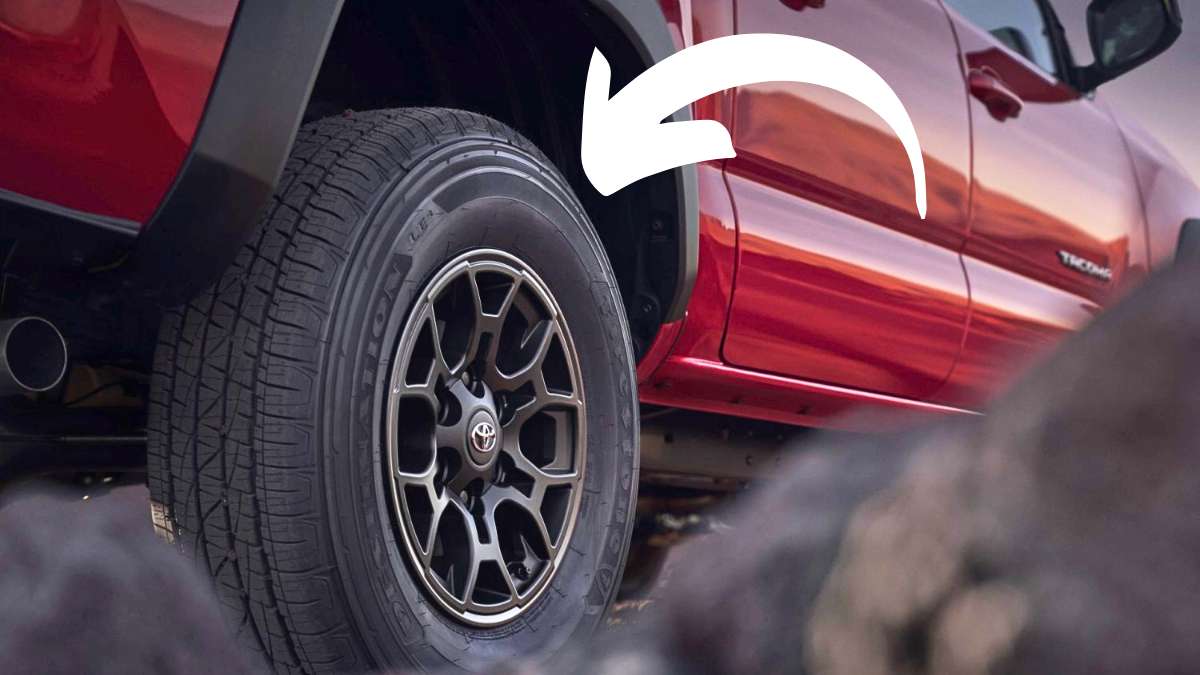

This afternoon I was scrolling through the Toyota Tacoma Facebook group and this interesting post grabbed my attention. Something about it feels off, like a red flag you can’t ignore. If you’ve ever stared at a repair quote that made your jaw drop, you’ll relate. The story that follows is about cost, trust, and the choices every vehicle owner faces when the unexpected hits.
Frank Novello, who owns a 2023 Toyota Tacoma TRD Off Road with 74,000 miles, put it plainly in the 2016 Thru 2023 Toyota Tacoma Owners public group:
"Dealer wants $1500 to replace rear passenger wheel bearing. 5 hours of labor and the part is $687. Is that too much? Sadly I can’t fix this myself because I don’t have the press for the work."
Reading that, you can almost feel the stress. Five hours of labor, $687 for the part, and a $1,500 sticker shock. It’s enough to make any Tacoma owner hesitate.
Understanding Toyota Tacoma Wheel Bearing Replacement Costs
The first responses were immediate and direct. Dan Haley warned: “Please don’t take anything to the Toyota dealer. Find a small shop with references.” And Linda Koenig added nuance: “There are some small shops that still let you supply the part and you pay them for labor. As someone who's been on both sides of the coin, I can tell you they'll mark up the part price, and labor prices are very high, and the mechanic over 90% of the time doesn't see all that, as it goes to management, shop rent, supplies, etc… So just a little food for thought, and quite a bit of savings, if you can find the right person.”
These insights reveal a common experience: dealer labor rates are often high, and parts can carry hidden markups. Knowing the breakdown of cost isn’t just about dollars, it’s about understanding where your money goes.
Christian Yang reminded readers of the trade-off: “But by going to the local Toyota dealership you will at least get a factory warranty.” That’s an important consideration. Warranties bring peace of mind and protection, though sometimes at a premium. And then there’s Hunter Holland sharing a regional perspective: “In Florida I recently had to get an axle and wheel bearing. The local shop quoted 1200 for parts and labor.” Costs vary based on location, vehicle specifics, and shop reputation.
Understanding what a wheel bearing does and how long it should realistically last can make a huge difference when you’re staring at a repair bill like Frank’s. In a detailed guide I wrote on keeping wheel bearings healthy and minimizing expensive repairs. Wheel Bearing Maintenance and Repair to Help Them Last the Lifetime of Your Car I explain common wear patterns preventive checks and simple steps that can help you avoid premature failures or unnecessary part replacements. Tying that insight together with the Tacoma discussion gives you a fuller picture of not just how much a repair might cost but how and when the part should fail in the first place.
Dealer vs Local Shop Repairs: What’s the Right Choice?
Jeremy Wilcock made a key point that Tacoma owners should keep in mind: “Since your Tacoma is 2023 I’d tell them to warranty it. Wheel bearings don’t just go out.” Roger Klemkosky added perspective from his past experiences: “I paid just under $500. Don't remember exactly but no more than $500 for the driver side rear bearing at a local shop that's done a lot of work for me over the years. That was a Jeep. Don't know if Tacoma's are very expensive.”
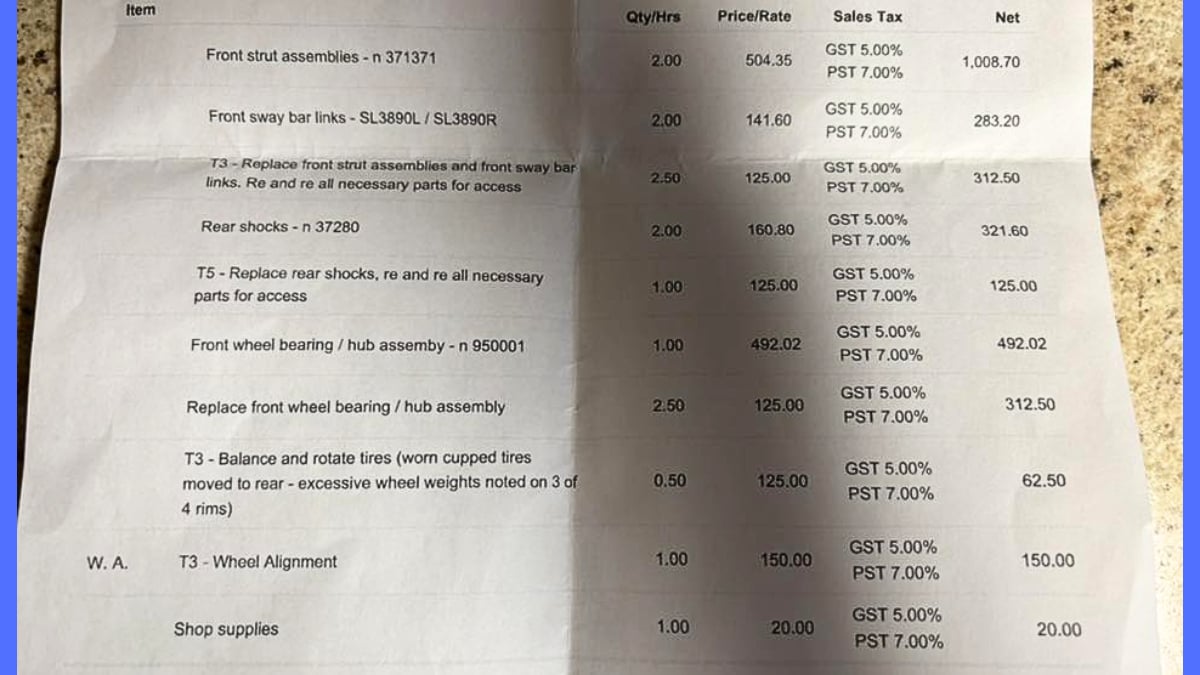
And yet, not all experiences are straightforward. Jerri Mclellan from Canada highlighted how prices can jump unexpectedly: “So I’m in Canada. West coast. I just did shocks, struts, and wheel bearings. The total was $3,458.”
Finally, John DeSouza offered the DIY perspective: “Way too much. DIY and bring it to any shop with a press and have them pressed then put it back.” Not everyone has the tools, skill, or confidence to take that route, but knowing it exists gives options and control over costs.
When it comes to Toyota repairs a high bill isn’t the only challenge many owners face — sometimes the problem itself gets misdiagnosed in the first place. In fact, I previously wrote about how one common Toyota wheel hum issue often leads owners and even dealerships down the wrong diagnostic path before the correct fix is applied, something that can cost time and money without solving the real problem. This Repair Fixes A Huge Issue With Lots Of Toyotas On The Road Today. That story highlights why it’s worth asking questions and seeking second opinions when a repair quote feels steep, or the symptom just doesn’t add up.
When comparing dealer and local shop repairs, consider your priorities: cost, warranty coverage, speed, and how much you trust the shop’s experience. There’s no one-size-fits-all answer, but evaluating each factor carefully can save money and stress.
Sometimes the real cost of a repair isn’t just what’s on the invoice but how confident you are that the work was actually needed and done right. I’ve written before about a simple “touch test” technique that can help vehicle owners avoid a common repair scam and better evaluate whether a symptom truly points to a specific part failure like a wheel bearing or something else entirely. Avoid Common Car Repair Scam With This Simple Touch Test. That kind of knowledge empowers you to ask smarter questions of dealers and shops so you’re not left wondering if the price you paid was really justified.
How to Make Smarter Tacoma Repair Decisions
This discussion about Frank’s Tacoma reveals a larger lesson: the best decisions come from understanding all your options. Ask questions about parts versus labor costs. Research local shops with references. Check warranty coverage before committing to a dealer repair. And recognize your own limitations. There’s no shame in not having a press or the skills for DIY repairs.
These moments aren’t just about money, they’re about building awareness, patience, and responsibility. When you take the time to weigh options, you not only make better choices for your vehicle, but also develop habits that help in other areas of life. You learn to balance trust, cost, and convenience. You become a more informed, selfless, and thoughtful decision-maker.
Tacoma owners, or anyone facing repairs on modern vehicles, can benefit from these takeaways. Sometimes, the first number you see isn’t final. Small shops may offer savings, but they need to be reputable. Dealers provide security, but often at a premium. And DIY is an option only for those who are confident and prepared. Being aware of these paths helps you make a decision that fits your situation, without being rushed by fear or sticker shock.
Not every Tacoma owner has a press or the time to wrench on their truck, but learning even a few DIY skills can save money and boost confidence when facing repair quotes that feel steep. In a piece I wrote about how hands‑on education can make a real difference for Toyota owners. In "Best Education for DIY Mechanics and Their Toyotas" Torque News reporter Tim Boyer walk through practical ways owners can safely build skill and knowledge without needing a full professional shop setup. That perspective reinforces the idea that the more you understand about your vehicle the better equipped you are to evaluate whether a dealer price is fair or if a local shop or DIY path makes more sense.
Lessons Learned From Community Advice
Frank’s post and the responses it drew are a reminder of the value of community. Experienced voices, even if unexpected or a little unlikeable, offer insight you might not find in manuals or invoices. From warranty advice to small-shop tips to DIY solutions, the thread reflects how shared experience can guide decision-making.
It’s more than a discussion about $1,500. It’s about learning to pause, evaluate, and consider multiple paths. That’s a skill that translates beyond vehicles to everyday decisions. Being thoughtful, seeking input, and understanding context isn’t just smart, it’s responsible.
f you found the Tacoma wheel bearing discussion insightful you might also be interested in another real‑world service‑vs‑dealership scenario that just came up. A local shop owner recently shared a detailed account of a Honda Accord that ended up costing its owner more because warranty coverage was bypassed and unnecessary parts were replaced. That follow‑up story puts a spotlight on the unexpected downsides of skipping the dealership and is worth reading next Local Shop Owner Says a Honda Accord’s Instrument Cluster Repair Would Have Been Cheaper in The Dealership.
So here’s a question for you: have you ever faced a repair quote that made you question whether it was fair or justified? Did you follow the dealer, find a trusted shop, or tackle it yourself?
And for Tacoma owners reading this, what strategies have you used to manage high-cost repairs while balancing warranty, labor costs, and reliability? Share your personal experience in the comments below. We at Torque News, would love to hear what worked for you.
About The Author
Armen Hareyan is the founder and Editor-in-Chief of Torque News and an automotive journalist with over 15 years of experience writing car reviews and industry news. Now based in the Charlotte region (Indian Land, SC, he founded Torque News in 2010, which since then has been publishing expert news and analysis about the automotive industry. He can be reached at Torque News on X, Linkedin, and Youtube. Armen holds three Masters Degrees, including an MBA, and has become one of the known voices in the industry, specializing in the landscape of electric vehicles and real-world stories of actual car owners. Armen focuses on providing readers with transparent, data-backed analysis bridging the gap of complex engineering and car buyer practicality. Armen frequently participates in automotive events throughout the United States, national and local car reveals and personally test-drives new vehicles every week. Armen has also been published as an automotive expert in publications like the Transit Tomorrow, discussing how will autonomous vehicles reshape the supply chain, and emerging technologies in vehicle maintenance.
Set Torque News as Preferred Source on Google
Follow us today...





Comments
The one time I took my…
Permalink
The one time I took my Tacoma to the dealer for maintenance, they said that they were going to change the oil and didn't. All they had to do was change the oil and take my money...
Can the whole hub be…
Permalink
Can the whole hub be replaced!! That would be easier if it is possible.
No, they are pressed on the…
Permalink
In reply to Can the whole hub be… by JAMES C PRYOR JR (not verified)
No, they are pressed on the axle. This is a convoluted job and 1500$ isn't a terrible price if you are doing both.
Don't take it to a…
Permalink
"Don't take it to a dealership" - I get sick of hearing that same thing. Two days ago, I had a Honda Accord that came into our shop. The car had never been to our shop before. The customer was going to try and get it smogged. They were not the original owner of the vehicle; they bought it second-hand. Well, when it was going to be smogged, the car had a check engine light code but no check engine light. The code was for the catalytic converter. So, the previous owner probably found out the catalytic converter was bad and decided to remove the instrument cluster from the car and break the LED out of the instrument cluster itself. This isn't a serviceable part; it's not a replaceable bulb. But if this person would have gone to the dealership, they would have found out that the car still had a warranty on the converter. I also noticed somebody replaced both the AF sensor and O2 sensors on the car, and the mass air flow sensor for some reason, because they were all aftermarket. So, they destroyed an instrument cluster, wasted money on three sensors they didn't need for a covered component. So yeah, now 'don't take it to the dealership?' And yes, I did replace the catalytic converter for the car under warranty, but the other items, such as the instrument cluster being damaged, are something they're going to pay for out of pocket because somebody decided not to take the car to the dealership.
I took my Honda accord in…
Permalink
In reply to Don't take it to a… by Krystal cane (not verified)
I took my Honda accord in for a oil change and asked if they would replace serpentine belt while it was on lift, a 15 m job. Service manger said no problem I bought belts week ago from them and handed it to him, when I got done they charge me $149,95 labor to install belt. He told me they don’t have a 15 m rate 1 hr is the lowest they charge, last time I went to dealer
What bs. My wheel bearing…
Permalink
In reply to Don't take it to a… by Krystal cane (not verified)
What bs. My wheel bearing quote was 1500. I asked around got anew part for sale and paid my neighbor mechanic ( whostrangely enough has the same diagnsticcomputer the dealership does. Supplied the part, $250 for hour labor. KMA Toyota dealerships financial rapist. Why we target practice behind one. They hate that.
My 2016 Toyota Prius driver…
Permalink
My 2016 Toyota Prius driver side running light burnt out. My local dealer said they would have to take the bumper off and that it would be $800. My local mechanic got the part on the internet and reached up underneath the front end of the car and changed it out. His total charge was $50.
You threw away $50 to have…
Permalink
In reply to My 2016 Toyota Prius driver… by Adam (not verified)
You threw away $50 to have someone else change a bulb?
Additional dealer “add ons”;…
Permalink
Additional dealer “add ons”; shop fees, environmental fees, surcharge, etc.
Also, some dealers don’t do repairs on minor components, but rather replace a whole assembly.
I look for OEM parts discounted via online purchase from dealership parts department. They usually come with the warranty.
Last, a lot of independent shops specialize in a specific brand. Find one or two for your vehicle.
Who here works for free?…
Permalink
Who here works for free? Most shop rates are in the $100-150/hr neighborhood, with dealerships tending to be at the high end of that, if not more. Assuming the latter, that's potentially ~$700-750 in labor alone. Add on the nearly $700 parts cost for bearing and seals (presuming that number is accurate), gear oil to refill the differential, sundries, and perhaps taxes depending on location, and it sounds completely reasonable to me. This isn't a typical simple bearing replacement job; the brakes must be disassembled and axle shaft removed from the housing, and then the old bearing must be pressed off of the axle with a hydraulic press, and then the new one pressed on.
I just did this exact thing…
Permalink
In reply to Who here works for free?… by Brad Morgan (not verified)
I just did this exact thing on my Tundra. This job is a beast to do even with the correct tools. Requires a special tool to press the bearing off the axle, and REALLY good press. Besides new bearing, seals, clips and the ring. The bad thing about the these when they go bad it contaminates the wheel sensor and the computer turns off all the driver aids including the 4wd. I had the press. Bought the bearing puller tool for $150. New bearing at AutoZone was $140 and the miscellaneous other parts were another $125. Took me half a day.
People who buy Tacoma's…
Permalink
People who buy Tacoma's deserve to be ripped off.
I would tell them that it…
Permalink
I would tell them that it should be covered under the warranty. It's too new of a vehicle to have a wheel bearing go out already!
Took my 2008 Ford Explorer…
Permalink
Took my 2008 Ford Explorer into a local trusted shop.for a rear wheel bearing. Upon inspection they found a multitude of other legit repairs needed, broken front spring, leaking radiator, seeping trans cooler lines ... $3800 estimate. I declined.
$700 in parts and 2 Saturdays wrenching.
Not a Tacoma, but my…
Permalink
Not a Tacoma, but my Girlfriend's 2016 Acura RDX rear wheel bearing was bad at 65K miles! The dealer quoted her $1400 to replace both sides.
Dealer list price for the bearings were $400 each plus three hours in labor!
I'm pretty handy at car repair, so I ordered after market parts and did the job myself. The replacement bearings from MOOG were better quality than stock, and it took me less than 3 hours to do the job in my driveway.
I hate paying dealer prices, both labor and parts!
Dude Don't do it you can…
Permalink
Dude Don't do it you can purchase the wheel bearing at an auto parts store for no more than $60 to $80 dollars and you can find an honest mechanic that is out there that would fix it for a fair price. Don't ever take your vehicle to be fixed at a dealership they will rip you a new one.
I just read the article and…
Permalink
I just read the article and looked up your part for $156 and lower.also there's other ways you can do it yourself without a press.ive done it myself,been a mechanic for 25 years.