
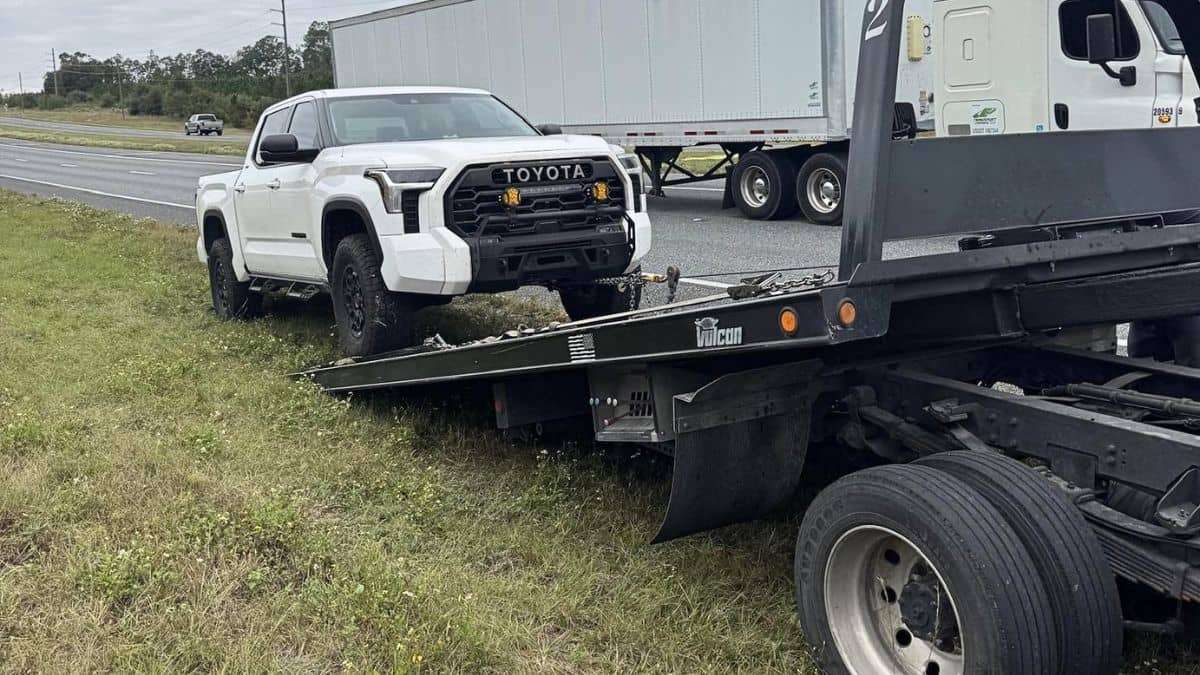

Every once in a while, a story comes along from a real Toyota Tundra owner that makes you stop scrolling and read every word. Not because it is shocking for shock’s sake, but because it feels so unexpectedly human. It is about what happens when trust, technology, and reliability suddenly collide. Today’s story began when I was scrolling through the 2023 to 2026 Toyota Tundra Owners Facebook group and came across a post by Austin Ratchford that has since blown up with nearly 500 comments from owners, mechanics, and fans all weighing in. His words immediately grabbed me, and they will likely grab you too.
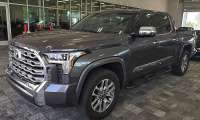
“Officially a statistic. Engine debris and bearing failure at 44k miles. Was driving down a 2024 Toyota SR5 TRD Tundra on the road and got an “Engine Shutdown. Pullover” warning. I will say Toyota has been great about it. New engine over the next 7 days, and they got me a rental within a few hours.”
That short paragraph says a lot. It is the kind of post that makes every 2024 Tundra owner pause for a few seconds and think, “Wait, could this happen to me?” What stood out most to me, though, was not just the failure, but Toyota’s surprisingly pleasant and responsible handling of the situation. In a time when some automakers drag customers through endless diagnostic loops, Toyota apparently stepped up in Austin’s case - fast rental, new engine, no drama. But underneath that quick response lies a much deeper story about owner anxiety, faith in engineering, and a bigger question about how Toyota’s third-generation Tundra is holding up under real-world use.
The pattern that Tundra owners cannot ignore anymore
When Austin’s post hit the group, it immediately drew hundreds of replies. Many owners shared that familiar blend of sympathy and worry. One owner, Curtis Stanush, commented, “This is too many already. I have a 2024 Tundra and I am worried. Wish I bought a 2021 Tundra used.” That one line says what a lot of people have been thinking. The V8 days of the second-gen Tundra might have been thirsty on gas, but they were widely regarded as bulletproof. The twin-turbo V6, while powerful and efficient, has drawn criticism for its growing list of engine-related complaints, especially under heavier use.
Austin replied right under that comment, “That’s my thoughts as soon as it broke down. Got a 1st gen that wouldn’t die. Should have upgraded to a 2nd gen instead of a 3rd.”
That mix of regret and nostalgia echoes what I have heard from many long-time Tundra owners who still swear by their 5.7-liter V8 models. The sentiment is not isolated. Earlier this year, another owner’s story went viral when his truck failed at 34,000 miles, but Toyota handled the situation so well that it restored his faith in the brand. You can read that detailed story in this report about a 34,000-mile Tundra engine failure and Toyota giving a white glove treatment, which perfectly mirrors what Austin experienced — a bad situation met with good corporate behavior.
What Toyota got right
Here is where this story turns from disappointment into a real conversation about responsibility. Many people focus only on the failure itself, but Austin was quick to note that Toyota immediately authorized a full engine replacement and provided a rental truck within hours. That is no small thing.
When other automakers have struggled with customer care or warranty hesitations, Toyota seems to have built a culture of quiet accountability. No excuses, no long service hold. Just results. That alone may be the reason some owners are staying patient with the third-gen Tundra despite growing unease over these recurring failures.
Bingham Fraley, another group member, noticed the same thing and commented, “That’s right Toyota stands behind their name. GMC lifter and transmission problems not doing anything about it.” That is a sharp contrast and a reminder that the measure of an automaker’s integrity is not whether its engines ever fail, but how it treats people when they do.
The other side of innovation
Now, let’s get real for a moment. The 3.4-liter twin-turbo V6 was supposed to redefine how Toyota balanced power and efficiency in a full-size truck. On paper, it is brilliant — tons of torque, better towing, and better fuel economy than the old V8. But as we have seen, innovation sometimes comes with unchecked complexity.
Tony Ballone, who introduced himself as a Toyota Master Tech, jumped into the conversation with a revealing comment. “As a Toyota Master tech I did one of these 2 years ago. Had to build a short block and assemble brand new cylinder heads, full timing set, turbos etc. That was it for me after 9 years. I was done. I quit and moved to a different brand. These new Tundras suck. I wish they would scrap the entire drivetrain and go back to V8s but it will never happen.”
It is hard to hear that from someone who has spent nearly a decade under Toyota hoods. The frustration is not just about the failure, but about the shift in philosophy. The push for turbocharged engines and hybrid systems, while smart for fuel economy and emissions, adds layers of complexity that can magnify small mistakes. It is the same issue we saw in a 2023 Toyota Tundra owner’s experience when his engine lost oil pressure without warning. These are stories that remind us that reliability in modern trucks is not just about hardware anymore, but also about software, sensors, and calibration.
The resale anxiety and real-world trust gap
Then there is Mike Lindberg’s comment, which cuts deep for anyone thinking about resale value and long-term ownership. “After 1 yr. I took a hit of 10k on a 2023 1794 Tundra TRD or long bed. As soon as these engines started failing I am out. I travel cross country, often at night, and just didn't want the headache. They're not fixing the issue, just kicking the can down the road for post-warranty. New engine will fail too. It's not debris, it's LSPI in my opinion.”
Mike brings up LSPI, low-speed pre-ignition, a known issue in turbocharged direct injection engines. It happens when small oil droplets ignite prematurely in the combustion chamber, often leading to bearing damage or piston failure. Engineers fight LSPI through better oil formulations and ECU tuning, but it remains a threat in high-compression, small-displacement turbo engines like Toyota’s iForce Max.
This is exactly why I tell readers and listeners to pay attention to what products they use for oil and fuel maintenance. If you own a modern twin-turbo engine, it is not just about sticking to a schedule. It is about using the correct oil chemistry designed to minimize LSPI and maintain clean bearing surfaces. High-quality synthetic oils with LSPI protection additives are not optional anymore. They are essential. These products do not fix design flaws, but they can dramatically reduce the stress on an already vulnerable system.
The loyalty paradox
Justin Branham, another group member, said something that resonated across the thread. “This is why I bought the last year of the V8 instead of a new one.” He is not alone. More and more used truck buyers are actively hunting for 2021 Tundras, which were the final model year of the old-school V8. In fact, I recently spoke to a used dealer who said clean 2021 Tundra TRD Pro models are moving fast and selling for surprising prices because of growing anxiety around the twin-turbo models.
And yet, Toyota’s brand loyalty remains intact. Even among critics, you hear things like “I wish they’d fix it,” not “I’m never buying Toyota again.” That difference in tone matters. It shows that people still want to believe. It also shows that Toyota has something most competitors do not: goodwill built over decades.
For example, one owner who experienced complete power loss at highway speed told his story in this detailed report about a 2024 Toyota Tundra shutting down at 80 miles per hour. What makes that story stand out is not the breakdown itself, but the owner’s balanced take on how Toyota handled it, much like Austin’s case here.
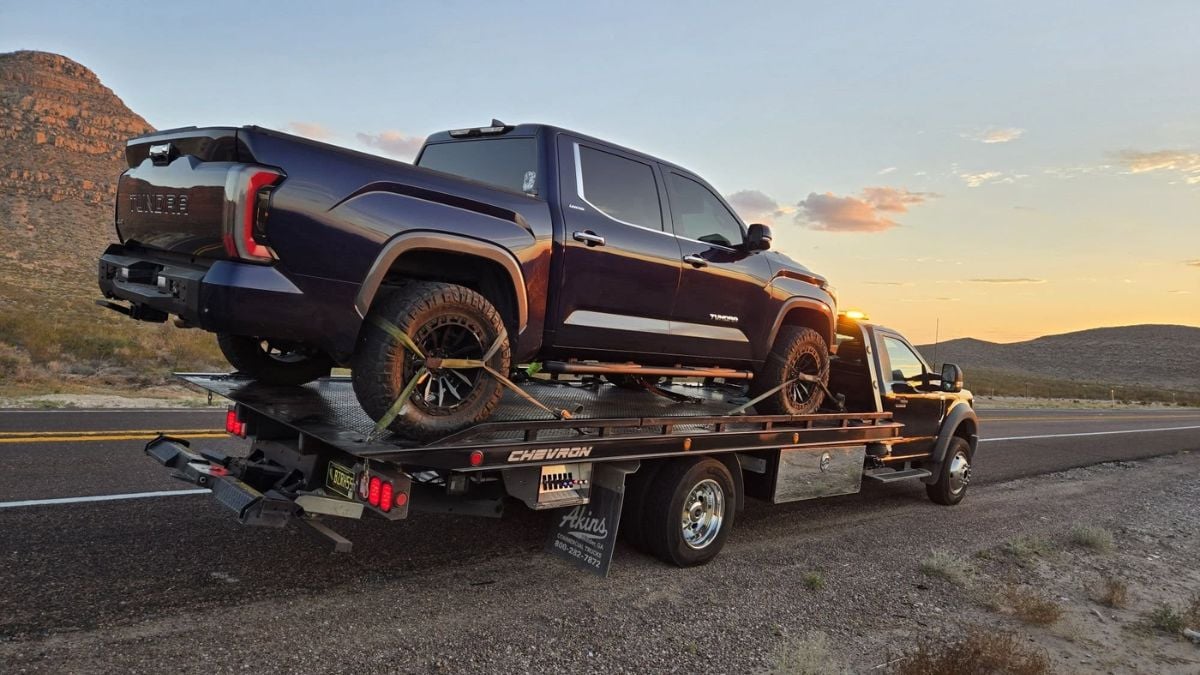
And this is Chris Graham's Tundra, who wrote, "Glad you got a quick turnaround and good customer service. My '22 did the same thing over three weeks ago, 8 hours from my house, and I am still waiting for news on it. Had to fight for a rental and have to constantly reach out for any updates."
What we can learn from Toyota’s “two right things”
So what are those “two right things” Toyota did in Austin’s situation? The first was speed. Toyota did not waste time arguing about diagnostics. They authorized an engine replacement right away. The second was support. They put him in a rental vehicle immediately, keeping his life moving while the fix was in progress.
That combination, action and empathy, is what many customers crave in this new era of high-tech trucks. It may not erase the frustration of a major failure, but it restores something far more valuable: trust. Toyota’s decision to act quickly without delay was a signal that they still know what customer care should look like in a connected age.
For comparison, look at another case where a Tundra owner said Toyota should be scared someone might get into an accident due to engine failures. It is one thing for a company to fix problems quietly, but another to show transparency and consistency in doing so. That is where Toyota seems to be getting better.
When a recall is not the real solution
Some Tundra owners have called for an official recall, arguing that Toyota should proactively replace affected engines rather than waiting for failures. But that raises a bigger ethical and commercial question. Should automakers publicly recall engines when only a small percentage fail, knowing it can damage resale values and brand perception? Or should they handle each case quietly, one by one, like Toyota appears to be doing now?
There is no easy answer. But it reminds us that every decision has ripple effects. A recall can save lives and earn respect, but it can also devastate used values overnight. Quiet handling can protect prices, but leave owners in suspense. Somewhere in between lies the balance Toyota seems to be trying to find.
A similar dilemma unfolded in a story about a 2025 Tundra TRD Pro Hybrid that suffered an engine issue only 400 miles into ownership. The owner’s experience sparked debate about transparency and warranty fairness — two things that define how people judge a brand long term.
The moral inside the metal
What Austin’s story really teaches us goes beyond mechanics. It is about how a company’s reaction can make or break a relationship. Every engine failure is a test, not just of hardware but of values. Toyota, for all its modern stumbles, still has an instinct for doing the right thing when it counts.
It also reminds us as owners to be proactive, not reactive. Keep your maintenance clean, follow the recommended oil specifications, and document every visit. When something feels off, do not let it slide. Small unchecked noises or warning lights can quickly become big problems in high-compression turbo engines. And for those planning to keep their trucks past warranty, consider products that go beyond standard protection, such as oil catch cans or oil analysis kits. They do not void warranties when properly installed, and they provide a window into your engine’s health that most owners never see.
The moral here is simple but powerful: good maintenance builds good outcomes, and good communication builds trust. Whether you drive a first-gen V8 or a brand-new hybrid, that principle never gets old.
Preventive maintenance for modern twin-turbo truck engines
One of the least sexy but most useful things you as a 2024 Toyota Tundra owner can do is lean into preventative maintenance that goes beyond just oil changes. The twin-turbo V6 powertrain (and the hybrid variant) in the current generation introduces complexity that older V8s did not carry. Issues such as machining debris, main bearing failures, or oil-related damage are creeping into owner forums and reliability studies. Because of that, treating your engine as if it were a performance powerplant rather than a traditional truck motor is smart. That means using top tier full-synthetic oil of the correct specification, keeping up with early service intervals, and monitoring oil quality (color, level, clarity) in between services.
In practice that looks like this: when you hit the warranty interval and the dealer changes the oil, ask for the filter to be inspected for metal particles, ask whether the dealership has documented any machining debris cases, and keep a log of all service visits. Also consider investing in a high‐quality oil analysis kit if you plan to keep the truck past warranty. While these products do not guarantee prevention of a catastrophic engine failure they significantly reduce risk by giving you early warning. When owners respond with regret such as “I wish I bought the 2021 Tundra used” or “new engine will fail too” the root often traces back to skipped maintenance or minimal servicing. Quoting an expert in the community: “New engine will fail too. It’s not debris, it’s LSPI in my opinion.” That rings like a warning bell.
By shifting your mindset from “maintenance as needed” to “maintenance as insurance” you give yourself a practical edge, and in a truck that costs six‐figures with options you owe it to yourself to take that edge.
Understanding Toyota’s warranty response and how to leverage it
In the case of Austin Ratchford, the warranty response from Toyota was surprisingly pleasant: new engine, rental vehicle, timely service. But that does not mean that every claim will be handled the same way. The lesson here is being prepared and knowing what you’re entitled to. Toyota appears to be doing the “right things” when the failure is clear, catastrophic and early. But less obvious issues: minor bearing chatter, early oil dilution, turbo lag—may be brushed off or deferred. That means you as an owner must document every symptom, every warning message, and let the dealership escalate to Toyota corporate promptly when the diagnosis isn’t clear.
In forums, this comes down to asking the right questions: “Are you replacing the bearing only or the entire short block?” “Has this VIN been subject to a known machining debris recall?” “Will a rental be provided until the truck is fixed?” Many owners treat the warranty like a checkbox; but if you regard it like a negotiation tool you’ll be better positioned. In Austin’s voice: “They got me a rental within a few hours.” That is not average. It is something you can expect if you press the right buttons and act as an informed customer rather than a passive one. Doing so helps you hold Toyota to the level of accountability they showed in Austin’s case—and it helps build stronger outcomes for everyone owning a 2023-2026 Tundra.
Ownership mindset shift: legacy V8s vs the turbo-hybrid era
Here’s where the conversation gets almost philosophical. A lot of Tundra owners look back fondly on the 1st and 2nd generation trucks with naturally aspirated V8 engines and zero turbo complexity, and say things like “Got a 1st gen that wouldn’t die”. There is truth in that nostalgia. The new generation brings performance and economy, but also brings layers of systems that can fail (turbochargers, hybrid modules, direct injection, dual ignition, etc.). The question for you becomes: are you buying a pickup that is going to be “set it and forget it” for decades, or are you buying one that is more of a high‐tech machine that demands attention?
If you lean toward the latter you need to embrace change: build a service schedule, monitor aftermarket products such as oil catch cans, use higher grade fuels and keep abreast of owner threads for emerging symptoms. If you lean toward the former perhaps a used V8 model may fit you better. Either way you become a better decision maker by aligning your ownership approach with your tolerance for maintenance, complexity and risk. The moral here is that technology can improve performance but it also increases the consequence of unchecked neglect. As owners we have to accept that luxury performance isn’t free. And when we make that choice consciously we become more forgiving, more discerning—and more in charge of our truck’s fate.
Final thoughts
As of this writing, Austin’s 2024 Tundra is getting a brand-new engine, and Toyota seems to be handling it with the urgency and respect that owners expect. Still, the conversation around these trucks will not fade soon. Too many similar stories have emerged, from Tundras losing power at the dealership multiple times to hybrid engines failing under 10,000 miles. But each one also shows how Toyota’s reaction can shape public confidence for years to come.
If you are a 2024 or 2025 Tundra owner reading this, the best takeaway might be this: monitor your oil, listen to your truck, and stay connected with the owner community. You are not alone in this conversation. And sometimes, the most surprising outcome of a mechanical failure is that it builds a stronger bond between customers and the company that serves them.
What do you think Toyota should do next about these recurring Tundra engine issues? Have you ever had an engine warning or complete failure in your own truck? Share your story and thoughts in the comments below. Your voice helps shape how these problems are understood and addressed across the Toyota community.
Armen Hareyan is the founder and Editor-in-Chief of Torque News. He founded TorqueNews.com in 2010, which since then has been publishing expert news and analysis about the automotive industry. He can be reached at Torque News Twitter, Linkedin, and Youtube. He has more than a decade of expertise in the automotive industry with a special interest in Tesla and electric vehicles.
Images by Austin Ratchford and Chris Graham. References provided above, in the article.
Set Torque News as Preferred Source on Google
Follow us today...


Comments
Shoulda bought an F150. My…
Permalink
Shoulda bought an F150. My 2021 xlt with the 3.5 twin turbo is a beast. Absolutely rock solid zero issues with 112,000 worry free miles. Love it.
A year or so ago, it was the…
Permalink
A year or so ago, it was the guy with the Corolla GR being denied assistance after the blown engine because to paraphrase: "Doing 85mph with incorrect tires" 🤣
Today, they did what they should be doing under warranty parameters and they get high praise?
My daughter recently had…
Permalink
My daughter recently had that same failure, she had the truck towed to the closest dealership. The dealership which I will not name has not been very pleasant and I personally believe that she is being treated unfairly. Toyota did not give her a new engine, her truck was under 36000 miles, its been over a month and the truck is still at the dealership. The truck is still under factory warranty and it took over a week for the dealership to give her a rental. I wont go into this story any further but as of this moment the truck is still in the dealership waiting for parts.
I just picked up my 2025…
Permalink
I just picked up my 2025 Tundra 1794 edition. I was 900 miles from home when my Tundra with just 2,300 miles on it let go. It was the same main bearing failure and it had taken about a month to repair my Tundra and I just picked it up yesterday. A 79,000 dollar lesson in advanced technology without any reliability testing, or is it just an experiment.
My son just had the 3.5…
Permalink
In reply to I just picked up my 2025… by Christopher Go… (not verified)
My son just had the 3.5 liter Engine replaced in his 2024 Tundra because of the metal in the oil issue. So far, all is well. But I'm gonna keep my 2018 Tundra. It's got the 5.7 and it has the smoothest running engine ive had yet, with power to spare. Newer technology ain't always the answer.
I am more forgiving with…
Permalink
I am more forgiving with Toyota because their entire lineup us new powertrains and nothing is reliable in their first generation, it takes time and failures to get thing to be reliable, people who expected the TT V6 to be reliable out of the gate are delusional
I hear that the replacement…
Permalink
I hear that the replacement engines that are put into the ones that had issues are failing as well. Just a garbage design, Toyota should be ashamed of themselves
Glad they did this, they…
Permalink
Glad they did this, they just added another 127 thousand. I wonder why they want replace the 2024 hybrid Tundra that burned to the ground in the owners driveway. Neighbor woke him up to tell him his truck is on fire. Why want they stand behind a 8 time Toyota buyer. This is shameful of Toyota.