
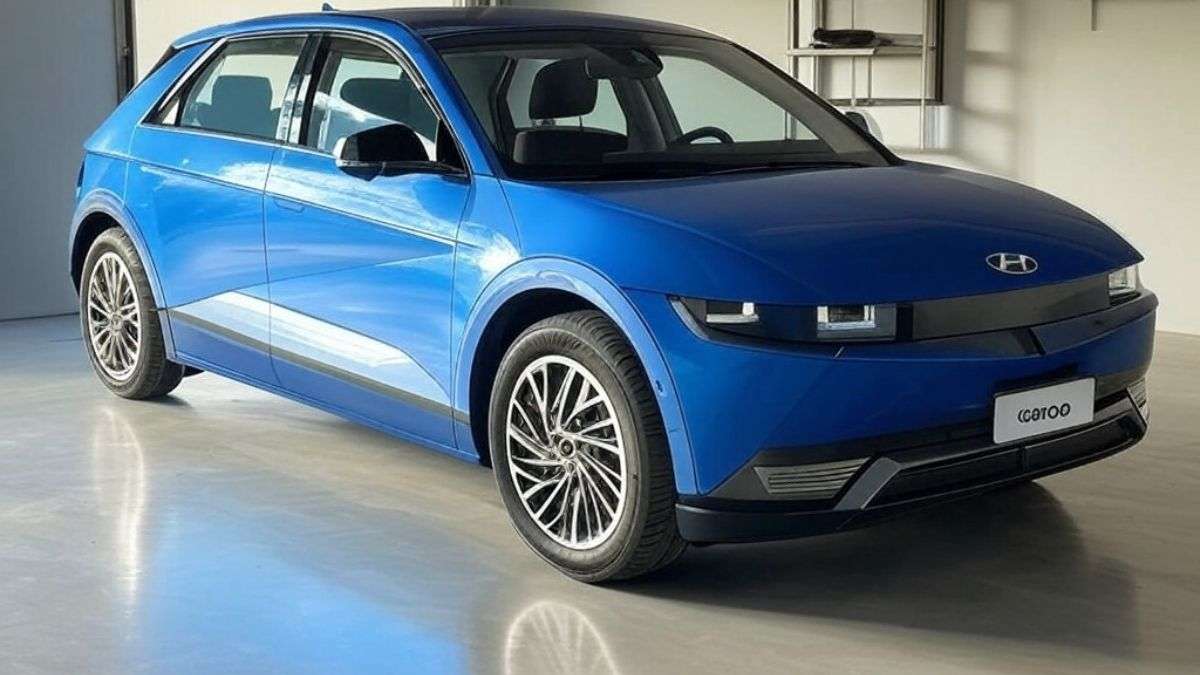

Let me set the scene for you. You buy a brand-new Hyundai Ioniq 5. You love the futuristic design, the spaceship dashboard, and the whisper-quiet ride. You’re sitting at just over 3,000 miles—barely out of the honeymoon phase. You park it in your garage, traction battery sitting at 78%, and go away for ten days. You come back expecting to drive off into the sunset. Instead, what greets you is a total system shutdown. The car is completely dead. Not low battery - dead. You have to use a manual key to get in, and then jump-start a brand-new 12V battery just to bring it back to life.
That’s exactly what happened to James Heckathorne, who shared his experience in The Ioniq Guy Facebook group - an increasingly essential place for Ioniq owners to make sense of their EVs beyond the sales brochures and glossy commercials. Here's what James wrote:
“I parked my Hyundai Ioniq in my garage for 10 days while I traveled; traction battery was at 78%. When I returned home the car was dead as a doornail, and I had to use manual key to enter, and jumped it to start (it’s a new 12V battery installed 45 days ago after the original died within 60 days). The dealer has had it for 2 days, and this text was their note to me. 'When I spoke to the tech earlier this afternoon about your vehicle he said that due to the vehicle sitting for the amount of time it was without being run, it does tend to kill the 12 volt battery. The 12 volt battery will only charge off the system while the vehicle is running and not draw off of anything in the system while it sits.’ Can anyone definitively tell me if they’re correct? (2024 Ioniq SEL AWD, 3100 miles on the odometer)”
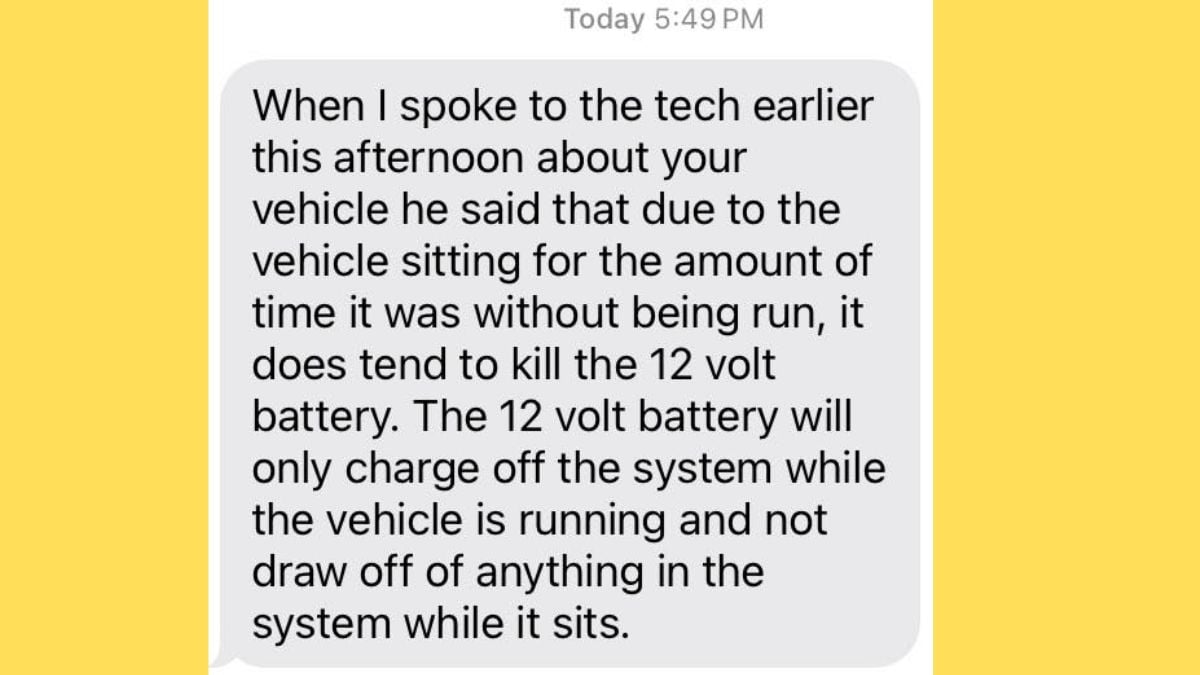
At first glance, that explanation from the dealership almost sounds believable. After all, most of us have had ICE (internal combustion engine) vehicles where leaving it too long without starting could lead to a drained 12V battery. But this is not an ICE car. This is an EV with modern battery management systems—and it’s marketed as being smart enough to maintain itself.
While James’s experience with his Ioniq 5 might seem like an isolated case, it highlights a broader consumer concern: the unusual and unexpected reliability issues that can sour the EV ownership experience. As it turns out, incidents like this may be contributing to a shift in how Americans view electric vehicles overall. In fact, U.S. EV market share has now dropped below 8%, falling beneath both 2023 and 2024 averages, with even Tesla seeing a notable decline. This deeper dive into what's driving the drop in EV interest sheds light on how stories like this one might not just be personal frustrations, but part of a growing hesitation among mainstream buyers.
As more EV drivers share their real-world ownership experiences, some of them reveal an unusual contrast: the thrill of electric driving versus the unexpected frustrations that come later. One Ford Mustang Mach-E owner, for example, recently reflected on his time with the EV—how it delivered excitement and utility, but ultimately left him with mixed feelings as he moved on. His story captures the highs and lows of EV ownership in a way that many Ioniq 5, Volt, and even Tesla owners might relate to.
So, what gives? Watch the video report about some possible causes of the Hyundai Ioniq's 12v battery drainage from the Torque News Youtube channel.
Why Did the Hyundai Ioniq 5's 12V Battery Die?
Here’s where things get unexpectedly interesting. Many Ioniq 5 and 6 owners, especially those who hang around online forums and Facebook groups, have already encountered this head-scratcher. A dead 12V battery in a nearly brand-new EV? That's not just inconvenient—it’s deeply unsettling.
This kind of unusual electrical mystery - where a nearly brand-new EV seems to betray your trust just by sitting idle - raises broader questions about how EV systems manage their auxiliary power and what kind of usage patterns might help or hurt longevity. Some Ioniq owners have started taking a deep-dive into their daily energy habits to understand what’s truly necessary for smooth ownership. In fact, one owner tracked every kilowatt used by their Level 1 charger and came to a surprising conclusion: they may never need to install a Level 2 charger at all. It’s a revealing look into how some assumptions about EV ownership may not always line up with real-world use—and it might get you thinking about whether your charging habits are helping or hurting your 12V system too.
But James is not alone.
Matthew Hunt, another group member, responded with hard evidence that throws the dealership’s diagnosis into serious question. He wrote:
“That’s certainly not true. There’s the amber light on the dashboard that comes on when the car is charging the 12V while parked. If they need proof, the description of service campaign 9A1 states: '12V battery saver logic update allows charging from EV Battery as low as 10% SOC when parked.'”
He even included a link to the actual campaign PDF from the NHTSA. This isn’t speculation or hearsay - it’s documented policy from Hyundai itself. And it suggests the dealership may not be fully up to speed on how the Ioniq 5’s battery systems are supposed to work.
Marq Anderson summed it up with a blunt:
“Find a new dealer.”
Honestly, it’s hard to argue with that sentiment.
Stories like James's aren’t isolated in the EV world. As more owners report unusual vehicle behavior that software updates or dealer visits can’t easily explain, we’re seeing a pattern of unexpected limitations in otherwise advanced electric vehicles. Take, for example, a recent case where a Rivian R1T owner was suddenly left in “turtle mode” - with no rear drive, no ride height control, and several core features missing after a software update. It’s a sharp reminder that even the most cutting-edge EVs can encounter strange, inconvenient issues when you least expect it. The breakdown in the article shows how unpredictability in EVs isn't always tied to battery range or charge level.
What’s Really Going On Under the Hood?
Let’s take a second to talk about the 12V system in EVs like the Ioniq 5. Unlike traditional vehicles where the alternator charges the 12V battery, EVs use something called a DC-to-DC converter to transfer power from the high-voltage traction battery to the low-voltage 12V battery. In well-designed systems, this charging happens periodically, even when the car is off—as long as it has enough charge.
Don Oltman weighed in with clarity:
“The 12V charges periodically from the traction battery using the DC to DC converter in the ICCU. Lights the amber light on dash while it's happening.”
That amber light is more than a pretty glow. It’s your sign that the system is doing its job.
And yet, stories like James' keep popping up. Could there be something else at play?
Could Hyundai’s Software Be "Pinging" Your Car Awake?
Now here’s where it gets unsettling again. Some owners suggest that Hyundai’s BlueLink system - the connected services platform that lets you check on your car from your phone - might be keeping the vehicle awake too long or too often.
It's a theory that’s been echoed in discussions around other Ioniq 5 charging quirks, such as this experience shared by another Ioniq 5 owner, where the user was surprised by how BlueLink was behaving during a service issue. There’s also this report about a 2020 Ioniq EV that required frequent boosting of its 12V battery, even though everything appeared fine on the surface.
Some savvy users have even suggested resetting the BlueLink system entirely. One solution? Change your account password to break the connection, or delete and re-add your car in the app. It’s not elegant, but it could stop the phantom energy drain.
So... Is the Dealer Right or Wrong?
The answer is not black-and-white.
Eric Russel brought a balanced perspective to the discussion:
“What he said is basically true for an ICE car, although 10 days shouldn’t kill a battery in an ICE car if the battery was in good shape. But modern EVs are designed to top off the 12V battery occasionally using the traction battery even when the car is not turned on.”
In other words, the dealership's logic is stuck in 2005. The 2024 Ioniq 5 is built to avoid this issue—at least on paper. If your 12V dies after ten days of sitting, it’s a symptom of something else. Maybe a firmware update is missing. Maybe BlueLink is overactive. Maybe there's a hidden parasitic draw.
Why the Ioniq 5 12V Battery Failing Matters More Than You Think
This isn't just a “nuisance” problem. It's a real ownership concern. EVs are supposed to be low-maintenance. That’s one of their biggest selling points. But if you have to worry every time you leave your car parked for more than a week, that’s a major trust issue.
If you're thinking long-term about EV ownership, you’ll want to read how long the Ioniq 5 battery lasts and whether you should charge it every night. These discussions aren’t just about longevity—they’re about living with these vehicles in the real world.
Is There a Fix or Workaround?
One useful habit is to manually put your Ioniq 5 into Utility Mode for a few minutes once a week. This helps trigger a recharge of the 12V battery. You could also consider using a smart trickle charger—something that connects to the 12V and automatically tops it off when needed, though that does add extra steps for a vehicle that’s supposed to be plug-and-forget.
Other users like Mike Cebual reported no issues after 30 days of inactivity:
“Mine's been home sitting for 30 days. Hyundai online system lists it as 2% loss (left at 70% SOC, now 68%). I’ll be home tomorrow.”
That’s how it should be working for everyone. So when it doesn’t, you know there’s a bug in the system—either software or hardware.
A Design Flaw That Needs Addressing
Thomas Smailus nails the big-picture concern:
“That may be true. The big question is for Hyundai: why did they design the car to not also draw zero power after the car has sat for over 24 hrs unused? Just have it hibernate. There is zero point in having all that electronics still running other than some super low power zigbee radio-like device that wakes up the car when someone bumps it to open it.”
Why shouldn’t an EV be able to fully hibernate, especially when it’s parked at home and not needed?
In a market that includes cars like the Tesla Model Y - where vampire drain is also an issue but more widely acknowledged - Hyundai needs to decide whether it wants to own the problem or keep letting dealerships push outdated ICE logic.
Sometimes, though, the EV world works in unexpected ways - what feels like chaos for some can turn into opportunity for others. One Cybertruck buyer recently shared how the massive buzz (and controversy) surrounding Tesla’s latest release actually helped him secure a lightly used unit for $20,000 less than expected. It’s an unusual twist in a market where demand often inflates prices, and it shows how being aware of EV trends and timing your purchase just right can really pay off. The article shows how he pulled it off, and why his experience might be a glimpse into the future of EV pricing.
What Can Hyundai Owners Do Right Now?
Until Hyundai issues a more robust fix or clearer guidance, Ioniq 5 owners are left navigating a maze of patchwork solutions. Your best bet? Keep firmware updated, manually wake your car now and then, disable BlueLink temporarily if you suspect it’s an issue, and - most importantly - push your dealership to escalate unresolved problems.
Also, if you’re noticing weird behavior when charging your Ioniq 6 or 5, like strange dialog boxes or screen errors, you might want to read about this annoying software bug owners have reported. These small symptoms may be connected in ways we’re only beginning to understand.
Stories like James’ show how unexpected realities can creep into what should be a smooth ownership experience—especially when you’re transitioning to new technology. But this isn’t just an EV phenomenon. Even some diesel truck owners - who swear by the reliability and torque of their rigs - find themselves making sudden pivots when opportunity knocks. One such case involves a 2021 Silverado Duramax owner who absolutely loved his truck, but walked into a dealership and walked out with a 2025 model after receiving an offer he just couldn’t refuse. It’s a different kind of unexpected ownership twist, but one that says just as much about how fast the auto market is evolving.
But not every EV story is about frustrating surprises. Some manufacturers are responding to these growing pains with unexpected innovation and a renewed focus on reliability, performance, and luxury. One standout example is the 2025 GMC Sierra EV Denali Max Range - a state-of-the-art electric truck that blends bold utility with high-end comfort, and offers over 400 miles of range. It’s an unlikely evolution of a classic American machine, but one that shows how the EV landscape is quickly changing. Look at what makes this next-gen Sierra EV so compelling, especially for drivers who want to go electric without compromising on capability.
EV ownership sometimes throws curveballs that have nothing to do with battery health or software glitches. In some cases, it’s the unexpected realities of modern driving that catch owners off guard. One Tesla owner, for example, suddenly found himself dealing with a hit-and-run incident while his car was parked - and although the entire event was caught on Tesla’s Sentry Mode camera, it still might not be enough to track down the culprit. It’s a stark reminder that even with high-tech tools, EV drivers can face real-world problems that no OTA update can fix.
So what do you think, should EVs like the Ioniq 5 be allowed to fail like this just because they’ve been sitting idle for a few days? Or is this a problem of dealers not catching up to the EV era?
And if you’ve left your Ioniq parked for an extended time, how long did it last without issue? Would love to hear your experience.
Armen Hareyan is the founder and Editor-in-Chief of Torque News. He founded TorqueNews.com in 2010, which since then has been publishing expert news and analysis about the automotive industry. He can be reached at Torque News Twitter, Facebook, Linkedin, and Youtube. He has more than a decade of expertise in the automotive industry with a special interest in Tesla and electric vehicles.
Set Torque News as Preferred Source on Google
Follow us today...






Comments
I also had the same problem…
Permalink
I also had the same problem i have a ioniq 6 hyundai and it recall every month and the dealer takes the car for a month to fix idk why i buy this junk car
This is very common with EVs…
Permalink
This is very common with EVs. I worked for a fleet and the batteries under the hood would be ruined about every 3 to 6 months. In addition many times it also drained the main hybrid battery and these often were ruined after just 3 or 3 years. Many times the vehicles only sat for 5 days and had to be jumped but our gas. Models could go a few weeks.
It's an ICCU issue. There's…
Permalink
It's an ICCU issue. There's a recall on it. You have to make an appointment with a dealer. It's a quick free fix
So this was the 12v that…
Permalink
So this was the 12v that died not the traction battery. I'd say it was a bad battery from the start.
It could simply be the…
Permalink
It could simply be the dealer charging you for a new battery but simply cleaning and charging the old one. If they do a load test after charging and it still reads within limits even though it's not a good battery it will act good for a short time. A bad battery can pass a load test yet drain itself not even connected to a vehicle.. I would go buy my own battery from interstate.. a larger beefier one. And I bet that's will fix all your problems. There dishing out crap 12v batteries.
In the winter below 20%…
Permalink
In the winter below 20 degrees instead of it discharging around 5% daily on an EV you could lose 7%. No dealer asks do you take 2 week vacations and leave car at airport?
However my EV did not need a new 12 V in Tesla for 2 years.
And the article says the 1st Kia 12V died after 60 days.
Something may be seriously wrong.
Neither Kia nor Tesla nor Porsche sits down and says here is how you charge. Here is what factors discharge.
Winter typically minus 22 to 17%.
Heat minus 5 to 11 percent.
Speed not much.
Towing reportedly minus 40%.
And you cant charge more than 80% full.
So if you had a range full at 360.
Battery will only be at 300.
Towing kills 40% so now you have 180 miles left.
Winter kills around 30 so 150.
But zero maintenance cost 1st year. Maybe $200 second year.
$1200 for tires and alignment 3rd year.
None of them really self drived.
But no smells.
Electric costs $60 monthly.
If you dont tow then you can go 2 or 3 days without home charging.
You dont need to spend $1200 on level 2 home charger.
Use your electric dryer 240V.
Insurance is close to $750 monthly.
Buying one used normally not from some young kid probably can go 9 years or close to 220,000 miles before real problems might show up.
Or consider a Hybrid but not Kia because they could make you wait 4 months to build you a new motor even though Fed laws say otherwise. No loaner car.
And Tesla ... no loaner car. Ever.
But Tesla has a magic entertainment system. Its the only reason to buy.
I had a related issue with a…
Permalink
I had a related issue with a Kia EV6. Used the cigarette lighter to power a tyre inflator and before I could finish inflating the 4th tyre, the 12V battery was dead, meaning nothing else on the car would work. Had to trickle charge the battery to get it going again. This was a demo vehicle. Bad experience. Led me to Tesla and haven't looked back.
Apparently this is common…
Permalink
Apparently this is common place with the Ioniq 5s. Ours completely killed it's first battery by sitting idle (wouldn't that a charge). Then we had the second battery die several times - the dealership claimed a cracked and leaking battery but I'm not sure.
We're now on our third battery and hoping it doesn't just randomly die again, though we are using it significantly more frequently right now.
It's bad enough where the tow truck drivers are taking notice and saying get rid of the cars because they're nothing but problems!
After Hyundai rejected to…
Permalink
After Hyundai rejected to honor a callback of the NU 1.8 liter engine that role crank shaft bearings, I knew they engineer their cars to screw their customers at around 100,000 miles.
STOP BUYING HYUNDAI
This is not unique to the…
Permalink
This is not unique to the ioniq. 12v can only charge when the vehicle is in active drive mode. We tested many brands of EVs at my job. EVs have hundreds of active electrical functions while parked that suck power from the 12v. We cluld never get 30 days of park time let alone 10. Disconnect your battery when parking for long periods of time
That's just WRONG…
Permalink
That's just WRONG. Absolutely should not be happening. Hyundai (and any other manufacturers) need to own this, and fix it ASAP! As suggested, just have the car hibernate if it's not used for 24hrs. They wouldn't even have to dig thru the software to figure out where the bug is. Just add a few lines of code to put it to sleep!
I work at a repair shop and…
Permalink
I work at a repair shop and we have this problem with Kia/Hyundai EVs all the time. The only car that is worse for dead batteries is the Prius. As a general rule of thumb when it comes to buying cars, DO NOT buy Kia/Hyundai, I can't stress this enough. They are so poorly built that they should be charged with fraud.
I had the same issue with my…
Permalink
I had the same issue with my Ioniq 6. I drove it 110 miles a day mon - fri. And on a Saturday morning, the 12v would be dead. Almost monthly the 12v would just die no matter how much or little I was driving that week. I went back and forth with Hyundai and eventually just had a lemon law lawyer take the case. Hyundai bought the car back in full.
Imo, this situation is…
Permalink
Imo, this situation is extremely over analyzed. This is 2025, and unless the owner is diy-hacking the car, the only one at fault is the manufacturer. In no modern universe should a 12v battery fail from a vehicle sitting in storage for a few months. With the exception of doing it on purpose, it just shouldn't happen.
I have a Kia EV6, and every…
Permalink
I have a Kia EV6, and every once in a while, I see an amber light on the dash while the car is off and the key is not in the car. I was worried, so I checked the manual. The amber light is the car maintaining the 12v battery. I am not sure why something might make that process fail unless the car stayed in auxiliary mode and the ignition stayed on. That might keep the cars high voltage battery pack disabled and forcing the battery to run the 12v electronics. If you don't have the app, you won't get a notification your car is on or unlocked. Even of the ignition is off, I know the car talks to the manufacturer to accept remote commands from the customer app.
What do you expect? Everyone…
Permalink
What do you expect? Everyone knows that electric cars are crap, and everyone knows that Hyundai's are crap. So what happens if you combine electric with Hyundai? A car that turns into a brick after 10 days! And as per usual, Hyundai and their shady dealers are trying to sodomize the customer.
We had the same issue with…
Permalink
We had the same issue with 2024 Ioniq 5, only 3,700 miles. The car was left at the airport parking lot for 5 days. My wife came back to a dead car. Hyundai roadside assistance said to her, "we don't have the right equipment you need to get your own tow service."
Empire Hyundai in Queens, NY still will not send us a report on what went wrong, other than to say it was the 12v battery.
I have a Hyundai hybrid,…
Permalink
I have a Hyundai hybrid, only had for 3 years. It'll stop working after sitting for awhile and I have to press the 12volt battery. I was told that only happens after the check engine light comes on which did not happen. They said there's no record from the car that it ever happened!! I go back in today to see if we can find the issue.
Hyundai's 12V Battery…
Permalink
Hyundai's 12V Battery charging logic is flawed
I have a 2021 Kona and installed a bluetooth 12V battery monitor. I noticed in cold temperatures (-20C) the car will try charge the 12V battery but does not bring up the voltage enough. Hyundai's logic needs to charge longer if the voltage is dropping.
We have no problems with the big battery.
The rest of the car is greet, we love our 2021 Kona
So if I'm going on holiday…
Permalink
So if I'm going on holiday for 3 weeks could I not just disconnect the 12v battery until I get home.ie if I'm parked at an airport car park?
A week after I bought an…
Permalink
A week after I bought an IONIQ 5, I parked at a cruise garage, took a 12 day cruise and when I got back, drove it home. No problems. The E battery was 90% because I charged it just before parking.
At my place of work we have…
Permalink
At my place of work we have 20 of these cars and they're always doing this. This is a common fault with these cars, it's because the 12v battery is smaller than norma. The AA save the car must be run for at least 20 miles per week to keep the auxiliary battery charged.
This article demonstrates a …
Permalink
This article demonstrates a <em>concerning lack of clarity</em> regarding the fundamental difference between an EV's auxiliary 12V battery and its primary, high-voltage traction battery. The initial framing of the issue strongly implies a critical failure of the main powertrain, only to later reveal the problem lies with a standard 12V component. This ambiguity is not only confusing but actively misleading to readers unfamiliar with EV architecture. As an author writing about electric vehicles, it is your responsibility to ensure accuracy and avoid such significant oversights that could foster unnecessary anxiety about EV reliability. This lack of precision undermines the credibility of your reporting.
We have a 23 Ford Maverick…
Permalink
We have a 23 Ford Maverick and a 22 F150. We have been abroad for December and January. When we came back, both started first turn.
Kia/Hyundai have no excuse for that problem.
I let mine sit for a month. …
Permalink
I let mine sit for a month. Started right up when I got home. Something on your car is broken.