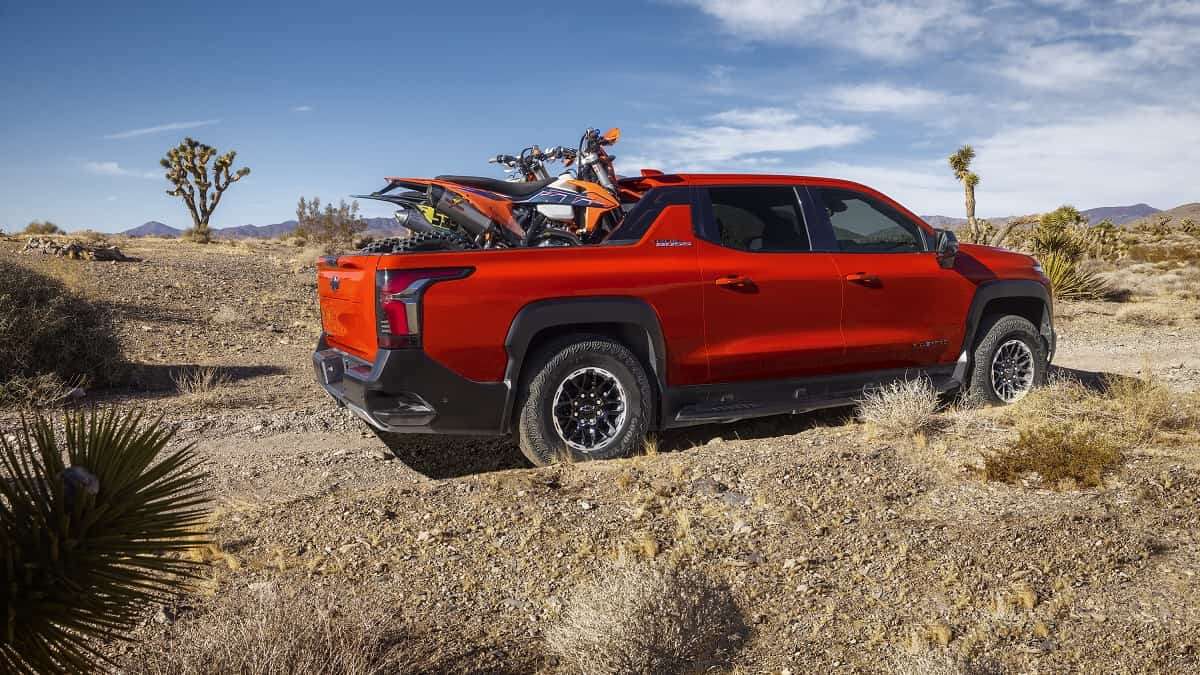

The cancellation of the Ford F-150 Lightning sent shock waves through the EV truck community. We’re seeing many social media posts from EV truck owners worried that their truck will be next. A post from Sean Butterworth on the Chevy Silverado EV Facebook group captures the sentiment:
“The dealership where I brought my Silverado EV has informed me that they are going to stop stocking all EVs going forward. It makes me very sad to think that they’re going to stop making Silverado EVs like how the Ford F150 Lightning was cancelled. My Silverado EV is the best vehicle I’ve ever owned, and I’m so sad more people aren’t giving it a chance.”
He goes on to say that he can only get tire rotations and software updates at the dealer. In hindsight, Sean says, “The Silverado EV were way under-advertised. GM should be offering them up as loaner vehicles so people can experience their superiority.”
Lawrence Scott Andrews responded:
“To be honest, they really aren’t promoting them. I went to the dealer today for a tire rotation, and they were tucked back with the cars in the back lot. They had two Trail Boss EVs and two WT trucks. I don’t understand. Mine is a 2024 RST and people around here are blown away by it, as if they’d never seen one before. They probably haven’t though. I have almost 24k miles with only issue being the moisture in the front bow tie and they covered that under warranty. It’s updated for sidewinder and the turn camera/streaming Apps. I love my truck.”
Linkford E. Shireman posted some reassurance:
“From what I read, this is just a dealership preference. They will continue making the Silverado EV, but they have discontinued the RST. They brought in the trail boss, and the LT will replace the RST. They will continue the WT.”
Will GM Cancel the Silverado EV
To see if General Motors will cancel the Silverado EV, let’s look at their recent actions. GM recently announced a multibillion-dollar charge tied to scaling back parts of its electric vehicle plans. The company disclosed in a recent filing that about $6 billion will be written off, following a $1.6 billion charge already taken in the third quarter of 2025. These write downs will reduce net income but will not affect EBITDA. GM has also signaled that additional charges are likely in 2026 as it continues to reassess its EV investments.
Slowing EV Demand in the U.S.
GM’s fourth quarter EV sales fell sharply, down 43% after a surge earlier in the year driven by expiring federal incentives. Once those incentives ended in September, demand cooled noticeably. Across the broader U.S. market, EVs accounted for about 7.8% of total vehicle sales last year, while hybrids climbed past 14%. Internal combustion vehicles still dominate, but their share slipped to roughly 78%.
Industry Wide Course Adjustment
General Motors is not alone in pulling back. Ford recently announced nearly $20 billion in charges related to its EV strategy. Both companies have made it clear that EVs remain part of their future, though at lower volumes than previously planned. Production targets for 2026 and 2027 are expected to be far more conservative than projections made just a few years ago.
It is also very important to keep in mind that GM is a global automaker, not just for the U.S. market. Despite a slight drop in U.S. sales, global EV sales in 2025 saw significant growth compared to 2024, with year-to-date figures showing increases of around 21-28% by late 2025, exceeding 18.5 million units by November and projected to surpass 20 million for the full year, reaching roughly one-quarter of all new car sales globally. Europe was a major growth engine, while the U.S. market showed slower growth, and China remained the largest market.
Shifts in Product Strategy
Ford is pivoting away from some pure electric models and leaning toward extended range electric vehicles that rely on onboard generators. General Motors plans to continue selling fully electric vehicles but has already redirected at least one Michigan plant away from EV production and back to internal combustion engines. These moves reflect a more cautious approach as automakers adjust to real world demand.
GM’s long term EV vision
Despite near term cutbacks, GM continues to frame electrification as its long-term future. The company has spent years building toward this transition, from early experiments like the EV1 to more recent models such as the Chevrolet Bolt. Its stated goal of eliminating tailpipe emissions from new light duty vehicles by 2035 remains a central part of its strategy.
Ultium Platform and Scale Advantages
At the heart of GM’s EV plans is the Ultium battery platform, designed to support everything from compact cars to large trucks. GM is also investing heavily in U.S. battery manufacturing through joint ventures, aiming to lower costs and secure supply. The company believes its size, dealer network, and brand recognition could eventually help bring EVs to a much broader audience.
Bottom Line
General Motors is navigating a difficult middle ground between bold long-term ambitions and short-term market realities. The recent write downs highlight the financial risk of moving too fast, while the continued investment in EV platforms shows the company is not abandoning its electric future. The next few years will determine whether GM’s slower, more measured approach can still deliver on its vision of leading the industry into an electric era.
The Chevy Silverado EV
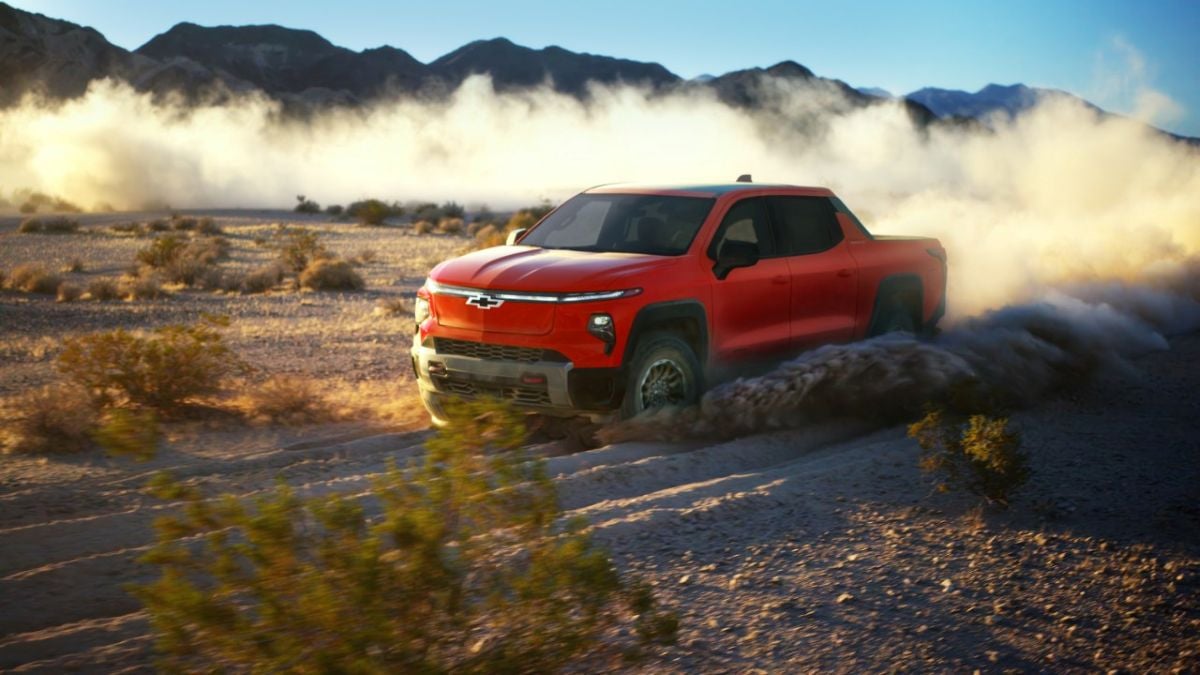
The Chevy Silverado EV is Chevrolet’s all-electric full-size pickup truck that first went on sale for the 2024 model year after being unveiled in early 2022, with production starting in 2023. It stands out from other EVs because it is built on a dedicated electric platform, offers impressive truck capability with strong towing and payload numbers, and includes innovative features like an available Multi-Flex Midgate that expands cargo space beyond a traditional bed. The Silverado EV delivers a mix of daily usability, long range, strong acceleration, and advanced tech that make it feel like a real truck rather than just an EV experiment. Pricing varies with trim level and battery, starting around the low-to-mid $50,000s for base Work Truck models and reaching into the $80,000-plus range for higher-end trims with extended range batteries, with some versions eligible for federal incentives. It is sold primarily as a four-door crew cab in multiple trims that include Work Truck (WT), LT, and Trail Boss for 2026 and later model years, all offering dual-motor all-wheel drive and a range that can approach roughly 480 to 493 miles on the right configuration.
What Do You Think?
Have you noticed Chevy Silverado EVs disappearing from local dealer lots, or is your area still seeing inventory?
How important is dealer visibility and test drives when it comes to convincing traditional truck buyers to try the Chevy Silverado EV?
Chris Johnston is the author of SAE’s comprehensive book on electric vehicles, "The Arrival of The Electric Car." His coverage on Torque News focuses on electric vehicles. Chris has decades of product management experience in telematics, mobile computing, and wireless communications. Chris has a B.S. in electrical engineering from Purdue University and an MBA. He lives in Seattle. When not working, Chris enjoys restoring classic wooden boats, open water swimming, cycling and flying (as a private pilot). You can connect with Chris on LinkedIn and follow his work on X at ChrisJohnstonEV.
Photo credit: Chevy media kit
Set Torque News as Preferred Source on Google
Follow us today...