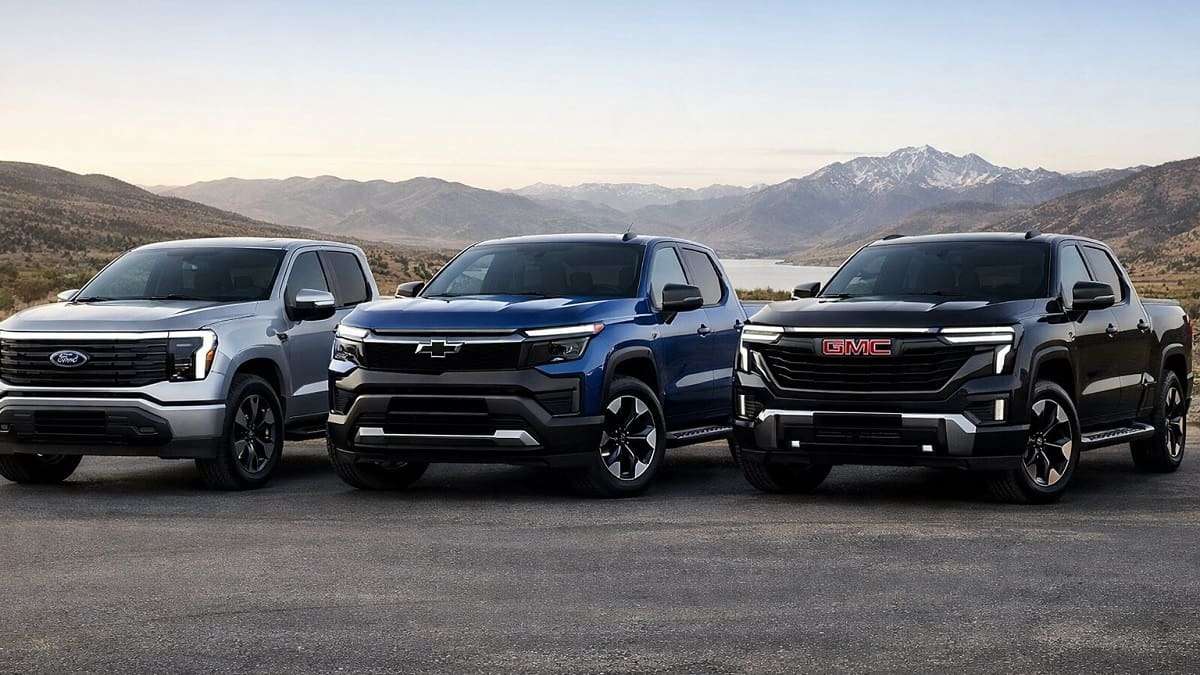

The cancellation of the popular Ford F-150 Lightning sent fear and uncertainty through the electric truck world. It’s clear from social media that Lightning owners really love their trucks, and the same goes for Chevy Silverado EV and the GMC Sierra EV owners. This isn’t hard to believe given the amazing improvement in responsiveness and performance that EVs offer. In fact, a recent survey by the Global EV Alliance found that 92% of EV owners would buy another EV, and only 1% would return to gas.
The concern about the future of GM electric trucks has been a trending topic on social media. A really long thread on the Facebook Chevy Silverado EV page captures the vibe, where Robert Brousseau posted:
“I wonder with Ford killing the lightning if this will have any ramifications on the Silverado EV good or bad.”
Keith Hall responded with a reassuring comment:
“GM’s approach was forward thinking compared to Ford’s in that they developed a dedicated EV architecture which could be globally scaled to get to profitability…We also know GM continues to work on reducing cell costs with the LMR chemistry and that cost reduction will hopefully allow GM to reduce Silverado EV prices closer to parity with gas Silverados.
Ford converted their existing F150 so it sort of stands on its own. And while it’s generally a good product, I think Ford and its leadership have done a poor job overall with their ‘EV-olution’…Frankly, Ford CEO Jim Farley gets too much of a pass for what I see as too much talk and not enough action.”
Steve Izell gave some insight about the F-150 Lightning:
“Let's be honest though, the lightning even though it was a milestone was still just a gas chassis with an electric drivetrain. The one thing they got really right was keeping the bed like a truck bed. We've spent a century refining the practical side of trucks and they honored that…”
Angus Alexander MacDonald went on to show another of the F-150 Lightning’s weaknesses:
“The Lightning did seem to have the worst range for an EV truck in testing by ‘Out of Spec'. I understand Ford’s desire not to compete in a segment you're losing in.”
And lastly, Carlos Wolfgang sums it up with:
“The Silverado EV blows away the F-150 Lightning in style, inside and out, plus distance is hundreds of miles better. The Sierra/Silverado EV is a main reason the F-150 Lightning failed.”
GM Pushes the Electric Truck Throttle Forward
Despite the worried comments from electric truck owners, General Motors has recently signaled it is still in the game with its electric trucks, not quietly backing away. At a recent Investor Day, GM explicitly called out the Chevrolet Silverado EV and GMC Sierra EV as part of its lineup of “powerful, capable electric trucks,” and said it will keep adding EV models as it pushes toward EV profitability. GM also publicly tied its EV economics to its purpose-built platform and large-scale battery joint venture plants, which is the opposite of a company preparing to pull the plug.
GM’s Ultium era development sits inside a broader commitment to spend $35 billion on EVs from 2020 through 2025, which has funded the battery platform, manufacturing, and the truck programs that ride on it. That combination of sunk investment, shared architecture across many models, and ongoing factory and battery partnerships makes a Silverado EV and Sierra EV exit far less likely than Ford stepping away from a single, more standalone electrified version of an existing truck.
Some confusion might have been caused because General Motors is discontinuing the public facing “Ultium” branding, after years of marketing it. The batteries and technologies will remain, but the “Ultium” name will not. The company will shift to a more tailored mix of chemistries such as LFP and different cell formats for cost and model specific design. The flexible architecture and Ultium Cells LLC joint venture will continue under GM’s broader EV strategy.
The Ford F-150 Lightning Versus the Chevrolet Silverado EV
We decided to compare the Ford F-150 Lightning to the Chevy Silverado EV because the Silverado outsells the GMC Sierra EV two to one. The Ford F-150 Lightning and the Chevrolet Silverado EV approach the same problem in very different ways, while still appealing to people who want capability, comfort, and everyday usability. We found that it’s difficult to rate one truck better or worse, just different in ways that matter depending on how the truck will be used.
Trim Levels and Positioning
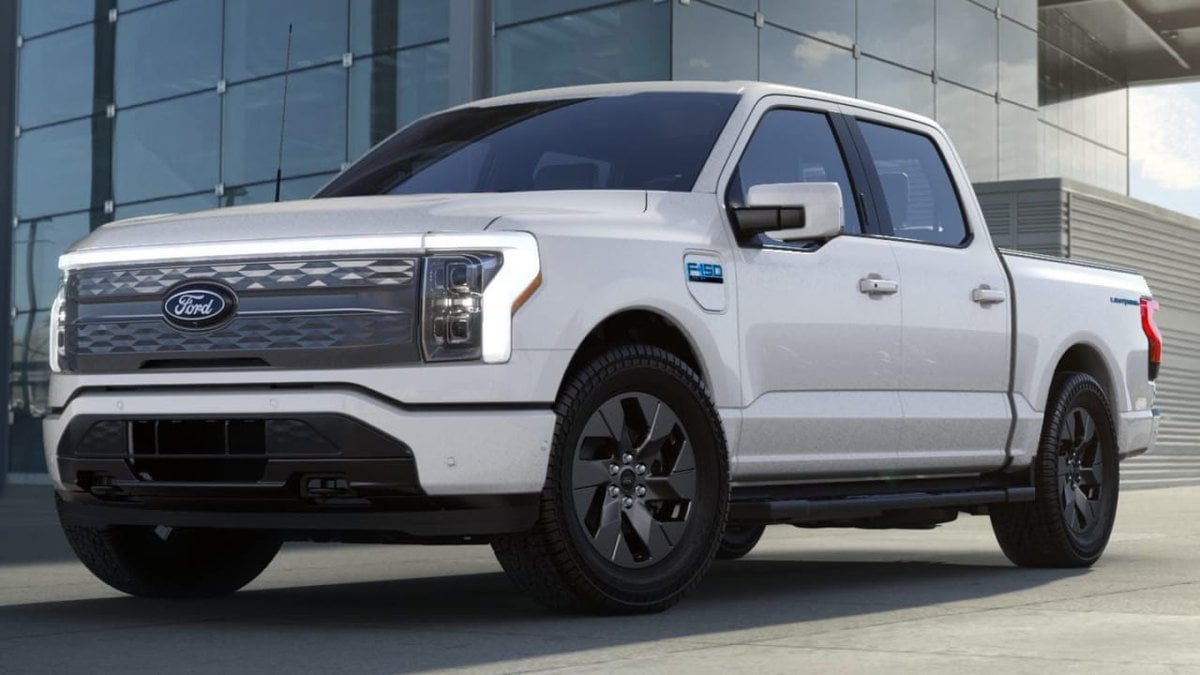
Trim structure is one of the easiest ways to understand how each truck is aimed at buyers. At the fleet and work focused end, the Lightning offers Pro and XLT trims, while the Silverado EV offers the WT work truck. These are practical, entry level trucks designed for fleets and job sites. Stepping up brings the Lightning Lariat, which always includes the extended range battery, and the Silverado LT, both aimed at buyers who want more comfort and features. At the top end, Ford offers the Platinum, while Chevrolet moves into the Trail Boss for 2026, complete with a factory lift and aggressive tires. The ladder is clear, with each step adding capability, comfort, and cost.
Design Philosophy and Platform Differences
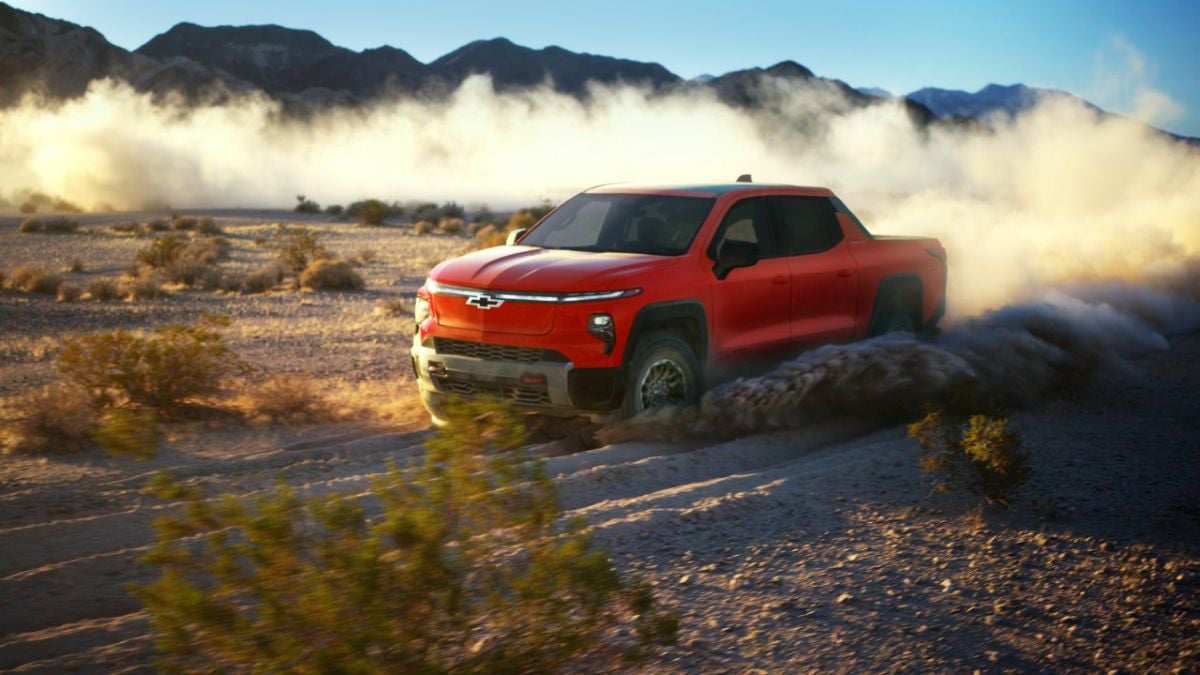
The biggest philosophical split between the trucks comes from how they were designed. The Silverado EV is built from the ground up as an electric vehicle, using a purpose-built skateboard platform with motors, battery, and suspension integrated into the structure. The Lightning takes a different approach, using the familiar F-150 body on frame design and electrifying it. The result is a difference in feel, with the Lightning driving more like a traditional truck and the Silverado feeling more like a modern EV. Each approach brings tradeoffs, including weight, payload, and overall driving character.
Payload, Weight, and Everyday Tradeoffs
Those design choices show up in practical ways. The Silverado carries a much larger battery, which adds weight but delivers significant range advantages. The Lightning, being lighter, offers better payload capability. The Silverado feels solid and planted, while the Lightning feels more familiar to long time pickup owners. These differences are not about right or wrong, they simply reflect how the trucks prioritize different strengths.
Range and Battery Size
Range is the topic that dominates most EV conversations, and the difference here is substantial. The Silverado EV, with its massive battery, can deliver close to 500 miles of range under ideal conditions. The Lightning extended range version delivers roughly 320 miles. That gap is real, but it must be viewed in context. Larger batteries cost more, add weight, and may not be necessary for drivers who don’t do much towing and spend most of their time in urban or suburban environments. Range reassurance has value, but it comes with a clear price premium.
Interior Flexibility and Storage Solutions
Interior and cargo flexibility highlight another contrast. The Silverado EV features a midgate, allowing the rear cabin and bed to combine into an extended cargo area of over eleven feet. This makes carrying long items like lumber or fishing rods far easier without a trailer. The Lightning does not have a midgate, but it counters with generous interior storage and a highly usable rear seating area that folds to create a large flat load space. Each solution works well, depending on whether long cargo or enclosed storage matters more.
Onboard Power and Energy Use
Both trucks turn their batteries into mobile power stations. Each offers multiple power outlets in the bed, cabin, and front trunk, making them useful for job sites or camping. The Silverado provides slightly more onboard power at just over 10 kilowatts, while the Lightning offers just under 10. In real world use, the difference is small. Running tools for a full workday consumes only a modest portion of either battery, leaving plenty of range to drive home. The practical benefit is clear, no separate generator is needed.
Cost and Value Considerations
Price differences mostly come down to platform investment and battery size. The Silverado EV costs more because it uses a new purpose-built platform and a larger battery. The Lightning benefits from Ford’s existing truck architecture, which helps reduce costs. Features like the Silverado midgate also add value for some buyers and none for others. Higher range and advanced design cost more, and buyers are essentially choosing where they want to spend their money.
EV Verus Internal Combustion Engine Trucks
Electric trucks offer lower running and maintenance costs, along with slightly higher upfront prices driven by battery costs. They also act as energy assets, powering tools, campsites, or even homes during outages. Towing long distances still requires planning around charging infrastructure, though this continues to improve. Governments in many countries are encouraging EV adoption through policy and incentives, making electric pickups increasingly attractive for fleets and private owners alike.
Bottom Line
There really is no single best answer. The Ford F 150 Lightning and the Chevrolet Silverado EV succeed by offering different solutions to the same needs. One leans on familiar truck roots with electric power, the other embraces a clean sheet EV design with standout range and flexibility. Prior to the cancellation of the F-150 Lightning, buyers had a genuine choice in electric pickups.
What Do You Think?
If you currently own a Lightning, how did the cancellation news make you feel about long-term support, resale value, and future updates?
Do you think Ford made a strategic mistake by electrifying an existing truck instead of building a clean-sheet EV platform from the ground up?
Chris Johnston is the author of SAE’s comprehensive book on electric vehicles, "The Arrival of The Electric Car." His coverage on Torque News focuses on electric vehicles. Chris has decades of product management experience in telematics, mobile computing, and wireless communications. Chris has a B.S. in electrical engineering from Purdue University and an MBA. He lives in Seattle. When not working, Chris enjoys restoring classic wooden boats, open water swimming, cycling and flying (as a private pilot). You can connect with Chris on LinkedIn and follow his work on X at ChrisJohnstonEV.
Photo credit: Provided by author, Chevrolet media kit, Ford media kit
Set Torque News as Preferred Source on Google
Follow us today...