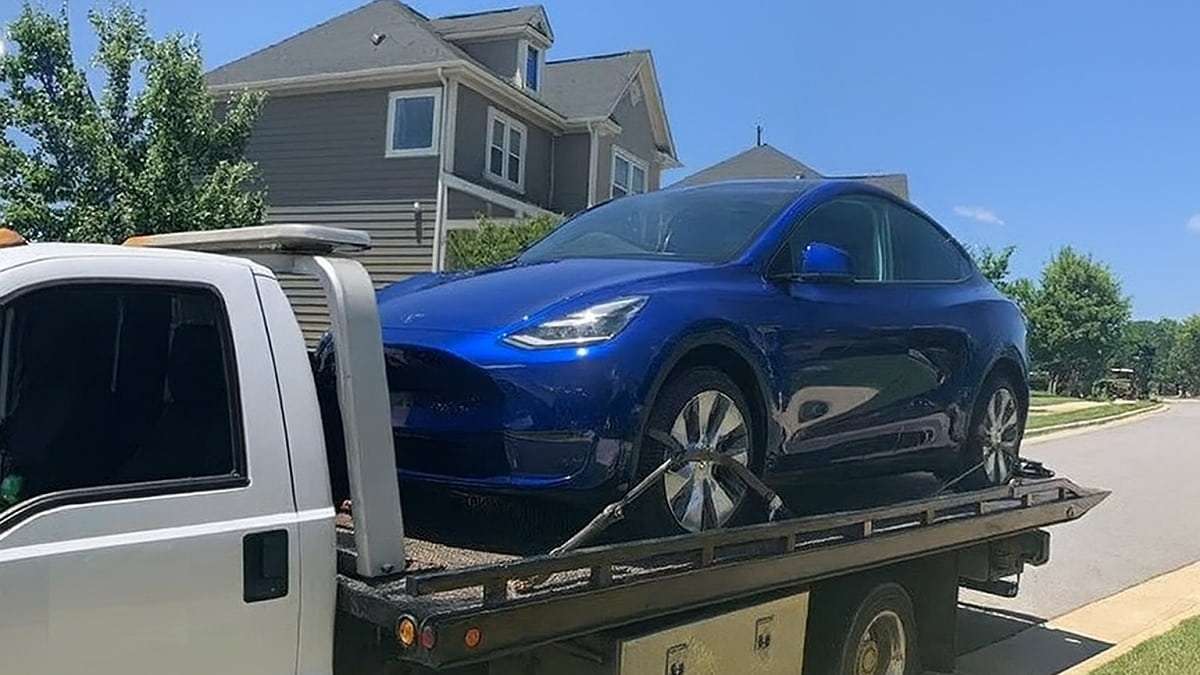

Tesla, like many other car companies, now sell cars without spare tires and instead opt for tire repair kits or run-flat tires. Some examples are BMW (3 Series, 5 Series, 7 Series, X1, X3, X5, X7), Mercedes-Benz (C-Class, E-Class, S-Class, GLC, GLE, GLS SUVs), Honda (Civic Hatchback & Hybrid models), and Toyota (Prius and Prius Prime).
This has led to a lot of social media discussion about not having a spare tire, drivers’ experiences, and various ways to better prepare for road trips. Here’s a recent post on Facebook Tesla Model Y Owners Club by David Henry about his recent experience with a flat tire and having his Model Y towed to a shop.
“Buy an aftermarket spare tire - then you will not have to pay overage of $220 to tow 45 miles to tire store when you run over a concrete nail in the road..”
Ty Tong responded with:
“Or you can save some space and carry a patch kit and portable compressor in your car and patch it yourself.”
Gail Ann Wasilewski Karp added:
“I bought a spare tire and keep it in my Tesla Y at all times. I drive across the state several times a month and I’ve already had like four flat tires in 2 1/2 years. By the way, it’s my third Tesla. Love my Tesla..”
Rick Rockhold said:
Advertising
“Or, you can get Triple A premium for $145 per year and get a tow up to 250 miles. This is Tesla 101. You can also get a charge of your car does on the highway.
If you go 4 or 5 years between flats that’s a lot of tows you could have paid for.”
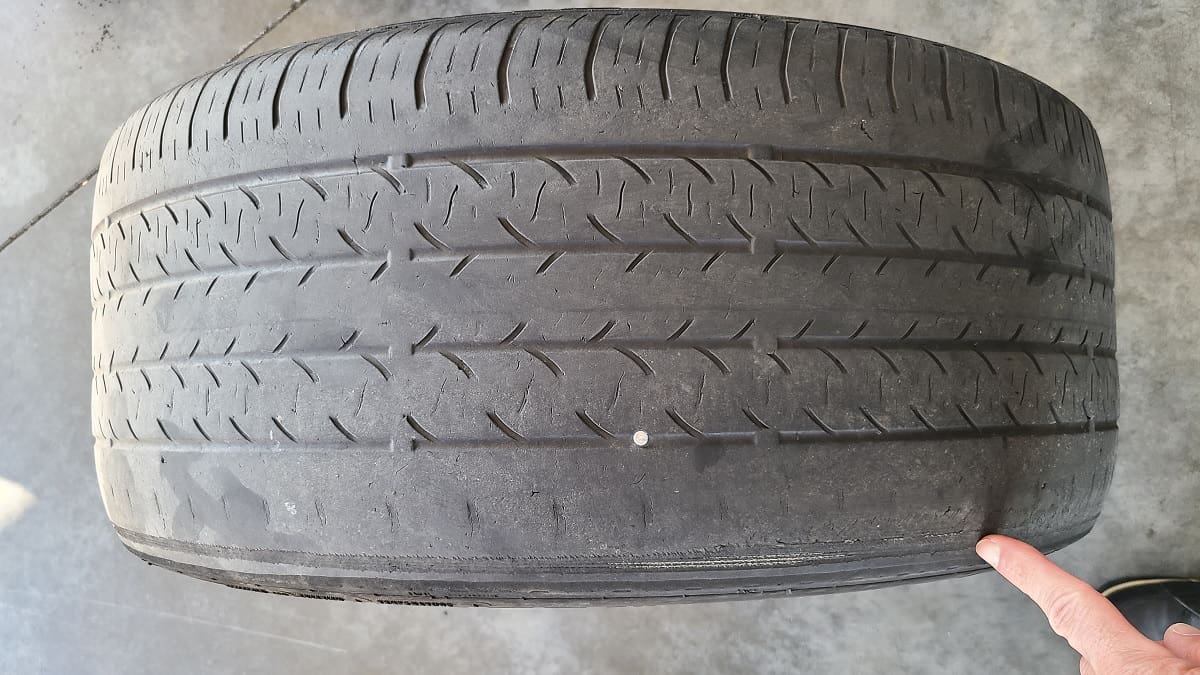
The removal of spare tires and jack kits has caused a quiet debate about self-reliance versus trust in roadside assistance. Some drivers are used to the “old school” method of jacking up the car and changing the tire themselves, but the reality is that many drivers have never changed a tire and don’t know how to. If you are in or around an urban area, you will probably be OK relying on roadside assistance. However, if you find yourself stranded in a rural area, the wait for assistance may stretch into hours and cost much more than expected.
It’s really cool to see the EV community make helpful suggestions for dealing with the limited charging infrastructure and availability of roadside support in rural or remote areas. Discussions include what to have in a “must-have” emergency kit like patch tools, portable inflators, and tire sealant. It also touches on ways to charge when on a road trip. It’s all about using our EVs now to explore farther without waiting for the charging infrastructure to grow or depending on someone else to bail you out.
There are a variety of reasons why car companies choose to remove the spare. Spare tires are heavy and take up a lot of space. Removing them creates more storage space and reduces vehicle weight which improves range. Improved range is especially important in EVs where it is scrutinized much more than in gas-powered cars. Also, flat tires are less common than in days past. Tires are more durable and often have “run-flat technology” and TPMS (Tire Pressure Monitoring Systems).
TPMS systems provide a lot of benefits. They help drivers maintain proper tire pressure which makes driving safer by reducing the risk of tire blowouts. The system also helps improve fuel efficiency and EV range by minimizing rolling resistance. Low tire pressure causes more of the tire to make contact with the road which increases rolling resistance. A higher rolling resistance will reduce fuel mileage and EV range. Properly inflated tires last longer which saves the driver money and reduces waste from premature tire disposal. Most importantly, TPMS gives drivers peace of mind with real-time alerts, allowing them to address tire symptoms before they become serious problems.
Run-flat technology usually eliminates the need to stop and change a tire immediately. The driver can continue their trip for a limited distance (typically about 50 miles) at a limited speed (typically about 50 MPH maximum). The TPMS has a sensor in each tire to detect when a tire’s air pressure falls below a safe threshold and alerts the driver with a dashboard warning light or display.
To help reduce anxiety about flat tires, many automotive manufactures offer roadside assistance as part of new vehicle warranties or certified pre-owned (CPO) programs.
Of course, like with most things, it comes down to money. Eliminating the spare tire and jack reduces production costs and simplifies production logistics.
Because the inclusion or exclusion of a spare tire can depend on the specific model, trim, and even geographic market, potential buyers should verify with a dealership or in the official specifications to be sure of what comes standard with a given vehicle. If the car you are considering buying doesn’t come with a spare tire, ask about what type of roadside assistance the dealer offers, or look into the costs of an independent program like AAA.
Please Drop Your Thoughts in the Comments Below
Have you ever been stranded with a flat tire and no spare? What did you do, and would you do anything differently next time?
What do you keep in your vehicle’s emergency kit? Anything you wish you had packed before a road trip or flat tire incident?
Chris Johnston is the author of SAE’s comprehensive book on electric vehicles, "The Arrival of The Electric Car." His coverage on Torque News focuses on electric vehicles. Chris has decades of product management experience in telematics, mobile computing, and wireless communications. Chris has a B.S. in electrical engineering from Purdue University and an MBA. He lives in Seattle. When not working, Chris enjoys restoring classic wooden boats, open water swimming, cycling and flying (as a private pilot). You can connect with Chris on LinkedIn and follow his work on X at ChrisJohnstonEV.
Image sources: Author
Set Torque News as Preferred Source on Google
Follow us today...