
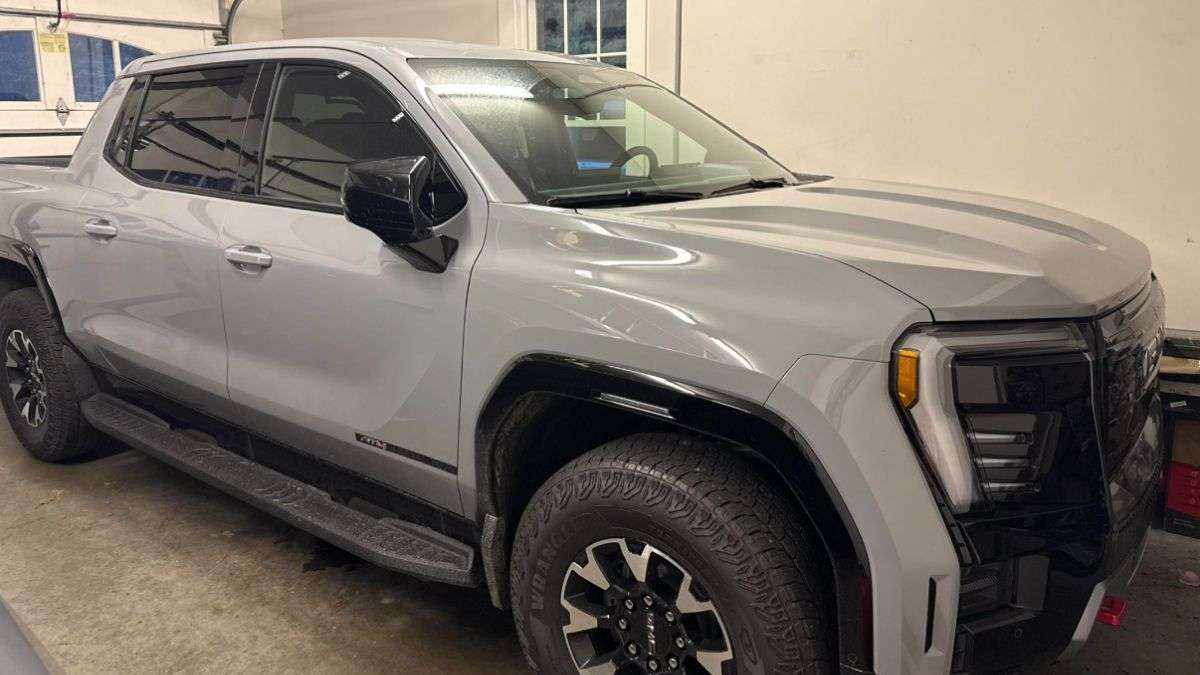

Every EV story begins with some curiosity. For some, it’s the thrill of instant torque. While for others, it’s the quiet hum that replaces the growl of an engine. But for John A. Colgan Jr., it started with something entirely different: a faint burnt smell coming from the front trunk of his brand-new GMC Sierra EV AT4 Extended Range. I came across his post in the “GMC Sierra EV Group,” where he shared both his excitement and unease. He was thrilled by the smooth home charging and cutting-edge feel of his new truck, yet he couldn’t shake the questions that come when something doesn’t quite add up.
Here's how he put it: “I have recently purchased my first EV, which is the GMC Sierra EV AT4 Extended Range model, and my experience has been overwhelmingly positive. Following the installation of the GM Level 2 charger, I have been satisfied with its operation. My first trip to the airport is scheduled for next weekend. One issue that has caught my attention is the discrepancy between the estimated range and actual range when driving on the interstate, which makes me somewhat anxious about embarking on longer trips. Any guidance on EV ownership would be greatly appreciated. Furthermore, I have detected a burnt smell emanating from the front trunk sporadically when I open it.”
Range anxiety and unexpected odors might sound concerning, but both are fairly common among early EV adopters. This is especially true in the first few thousand miles of ownership. The Sierra EV, being new to market, is still a mystery to many drivers who are transitioning from gas trucks to electric powertrains. John’s mention of the burnt smell isn’t unusual either. New EVs often produce temporary odors due to heating elements or protective coatings burning off inside electrical components, especially near the front power modules and under hood plastics.
Community Insights and Owner Advice
When it comes to the highway range not matching expectations, several owners echoed what’s becoming a well-known truth in the EV world. Real-world range is often lower than what’s estimated on paper.
Marc Franco shared some helpful advice: “The best way to ‘guesstimate’ what your range will be on hwy is to figure an average of 20-30% less than what you normally get. Major factors that affect this are your driving style (speed), outside temperature (worse in extreme cold or hot), and incline. Most EVs I've seen have the biggest decline over 70 mph. You can offset a lot of this by using cruise. The decline is on par with ICE vehicles, and MPG can differ city vs highway.”
Marc’s comment points to an important reality that aerodynamic drag plays a massive role in EV efficiency. Above 70 mph, wind resistance increases exponentially, taking a bigger toll on electric range than many expect. Interestingly, this mirrors what some GMC Hummer EV owners have experienced while their trucks were in service too.
Another commenter, Chuck R Miller, offered reassurance and practical advice that directly addressed both of John’s concerns. He explained that the faint smell was likely normal and short-lived, noting, “Mine did it too when it was new and has since gone away. I think it's just heat associated with the charging and new plastic. I'm at 23,500 miles and have had zero drivetrain or charging failures.”
Chuck also expanded on range efficiency tips that every Sierra EV owner could benefit from, like adopting one-pedal driving and smarter charging habits. He described how using one-pedal driving increased his miles per kWh: “On longer trips, charge to 100% before you leave. But if you have to charge on the road, charge when you dip to 20% and stop at 80%. The charge rate from 80%-100% is considerably slower than what you'll experience when below 80%.” His perspective ties together comfort, control, and strategy in a way that makes EV ownership feel more intuitive and less intimidating.
Following that, Michael CR added to the discussion with a valuable insight about regenerative braking as well: “Make sure to use regenerative braking. On average, we have been adding 40-50 miles in additional range consistently. How you drive, terrain, and traffic all impacts actual results.”
This kind of advice shows new owners like John that there’s more to electric driving than just squeezing out extra miles. It’s about getting a feel for the truck itself, how it reacts when you ease off the pedal, how energy flows back into the pack, and how smooth it feels when everything clicks. Regenerative braking becomes less about math and more about rhythm, giving drivers a sense of connection that’s unique to EVs.
Understanding the Bigger Picture
I think John’s situation highlights something larger that new GMC Sierra EV owners are discovering. While the truck’s technology is advanced and its performance impressive, it’s still part of an evolving landscape. Some owners have even faced longer repair times or complex warranty processes, with reports of trucks staying in shops for weeks or of buyers losing trust after unresolved issues, as seen in cases like this Arizona lemon law dispute. These aren’t the norm, but they show that while early adopters benefit from cutting-edge innovation, they also shoulder some of the growing pains that come with it.
John’s experience is both relatable and revealing. I think many of us underestimate how different EV ownership feels when coming from gas-powered trucks. What’s fascinating about the Sierra EV is how it blends the comfort and familiarity of a full-size pickup with the learning curve of electrification. From mastering one-pedal driving to understanding battery management, it’s about rethinking the entire ownership experience. And while some buyers were hesitant at first, stories like the one from a new GMC Sierra EV test drive show how transformative that first electric drive can be.
Key Takeaways and Lessons for New Owners
- Initial odors are temporary: Slight burnt or plastic smells are common as new electrical components heat-cycle during early use.
- Range depends on driving style: High speeds, temperature extremes, and elevation can cause 20–30% drops from estimated range.
- Regenerative braking is your friend: It can meaningfully extend your effective range on long trips.
- Plan charging stops smartly: Avoid charging above 80% during travel unless necessary to save time and reduce battery stress.
- Patience pays off: Early ownership quirks are normal and tend to smooth out as systems break in.
Your Thoughts Matter
Have you personally experienced strange smells or range discrepancies in your EV?
And do you think early Sierra EV owners are being too cautious about these early issues? Or are they right to be concerned?
Share your thoughts and real-world experiences in the comments below.
Aram Krajekian is a young automotive journalist bringing a fresh perspective to his coverage of the evolving automotive landscape. Follow Aram on X and LinkedIn for daily news coverage about cars.
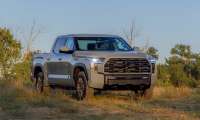
Image Sources: The “GMC Sierra EV Group” public Facebook group and GMC’s gallery, respectively.
Set Torque News as Preferred Source on Google
Follow us today...


Comments
You should have the smell…
Permalink
You should have the smell issue inspected on your Sierra EV. However, it is likely the product of the controller in the front of the vehicle heating in operation, which will cause some outgassing of the materials when new. As far as range, it takes some time for the vehicle to "learn" your driving behavior, and the batteries to season from several charge cycles. Likely will improve performance as you break the vehicle in. As far as all the noise here about the superiority of ICE tech and it's "efficiency" and "environmental" perfection? Ignore it. You cannot change the mind of anyone operating on feelings, being fed from their echo chambers of love for ICE, and the misinformation spewed by the oil industry to keep their pipelines profitable to the last drop. I have only met one individual who found their EV (Tesla Model S Performance) dissatisfying enough to get rid of it and go back to ICE (BMW 7 Series). As far as all the range calculations and noise on the topic? Give it time, and you'll learn the quirks and demands for charging and expected results as readily as anyone knows their ICE cars, it's just a matter of time and experience.
EV range is based on mixed…
Permalink
EV range is based on mixed driving, meaning it factors in energy recovery during braking. In other words, the car wants you to start-stop drive everywhere. The second you have a blissfully clear 100 miles ahead of you on the highway, expect to lose about 20% of your range. As for the smell, get the car checked, the inverters and high voltage electrics are usually in the front.