

On paper, upgrading to a higher-output engine is supposed to be the easy decision. More horsepower, more torque, and a higher trim level usually signal that the experience will be better in every measurable way. But as many long-term owners will tell you, real-world driving does not always line up neatly with spec sheets. Sometimes the differences only show themselves after weeks of daily use, not during a quick test drive.
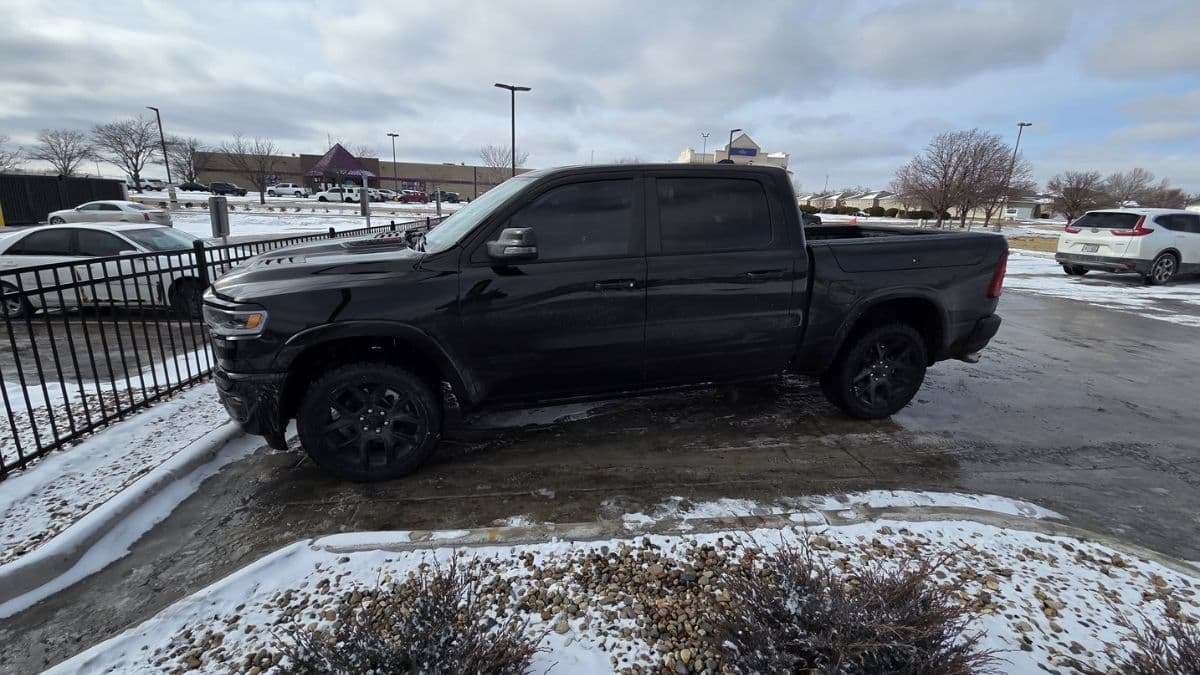
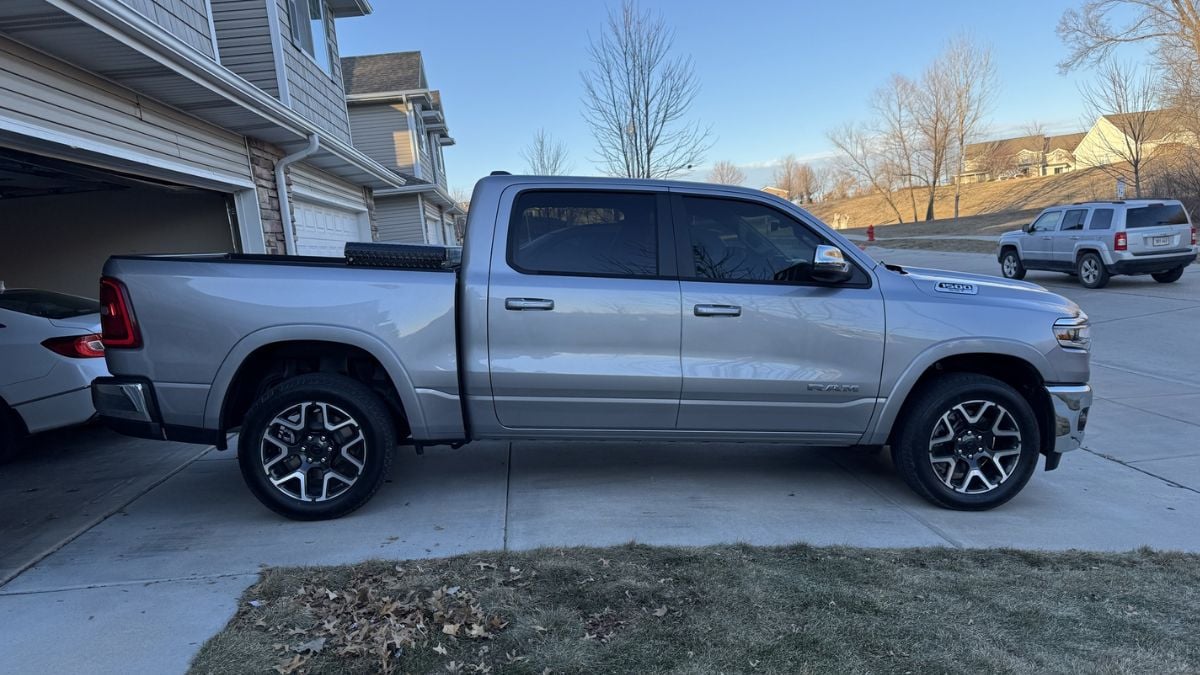
That is exactly the situation one Ram owner found himself in. While scrolling through the Hurricane 3.0 TT Rams Facebook group, I came across a detailed post from Rob Pickel who recently moved from a 2025 Ram 1500 Laramie equipped with the Standard Output Hurricane engine to a 2026 Ram 1500 Limited with the High Output version. Having spent roughly a year with the SO before stepping into the HO, Rob found that what seemed like a straightforward upgrade instead raised deeper questions about tuning, drivability, and how differently the same 3.0-liter twin-turbo engine can feel across the Ram 1500 lineup powered by the Hurricane engine.
Here is how Rob described his experience after a month behind the wheel of his new truck:
“I've had my ’26 Limited HO for about a month now, and I've noticed something that I wonder if others have or would like to talk about it anyway. I traded my ’25 Laramie SO for this ’26, and I've noticed a stark difference in the characteristics of the HO vs the SO. The SO was very linear from 2k RPM on up to 5,800 and it really felt like a nice smooth curve of power. The HO on the other hand has like 2 different souls. Below 4k RPM it's quite timid, more so than the SO, and then above 4k it goes into blow your face off demon mode. Even with the sounds it makes on the SO, the engine noise was pretty linear, but in this thing it’s basically silent and then turns into a screaming freight train. Are these differences in SO vs HO? Does ’25 vs ’26 play a role? For example, the interior white ‘mood’ lights were MUCH brighter in the Laramie/’25, but they're almost too dark in the ’26. There are little things like that that I've noticed between the two. I feel like I'm in a rare position to have driven a SO for a year, and now have plunked down in a HO. But in some regards, I think I prefer the SO and that makes me wonder if my HO is performing the way it's supposed to. Any thoughts? Cheers!”
Same Engine, Very Different Personality
To understand why this difference feels so pronounced, it helps to step back and look at how Ram positions the Hurricane engine within its broader truck strategy. Ram did not simply replace the HEMI with a single turbocharged six-cylinder and call it a day. Instead, it created two distinct personalities using the same hardware, allowing buyers to choose between refinement-focused drivability and performance-oriented output without changing engines entirely.
This approach mirrors what Ram has done in the past with suspension tuning, axle ratios, and even interior design. The idea is not that one option is universally better, but that each serves a different kind of owner and use case. Rob’s experience highlights how noticeable those differences can become when you live with both back-to-back.
Both of these trucks use Ram’s 3.0-liter twin-turbo Hurricane inline-six, especially as Ram continues expanding its Hurricane lineup across trims and replacing the long-running HEMI V8 in the Ram 1500’s engine lineup transition. Ram has leaned heavily on this engine across trims, marketing it as a balance of performance, refinement, and fuel economy within the Ram Hurricane 3.0-liter twin-turbo strategy.. There is no difference in displacement, basic architecture, or overall engine design. Where things diverge is in calibration. The Standard Output and High Output variants are tuned with different priorities, and those priorities are clearly felt from the driver’s seat.
The Standard Output Hurricane is designed to deliver power in a smooth, predictable way. Owners often describe it as linear, responsive, and easy to modulate in daily driving. Torque builds early, throttle response feels natural, and the engine maintains a consistent character from low RPMs through the upper range. For towing, commuting, and relaxed highway driving, this kind of behavior inspires confidence.
The High Output version takes a different approach. Peak numbers matter more here, and the tuning reflects that. At lower RPMs, the engine feels calmer and more restrained than the SO. Push past roughly 4,000 RPM, however, and the character changes dramatically. Boost ramps up aggressively, sound increases sharply, and acceleration becomes far more intense. This is the “two souls” sensation Rob described, and it's very much by design.
Why the HO Feels Quieter and Tamer Down Low
One factor that often goes unnoticed in discussions like this is transmission calibration. The ZF eight-speed automatic paired with the Hurricane engine plays a significant role in shaping how power is delivered. In High Output trims, shift logic is frequently tuned to prioritize smoothness and efficiency during light throttle operation, especially in luxury-focused models like the Limited.
This means the transmission may hold higher gears longer, keeping RPMs lower and masking the engine’s true potential unless the driver demands it. In contrast, the Standard Output setup often feels more eager because the drivetrain responds more immediately to modest throttle inputs, even if it ultimately produces less peak power.
One of the more interesting observations Rob made was how quiet and subdued the HO feels at lower engine speeds. That is not accidental. High Output calibrations often limit boost and soften throttle mapping at lower RPMs to protect driveline components and maintain refinement in luxury-focused trims like the Limited.
In everyday driving, this can make the HO feel less eager than the SO when pulling away from a stop or cruising at moderate speeds. The tradeoff is that when the engine is pushed harder, it delivers a far more dramatic surge of power. For drivers who enjoy spirited acceleration and higher-RPM performance, that payoff is part of the appeal.
For others, especially those coming from the SO, the transition can feel counterintuitive. The truck with the higher output rating may actually feel less responsive most of the time unless it is driven aggressively.
Does the Model Year Change Matter?
Model year changes are often dismissed as cosmetic, but Rob’s observations suggest they can influence daily enjoyment more than buyers expect. Beyond lighting adjustments, manufacturers routinely revise software calibrations to address feedback, emissions targets, or perceived refinement goals. These updates rarely make headlines, yet they shape how a vehicle feels every time it is driven.
In recent years, Ram has steadily refined its interior experience in higher trims. Changes to ambient lighting brightness, screen responsiveness, and even steering feel can subtly alter a driver’s perception of the vehicle. For someone moving directly from a 2025 to a 2026 model, those differences are far more noticeable than for a first-time buyer.
Rob also raised an important question about differences between the 2025 and 2026 model years. While automakers rarely advertise small year-to-year changes, they happen constantly. Software updates, supplier changes, and refinement efforts can subtly alter how a vehicle feels.
How Other Hurricane Owners Are Experiencing the HO
Rob’s post sparked thoughtful discussion from other Hurricane owners, many of whom helped contextualize what he was feeling behind the wheel. Rather than dismissing his experience, several commenters reinforced that the SO-to-HO transition is unusual and that the differences are very real.
James Veigl pointed out just how rare Rob’s position is, writing, “You are probably one of the first, if not the first person to experience an SO then get into an HO in a real world scenario. The HO has different turbos and different programming. It should feel about the same as the SO until you get into boost. That's when it will feel and sound much different.”
James’ comment helps explain why the HO can feel subdued in normal driving. Until boost ramps up, the engine is intentionally restrained, which aligns closely with Rob’s description of the truck feeling calmer below 4,000 RPM.
Others emphasized that this dual personality is exactly what they enjoy about the HO. Jon Tyler Sr. shared, “I’ve only had an HO and no complaints. It can be as mild as needed but is a straight up beast when pushed.”
That perspective highlights how expectations shape perception. Owners who start with the HO tend to accept its relaxed nature at low speeds because they know what it delivers when driven harder.
Tony Shackelford echoed that sentiment from a more emotional angle, writing, “I have a ’26 HO Limited. I like your analogy. And yes, there’s a ‘Hurricane’ that shows up. And punching it at level and still being thrown back. This truck and Pirellis, it’s awesome. Plus the sound. So no, I don’t miss my hemi.”
Tony’s response reinforces that for many drivers, the HO’s appeal is not constant aggression, but the contrast. When the power arrives, it feels dramatic enough to replace the emotional pull of a traditional V8.
More Power Is Not Automatically Better
Perhaps the most interesting takeaway from this experience is that preference does not always follow the numbers. The High Output Hurricane is undeniably more powerful, but that power is delivered in a way that may not suit every driver’s expectations or habits.
The Standard Output engine offers a sense of consistency. It feels awake across a broader range of everyday driving situations. The High Output engine, by contrast, saves much of its excitement for higher RPMs, rewarding drivers who actively seek it out. Neither approach is objectively wrong. They simply serve different priorities. Ram appears to have intentionally separated the personalities of these two engines rather than making the HO a strictly better version of the SO.
What Rob is experiencing with the Hurricane HO fits into a much wider industry trend. As manufacturers chase higher output figures from smaller displacement engines, drivability tradeoffs become unavoidable. Turbocharged engines rely heavily on software to determine when and how power arrives, which means character is often engineered rather than inherent.
This kind of tuning philosophy is not unique to Ram. Across the industry, higher-output variants often trade low-end immediacy for top-end performance. Turbocharged engines in particular are sensitive to calibration choices, and small changes can dramatically alter how they feel.
For buyers who value smoothness, predictability, and effortless response, the Standard Output Hurricane may actually be the better match. For those who enjoy aggressive acceleration and a more dramatic powerband, the High Output delivers an experience that feels special when pushed.
Key Takeaways for Ram Shoppers
- Same Engine, Different Tuning: Both the SO and HO use the same 3.0-liter twin-turbo Hurricane engine, but differences in calibration and software dramatically change how the power feels behind the wheel.
- Standard Output Focuses on Consistency: The SO delivers smoother, more linear power that feels responsive and predictable in normal driving conditions.
- High Output Favors Peak Performance: The HO is tuned to feel calmer at low RPM but becomes far more aggressive and powerful once pushed into higher engine speeds.
- Numbers Do Not Tell the Whole Story: Higher horsepower ratings do not always translate to a better day-to-day driving experience.
- Model Year Changes Can Be Noticeable: Software updates, refinement tweaks, and interior adjustments between 2025 and 2026 can subtly but meaningfully affect ownership feel.
- The Better Choice Depends on the Driver: Preference between SO and HO ultimately comes down to driving style, priorities, and how the truck is used most of the time.
What Are Your Thoughts?
If you’ve driven both the Standard Output and High Output Hurricane engines, which one felt better in everyday driving, and why?
Would you rather have smoother, more predictable power all the time, or a calmer truck that saves its punch for higher RPMs?
Don’t hesitate to share your thoughts with us in the comments below.
Aram Krajekian is a young automotive journalist bringing a fresh perspective to his coverage of the evolving automotive landscape. Follow Aram on X and LinkedIn for daily news coverage about cars.
Image Sources: The “Hurricane 3.0 TT Rams” Facebook group.
Set Torque News as Preferred Source on Google
Follow us today...






Comments
Just bought a 2025 Laramie…
Permalink
Just bought a 2025 Laramie 1500 with the 3.0 HO . Very interesting listening to everyones comments. I can’t wait to find out how I like it.