
Brembo announced Monday that its Sensify brake-by-wire platform has entered production for an unnamed "leading global vehicle manufacturer." The system is fitted as standard on every vehicle in the launch program. Brembo expects to equip hundreds of thousands of vehicles per year across multiple contracts, including new customers signed after the initial program began. The Italian supplier will not name the automaker, citing confidentiality agreements.
This is the most significant deployment of brake-by-wire technology since Mercedes experimented with Sensotronic in 2001. It eliminates hydraulic fluid, replacing brake lines and master cylinders with electric actuators at each wheel and an AI-driven control unit that modulates braking force individually. Brembo calls it "the first fluid-free intelligent braking system." The problem is that nobody outside Brembo's Bergamo headquarters knows which car will be the first to stop without brake fluid.
What The Timeline Says
The timeline tells part of the story. At the April 2023 Shanghai Auto Show, Brembo announced that the first Sensify-equipped vehicle would launch in 2025. That deadline came and went without production news. By March 2025, industry publications were already reporting that Sensify would debut in 2026 instead. The May 4 announcement is the fulfillment of a promise that arrived twelve months late.
The JAC Group partnership announced on February 5, 2026, generated immediate speculation. JAC and Brembo signed a co-development agreement for "intelligent braking solutions," and some outlets assumed JAC or its Maextro brand would be the Sensify launch customer. That assumption collapses under timeline scrutiny. Three months is impossible for brake-by-wire integration on a production vehicle. The Maextro S800 launched in May 2025 with conventional Brembo electro-hydraulic calipers, not Sensify. JAC is a strong candidate for Wave 2 adoption, but JAC is not the launch customer.

China is where the brake-by-wire race is moving faster than Brembo's press releases. Chery's Exeed EX7 launches April 19, 2026, with what Chery calls "aviation-grade" electro-mechanical braking, supplied by domestic Chinese companies rather than Brembo. Li Auto's L9 Livis combines steer-by-wire with a fully dry EMB system. China's mandatory GB21670-2025 standard for electrical transmission braking systems took effect January 1, 2026, clearing the regulatory path for mass production.
Chinese suppliers, including Orient-Motion Technology, Jiongyi Electronic Technology, and Beijing West Industries, are already building EMB assembly lines. Brembo is not ahead of this wave. Brembo is running alongside it, trying to prove that an Italian supplier can match Chinese development speed.
How BMW May Be Involved
BMW's iX3 Neue Klasse entered production in late 2025, so it was an obvious suspect. I pulled the official BMW specification sheet and found conventional vented disc brakes with single-piston floating calipers on both axles. The M Sport package adds painted calipers in blue or red, but these are still hydraulic units. No BMW review, press material, or specification document mentions Sensify. BMW historically sources braking systems from Continental and Bosch for its volume vehicles. The iX3 is the most technologically advanced BMW ever built, and if it carried Brembo's flagship brake-by-wire system, BMW would have said so.
Mercedes-Benz will introduce ZF steer-by-wire technology in its 2026 EQS facelift. Mercedes calls steer-by-wire an "absolute game changer." But Mercedes is also developing its own "In-Drive Brake" concept, which relocates brake calipers inside the electric drive motor assembly rather than at the wheels. That is a fundamentally different architecture from Sensify. Porsche has no known brake-by-wire supplier relationship with Brembo. Ferrari renewed its Brembo partnership in February 2026, but the agreement covers only Formula 1 and World Endurance Championship Hypercar programs, both of which use hydraulic racing brakes, not Sensify.
The Most Likely Candidate
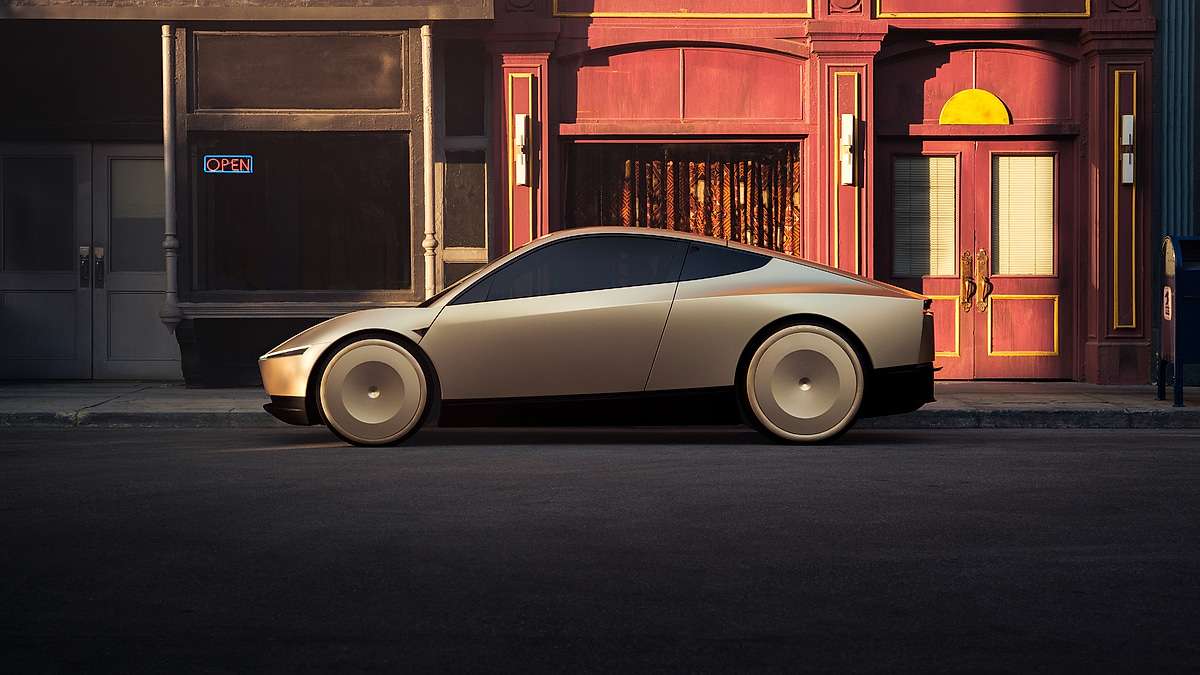
Tesla is the launch customer. More specifically, the Cybercab robotaxi. The evidence is circumstantial but stronger than any other theory.
A MarkLines supply chain database entry documents a 2023 European test drive event where Tesla tested Brembo's Sensify system. This is a market research firm's tracking of supplier-OEM interactions. Tesla had direct, documented contact with Sensify hardware two years before production began.
A January 2026 decompile of the Tesla mobile app confirmed that the Cybercab will use true brake-by-wire architecture. The code explicitly references a brake-by-wire system with no hydraulic fallback. Tesla designed the Cybercab from the ground up as a steer-wheel-free, pedal-free autonomous vehicle. A conventional hydraulic brake system would be an anomaly in a car built exclusively for software-driven operation.
Tesla Cybercab production began at Giga Texas in February 2026. Musk confirmed the production start during Tesla's Q1 2026 earnings call in April. Brembo's May 4 announcement that Sensify "has entered production" arrives six to twelve weeks after Tesla's own production start. The timing is tight enough to suggest Brembo's parts are feeding a running production line, not a future announcement.
Tesla fits Brembo's description of a "leading global vehicle manufacturer" without question. Tesla's stated long-term production goal for the Cybercab is two million units annually. Even the initial ramp targets volumes that fit Brembo's "hundreds of thousands" projection.
Tesla's culture of secrecy around supplier relationships is well documented. The company does not pre-announce partnerships. It lets the product speak. Brembo's refusal to name the customer aligns perfectly with how Tesla handles its supply chain.
The counterargument is that Tesla vertically integrates core systems. It designs its own chips, motors, and battery packs. Outsourcing braking to an Italian supplier would be uncharacteristic. But Tesla has partnered with external suppliers when the technology is new, and the development risk is high. It used Panasonic for battery cells, Mobileye for early Autopilot hardware, and Nvidia for early compute platforms before bringing those capabilities in-house. Brake-by-wire is a safety-critical technology with no production precedent at scale. Partnering with Brembo for the first generation while Tesla develops its own EMB capability internally would be consistent with Tesla's historical pattern.
The Secondary Possibilities
If Tesla is not the customer, the next most likely candidate is the "mystery premium automaker" Brembo CEO Daniele Schillaci mentioned in October 2021, around the time Sensify was unveiled. A five-year development cycle from 2021 to 2026 fits the complexity of integrating brake-by-wire into a production vehicle platform.

BMW is the best fit among European premium brands. The Neue Klasse i3 sedan launches in the second half of 2026, and BMW's "Heart of Joy" dynamic controller is explicitly designed to integrate braking, drivetrain, and energy recuperation into a single software-defined system. But the iX3's conventional brakes make this theory weaker than it first appeared.
Mercedes-Benz is also plausible. The EQS facelift arrives in 2026 with ZF steer-by-wire, and Mercedes already sources Brembo brakes for its EQ lineup. Adding Sensify would make the EQS the first production vehicle with both steer-by-wire and brake-by-wire from tier-one suppliers. But Mercedes has never been shy about announcing technology partnerships, and the silence around Brembo is notable.
What This Means for the Buyer
The transition to software-defined braking means your stopping power will be updated over the air. It means no brake fluid, no flushes, no hydraulic line corrosion, and no pedal vibration during ABS events. Maintenance costs drop for the owner, and complexity drops for the manufacturer.
But the trade-off is dependence. Your braking system becomes software. It calibrates itself based on driving data. It can be changed remotely by the manufacturer after you buy the vehicle. That is either a feature or a liability, depending on how much you trust code with your life.
The software-defined vehicle architecture that Sensify enables, over-the-air brake calibration updates, individual wheel force modulation, and seamless ADAS integration, is the same architecture Chinese OEMs are building with domestic EMB suppliers. Brembo needs the world to know that a "leading global manufacturer" chose Sensify before the narrative becomes that China chose its own suppliers and left Brembo behind.
The first Sensify vehicle will roll off an assembly line sometime in 2026. When it does, the automotive press will tear the brakes apart to confirm what Brembo would not say. My money is on a steering-wheel-free robotaxi built in Texas.
About The Author
Noah Washington is an automotive journalist based in Atlanta, Georgia, covering sports cars, luxury vehicles, and performance culture. His reporting focuses on explaining the engineering, design philosophy, and real-world ownership experience behind modern vehicles.
Noah has been immersed in the automotive world since his early teens, attending industry events and following the enthusiast communities that shape how cars are built and driven today. His work blends industry insight with enthusiastic storytelling, helping readers understand not just what a car is, but why it matters.
Noah is also a member of the Southeast Automotive Media Association (SAMA), a professional organization for automotive journalists and industry media in the Southeast.
His coverage regularly explores sports cars, luxury vehicles, and performance-driven segments of the automotive industry, including the evolving culture surrounding Formula Drift and enthusiast builds.
Read more of Noah's work on his author profile page.
You can also follow Noah here:
Set Torque News as Preferred Source on Google
Follow us today...