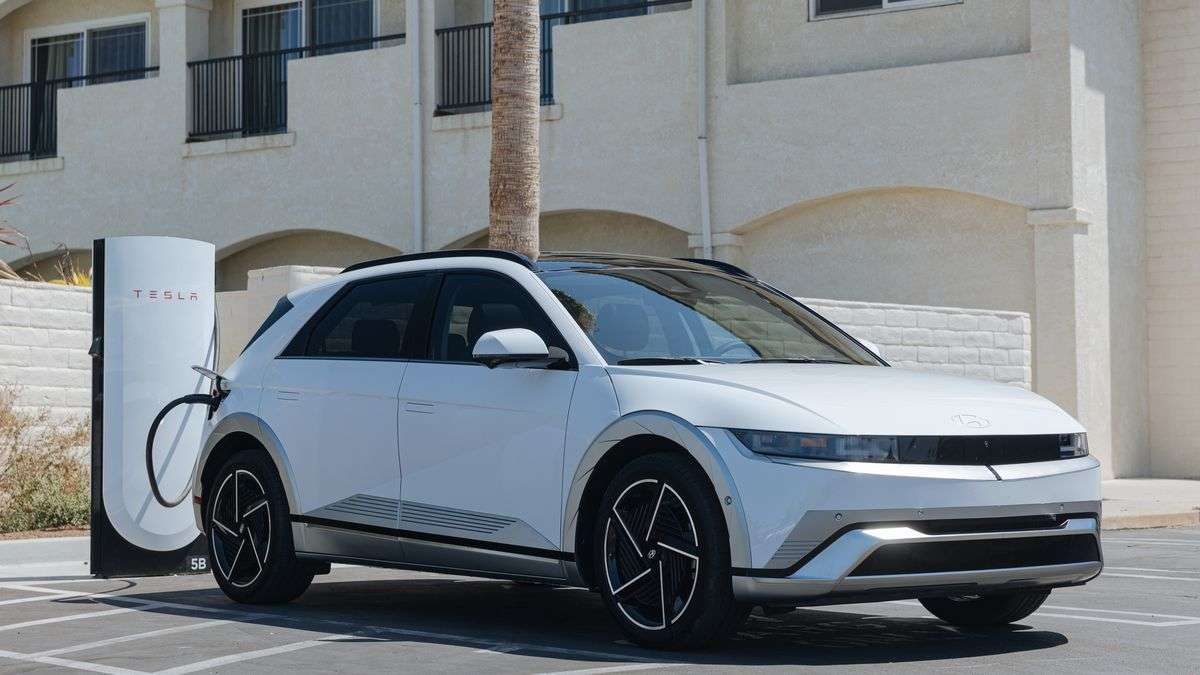

There’s a saying in motorsports: “You only find the weak link when it breaks.” It applies to brake lines at Le Mans, diff housings at Pikes Peak, and, apparently, charge cables at your local EV fast-charging station. For all the promise of electric propulsion, smooth, silent, and increasingly potent, we’re learning that even the most advanced systems have their moments of mechanical melodrama.
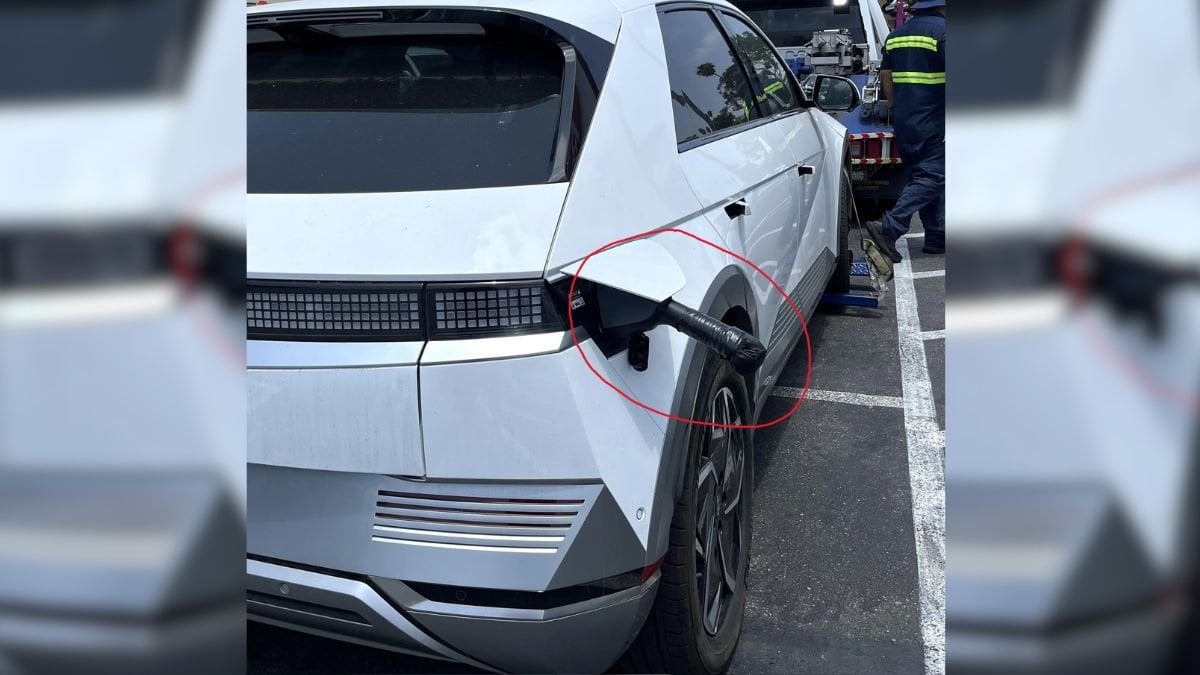
Sometimes it’s a design flaw. Other times, it’s wear, tear, or just plain bad luck. But what happens when two well-meaning players in the electrification ecosystem, Hyundai and Electrify America, point fingers at each other while the customer is left holding the bill?
I’m sharing this to get advice and possibly connect with others who’ve had a similar experience.
Recently, my Ioniq 5’s charging port was damaged while using an Electrify America charging station near my home. Here’s what happened:
My wife plugged in the charger, something she’s done many times before at the same location, and the session began normally. But after about 30 seconds, charging suddenly stopped, and she couldn’t unplug the charger. She contacted Electrify America, and a technician was sent out to help. Unfortunately, even he couldn’t remove the charger.
While this was happening, I also called Hyundai service, but they were unable to assist remotely. In the end, the EA technician cut the cable to free the car, and I had it towed to the dealership, still with the EA plug attached to the port.
The dealer was able to remove the connector and determined that the charging port had been damaged. I was then informed that this damage is not covered under warranty, and I would need to pay about $2400 out of pocket. When I contacted Electrify America, they also said they weren’t responsible.
We used the charger properly, followed instructions, and didn’t force anything. Still, neither company is accepting responsibility, and I’m left with a significant bill.
Advertising
Has anyone else experienced something like this?
How did you handle it?
Is there a recommended way to escalate this issue constructively?
Any advice or shared experience would be greatly appreciated.
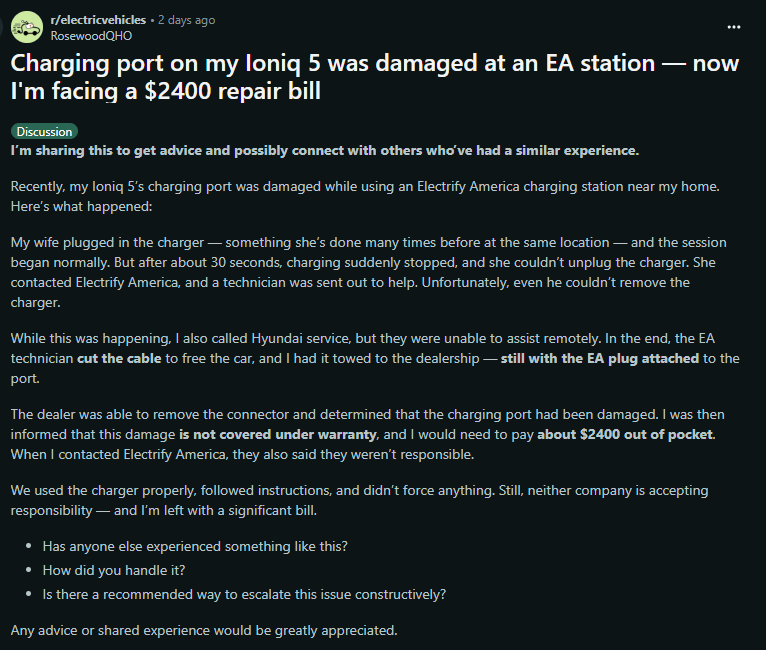
That was the account shared by Reddit user RosewoodQHO, and it reads like a parable of our electrified age. Plug in, walk away, and return to find your futuristic five-door hatchback physically tethered to the machine that’s supposed to be recharging it. When even the technician sent to help is forced to cut the charging cable with what one assumes was grim determination, it’s clear that something somewhere didn’t go to plan. And while both Hyundai and Electrify America have built reputations on innovation and investment, there’s still a strange twilight zone, call it a liability Bermuda Triangle, where responsibility seems to vanish into thin air.
Issues With Electrify America
- A number of drivers report chargers failing to initiate or abruptly stopping mid-session, often requiring them to replug or move to another stall
- Some problems trace back to faulty components in power cabinets that limit charging output, reducing available speed until the equipment is repaired
- Reliability data and community feedback show numerous instances of broken screens, payment-system malfunctions, and connectors that don’t activate for weeks at some locations.
- Electrify America is actively addressing these issues, dedicating $172 million to upgrade about 600 charging stalls in California and piloting features like ending charging at 85% to improve station availability
And this isn’t just an isolated case. Owners across forums have reported similar situations where CCS connectors become unresponsive, or worse, damage the vehicle’s port due to unseen wear or degraded contacts. “The pins on the EA plug were most likely dirty/damaged and then melted when they made contact with your car’s charging port,” one user suggested, a plausible explanation considering the thermal loads involved. These aren’t clear-cut failures. They’re silent breakdowns, contact resistance rising imperceptibly until something deforms or melts, turning a charging session into a service visit.
In such cases, the smart play might be insurance. As BiglyBirdWuzHere reminded the original poster, “Call your insurance, this is what it’s for.” Subrogation, explained by another user, allows your insurer to foot the repair bill while they hash out reimbursement from whoever might actually be at fault. It’s a sound approach in a blurry situation. And make no mistake, this isn’t about placing blame, it’s about ensuring the consumer doesn’t foot the bill for being stuck between the proverbial rock and an electron-filled hard place.
A Deeper Understanding Of It All
There’s also a deeper, more technical undertone to all of this. On the Ioniq Forum, several users have voiced concern over the tight tolerances between Hyundai’s charging port and third-party CCS connectors.
“It seems to me like the pins on the EV6/I5 are either undersized or otherwise poorly designed... the joint between the I5 port and a standard J-plug has higher than nominal contact resistance,”
One member speculated. While Hyundai hasn’t officially acknowledged a design flaw, these small variances can create major headaches when mated with aging infrastructure or when charging under peak conditions.
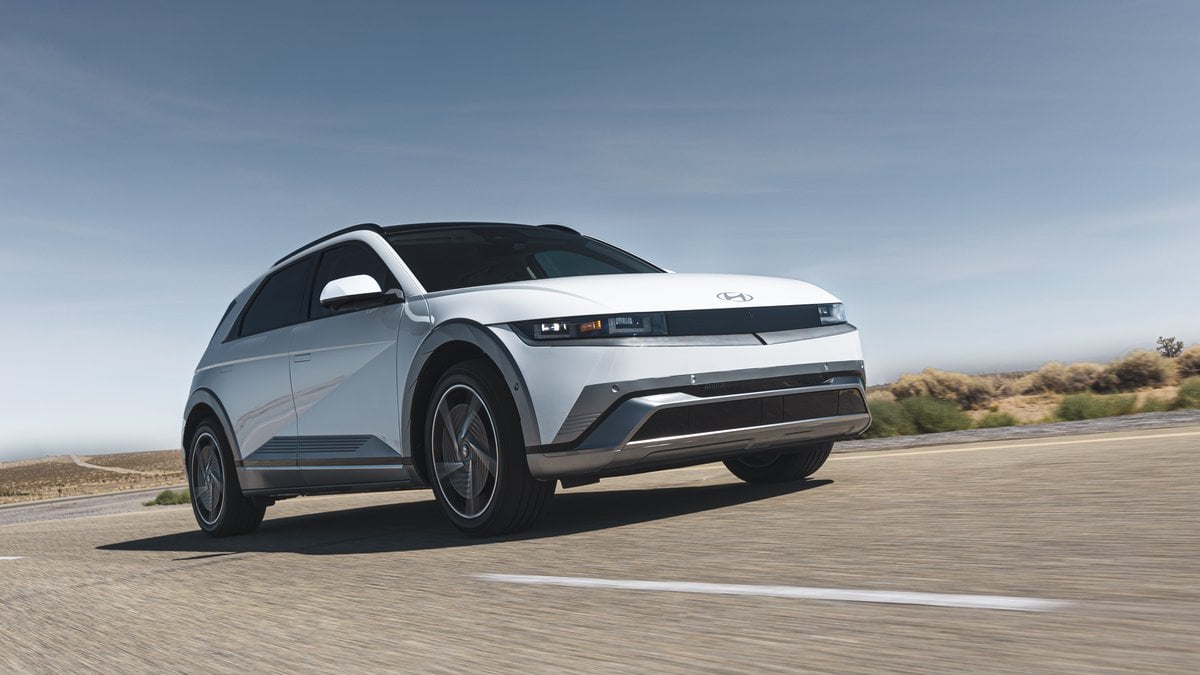
What makes this harder to swallow is the effort Hyundai and Electrify America have put into making EV ownership seamless. The Ioniq 5, in particular, is a technological triumph: 800-volt architecture, V2L capability, fast-charging that’s the envy of the segment. But when that brilliance runs up against something as mundane as a faulty pin or stubborn release latch, the whole experience crumbles in an instant.
2025 Hyundai Ioniq 5 Charge Time
- Thanks to its 800‑volt E‑GMP architecture, the Ioniq 5 can recharge extremely fast, about 10% to 80% in roughly 18–20 minutes using a high‑power DC fast charger (around 350 kW)
- In real-world testing, a 2025 model charged from about 9–80% in 20 minutes, with peak power exceeding 260 kW and a strong charging curve
- Using Tesla Superchargers (thanks to new NACS compatibility), the Ioniq 5 typically hits 10–80% in about 22 minutes, slightly quicker than at Electrify America stations
- At home on a Level 2 (240 V) charger, expect slower speeds: approximately 5 h 40 min for the standard battery or 7 h 20 min for the larger pack to go from 10–80%
As for drivers, some are now doing pre-checks before charging, inspecting connectors for heat discoloration or damage. Others are opting to reduce amperage on Level 2 chargers as a preventative measure. But as one user asked pointedly, “So should we all be looking at the pins before plugging in every time we charge?” It’s not an unreasonable question, but it’s a disappointing one. Shouldn't our infrastructure be robust enough to handle everyday use without forensic inspection?
We’re not condemning anyone here. Not Hyundai, not Electrify America, not the unlucky owner. This isn’t a failure of vision; it’s a misalignment in execution. And as with every leap in automotive history, growing pains are part of the deal. But if the industry wants to keep the public’s trust, it needs to take responsibility, shared or otherwise, when things go wrong. Otherwise, the only thing getting charged is the customer’s bank account.
Image Sources: Hyundai Media Center
Noah Washington is an automotive journalist based in Atlanta, Georgia. He enjoys covering the latest news in the automotive industry and conducting reviews on the latest cars. He has been in the automotive industry since 15 years old and has been featured in prominent automotive news sites. You can reach him on X and LinkedIn for tips and to follow his automotive coverage.
Set Torque News as Preferred Source on Google
Follow us today...