
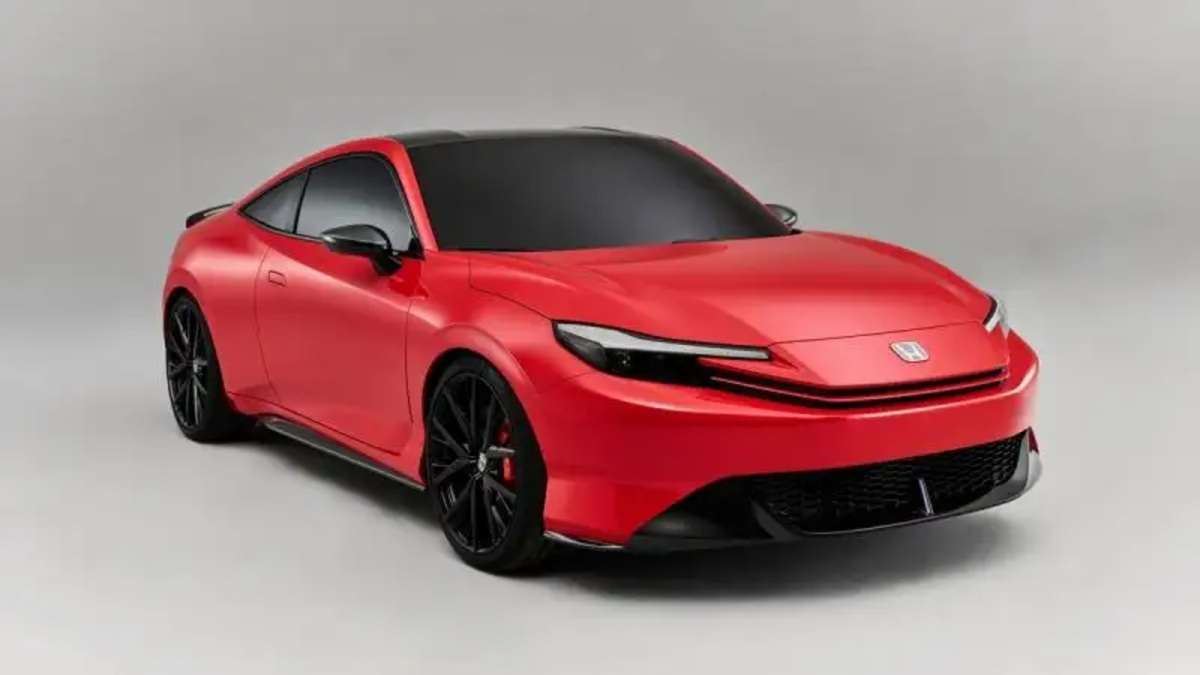

Update: In response to our recent article, Honda reached out to TorqueNews to share updated information on Prelude sales and early market reception.
"We are very pleased with the initial Prelude sales in December (174 units) considering we are so early in the launch and distribution of the model. Once we reach full national distribution this spring, we expect to see sales of around 300 to 400 units per month. Early feedback from our customers and dealers has also been incredibly positive."
In 2026, it seems like Honda has misread the room. The most important fact about the new Honda Prelude is also the simplest: 174 units sold in its first full month on sale. That number is not a rounding error. It is not a supply constraint. It is not a launch anomaly. It is a verdict.
Among Honda enthusiasts, the reaction has not been casual disappointment. It has been something sharper and more personal. One r/Honda commenter summed it up bluntly: “This isn’t a Prelude. It’s a Civic Hybrid wearing a nostalgia costume.” Another put it more economically: “They brought the name back, but none of the reasons anyone cared.”

Those reactions matter because the Prelude name is not an empty badge. For decades, it represented a specific Honda idea: accessible performance driven by engineering clarity rather than marketing theater. The new car does not fail because it is a hybrid, or because it isn’t rear-wheel drive, or because it doesn’t chase Nürburgring lap times. It fails because it is built around compromises that Honda once existed to avoid.
A Car That Feels Engineered by Risk Management
From a purely technical standpoint, the Prelude is competent. The chassis is composed. The seating position is correct. The steering rack is quick enough to suggest intent. There are moments, brief, fleeting, where the car hints at balance and poise. That’s the frustrating part. The fundamentals are there.
Then you lean into the throttle.
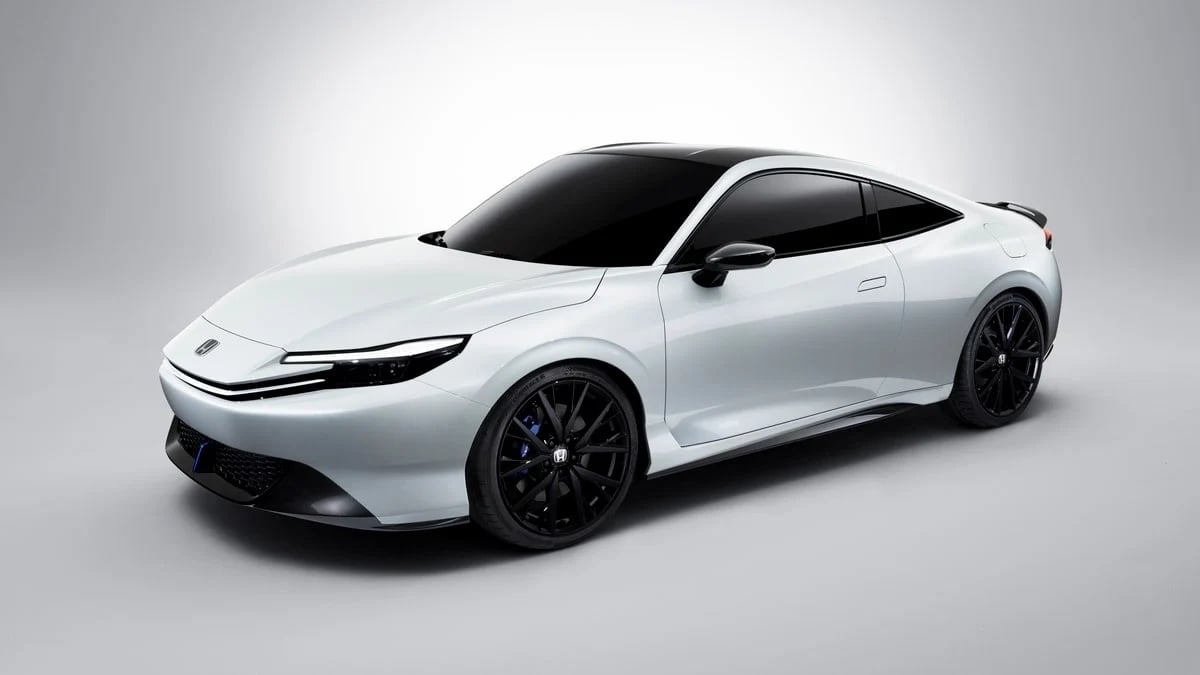
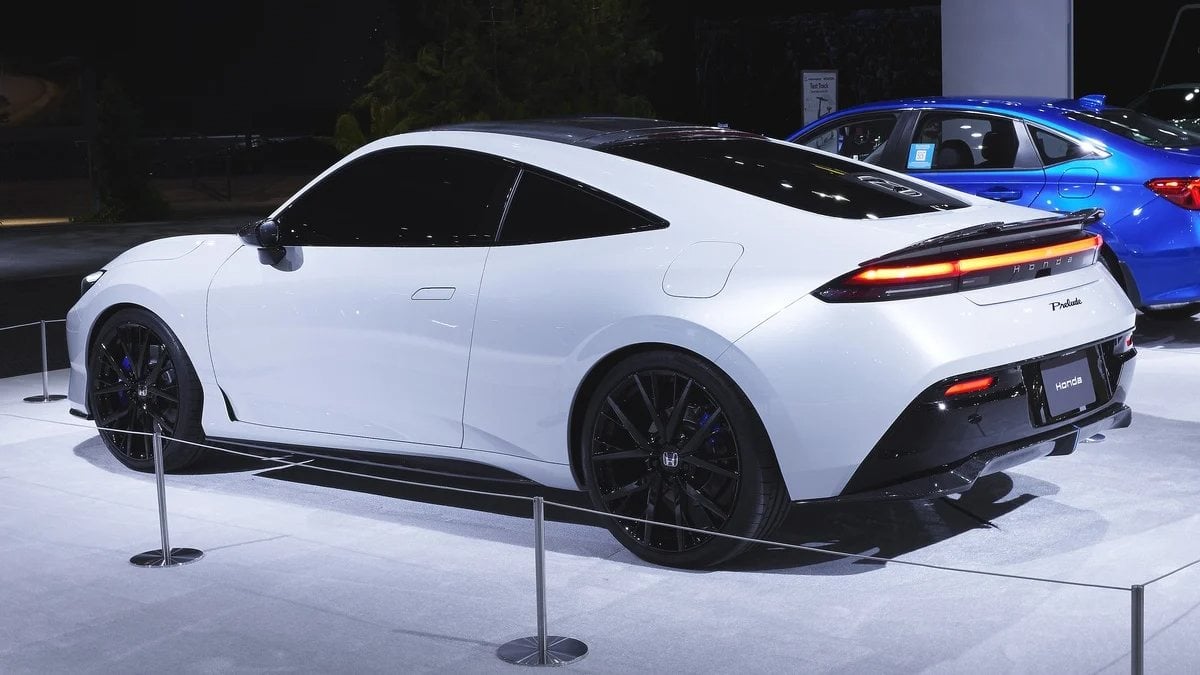
Honda Prelude: Styling & Design Choices
- The new Honda Prelude marks the return of the Prelude nameplate after more than 20 years, reintroduced as a modern hybrid coupe.
- Honda has confirmed the new Prelude will use a hybrid powertrain, focusing on efficiency and everyday drivability rather than high horsepower.
- Unlike earlier generations, the new Prelude is designed as a sporty daily car, positioned below dedicated performance models like the Civic Type R.
- The exterior styling takes inspiration from past Preludes while using a low, wide profile that reflects current aerodynamic and safety standards.
What follows is not drama, not crescendo, not mechanical conversation, but managed output. The hybrid powertrain delivers torque efficiently and predictably, but without texture. The simulated shifts, artificial sound augmentation, and software-governed responses are not offensive on their own. They are simply disconnected. One Reddit user nailed it: “Fake shifts, fake noise, real money.”
Many reviewers and enthusiasts alike often talk about “honesty” in a car, the alignment between what the driver inputs and what the car returns. The Prelude’s problem is that everything feels mediated. Nothing feels earned. The experience isn’t slow, but it’s inert. In a market where cars like the GR86, Mustang, and even the Civic Type R exist, inertia is fatal.
Pricing That Breaks the Social Contract
If the driving experience is the emotional failure, the pricing strategy is the structural one.
With an MSRP in the low-to-mid $40,000 range, the Prelude already enters contested territory. That alone demands excellence. Instead, buyers encountered dealer markups that routinely pushed transaction prices well past $55,000, and in some cases, north of $60,000.
One widely upvoted r/Honda post described a dealer quote as “$15k over MSRP with add-ons I didn’t ask for, this is almost used Porsche money.” That sentiment appears again and again. Not anger at dealers alone, but disbelief that Honda allowed the situation to unfold at all.
This is where trust erodes. Honda once built loyalty by delivering more than expected for the money. The Prelude reverses that equation. It asks buyers to pay a premium for restraint, and then watches as dealers inflate the number further. The customer is left feeling cornered rather than invited.
Dealers as Accelerants, Not Root Causes
It is tempting to blame dealerships exclusively. That would be incomplete.
Yes, markups killed momentum. Yes, add-ons and artificial scarcity poisoned goodwill. But dealer behavior thrives in vacuums created by manufacturers. Honda positioned the Prelude ambiguously, neither enthusiast-focused nor mass-market, and left retailers to “discover” its value. They did exactly what the system incentivized them to do.
One forum commenter captured it succinctly: “Honda didn’t underbuild this. Dealers didn’t lack supply. Buyers just didn’t see the point.”
That is the uncomfortable truth. There was no hidden demand waiting to be unlocked. The car arrived without a clear audience and was priced as if demand were guaranteed.
A Corporate Pattern, Not a One-Off
The Prelude does not exist in isolation. It fits a broader pattern of corporate hesitation and half-measures.
Honda’s failed merger talks with Nissan revealed similar dynamics: strategic caution masquerading as discipline, vision diluted by consensus. Rather than defining a bold future, Honda has repeatedly opted for incrementalism, hoping brand equity will cover the gap between what’s offered and what’s desired.
That mindset produced the Prelude exactly as it is: technically sound, emotionally distant, and positioned for a buyer who largely does not exist.
The Dangerous Lesson Honda Is Likely to Learn
Here is the real risk.
Honda will look at the Prelude’s sales figures and conclude that coupes no longer matter. Executives will cite market trends and consumer preferences. They will point to SUVs and crossovers and declare the case closed.
But the Prelude did not fail because it is a coupe. It failed because it was indecisive. Because it asked enthusiasts to pay more for less engagement. Because it tried to convert nostalgia into margin without delivering substance.
One r/Honda commenter warned exactly this outcome: “They’re going to use this as proof no one buys coupes, when really no one bought this coupe.”
That distinction matters.
What the Prelude Tells Us About the Industry
The tragedy of the Prelude is not that it exists. It’s that Honda had every tool required to make it matter, and chose restraint where commitment was required.
The name deserved more than caution. So did the customers.
Toyota has quietly shown the industry what respectful revival actually looks like, and the lesson isn’t subtle. When Toyota brought back the Supra and green-lit cars like the GR86, it didn’t pretend the calendar hadn’t moved forward, but it did respect the original promise.
The names were attached to products that matched the intent: affordable performance, mechanical honesty, and a clear reason to exist beyond brand leverage. Contrast that with how other manufacturers have treated their heritage badges.
The Chevrolet Blazer, Dodge Hornet, and Ford Mustang Mach‑E aren't failures, but they fail symbolically because the names carry expectations the products never intended to meet.
Among enthusiasts, and especially older car people, these cars are endlessly mocked not out of reflexive nostalgia, but because the names feel miscast. It’s the automotive equivalent of a movie sequel that exists solely because the IP tested well, not because the story demanded continuation.
You don’t call it disrespectful when fans push back on a sequel that misunderstands why the original mattered; you call it predictable.
Honda repeated this mistake most painfully with the Honda NSX. On its own terms, the second-generation NSX was an impressive machine: technologically dense, beautifully engineered, and genuinely fast.
But the original NSX didn’t earn its reputation by chasing the top of the supercar hierarchy; it earned it by being a European Corvette, not a Corvette Z06. It delivered exotic looks and performance with Japanese reliability and relative accessibility. The reboot flipped that ethos on its head.
Honda priced the NSX like a Ferrari alternative, layered it in complexity, and then acted surprised when buyers hesitated. The market wasn’t rejecting the car; it was rejecting the broken contract. Just as with nameplate crossovers and misapplied revivals, the failure wasn’t in execution so much as positioning.
When manufacturers forget that a name is a promise, not just a marketing asset, they end up blaming consumers for not applauding a performance they never asked for in the first place.
The same pattern plays out with the Ford F-150 Lightning, and this one cuts deeper because the product itself largely got it right. As an electric truck, the Lightning was genuinely impressive: fast, useful, thoughtfully packaged, and engineered with a clear understanding of how trucks are actually used.
The problem wasn’t the vehicle; it was the name and everything that came with it. “Lightning” once meant outrageous, supercharged excess, a factory hot rod that existed to be slightly irresponsible.
Reusing that badge on a quiet, software-driven EV immediately put the truck in a rhetorical cage it never asked for. Older enthusiasts scoffed at the name, younger buyers got caught in the crossfire, and then dealerships finished the job.
Markups, bait-and-switch pricing, and forced add-ons turned a strong product into a cautionary tale. Owners repeatedly reported that the buying experience felt adversarial, as if the truck’s success gave dealers permission to extract maximum pain.
That same dealership-driven distortion is now something many fear could permanently scar the Chevrolet Corvette, a car that for decades has survived every market shift precisely because it stayed true to its mission. The modern Corvette is a triumph of engineering and value, but testimonials from buyers increasingly echo the same frustration heard with the Lightning: astronomical markups, artificial scarcity, and an ownership experience that feels disconnected from what the car represents.
When people say dealerships are “ruining the Corvette,” they don’t mean the car has lost its way; they mean the ecosystem around it is actively undermining the mission that made it special. This is the industry’s quiet crisis. Manufacturers keep relearning the wrong lesson: that customers reject products, when in reality they reject broken narratives. Names matter.
Price positioning matters. And the moment the buying experience feels like exploitation rather than enthusiasm, even great vehicles begin to carry the stench of betrayal.
Image Sources: Honda Media Center
Noah Washington is an automotive journalist based in Atlanta, Georgia. He enjoys covering the latest news in the automotive industry and conducting reviews on the latest cars. He has been in the automotive industry since 15 years old and has been featured in prominent automotive news sites. You can reach him on X and LinkedIn for tips and to follow his automotive coverage.
Set Torque News as Preferred Source on Google
Follow us today...




Comments
Funny how people react so…
Permalink
Funny how people react so negatively about a car they haven't tried. From what I've heard from Japanese reviews they understand this new Prelude targets a more matured group rather than young enthusiasts. It's not a track or street racer but a laid back cruiser. Is it fun or boring to drive? I don't know because I haven't driven it, but I'm intrigued to see if they succeed in making a fun hybrid car.
The point is that the…
Permalink
In reply to Funny how people react so… by Ken (not verified)
The point is that the Prelude and its SH variant was never a cruiser. A more mature audience for sure. The car was always the showcase for engineering at Honda -- like 4-wheel steering and horsepower above anything Honda had in its line. It was basically an Acura Integra Type R. This version is on par with a Civic Sport and a light year behind the Type R Civic.
Reasons no one is buying it:…
Permalink
Reasons no one is buying it:
1) insane dealer markups
2) weak performance
and for #2 some prospective purchasers are willing to overlook.
Well written and spot-on. …
Permalink
Well written and spot-on. Any comment would be redundant. This editorial captures the all of my thoughts as I read. I owned an S2000 and a Prelude SH. All of my driving experiences were flashing through my head as I read your counterpoints and explanations. Well done.
I remember the old Prelude…
Permalink
I remember the old Prelude as an Accord coupe. Not exactly the stuff of posters on teenage walls.
Shame on Honda for not realizing dealer funny business devalues their brand.