A same-road cabin-noise comparison between a Tesla Model X and a Ford F-150 Lightning produced a surprising spread: 71 dB in the Model X and 61 dB in the Lightning at an indicated 58 mph, with the Lightning wearing Goodyear Wrangler all-terrain tires. Torque News checked the photos, the decibel math, Apple Watch measurement limits, and NHTSA/SAE context on tire and wind noise. For EV buyers, the point is not brand tribalism. It is that highway quietness depends less on the electric drivetrain than on tires, glass, seals, suspension isolation, and road surface.
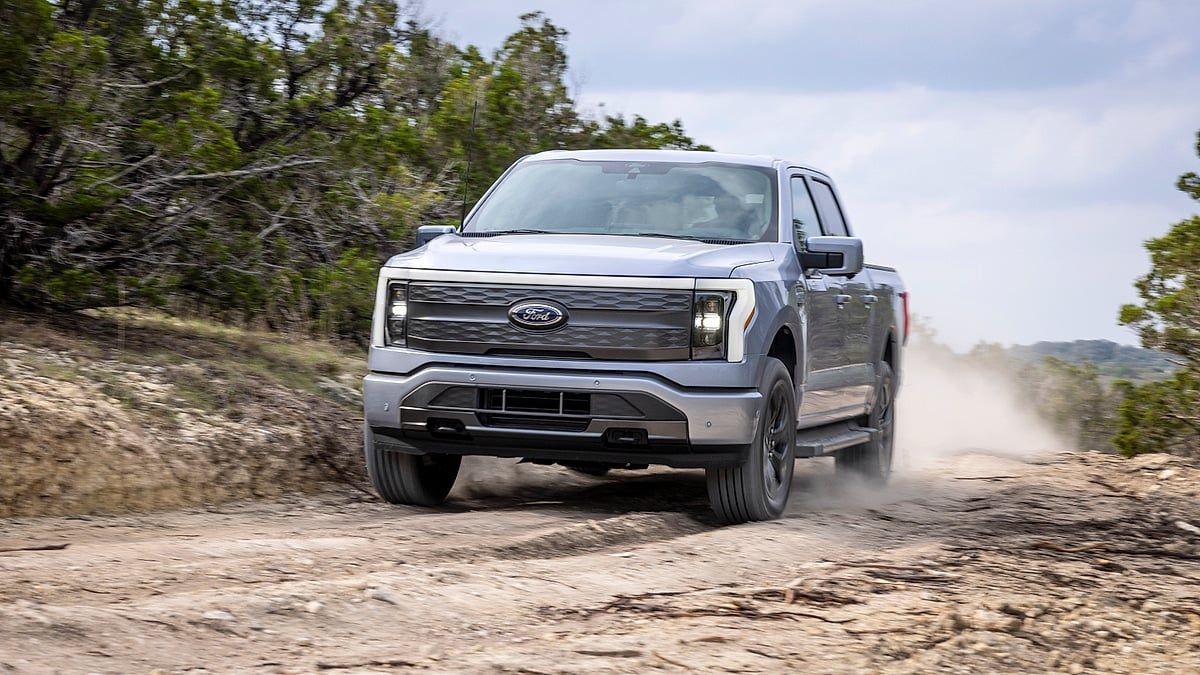
The comparison came from Matt Linn, who said he had received pushback for saying Teslas were "loud." His follow-up was simple: same speed, same conditions, same road surface, same road. One photo shows a Tesla Model X cabin at 58 mph with an Apple Watch Noise reading of 71 dB. Another shows a Ford F-150 Lightning at the same indicated 58 mph with a 61 dB reading.
Linn added one important detail: his truck was "running more aggressive all terrains than it does when stock." A separate photo shows a Goodyear Wrangler tire on the Lightning.
That matters because all-terrain tires are not usually the easy path to a quiet cabin. They tend to have more open tread blocks and a more rugged pattern than a highway tire. So if the Lightning still produced the lower reading in this field comparison, the result points beyond the basic "tires are everything" answer. Tires matter, but so do the body structure, acoustic glass, seals, suspension isolation, wheel-well treatment, and how each vehicle transmits road texture into the cabin.
What Torque News Checked
Torque News checked four layers before treating this as more than a social-media argument.
First, the photos show a real measured gap. The Tesla Model X image shows 71 dB at 58 mph. The F-150 Lightning image shows 61 dB at 58 mph. The readings appear on an Apple Watch Noise display, not on a calibrated professional meter.
Second, the math is bigger than it looks. Decibels are logarithmic. A 10 dB increase represents roughly 10 times the sound intensity. CDC/NIOSH noise guidance uses a 3 dB exchange principle, meaning each 3 dB increase represents a doubling of sound energy for exposure purposes. That does not mean the Model X necessarily "felt" 10 times louder to the human ear, but it does mean the measured gap is not trivial.
Third, Apple explains that the Noise app measures environmental sound in A-weighted decibels and uses the watch microphone without recording or saving audio. That makes the watch useful for a real-world comparison, but the placement matters. A wrist on the wheel, HVAC fan speed, open vents, road grade, wind, tire pressure, nearby traffic, and where the watch sits relative to the glass can all change the reading.
Fourth, the result fits a broader EV noise pattern. NHTSA's quiet-car rulemaking notes that the benefit of added low-speed EV warning sound tapers at higher speeds because wind and tire noise rise. SAE research on EV interior noise has also identified tire-road excitation as a major contributor to cabin noise. In plain English: once an EV is moving at road speed, the missing engine is no longer the whole story.
That is why this comparison is more interesting than a Tesla-versus-Ford scoreboard.
EVs remove engine and exhaust noise, but they also remove the masking effect those noises used to provide. In a gas vehicle, tire slap, suspension thumps, wind hiss, HVAC fan noise, and small rattles can hide under engine sound. In an EV, those sounds stand alone. A quiet motor can make everything else feel louder.

John Heritage made the same point from a different angle in the replies. He said his 2015 Nissan Leaf was quieter than his 2018 Model 3 on the highway, then added that tires made a huge difference on the Model 3. Pilot Sport AS4 tires were much louder than the original Michelin Primacy MXM4s, in his experience. Linn replied with the short version: "Tires are a huge factor."
That is the sentence shoppers should remember, but it should not be the only one.
Tires are a huge factor, but they are not an excuse to stop thinking. If tire choice explained everything, the Lightning's all-terrain setup should have been a disadvantage. The fact that it still showed a lower reading suggests the truck's overall noise path may be doing meaningful work, or that this particular Model X, tire setup, pavement interaction, or cabin condition was contributing more noise.
Why the Model X is harder to keep quiet
The Model X also has its own complications. It is a large, heavy EV with a broad glass area, flush door hardware, big wheels on many trims, and, depending on year and tire setup, different noise behavior than newer Tesla Model 3 and Model Y updates. The F-150 Lightning is also large and heavy, but it comes from a pickup platform where Ford has spent decades tuning body mounts, tire isolation, and highway comfort for truck buyers.
None of that means every Lightning is quieter than every Model X. It does show that "EV" is not a cabin-noise category by itself.
For buyers, the practical test is simple. Do not judge an EV's quietness from a spec sheet or from a five-minute drive on smooth pavement. Drive the exact trim, wheel, and tire setup at 55 to 75 mph on the same road type you use every day. Turn the radio off. Set the climate fan to the same level. Listen for tire roar, wind around mirrors and glass, suspension boom over coarse pavement, and high-frequency whine. If you use a phone or watch app, keep it in the same place for each vehicle and treat the result as a comparison tool, not a lab certification.
The useful lesson from Linn's comparison is not that the Tesla Model X is always loud or that the F-150 Lightning is always quiet. The lesson is that highway quietness is engineered after the engine disappears. A 10 dB field gap at the same indicated speed is enough to tell shoppers one thing clearly: if long-distance comfort matters, cabin noise deserves its own test drive.
Have you measured cabin noise in your EV at the same speed before and after changing tires? Send the vehicle, tire model, speed, road surface, and dB reading.
Let us know in the comments below.
About The Author
Noah Washington is an automotive journalist based in Atlanta, Georgia, covering sports cars, luxury vehicles, and performance culture. His reporting focuses on explaining the engineering, design philosophy, and real-world ownership experience behind modern vehicles.
Noah has been immersed in the automotive world since his early teens, attending industry events and following the enthusiast communities that shape how cars are built and driven today. His work blends industry insight with enthusiastic storytelling, helping readers understand not just what a car is, but why it matters.
Noah is also a member of the Southeast Automotive Media Association (SAMA), a professional organization for automotive journalists and industry media in the Southeast.
His coverage regularly explores sports cars, luxury vehicles, and performance-driven segments of the automotive industry, including the evolving culture surrounding Formula Drift and enthusiast builds.
Read more of Noah's work on his author profile page.
You can also follow Noah here:
Set Torque News as Preferred Source on Google
Follow us today...