
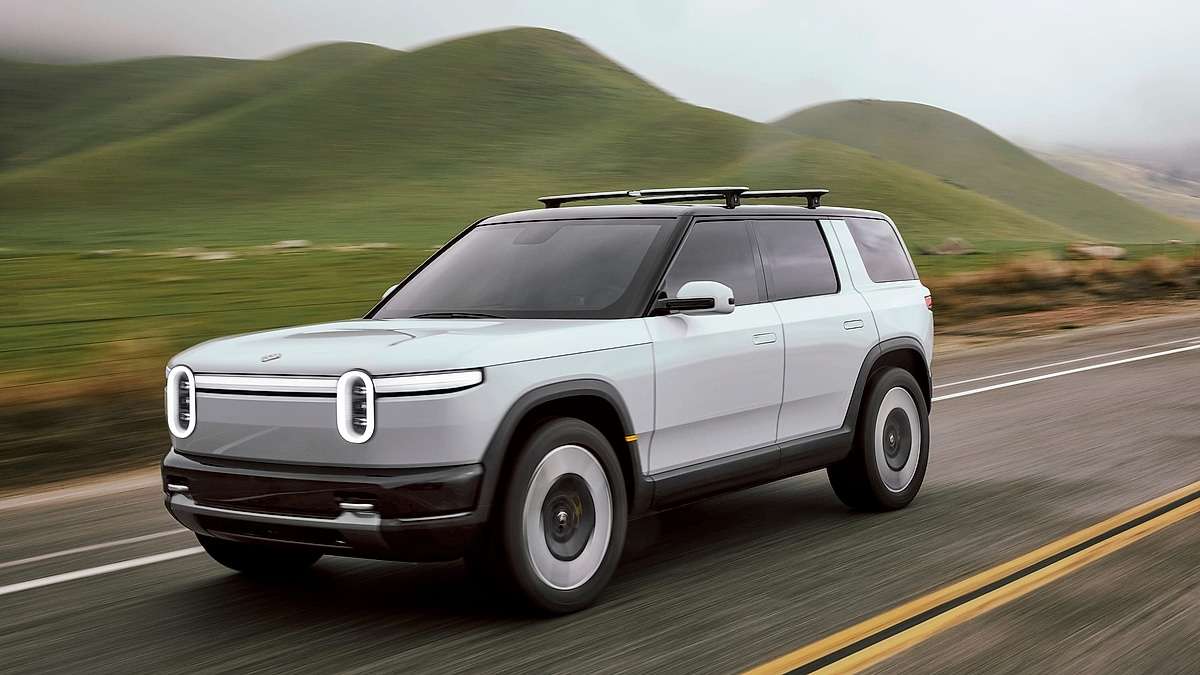

What You Need to Know
- A 4XL driver tested the R2 and found generous headroom, belly clearance, and thigh room
- The roughly 29-inch cargo hatch opening may limit large dog-crate usability for some buyers
The first R2 arriving in spring 2026 starts at $57,990, while the lower-cost version is delayed until later in 2027 - Rivian still does not support Apple CarPlay or Android Auto, keeping buyers in its native system
- Rivian designed the R2 with simpler exterior details intended to make small repairs less painful
- Service access is still thinner than that of Toyota or Ford, which remains a concern for some reservation holders
Ryan Quintal walked into Rivian's Denver Block Party expecting to be disappointed.
At five-foot-seven and 4XL, he's the kind of buyer the automotive industry often forgets exists. Steering wheels press into his belly. Center consoles dig into his thighs on long drives. Headroom becomes a fantasy.
He drives a Subaru Crosstrek, a compact crossover that fits his budget but leaves him cramped on road trips. The Rivian R2 would be, by a wide margin, the most expensive vehicle he's ever considered.
"I am not the traditional luxury vehicle buyer," he wrote in a Reddit post that now has 475 upvotes and 160 comments. "So I wanted to see if this thing actually works for someone like me."
It does. Mostly. And that "mostly" is where the story lives.
Quintal's first surprise was the sheer size. Coming from a Crosstrek, the R2 felt "a size class larger." Head clearance was "plenty", not R1 levels, but enough, and consistent with what a taller driver reported when he climbed inside at a preview event: the R2 Feels Smaller Than the R1S but Keeps "Plenty of Legroom". The leg lift to get in was noticeable for shorter folks, but not a dealbreaker. The real revelation came once he settled into the driver's seat.
"I've got a big ol' belly and didn't feel like the steering wheel even came close to touching or rubbing, even when the seat was far enough forward for me to operate the touchscreen," he wrote. For plus-size drivers, this is not a minor detail. It's the difference between a vehicle you can tolerate and one you can actually enjoy. Many cars force larger drivers to choose between reaching the pedals and reaching the screen. Quintal didn't have to choose.
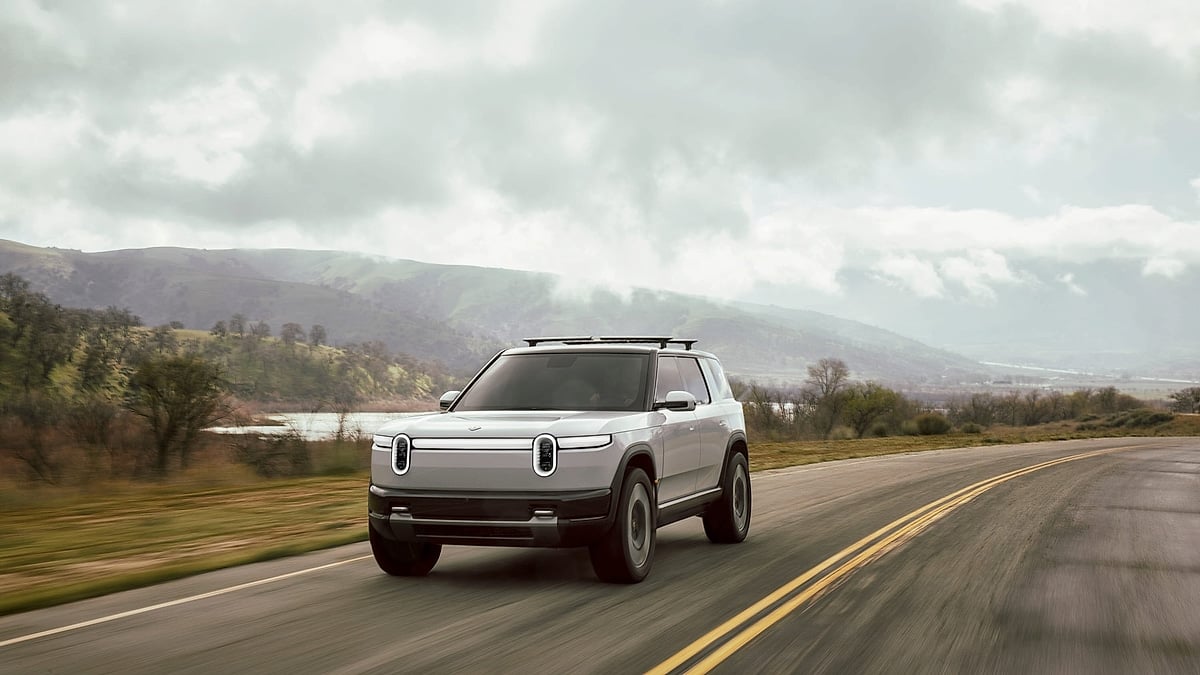
The thigh room was equally unexpected. "A lot of cars have a center console that presses into my right thigh when driving. Not bad on short trips. But after 45-plus minutes of traffic or driving, I can feel it, and on longer trips it lingers." The R2? No obstruction. "Really promising for longer trips or bent knees while letting autonomy do its thing."
Then he climbed into the back seat and laughed. "Very generous. It felt like two adults could sit next to a car seat and still have a decent ride." That spaciousness tracks with what a 6-Foot Rivian Fan Reported After Sitting Inside: He Was Taller Than the R2's Roofline but Still Shocked How Roomy It Felt Inside at an early preview. For the sub-six-feet folks, Quintal said, it was better than any smaller car class, "an amount of leg room you'd beg for on an airplane. One person could nap back there."
This is the part of the review that matters for Rivian's broader ambitions. The R2 isn't trying to steal buyers from the R1. It's trying to convert Honda CR-V owners, Subaru Forester loyalists, and Toyota RAV4 shoppers, people who want an EV but can't stomach a $90,000 luxury price tag. Quintal is exactly that buyer. And his verdict is clear: the R2 fits where other EVs in its price class often don't.
Quintal's experience highlights a genuine market gap in EV design. Most vehicle cabins are engineered around SAE-standard body dimensions, a 5'10" male weighing approximately 175 pounds. When occupants fall outside that median, whether very tall, very short, or carrying significant weight, standard seat geometry, steering column placement, and console design often create discomfort. The Tesla Model Y and Ford Mustang Mach-E have both received criticism from plus-size drivers for tight cabin packaging. Rivian's decision to prioritize interior width and thigh clearance could give the R2 a genuine competitive advantage in a segment that has historically ignored non-standard body types.
But fit is only one dimension of ownership. Function is another. And a separate Reddit post, this one with just 45 upvotes but 20 comments, revealed a design limitation that could quietly exclude an entire category of buyers.
The cargo hatch opening is approximately 29 inches at its lowest point. Inside, the ceiling reaches about 31 inches. The width between wheel wells is roughly 41 inches, and the depth to the back of the seats measures 36.5 inches.
Those numbers mean nothing until you try to fit a large dog crate through the opening. A German Shepherd travel crate typically measures 36 to 40 inches in length and 25 to 27 inches in height. The R2's 29-inch hatch opening, with that lower lip cutting into usable height, excludes the most popular travel crate sizes for America's favorite breed. One owner who measured the space specifically for his GSD wrote that he couldn't find any crate that would fit through the opening. The cargo area itself is generous. Getting cargo into it is the problem.
This isn't a Rivian-specific failure. EV designers across the industry prioritize aerodynamic efficiency to maximize range, and that priority inevitably produces sloped rear hatches with tight openings. The Tesla Model Y, the Ford Mustang Mach-E, and the Hyundai Ioniq 5 all make similar tradeoffs. But Rivian markets itself as the adventure brand, the company for hikers, campers, and dog owners. A 29-inch cargo opening that can't accommodate a large dog crate undermines that identity in a way that spec sheets never capture.
Back in the comments on Quintal's post, the enthusiasm met reality in real time. "They're going to be putting 100,000-plus R2s in the next year or two," one user predicted. Another, a Denver R1T owner, offered reassurance on the service anxiety that Quintal had raised: "Repairs and service issues are much, much better now versus three years ago. Locally, they just added two more service centers." A third pointed out that Rivian designed the R2 specifically for cheaper repairs; the rear A/C unit is now a small removable panel, and the bumpers aren't body-colored, so minor fender benders cost less to fix.
That repairability detail is easy to skip past, but it's one of the most financially significant design choices Rivian made. On the R1S and R1T, minor bodywork is punishingly expensive. Body-colored plastic trim, integrated LED light bars in the bumper, and complex panel geometry mean a low-speed parking lot tap can produce a $4,000 repair bill. Insurance companies noticed that Rivian's collision coverage rates are among the highest in the EV segment. The R2 reverses that approach. Non-body-colored bumpers mean scratches and scuffs don't require full-panel painting. The removable rear A/C panel means a minor rear-end collision doesn't require tearing apart the interior to access climate components. Over a typical five-year ownership period, R2 buyers could see significant savings in repair and insurance costs compared to R1 owners, or compared to luxury EV competitors with equally fragile front and rear fascias.
Every EV reviewer tests acceleration and charging speed. Almost no one tests what happens when someone backs into your bumper at a trailhead. For an adventure brand, repair costs are a durability metric that matters as much as range. The R2's simpler construction isn't a cost-cutting compromise; it's a recognition that real owners dent real trucks.
But the nervousness persists. And it crystallizes around three specific concerns that kept surfacing across all 160 comments.
Concern 1: Service and Repair Anxiety
Quintal put it bluntly. "This subreddit has made me nervous with repair and service stories." Even the optimists acknowledge it's a risk compared to established brands.
Concern 2: The first R2 is not the $45,000 Rivian many buyers had in mind
The first version Rivian is actually sending to customers is much closer to $58,000 than to the headline-grabbing $45,000 number that shaped early excitement around the vehicle.
In March, Rivian said the first R2 to reach customers in spring 2026 would be the R2 Performance with Launch Package, starting at $57,990. The company said the Premium trim would follow in late 2026 from $53,990, a Standard version would arrive in 2027 from $48,490, and the roughly $45,000 entry version would come later in 2027.
That changes the emotional math of the R2 more than any exaggerated optioned-up number does. Rivian can still say a $45,000 R2 is coming, and that remains true. But the first R2 buyers will meet in the real market is a launch-spec model that starts just under $58,000. For reservation holders who were drawn in by the idea of a more accessible Rivian, that is a meaningful shift.
Concern 3: No CarPlay
"If I don't get an R2, it might be because Rivian's dead set against CarPlay," Quintal wrote. Rivian's native infotainment system is polished, but it locks buyers into Rivian's app ecosystem. No Apple Maps. No Waze. No seamless integration with the phones they already use every day. For a tech-forward brand, refusing the industry-standard phone integration is a curious hill to die on.
So, where does this leave the R2? In an interesting position, actually.
The vehicle solves problems that EV reviewers rarely discuss. Accessibility for larger drivers. Better thigh and steering-wheel clearance than many mainstream crossovers. Practical repairability improvements that should lower ownership costs over time. The back window rolls down. The rear seats sound genuinely usable. The design team clearly thought about daily life, not just charging curves and 0-60 times. The catch is that the first R2 buyers will actually see is launching much closer to $58,000 than to the long-promised $45,000 entry point.
But the R2 also creates problems Rivian has not really neutralized yet. The cargo opening may frustrate buyers who travel with large dogs. The infotainment system still refuses to play nicely with Apple CarPlay or Android Auto. And while Rivian still talks about a roughly $45,000 R2, the first version customers can actually buy starts at $57,990, which makes the vehicle feel less like an affordable breakthrough and more like a premium compact EV with a lower-cost version still off in the distance.
Quintal is still holding his preorder. "If I didn't have a kid, I'd tend toward an R3," he admitted. "And R1 is way too big for me." The R2 lands in a genuinely useful size category, bigger than compact crossovers, smaller than full-size trucks, electric, adventurous. For buyers who fit in it, both physically and financially, it's compelling.
For buyers with large dogs, iPhones, or service centers more than an hour away, the math gets harder. And those buyers represent a lot of the market Rivian is trying to capture.
The competitive field isn't standing still while Rivian sorts out these questions. The Tesla Model Y continues to dominate EV sales with a starting price thousands of dollars lower. The Hyundai Ioniq 5 offers 800-volt fast charging that the R2 can't match. Ford's Mustang Mach-E has a service network that spans every county in America. And Volkswagen's ID.4, while uninspiring to drive, undercuts almost everything in the segment on price. Rivian isn't competing in a vacuum.
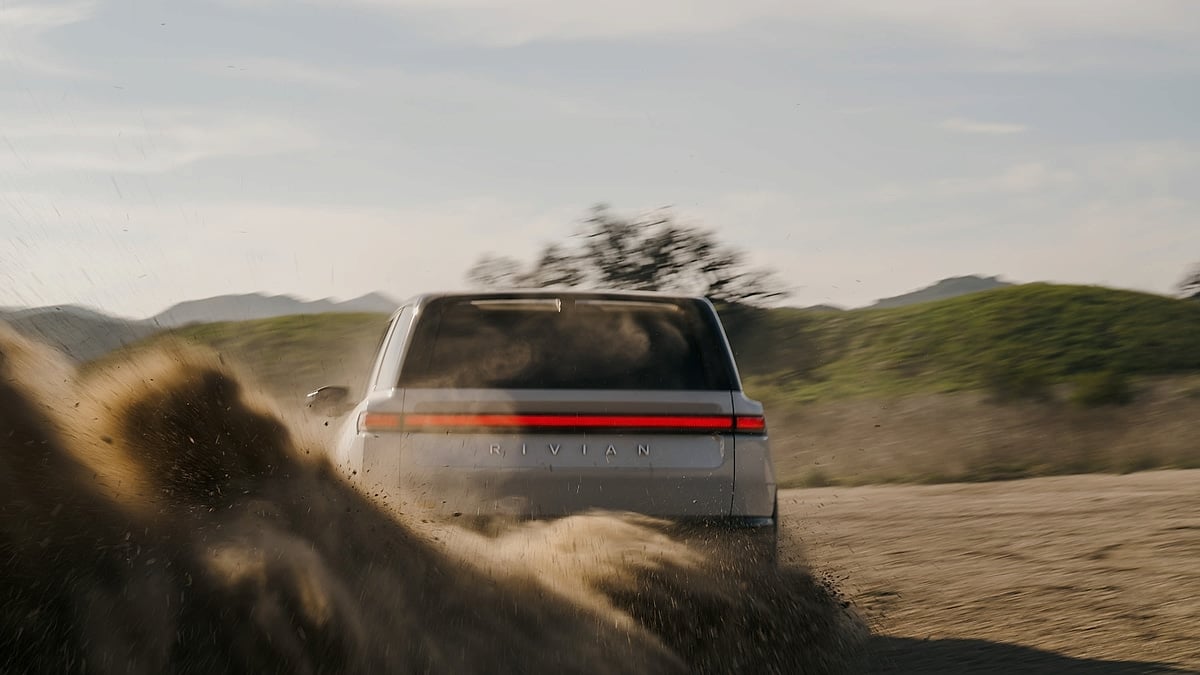
What Rivian does have is personality. The R2 looks like nothing else on the road. The back window rolls down, a feature so charmingly unnecessary that it becomes a conversation starter. The interior design shows genuine creativity, not just a tablet glued to a dashboard. For buyers who want an EV that feels special rather than sensible, that personality matters.
But personality doesn't fix a 29-inch cargo opening. It doesn't restore CarPlay. And it doesn't build a service center in rural Montana. The R2 solves real problems for real people. Quintal's review proves that. Now Rivian needs to solve the problems it created, too.
The R2 may still be the right vehicle for a lot of people, especially buyers who feel ignored by the way many cabins are shaped and packaged. But Rivian still has to answer a harder question before the R2 becomes a true mainstream win. Can it turn that strong first impression into a product that feels accessible, practical, and easy to live with once real buyers move beyond the launch hype and start comparing the actual version on sale?
Image Sources: Rivian Media Center
About The Author
Noah Washington is an automotive journalist based in Atlanta, Georgia, covering sports cars, luxury vehicles, and performance culture. His reporting focuses on explaining the engineering, design philosophy, and real-world ownership experience behind modern vehicles.
Noah has been immersed in the automotive world since his early teens, attending industry events and following the enthusiast communities that shape how cars are built and driven today. His work blends industry insight with enthusiastic storytelling, helping readers understand not just what a car is, but why it matters.
Noah is also a member of the Southeast Automotive Media Association (SAMA), a professional organization for automotive journalists and industry media in the Southeast.
His coverage regularly explores sports cars, luxury vehicles, and performance-driven segments of the automotive industry, including the evolving culture surrounding Formula Drift and enthusiast builds.
Read more of Noah's work on his author profile page.
You can also follow Noah here:
Set Torque News as Preferred Source on Google
Follow us today...




Comments
Amazing article!
Permalink
Amazing article!
Tim, thank you.
Permalink
In reply to Amazing article! by Tim Smith (not verified)
Tim, thank you.