
Buying a used car has always been a calculated gamble. You arrive hoping the paperwork and the promises line up with reality, while the seller offers the version of the car’s past that makes the transaction go smoothly. Somewhere between those two narratives lives the truth, and sometimes it arrives soaked.
Even with tools like Carfax available to modern shoppers, the used car world retains more than a trace of the old frontier mentality. When a buyer starts finding moisture inside a cabin, the risk profile rises quickly. One 2024 Prius owner learned this the hard way and took his concerns to Facebook in search of clarity rather than comfort.
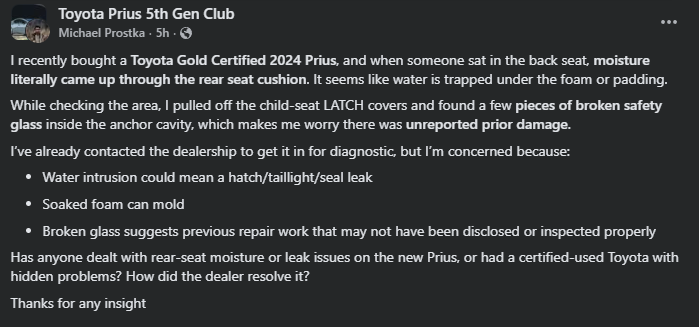
“I recently bought a Toyota Gold Certified 2024 Prius, and when someone sat in the back seat, moisture literally came up through the rear seat cushion. It seems like water is trapped under the foam or padding.
While checking the area, I pulled off the child-seat LATCH covers and found a few pieces of broken safety glass inside the anchor cavity, which makes me worry there was unreported prior damage.
I’ve already contacted the dealership to get it in for a diagnostic, but I’m concerned because:
Water intrusion could mean a hatch/taillight/seal leak
Soaked foam can mold
Advertising
Broken glass suggests previous repair work that may not have been disclosed or inspected properly.
Has anyone dealt with rear-seat moisture or leak issues on the new Prius, or had a certified-used Toyota with hidden problems? How did the dealer resolve it?
Thanks for any insight.”
For anyone who has driven off a dealership lot with a newly purchased used car and heard a sound that did not belong, the tone of this message is unmistakable. Moisture surging upward from a seat cushion is not a quirk or an annoyance. It is a warning sign. One commenter, Sirirat Martin, was blunt in voicing a possibility that no used car buyer wants to hear: “Flooded or underwater . . . Possibly . . .” That kind of speculation strikes at the core of what makes water intrusion so chilling. Flood exposure can leave behind electrical, mechanical, and biological problems that often reveal themselves long after the ink dries on the bill of sale.
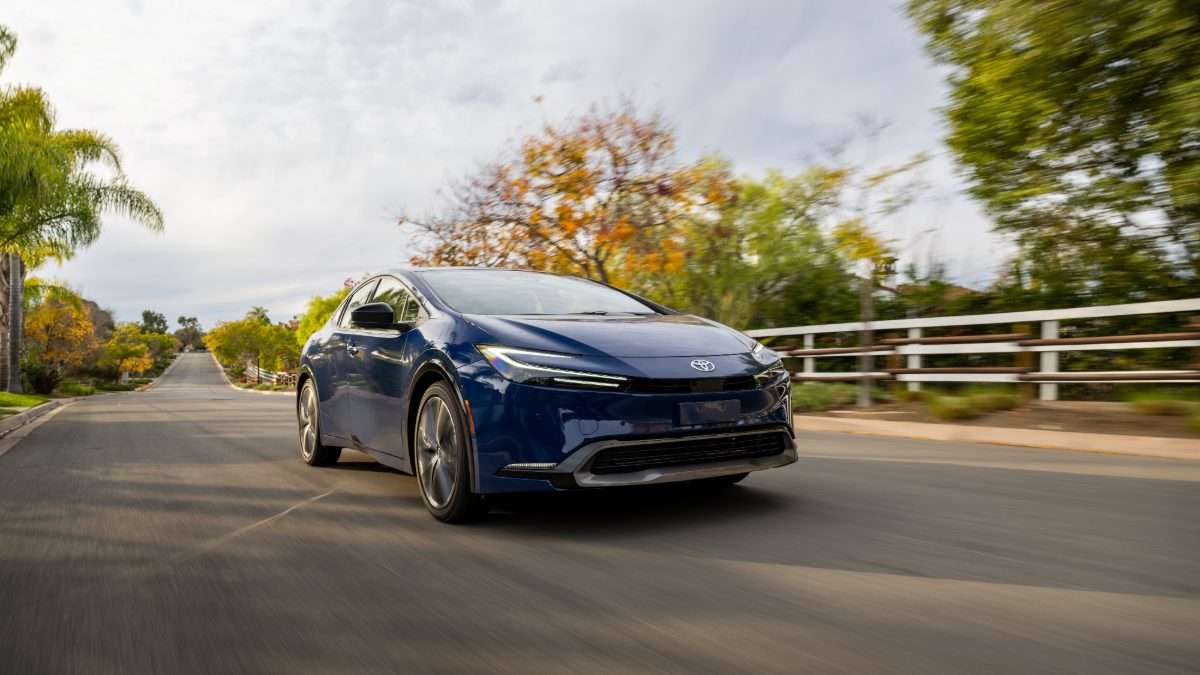
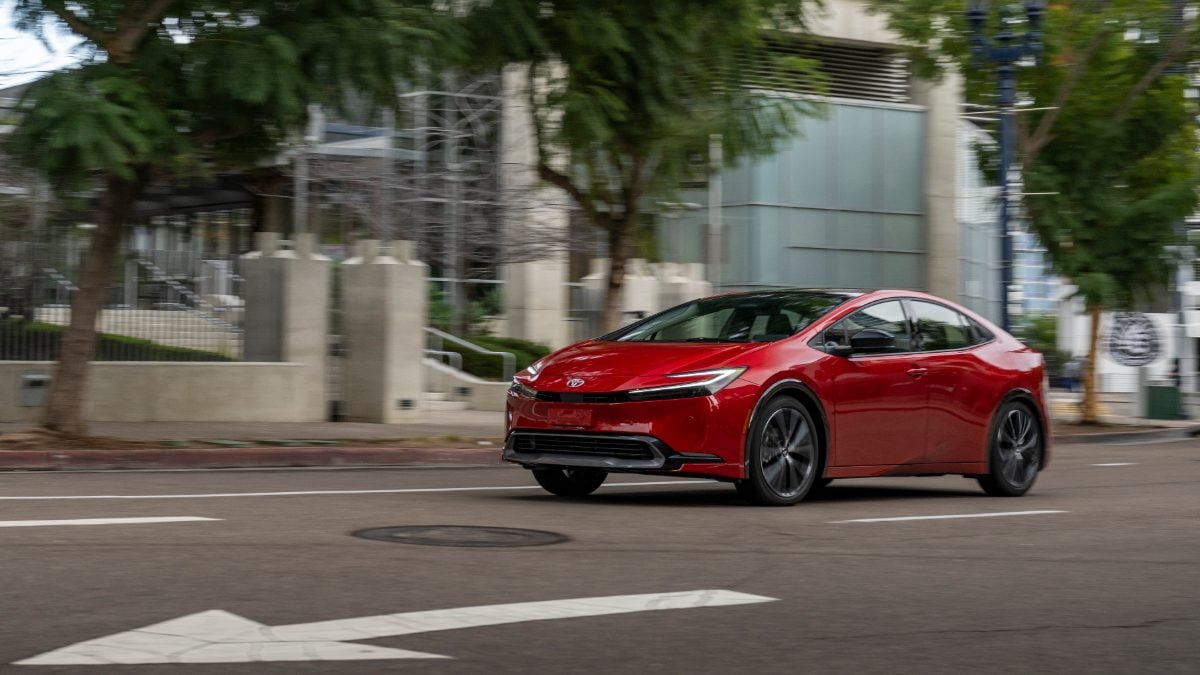
Toyota Prius: A New Styling Trend
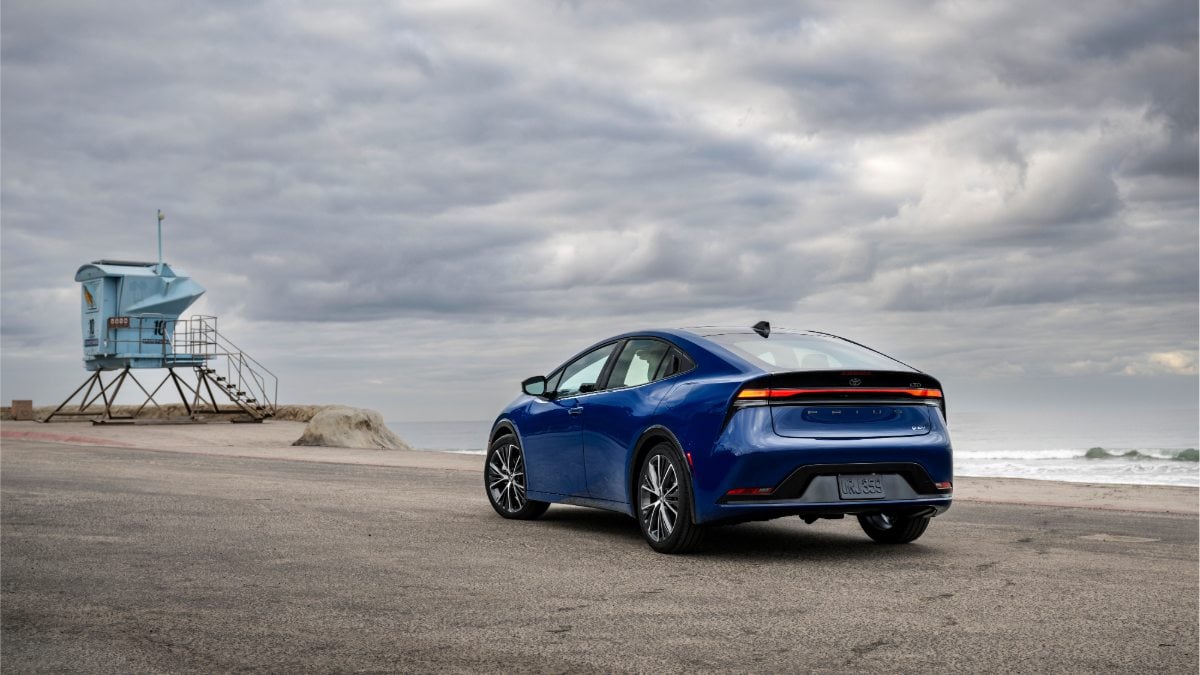
- The latest Prius flips its old reputation on its head; instead of blending in, its low-slung, coupe-like profile and aggressive LED signature make it one of the most strikingly styled hybrids on the road, not just the most efficient.
- Toyota’s fifth-generation hybrid system gives the Prius a surprising boost in real-world punch: instant electric torque and a far more responsive throttle make city driving feel lively rather than utilitarian.
- Inside, Toyota has finally embraced a “tech-forward” identity. The Prius offers a wide, driver-centric display layout, intuitive infotainment, and an interior that ditches the old econo-car vibe for something notably more premium.
- Efficiency is still its crown jewel, but the new Prius proves that fuel economy doesn’t have to be boring: 50+ mpg capability pairs with available all-wheel drive, giving drivers both frugality and four-season confidence.
Yet the Toyota Prius community did not immediately declare the car a flood victim. Mike Rauscher stepped in with a more grounded theory, suggesting a broken window that was left uncovered long enough to allow significant rain into the interior. That explanation aligns neatly with the broken safety glass the owner discovered beneath the child seat anchor covers. It is entirely possible for a shattered window to soak seat foam thoroughly, especially if the mishap coincided with a storm or overnight exposure. It is also the kind of incident that should have been addressed and documented before any vehicle earned a certified label.
Not all commenters were focused on the cause. Some were more concerned with the paper trail. Both Jeffrey Cannon and Kuo Juno encouraged the owner to confirm what appeared, or did not appear, on the Carfax report. Juno added that the fifth-generation Prius has no known tendency toward rear seat moisture issues, which puts greater emphasis on the individual history of this specific car rather than any broader design concern. That distinction matters. This is not a case of a known manufacturing flaw. It is a case of a vehicle presenting symptoms that point to a moment in its past that may not have been fully disclosed.
Water intrusion is one of the most dangerous gray areas in the used car market. According to the National Insurance Crime Bureau, many flood-damaged vehicles eventually find their way back onto dealership lots after storms, often in regions far from where the damage occurred. Even without floodwater in the equation, interior moisture can lead to mold growth inside seat foam, a problem that typically requires replacement rather than cleaning. Hybrid systems like the one in the Prius add a layer of complexity, since moisture near high voltage components demands careful inspection and proper documentation.
What makes this case particularly frustrating for the buyer is the presence of a manufacturer’s certification. A Gold Certified badge is designed to reassure customers that a trained inspector has vetted the car thoroughly. It is supposed to represent diligence, accuracy, and transparency. Yet no inspection program is perfect, and an oversight involving water intrusion is not a small matter. The owner acted responsibly by contacting the dealership immediately, but this situation highlights how even the most polished certification process cannot replace a careful, independent evaluation by the buyer.
The broader lesson from this damp and troubling discovery is that trust in the used car market must be paired with verification. Buyers should ask questions, review documentation, and examine physical signs that suggest past damage. Moisture trapped inside a rear seat cushion is not something that happens by accident. It has a cause, and it leaves a trail. Whether the culprit turns out to be a leaky taillight, a previously broken window, or a past incident that never made its way to the official records, this Prius owner’s experience serves as a reminder that the car always has a story to tell. The challenge for any buyer is making sure they hear all of it before they drive away.
Image Sources: Toyota Media Center
Noah Washington is an automotive journalist based in Atlanta, Georgia. He enjoys covering the latest news in the automotive industry and conducting reviews on the latest cars. He has been in the automotive industry since 15 years old and has been featured in prominent automotive news sites. You can reach him on X and LinkedIn for tips and to follow his automotive coverage.
Set Torque News as Preferred Source on Google
Follow us today...