
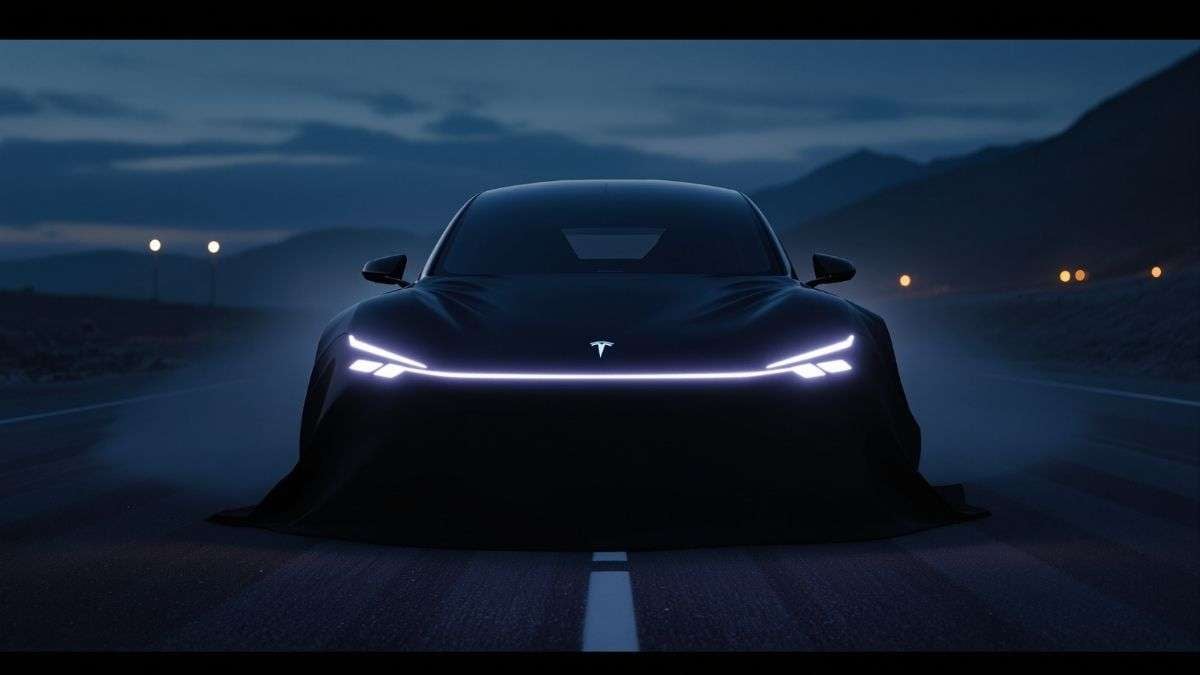

For nearly a decade, the electric vehicle revolution has been defined by a tantalizing but frustrating promise: the prospect of a truly affordable, mass-market car from its undisputed leader. While Tesla has successfully redefined the premium automotive landscape, its ultimate mission to accelerate the world's transition to sustainable energy has always hinged on a vehicle for the rest of us. Now, after years of whispers, delays, and feverish anticipation, the moment is finally here. According to sources inside the company, pilot production of Tesla's smaller, next-generation vehicle—dubbed the "Model 2" by the media—has officially begun at Giga Texas. With a reported target price of just $27,500, this isn't just a new car; it's a seismic event poised to unlock the mainstream market, reclaim wandering customers, and fundamentally alter the trajectory of the auto industry.
The Sub-$30k Tipping Point
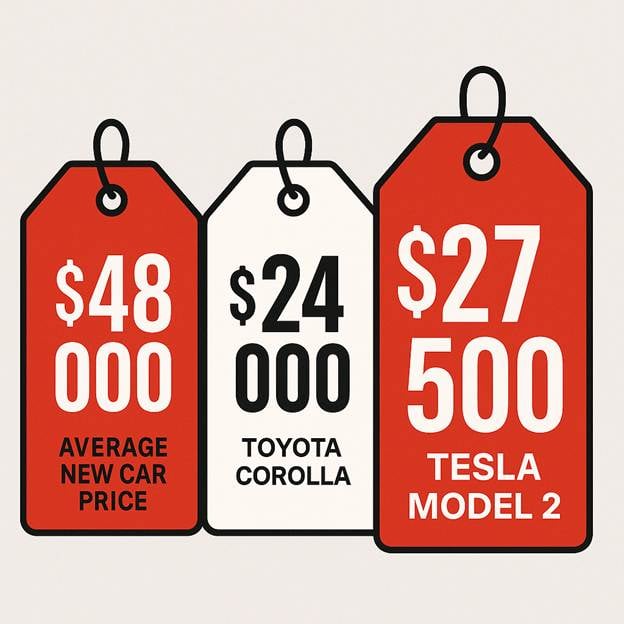
Price is, and has always been, the single greatest barrier to widespread EV adoption. While early adopters and tech enthusiasts were willing to pay a premium for a Model S or Model 3, the average car buyer has remained on the sidelines. The average price of a new car in the United States hovers around $49,000, placing most new EVs squarely in the luxury category. The $27,500 price point isn't just lower; it's a psychological and financial tipping point. It catapults Tesla out of the premium segment and into direct competition with the best-selling gasoline cars on the planet, like the Toyota Corolla and Honda Civic.
This is a game-changer because it transforms the purchasing decision. At this price, a buyer no longer has to be an EV evangelist to consider a Tesla. They can be a college student, a young family buying their first new car, or a household needing an affordable second vehicle. The conversation shifts from "Can I afford an EV?" to "Why wouldn't I buy the EV?" When factoring in the thousands of dollars saved annually on gasoline and maintenance, the total cost of ownership for a "Model 2" could easily dip below that of its combustion-engine rivals, making it the most economically rational choice for millions of households.
Stemming the Tide of Defection
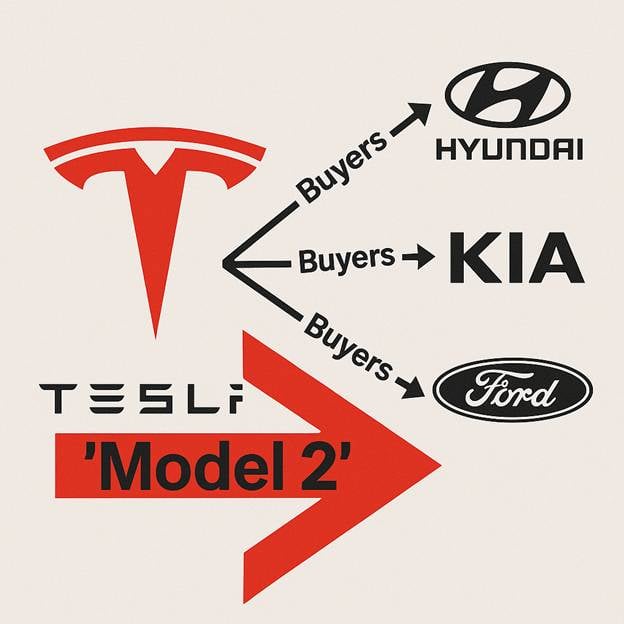
While Tesla remains the EV market leader, its dominance has begun to show cracks. The Model 3 and Model Y, while still immensely popular, are now aging designs in a market flooded with exciting new alternatives. Competitors like Hyundai, Kia, Ford, and a resurgent General Motors have been successfully luring away potential Tesla buyers with fresh designs, different body styles, and more accessible price points. As a result, Tesla's once-monolithic share of the U.S. EV market has been steadily declining, falling below 50% for the first time this year.
The "Model 2" is Tesla's strategic imperative to stop the bleeding. It provides a powerful new entry point into the Tesla ecosystem, designed to capture buyers before they even consider another brand. For existing Tesla owners looking for a second car for their family, it's the obvious choice. For new buyers who were cross-shopping a Hyundai Ioniq 5 or a Ford Mustang Mach-E, the allure of a brand-new, more affordable Tesla with access to the gold-standard Supercharger network becomes almost irresistible. This vehicle isn't just about attracting new customers; it's a defensive moat designed to protect its existing empire and ensure long-term loyalty.
The Perfect Starter EV
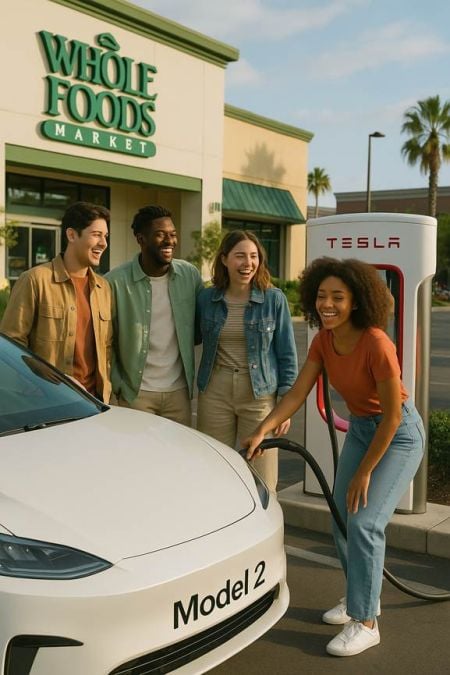
For someone considering their first electric vehicle, the "Model 2" is poised to be the default, no-brainer option. It solves the three biggest pain points for new EV buyers: price, charging anxiety, and complexity. The price is addressed head-on. The charging anxiety is vaporized by granting access to Tesla's ubiquitous and famously reliable Supercharger network, a massive competitive advantage that other automakers are still struggling to replicate. Finally, Tesla's minimalist, tech-forward user experience, while sometimes controversial, is generally intuitive for a generation raised on smartphones.
This car is best suited for the urban commuter, the suburban family, and the young professional. Its smaller footprint will make it easier to park and navigate in dense city environments, while its expected range (likely 250-300 miles) is more than sufficient for the vast majority of daily driving needs. It will be the car that introduces millions of people to the benefits of electric driving—the instant torque, the silent ride, the convenience of waking up with a "full tank" every morning—without the premium price tag that has so far kept them away.
Wrapping Up
The start of pilot production for the Tesla "Model 2" is a watershed moment. This is the vehicle Elon Musk has been promising for years—the one that fulfills the company's master plan of using premium cars to fund the development of an affordable car for the masses. It is not just another product launch; it is a strategic necessity designed to fend off a rising tide of competition and unlock the vast, untapped potential of the mainstream auto market. By breaking the sub-$30,000 barrier, Tesla is not only preparing to sell millions of new cars but is also ensuring its place at the center of the automotive world for the next decade. The people's Tesla has finally arrived.
Disclosure: Images rendered by Artlist.io and Scholar GPT4
Rob Enderle is a technology analyst at Torque News who covers automotive technology and battery developments. You can learn more about Rob on Wikipedia and follow his articles on Forbes, X, and LinkedIn.
Set Torque News as Preferred Source on Google
Follow us today...




Comments
Cost is Not the most…
Permalink
Cost is Not the most significant reason that electric cars have not caught on. The cars weigh 30% to 50% more than an IC car. The 2000 lb battery degrades in capacity, making the useful life of the car around 10 years. Replacement cost of the battery is prohibitive. So it's a 10-year throw away car. They are not suitable for road trips greater than a few hundred miles. My Honda Accord Hybrid will go 600 miles on 12 gallons of gas. It is light, fast, reliable and it retains value--it cost 32k two years ago. I can sell it for 30k today. Our previous Accord lasted 32 years.