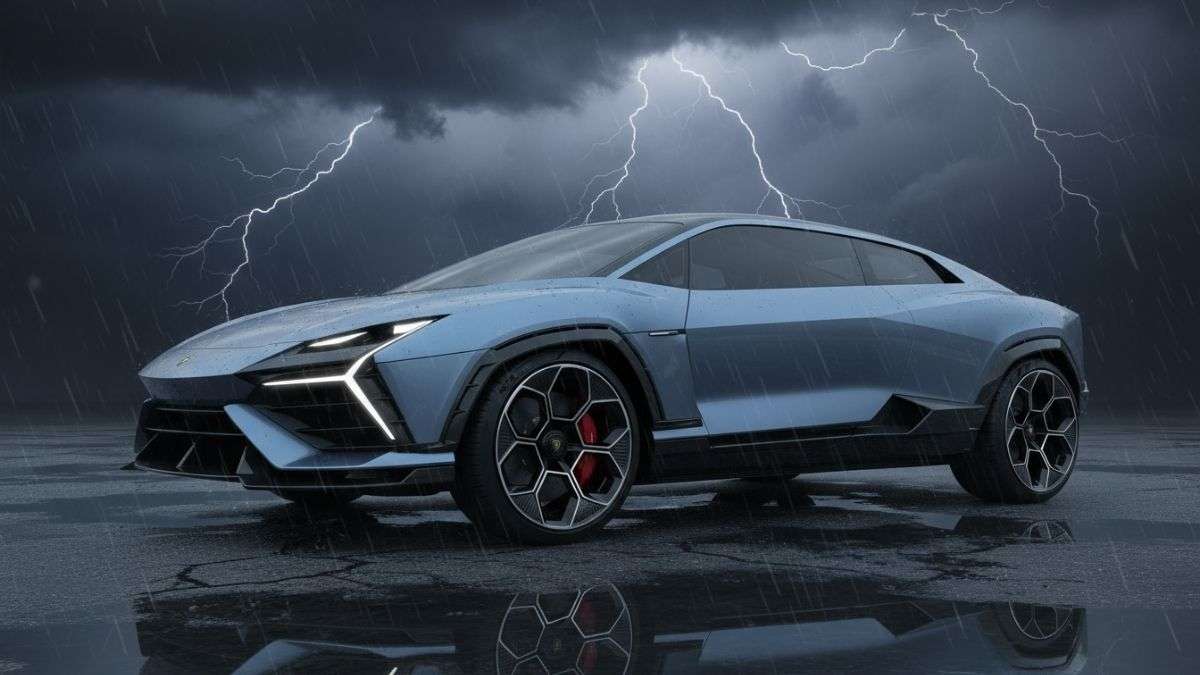

In the high-stakes, high-octane world of supercars, tradition is everything. And no tradition is more sacred than the ear-splitting shriek of a naturally-aspirated V12 engine bolted to a chassis from Sant'Agata Bolognese. That's why Lamborghini's 2023 reveal of the Lanzador concept—a high-riding, all-electric 2+2 "Ultra GT"—felt like such a radical, world-changing moment. It was the "Raging Bull" finally, fully, committing to a silent, electric future.
Or not. In a stunning announcement on October 10, 2025, Lamborghini stated it is "reconsidering" the Lanzador's all-electric powertrain and may switch its first "everyday" model to a hybrid instead. This is more than just a development pivot; it's a last-minute crisis of identity and a potential vote of no confidence against the very platform it was meant to champion.
An Awkward Family Dinner at VW Group
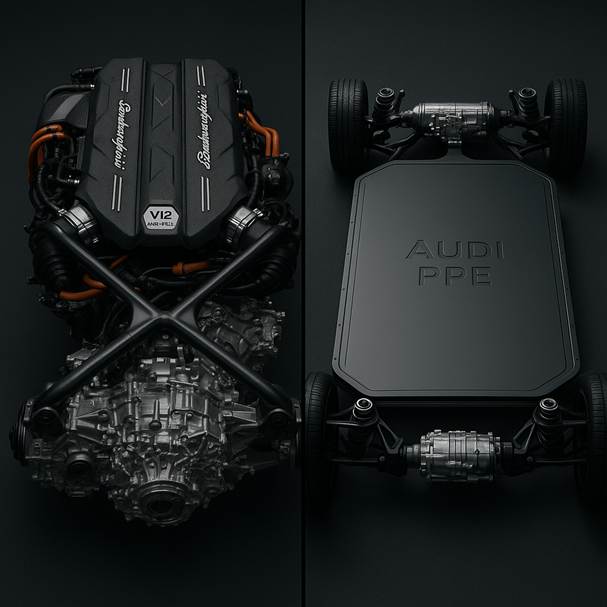
On the surface, this hesitation seems bizarre. Lamborghini is owned by Audi, which in turn is the technological spearhead for the entire Volkswagen Group's premium EV strategy. Audi has poured billions into its Premium Platform Electric (PPE), the advanced 800-volt architecture underpinning its new Q6 e-tron and A6 e-tron. The Lanzador was meant to be the glorious, hyper-expensive pinnacle of this platform.
For Lamborghini to now publicly waffle on a pure-EV powertrain is a major disruption. It’s the equivalent of the star athlete refusing to wear the family's new team uniform. This suggests that Lamborghini's leadership, under the masterful brand-guardian Stephan Winkelmann, believes that what works for a $90,000 Audi simply cannot deliver the "Lambo-ness" required of a $400,000+ flagship. It’s a sign that even within the world's most aggressive EV-focused automotive group, the emotional, fire-breathing soul of a brand can still win a fight against the cold, efficient logic of a shared platform.
What Does a Lamborghini Buyer Really Want?
This pivot isn't happening in a vacuum; it's a direct response to market data. And the data from the hypercar world is crystal clear: hybrids are the reigning kings.
Lamborghini's own Revuelto—a V12 plug-in hybrid—is sold out for years. It’s a 1,001-horsepower monster that uses its electric motors not to save the planet, but to sharpen handling (via torque vectoring) and add brutal, instant acceleration, all while its V12 engine provides the symphony. Ferrari has seen the same phenomenon; its SF90 Stradale V8 hybrid is one of its greatest-ever commercial successes.
In this segment, a pure BEV like the Rimac Nevera is an astonishing technological marvel, but it's a new product from a new brand. For a legacy company like Lamborghini, the engine is the brand. A hybrid is the perfect compromise. It allows the company to meet tightening emissions regulations and deliver mind-bending performance, all without sacrificing the sound, vibration, and emotional drama that its customers are actually paying for. A silent Lamborghini is a much harder sell to a clientele that buys a car to be seen, and heard.
The Great Divide: Exotics vs. Everybody Else
This move highlights a growing trend divide. In the general auto market, the battle between BEVs and hybrids is one of practicality. Mainstream buyers, spooked by high prices, range anxiety, and inconsistent charging infrastructure, are flocking back to hybrids. Companies like Toyota, who bet big on hybrids, are seeing record profits as a result. For normal people, a hybrid is a logical, safe, transitional step.
In the exotic market, the battle is one of emotion. A hybrid isn't a compromise; it's an enhancement. The electric motor is a performance-adder, a new tool in the toolbox. A pure BEV, by contrast, requires sacrificing the single most defining characteristic of the brand: the engine noise. Lamborghini is clearly looking at the market and realizing that its customers aren't ready to make that sacrifice, especially when the hybrid alternative is so compelling.
What Does This Mean for Audi?
This is a public relations blow for Audi's all-in EV strategy. It suggests that its state-of-the-art PPE platform, while brilliant for premium sedans and SUVs, may lack the emotional "X-factor" and performance ceiling that a brand like Lamborghini demands. It implies the platform is too sterile.
This doesn't derail Audi's own EV future, which is set in stone. But it does raise questions about the VW Group's one-platform-fits-all approach for its highest-end brands. Bentley, which also falls under Audi's umbrella, is likely watching this very closely. If the Lanzador does indeed switch to a hybrid (perhaps borrowing the V8 system from the Urus or Revuelto), it will be a clear signal that Audi's pure-EV platform isn't the silver bullet for every brand in the portfolio. It forces Audi to prove that its "Vorsprung durch Technik" can create not just a fast car, but one with a soul.
Wrapping Up
Lamborghini's hesitation on the Lanzador is not a sign of failure. It is a sign of a company that, unlike many of its rivals, is actually listening to its customers and the market. It’s a smart, if slightly panicked, strategic pivot away from technological dogma and toward a proven, profitable, and emotionally resonant solution. The hybrid supercar is the undisputed champion of the current market, offering all the electric performance benefits without sacrificing the V12 symphony. The pure-EV Lamborghini will come, but this move proves the brand's guardians know, correctly, that the time is not yet now.
Disclosure: Images rendered by ChatGPT 5.0
Rob Enderle is a technology analyst at Torque News who covers automotive technology and battery developments. You can learn more about Rob on Wikipedia and follow his articles on Forbes, X, and LinkedIn.
Set Torque News as Preferred Source on Google
Follow us today...