
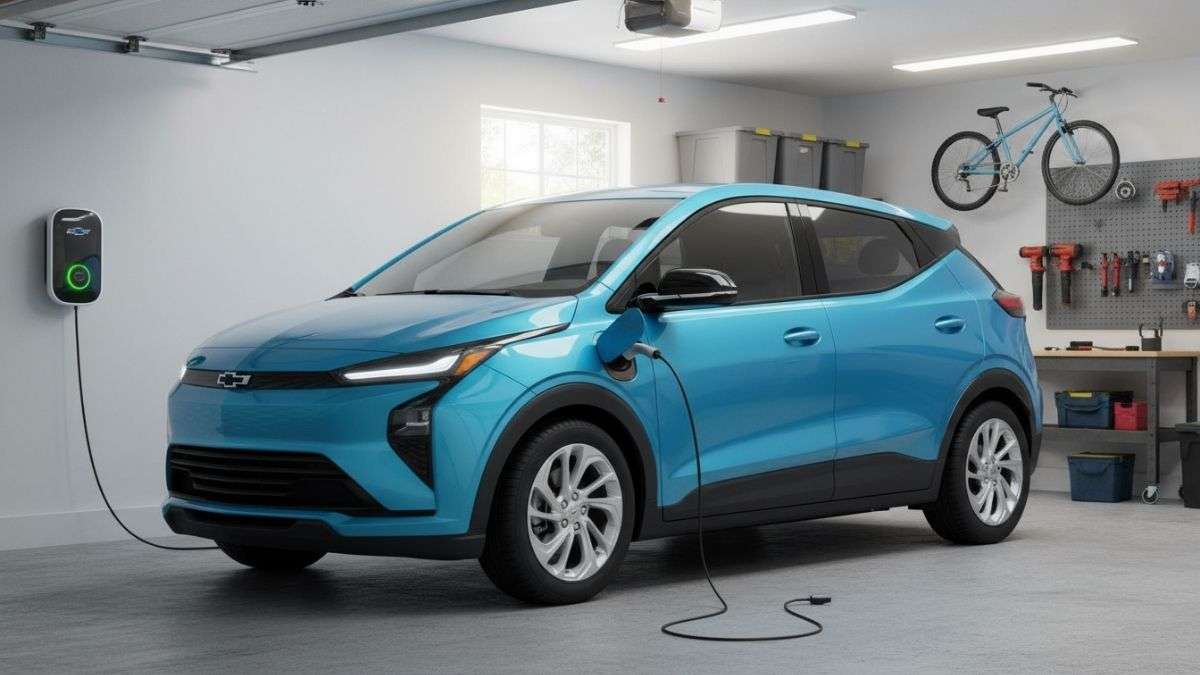

In the automotive world, admitting a mistake is the hardest thing a company can do. This week, General Motors did just that. With the announcement that the Chevrolet Bolt EV will return for the 2027 model year, GM has finally acknowledged a massive strategic blunder. Just two years ago, they killed the Bolt—the only high-volume, affordable, and widely beloved EV they had—betting the farm on their expensive new Ultium-platform trucks and SUVs. It was a disastrous miscalculation.
Now, the Bolt is back. And with a target starting price under $30,000 and a solid 255-mile range, it’s not just a car; it’s GM’s second, and perhaps last, chance to prove it can survive the electric revolution.
The $30,000 Holy Grail
In the current, top-heavy automotive market, a sub-$30,000 price tag isn't just important; it's the only thing that matters for mass adoption. The average price of a new EV has hovered in the $50,000 range, while the average new car of any kind is well over $45,000. This has left millions of middle-class buyers completely locked out of the new car market, let alone the EV market.
This price point is the holy grail. It’s the "EV for the rest of us." It’s also a critical defensive move. While US automakers focus on $80,000 trucks, Chinese brands like BYD are perfecting high-quality, low-cost EVs like the sub-$15,000 Seagull. The Bolt is GM's only credible weapon to defend its home turf from an impending wave of affordable global competitors. This relaunch isn't just a good idea; it's an act of survival.
GM's Brutal EV Reality Check
The return of the Bolt is a humble decision forced by a series of brutal realities. GM’s grand EV transition has been, to put it mildly, a catastrophic failure in execution. The Ultium platform, its "next-gen" architecture, has been plagued by agonizingly slow production ramp-ups. The flagship Blazer EV had a disastrous and humiliating "stop-sale" order due to crippling software failures.
Globally, GM is a shadow of its former self. In China, the world's largest and most important EV market, GM has been rendered almost irrelevant by BYD, Tesla, and other domestic players. In the US, its one shining success was the original Bolt. Killing it in 2023, just as EV adoption was hitting its stride, will be studied in business schools as one of the great unforced errors of the modern auto industry. This relaunch is the admission.
The Infotainment Suicide Mission
The new Bolt has the price, the range, and the brand recognition to be a smash hit. Unfortunately, it will also be saddled with GM's single most baffling and anti-consumer decision in recent memory: the elimination of Apple CarPlay and Android Auto.
This is an act of pure corporate hubris. GM believes that by blocking the phone-mirroring systems that customers love, it can force drivers into its own clunky, proprietary infotainment software. Why? To capture a future revenue stream of subscription fees.
This is a terrible idea. Study after study, including consistent data from J.D. Power, shows that in-car infotainment systems are the single biggest complaint from new car owners—unless they are simply using CarPlay or Android Auto. Consumers do not want a worse version of Google Maps that costs a monthly fee.
This will absolutely hurt the Bolt. The target demographic—a practical, tech-savvy, cost-conscious buyer—is precisely the person who wants their phone to just work. They will see this not as a new feature, but as a greedy, user-hostile decision to take away a standard feature.

Can US Automakers Survive the EV Transition?
This brings us to the big picture. Are US automakers like GM and Ford, under current conditions, likely to be successful long-term? The forecast is stormy. They are caught in a classic "pincer movement." Tesla owns the premium, high-tech EV market. Chinese brands are rapidly cornering the low-cost global market.
GM and Ford are stuck in the "middle," the most dangerous place to be. Their legacy cash cows, the big gas-powered trucks, are funding the transition, but even that demand is beginning to show cracks. Their attempts to compete in the high-end EV space (F-150 Lightning, Hummer EV) have been low-volume, with softening demand.
Their only path to long-term survival is to win the mass-market, affordable segment. They need to build the electric equivalent of the Model T or the Honda Civic. The relaunched Bolt is GM's best, and perhaps only, shot at doing just that.
Wrapping Up
The return of the Chevrolet Bolt is a necessary, smart, and refreshingly humble move from GM. It proves they are finally listening to the market (and their own sales charts). The car itself—a $30,000 EV with 255 miles of range—is the exact car America needs. However, it’s being launched into a sea of competition that didn't exist when the original was born. And it’s being kneecapped from the start by GM's disastrous, self-inflicted wound of blocking Apple CarPlay. This car is GM's second chance; they can't afford a third.
Disclosure: Images rendered by ChatGPT 5.0
Rob Enderle is a technology analyst at Torque News who covers automotive technology and battery developments. You can learn more about Rob on Wikipedia and follow his articles on Forbes, X, and LinkedIn.
Set Torque News as Preferred Source on Google
Follow us today...






Comments
I am glad the Bolt is coming…
Permalink
I am glad the Bolt is coming back, although it seems that like many others every extra feature will require a monthly subscription. GM seemed ahead of the curve decades ago looking at the many concept vehicles they built before the EV1 made its mark. The Bolt, to me, is an excellent vehicle, not just as a Primary but especially as 2nd family vehicle to run errands, driving kids to their school and activities, and great for retired people. The Bolt, like the Volt, met needs people are finally figuring out now. Me, my Spark EV is a very efficient little EV with 0-60 times of 80s muscle cars and hot hatches, and very efficient. Also I think HM gave up on the Brightdrop vans too early. Anyway, hopefully I'll be able to move up to a new Bolt.
I'm a owner of a 2023 bolt…
Permalink
I'm a owner of a 2023 bolt euv, i like the android auto and apple carplay. GM is making a huge mistake in sun setting these options. Their built in Google is fine but not being able to send directions via my phone is short sided at best.