

We are used to seeing Toyota and Lexus cars as the stalwarts of reliability. Despite a few hiccups along the way (all carmakers have those), even the latest offerings of the Japanese company are largely seen as dependable vehicles. Older Toyota and Lexus models, in particular, are constantly being praised for their quality and the seemingly undeniable fact that they are built to last.
That said, not everyone is on board with that statement. Recently, I stumbled upon a Facebook post by Mileskurth, a Toyota and Lexus master technician, and he introduced a very different point of view, which rightfully raised a few eyebrows. Here is what the post says:
“This right here is exactly why you should NEVER buy an older Lexus. People act like these things are “bulletproof” just because they last forever, but that’s actually the problem. Engines aren’t supposed to last this long. All this dark oil and “wear” you’re seeing is proof Toyota over-engineered it to the point where it never properly cycles fresh components. That’s bad engineering.
Meanwhile, BMW and Land Rover get hate for being “unreliable” when in reality they’re just honest cars. They let you know when something’s wrong instead of silently aging for 300k miles. BMW is engineered to be serviced regularly, which means they stay fresh. Land Rovers are constantly updating components, so nothing ever gets old enough to fail catastrophically. That’s reliability.
Lexus owners brag about “only oil changes” but ignore the fact that these engines are basically fossilized inside. No innovation. No progression. Just decades-old metal refusing to die. That’s not reliability — that’s stagnation.
If you want a car that’s actually reliable, get something that breaks early, often, and predictably. BMW or Land Rover all day. Anyone defending old Lexus motors is just scared of technology and warning lights.”
We can agree that there are a few issues with the statement.
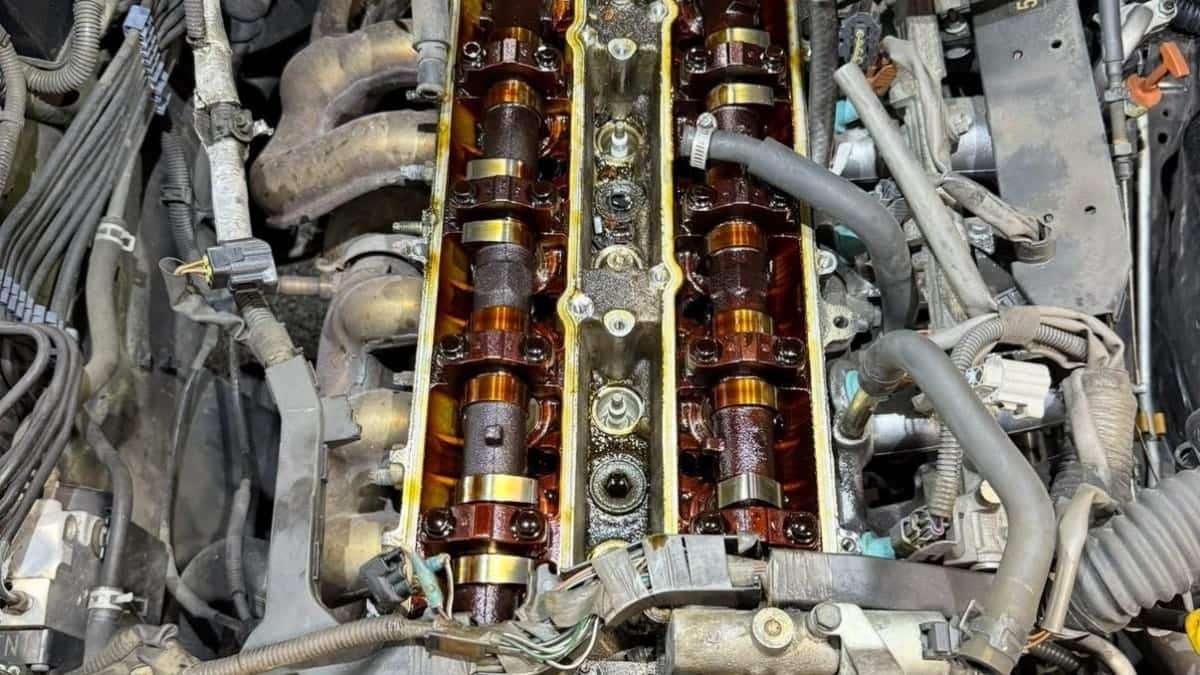
For the record, the person who posted this doesn’t point out which model Lexus this is. The engine looks to be a longitudinally-mounted, inline-six (from the JZ series). These are known for being extremely dependable and capable of holding big power reliably, although they still have common issues worth looking out for.
We are likely looking at the engine bay of a Lexus SC300 or another model that has a JZ engine. This one has the brand’s VVTi system, which means it is 1995 or newer (early JZ engines were non-VVTi and were non-interference engines).
The image clearly shows dark oil stains, suggesting possible sludge buildup - a result of infrequent oil changes. I have seen firsthand how some Toyota owners purposefully neglect maintenance because “it’s a Toyota and it wouldn’t mind”. But this is about a mechanic’s contradictory point of view.
Toyota is taking a wise approach when it comes to modern powertrains. If something works, don’t fix it. Instead of reinventing the wheel all over again, the company improves its current tech. This is why Toyota hybrids currently rule and will continue to do so.
The aforementioned post could be viewed as a gaslighting tactic to buy vehicles that are more maintenance-intensive. Many car owners view a mechanic’s opinion as more authoritative than the average person’s, at least when it comes to choosing a reliable vehicle. That said, mechanics make a living from fixing vehicles, so buying a reliable, easy-to-maintain vehicle effectively saves you from frequent visits to a repair shop.
Naturally, people were quick to retaliate in the comment section and were quick to rebut the “mechanic’s” words.
One user says: “My BMW F30 N20, at 80 000 km, looked sludged way worse than that Lexus”. - This is also a much newer model since Toyota stopped making the JZ-series engines in 2002.
Another member chimes in with regards to the Land Rover statement: ‘Yesiree, Bob! My Range Rover just kept breaking down to the tune of several thousand dollars per repair. But hey, now that it's 20 years old everything has been replaced at least once, so it's like a new vehicle! So what if I had to effectively buy it three times? Come to think of it, I'm an old geezer now. But if I get a heart transplant, a liver transplant, kidney transplants, lung transplants, and a brain transplant, I'll be good as new too! No, wait…”
You get the idea. While infrequent oil changes may have been the cause of this Lexus’ visit at the workshop, these are vehicles with a proven track record in reliability. All things eventually go bad with age. In the case of a Toyota JZ engine, that’s usually the valve-stem seals, which cause excessive oil consumption. Regardless, there are unreliable Toyotas and reliable BMWs out there. They just aren’t as frequent a sight.
If you have any experience related to this, I would love to hear it in the comments section. Maybe you have a reliable BMW or an unreliable Toyota or Lexus. Feel free to join the conversation below.
Other stories:
Toyota Owners Have Spoken: The Fifth-Generation 4Runner Is A Much Better SUV Than The Sixth Gen
Thanks To Trump, This Cute Toyota Truck Could Arrive In The US
Source: Mileskurth via Facebook
Dimitar Angelov's automotive interests made him an expert in a wide variety of vehicles. Japanese brands like Toyota and Nissan are closest to his heart, although performance cars in general are his favorite segment, which is why he is constantly on the lookout for the best deals on the market. Dimitar Angelov's car passion and knack for the written word led him to complete a Master of Arts in Media and Communications, and classic car restoration. Dim is happy to get behind the wheel of any car and share his impressions. You can follow Dimitar on X, Linked-in, Instagram, and Facebook.
Set Torque News as Preferred Source on Google
Follow us today...







Comments
I think there’s some…
Permalink
I think there’s some difference of opinion on the definition of “reliable”.
Everything eventually breaks…
Permalink
In reply to I think there’s some… by Jim brown (not verified)
Everything eventually breaks, but I think there are different types of reliability. There is "reliable when maintained and used properly," and then there is "idiotproof".
Modern engines, being more complex, simply have more potential failure points. Then, there are the tighter tolerances of modern engines, which means they aren't as "idiotproof" as the older ones.
I mean, heck! You could drive old diesels on recycled cooking oil. Try that with a modern turbodiesel, and you are likely looking at a complete engine rebuild.
That has to be the strangest…
Permalink
That has to be the strangest, most illogical POV that I've ever stumbled upon on this site. So, according to this bloke, a reliable engine with 300k miles isn't really a reliable engine.Wow! OK, we'll try to keep that in mind.
Exactly. When writing about…
Permalink
In reply to That has to be the strangest… by Buzz Wired (not verified)
Exactly. When writing about it, I tried really hard to look for any clues that give out that this is some sort of joke. Sadly, it seems the bloke seriously means what he says.
I’ve got a 3.5l V-6 2010…
Permalink
I’ve got a 3.5l V-6 2010 Dodge Avenger approaching 300k miles. Fortunately it had an outstanding lifetime warranty that is no longer available that helped to keep it on the road when it needed parts. Engine and transmission have always worked well.
Those 3.5 V6s were decent…
Permalink
In reply to I’ve got a 3.5l V-6 2010… by Paul Lajoie (not verified)
Those 3.5 V6s were decent engines. If you stayed on top of maintenance,I am not surprised you managed 300k miles.