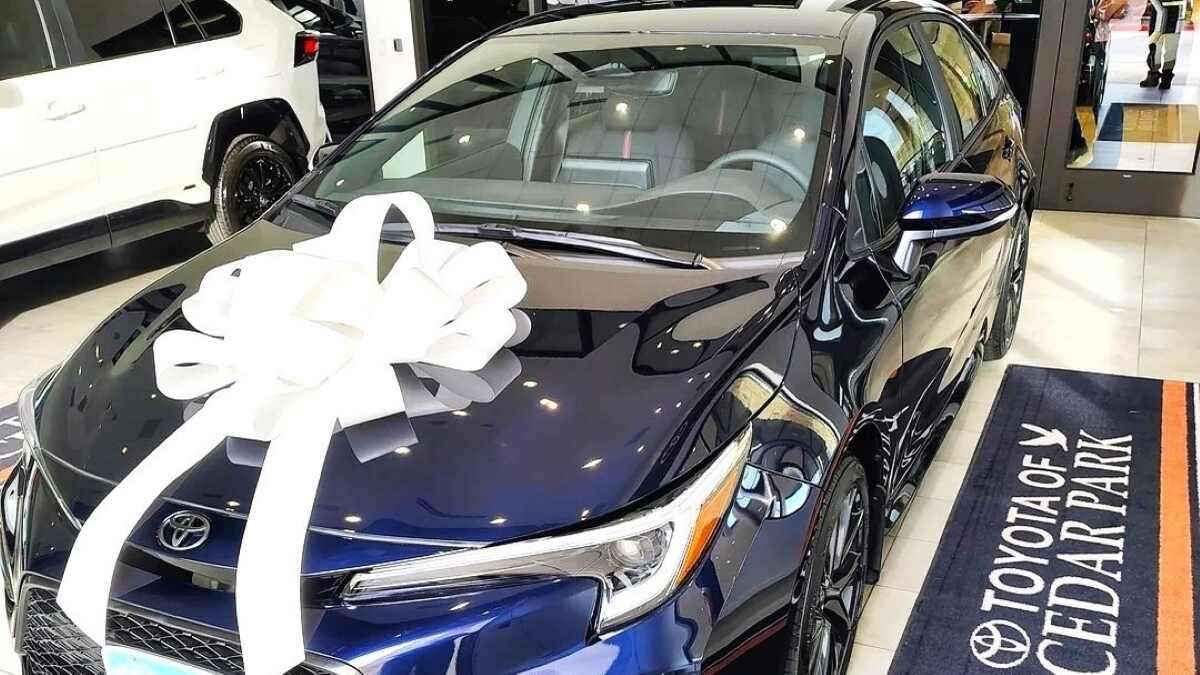

When you pay somewhere in the neighborhood of $30,000 or more for a brand-new Toyota, there are certain expectations owners have and should be granted. But what if you are unfortunate enough to receive the wrong one from the assembly line and have the wrong mechanic work on it, as this new Corolla owner did, as reported in a recent Reddit r/Toyota forum discussion?
2025 Corolla SE Oil Leak Discovery First 500 Miles
According to the Reddit r/Toyota forum discussion titled "2025 Corolla SE 2.0L Oil Leak," the OP wanted to take the reasonable precaution of changing his vehicle's motor oil the first 500 miles to replace oil that will naturally have metal bits floating around from the engine's initial break-in.
A careful examination during the DIY oil change revealed an oil leak problem, which led to this lightly summarized repair saga reported by the OP:
"I bought this car brand new on May 14th, 2025, and it had 15 miles on it. It drove just fine, enjoyed it up until around 526 miles. That's when I wanted to do the first oil change.
When I got under the car, I noticed oil dripping from between the engine/transmission area as well as some from the oil pan, and took it to the dealership the following Monday."
(Trip #1) The service advisor told me they didn't think it was leaking enough and suggested driving it for another week and then coming back.
After I got home, I got under it to check if it was leaking again, and I realized they had only seen the leak from the oil pan, not the bigger leak from between the engine and transmission. So I took it back the next day.
(Trip #2) They did see the bigger leak but could not tell where it was coming from. So they added UV dye to the engine oil and told me to come back in a week.
(Trip #3) One thousand twenty miles on the odometer, and they said they still couldn't tell where it was coming from and told me to drive another 2k-3k miles.
Unhappy with the repair efforts, the OP contacted Toyota with documentation of the leaks, including pictures/videos. At that point, Toyota told the OP to take it back to the dealer for them to replace the small block portion of the engine to remedy a crank alignment pin problem responsible for the leak.
(Trip #4) The repair was done; however, upon inspecting the engine afterward, the OP found obvious shoddy repair work.
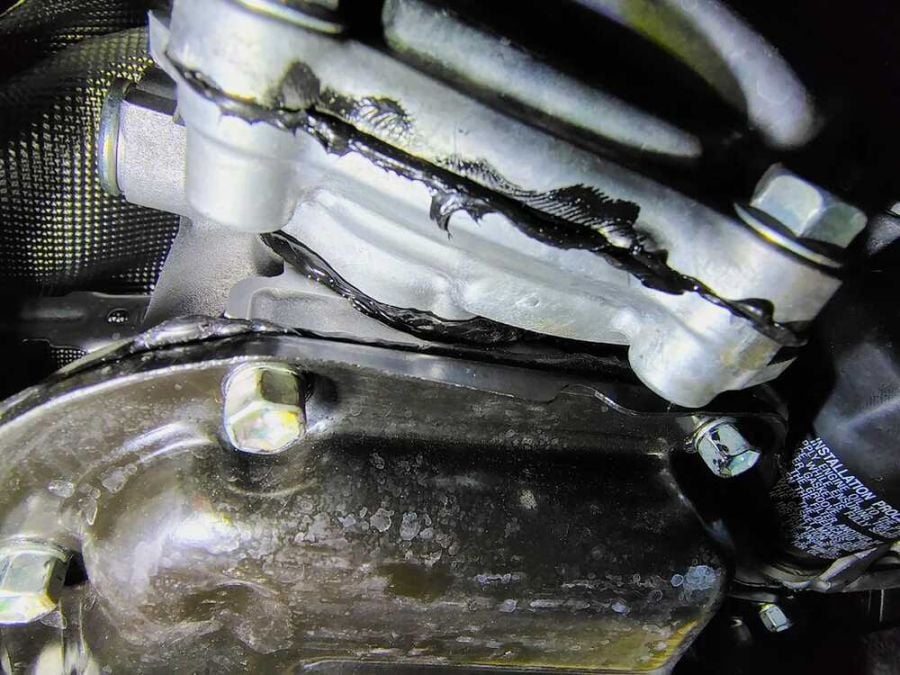
I recently got the car back and crawled under it to inspect their work and found this sloppy mess. Am I just being picky, or would this be considered a lemon? I have barely had it 2 months and already have doubts about the life of this car. ―OP
Is The OP Justified in Considering Applying a Lemon Law for Another New Model?
The OP is justifiably upset over this repair saga.
Not only because of the oil leaks discovered during the first 500 miles on the odometer, but also what it took to get the Service Department to do the correct repair…and then doing a shoddy job of it.
The excessive amount of sealer applied to both the half-case and the oil pan is a red flag that either the person who did it, does not understand how to apply sealant properly; or, simply did not care and slopped it on, thinking an excessive amount would guarantee no more oil leaking.
In fact, however, excessive sealant is never the correct answer. If you check repair manuals on any make and model, you will find specific instructions on whether to apply a thin bead of 1/16 inch, 1/8 inch, 1/4 inch, etc., depending on the part. In some cases, only a thin smear across the gasket material is enough to ensure a good seal. Excessive sealant can lead to leaks.
If they put RTV on it like that, I bet they didn't bother to torque anything to spec either. I would watch the car like a hawk. Keep documenting everything, but man, that is some TERRIBLE work. It might be worth talking to Toyota about it, too. ―Hatchz
Other comments suggest that the sloppy sealant application is not a problem and point out that some light leaking or seepage is normal.
They replaced the half case. I don't like their application of RTV, but there aren't any fine oil passages that will be affected by the amount used. Their work isn't the cleanest, and I would think the tech needs a talking, but the issue is resolved, so good luck with making a lemon buyback case.
Oil leaks happen. There are bulletins about resealing certain oil pans. I've done several half cases on 2GR's under warranty because of a seep. It's unfortunate, but it's also the nature of manufacturing. ―ThatManitobaGuy
What Would I Do If It Were My Corolla?
Both comment posts make a good point. My concern is whether there is excessive sealant spillage inside the engine from the shoddy work. That and what appears to be a red flag mechanic. Would I worry about whether the correct torque was done? You Betcha, I would, among other concerns. Hence, I would argue for a new replacement vehicle.
Is This a Lemon Law Case?
Lemon Laws vary by state in the U.S., but most share common conditions a new car must meet to qualify as a lemon. Typical requirements include:
1. The Vehicle Must Be New (or Recently Purchased/Leased)
2. The Defect Must Be Substantial―It must impair the vehicle's use, value, or safety, such as with:
- Engine or transmission failure
- Brake or steering issues
- Persistent fluid leaks
- Electrical system malfunctions
3. Reasonable Repair Attempts Must Be Made―The manufacturer or authorized dealer must be given a reasonable number of attempts to fix the issue, typically:
- Three to four repair attempts for the same issue.
- The car is out of service for 30 or more days (cumulative) within the first 12–24 months.
4. The Problem Must Have Occurred Within the Lemon Law Period―Most Lemon Laws apply during:
- The first 12–24 months after delivery or the first 12,000–24,000 miles
5. The Defect Must Be Covered by the Manufacturer's Warranty―The issue must fall under the factory warranty. Problems caused by accidents, neglect, or aftermarket modifications generally do not qualify.
6. You Must Notify the Manufacturer―Some states require you to formally notify the manufacturer and give them a final chance to repair, before filing a claim.
Lemon Law requirements vary state by state. However, if your vehicle qualifies, you may be entitled to:
- A replacement vehicle
- A full refund (minus a mileage offset)
What Would You Do If It Were Your Corolla? Please share your thoughts about the OP's situation in the comments section below. If it were you and your new car, would you want a replacement vehicle or a full refund? Or, does the situation not merit Lemon Law protection for the OP?
For additional Toyota fails, here are two for your consideration:
- The Toyota Brand Engagement Employee That Called Said My Vehicle Was Manufactured in Kentucky and Joked That They Probably Made My Car on a Friday
- Dealership Nearly Bricked My Truck ― Brought My 2024 SR5 Tacoma in for the Trailer Blind Spot Monitor Update Recall Last Week
Timothy Boyer is an automotive reporter based in Cincinnati who currently researches and works on restoring older vehicles with engine modifications for improved performance. He also reports on modern cars (including EVs) with a focus on DIY mechanics, buying and using tools, and other related topical automotive repair news. Follow Tim on Twitter at @TimBoyerWrites as well as on Facebook and his automotive blog "Zen and the Art of DIY Car Repair" for useful daily news and topics related to new and used cars and trucks.
Image Source: Deposit Photos
Set Torque News as Preferred Source on Google
Follow us today...