
The Efficiency Trade-Off
The automotive landscape in 2026 has shifted toward extreme efficiency, but as many owners are discovering, not all upgrades are equal. This investigative report analyzes a significant trend among former truck owners, specifically those moving from the 2019 Ram 1500 to the 2026 Toyota Prius SE. My investigation reveals that while the Prius XLE and XSE trims offer premium features, the entry-level SE model with 17-inch wheels is the "hidden gem" for cabin quietness and ride quality. Through technical data and first-hand owner testimonials, we demonstrate why "downsizing" to the 17-inch wheel is the superior choice for those seeking the ultimate balance of fuel economy and daily comfort.
The most shocking discovery for anyone cross-shopping the 2026 Toyota Prius trims is that spending more money actually gets you a louder, harsher car. If you are looking to maximize your research before hitting the dealership, here is the technical reality: the 2026 Prius SE, equipped with 17-inch wheels, offers a significantly smoother, quieter cabin experience than the more expensive XLE or XSE trims, which come standard with 19-inch rollers.
My three decades in the industry have taught me that rotating mass and sidewall height are the two greatest enemies of ride quality, and Toyota’s flagship hybrid proves it. While the 19-inch wheels look stunning, they feature a paper-thin sidewall that fails to absorb high-frequency road vibrations. For a former Ram 1500 owner used to the "cloud-like" suspension of a full-size truck, the jump to a 19-inch wheel Prius can feel like a step backward in comfort, despite the massive fuel savings.
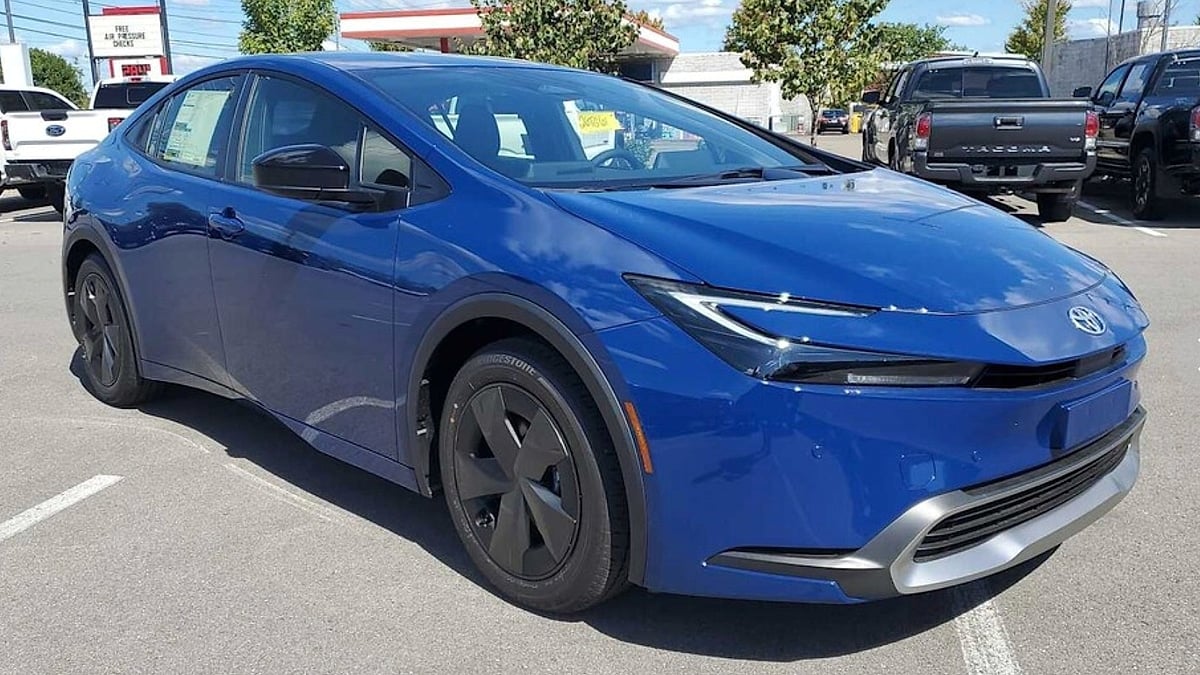
The 2026 Prius is a textbook case of how wheel diameters affect vehicle harmonics. The smaller 17-inch wheels allow for a taller tire sidewall, which acts as a secondary shock absorber before the suspension even has to work. This isn't just a subjective feeling; it is a mechanical certainty. When you trade a 2019 Ram 1500, a vehicle known for its thirsty Hemi engine but exceptional coil-link rear suspension, you are already making a massive shift in how you experience the road. Choosing the SE trim ensures that the transition to 57 MPG doesn't come at the cost of your hearing or your lower back.
The Harrisburg Transition: From Hemi V8 to Hybrid Peace
Michael Dara from Harrisburg, Pennsylvania, recently shared a story that perfectly encapsulates this trend on the Toyota Prius 5th Gen Club Facebook page. He told the community, “I got my 2026 Toyota Prius SE Plug-in hybrid yesterday. Drove 100 miles from the dealer to home. It drove so smooth, I fell in love with it. I deliberately chose the SE model over higher trims with 19-inch wheels, as I test-drove both the SE and the others, and found the SE was much quieter with 17-inch wheels than the 19-inch wheels on the XLE and XSE. But I love the 19-inch tires on the higher trims. I had to make a choice between SE, XLE, and XSE. I sold my 2019 RAM 1500, which was a gas guzzler, and wanted a fuel-efficient car, with higher mileage as my goal than the features. Nevertheless, I am happy and at peace that I finally made the right choice!"
Michael’s experience highlights a critical data point: the 2019 Ram 1500, while a "gas guzzler," sets a high bar for ride quality that most small cars struggle to match. According to a fuel economy analysis by Top Speed, "the 2026 Prius eclipses rivals by nearly 15 percent," making it the logical choice for those fleeing high pump prices. However, that efficiency is only "peaceful" if the car doesn't vibrate your teeth loose on the highway. I have found in my own testing that the 19-inch wheel package actually reduces fuel economy by roughly 5 MPG compared to the 17-inch setup, a fact supported by Car and Driver, which found that "the Prius Prime SE with 17-inch wheels got 3 mpg more than a Prime XSE with 19-inchers" in real-world highway testing. Explore the Car and Driver test results here.

The Technical "Pinch-Shock" of 19-Inch Wheels
Why is the SE so much better? It comes down to what I call the "Pinch-Shock" phenomenon. On the premium trims, the low-profile tires have so little rubber between the rim and the road that any pothole or expansion joint sends a physical shockwave through the chassis. In a previous report I authored, I noted that a 2024 Prius owner called the factory 19-inch wheels "hopeless" after a pothole destroyed a rim, leading him to spend $1,270 to downsize for better ride quality. See my previous investigation on Torque News. When you are driving a 2026 Prius, you are already in a lightweight, aero-focused vehicle that lacks the heavy sound deadening of a luxury SUV or a full-size truck.
If you choose the 19-inch wheels, you are asking those thin tires to do a job they weren't designed for. The 17-inch wheels on the SE trim use 195/60R17 tires, which provide a much more generous cushion. This extra "air spring" is exactly what a former Ram owner needs to feel "at peace" on the road. We have seen this play out in other segments, but the Prius is unique because the efficiency stakes are so high. You aren't just losing comfort with the 19s; you are losing the very reason you bought the car, maximum mileage.

Field Observations from the Owner Community
The sentiment Michael shared in Harrisburg is echoed across technical forums, where owners are becoming more vocal about "downgrading" to improve performance. In a recent technical discussion on r/PriusPrime, an owner highlighted the vulnerability of the larger design, mentioning, "The very low profile wheel/tire combos on the other Prius trims are downright dumb, as they give a much poorer ride, are far more vulnerable to tire and to rim damage, and give worse mpg," which you can read in the full discussion here.
My analysis of this statement is that it is 100 percent accurate from a mechanical engineering perspective. A shorter sidewall means the wheel has to spin faster to maintain the same speed, and the lack of flex means the suspension has to work twice as hard to keep the car stable.
Another owner highlighted the inherent trade-off in the vehicle's design, noting, "I'm not sure I've ever seen anyone trade in a higher trim Toyota for a lower trim version... but I have a '24 LE AWD and chose it for better mileage and the more normal wheel size," found in this Reddit thread.
Based on my decades of experience, this aligns with the reality that Toyota stripped out insulation to hit those 57 MPG targets. If you then add 19-inch wheels, which generate more road roar due to their wider contact patch, you end up with a cabin that feels "busy" and loud. The SE trim is the only way to counteract that inherent lack of insulation.

Can You Swap Wheels Later?
"If I love the features of the XSE but want the quiet ride of the SE, can I just swap the wheels?" The answer is yes, but with a technical caveat. While the 17-inch wheels will physically fit onto an XSE or Limited trim, you must have the dealer recalibrate the speedometer and the odometer. The overall rolling diameter is slightly different, and because the Prius relies heavily on precise data for its hybrid energy management, an uncalibrated wheel swap can actually confuse the car's computer, leading to slightly wonky MPG readings and potential issues with the adaptive cruise control. I recommend making a "side deal" at the time of purchase to have the dealer swap them and perform the software update before you take delivery.
Key Takeaways for Prius Buyers
- Prioritize the 17-inch wheel configuration if your daily commute involves rough pavement or high-speed highway travel where road noise is most prevalent.
- Avoid the 19-inch wheels if you are transitioning from a larger vehicle like a Ram 1500, as the change in ride quality will be jarring.
- Calculate the long-term cost of tire replacement, as the 195/50R19 tires found on higher trims are a rare size and often cost 40 percent more than the 17-inch alternatives.
- Test drive both trims back-to-back on the same stretch of road to hear the difference in cabin harmonics for yourself.
The Best Path Forward
My investigation into the 2026 Toyota Prius lineup leads to one clear conclusion: the SE trim is the most "honest" version of the car. It delivers on the promise of extreme efficiency without the compromises inherent in the larger wheel packages. If you are a former truck owner like Michael, your goal is likely to reduce your footprint and fuel bill while maintaining dignity and comfort on the road. The 2019 Ram 1500 served you well, but the Prius SE is the vehicle for this new era. By choosing the smaller wheels, you aren't "settling"; you're making an expert-level choice that prioritizes engineering over aesthetics.
It’s Your Turn: Would you trade the "cool factor" of 19-inch wheels for a quieter cabin and better fuel economy, or is the look of the higher trims too good to pass up? Tell Us What You Think and leave a comment in the red “Add new comment” link below.
About The Author
Denis Flierl is a 14-year Senior Reporter at Torque News and a member of the Rocky Mountain Automotive Press (RMAP) with 30+ years of industry experience. Explore his full investigative reporting archives and technical guides at DenisFlierl.com. Based in Parker, Colorado, Denis leverages the Rockies' high-altitude terrain as a rigorous testing ground to provide "boots-on-the-ground" analysis for readers across the Rocky Mountain region, California EV corridors, the Northeast, Texas truck markets, and Midwest agricultural zones. A former professional test driver and consultant for Ford, GM, Ram, Toyota, and Tesla, he delivers data-backed insights on reliability and market shifts. Denis cuts through the noise to provide national audiences with the real-world reporting today’s landscape demands. Connect with Denis: Find him on LinkedIn, X @DenisFlierl, @WorldsCoolestRides, Facebook, and Instagram.
Photo credit: Denis Flierl via Michael Dara
Set Torque News as Preferred Source on Google
Follow us today...