

Listen to the oil change sticker, listen to your car, or listen to the dealer? That’s this RAV4 owner’s dilemma.
Imagine taking your 2023 Toyota RAV4 LE in for a routine check, expecting a standard oil service, only to be met with a baffling refusal that has sparked a massive debate I discovered within the Toyota RAV4 Discussion Facebook group. This specific maintenance clash between owner intuition and 2023 model-year software is now the frontline of a battle for Toyota's legendary reliability.
Jason says,
“So, at my last visit to the dealership, I was told no oil change needed until my 2023 Toyota RAV4’s computer requests maintenance. The tech said I don't drive enough. My 2023 LE’s last visit to the dealer was for a tire rotation and a fluid check. So has anyone else been told that? I passed the mileage on the oil change windshield sticker, but I have no message for maintenance from my car.”
I can picture Jason...
Standing in the service lane, looking at his windshield sticker: 5,000 miles exactly. Yet the service advisor looked him in the eye and said, “The car hasn’t told us it’s time yet.” It would feel like a gaslighting session with the dealer’s own oil change sticker.
I have covered the automotive industry for over 30 years, and Jason's situation is one I see becoming a dangerous trend in 2026. The conflict between digital sensors and mechanical reality is reaching a breaking point for owners who want their vehicles to last. Modern maintenance schedules are often optimized for the "first owner" experience rather than long-term durability, and according to the Toyota experts at Toyota of Knoxville, rigidly following a 10,000-mile interval without considering local driving conditions, such as stop-and-go traffic, might actually harm your vehicle.
In my own investigative reporting, I have found that a good question from a new Toyota owner is whether his service advisor is correct about how often his RAV4 needs certain services, which is countered with advice that the 10,000-mile interval is often a lie designed to lower perceived ownership costs.
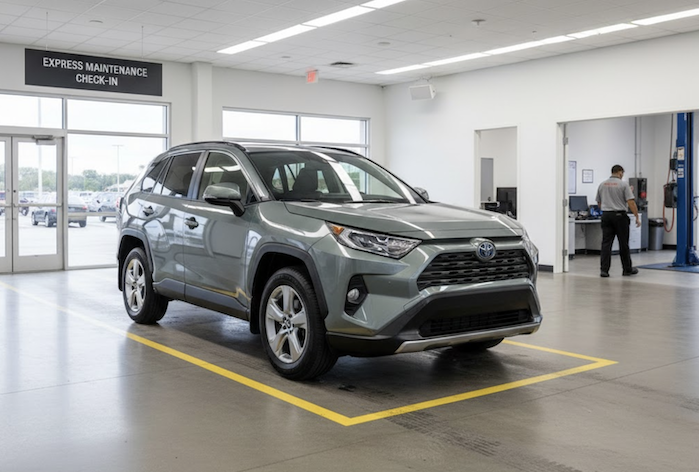
You know right away there’s a problem because even "manufacturer-trained technicians” admit that you shouldn't treat the 10,000-mile claim as gospel, especially when real-world repairs for neglected oil can total $9,000.
From my view, the "0W-16 oil used in the 2023 Toyota RAV4 has less of a buffer against wear" than heavier oils of the past, making the 5,000-mile mark the true threshold for safety.

The Master Tech Told Me...
I reached out to a Toyota Master Lead Tech with twenty years of experience under the hood of Japanese SUVs. His "whisper" was more of a warning: "The computer is programmed for the 'average' driver under perfect conditions," he told me. "In the real world, short trips and cold starts break down oil long before a sensor triggers. If you want that engine to last, you listen to the oil, not the algorithm."
From My View: The 100,000-Mile Threat
The dealer is strictly following a corporate manual designed to lower "cost of ownership" stats, but I’m looking at the reality of sludge and carbon buildup that could cost $9,000 in engine repairs down the road. Waiting until 10,000 miles might get you through your lease, but for those of us planning to hit the 200,000-mile club, these extended intervals are a ticking time bomb for your valves and pistons.
My Take
In my decades working with dealers, I’ve seen manufacturers push the envelope on maintenance intervals to satisfy environmental regulators and marketing departments. They want to claim their cars are "maintenance-free" for as long as possible. But metal-on-metal friction hasn't changed just because we have better software. When a service advisor tells you the "computer says no," they are prioritizing a pre-programmed algorithm over your engine's physical health.
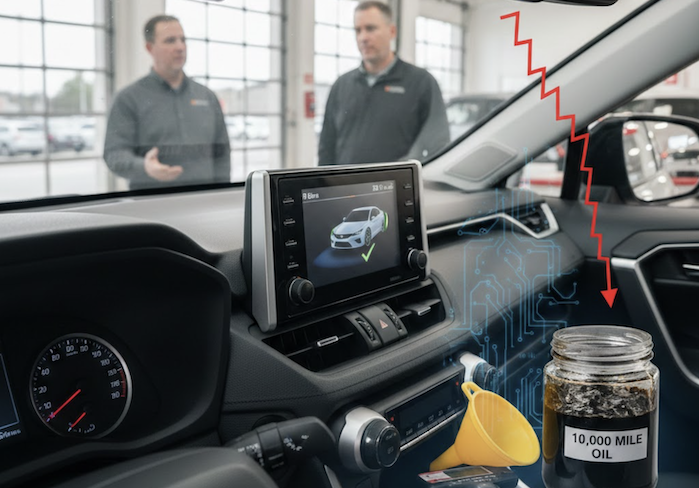
The Cost of Compliance
I believe the 10,000-mile oil change is the greatest myth in the modern automotive world. If you plan on trading your RAV4 in three years, follow the computer. If you want to keep it for fifteen years, you must be proactive. I’ve seen too many engines torn apart at 120,000 miles filled with "jello" because the owner did exactly what the dealer told them to do.
What RAV4 Owners Are Saying
The community is divided, but the most experienced owners are sounding the alarm. One user on Reddit noted the severity of the situation, stating, "I unequivocally stand behind 5k intervals because the mechanics that work on the cars see the carnage on engines," which you can read in the full discussion here.
Another owner highlighted the new design's vulnerability, noting, "The manual gives you the bare minimum specs... 80% of all Americans should be changing their engine oil every 5,000 mi," in this Reddit thread.
Wait, There's More: What RAV4 Owners Need To Know
1. The "Severe" Schedule: Almost all city driving, short trips, or cold weather starts qualify your 2023 RAV4 for the "Severe" maintenance schedule, which Toyota itself admits requires 5,000-mile changes.
2. The Color Test: If your oil is dark and opaque at 5,000 miles, it has already suspended as much carbon and debris as it can handle.
3. Pay Now or Pay Later: An oil change is roughly $100. A new Toyota engine is $9,000. The math is simple.
Key Takeaways
- Trust the Dipstick: Physical evidence of dirty oil outweighs a digital dashboard reminder every time.
- 5,000 Miles is the Limit: For long-term reliability, ignore the 10,000-mile "marketing" interval.
- Demand the Service: You are the customer. If you want to pay for an oil change at 5,000 miles, the dealer should perform it regardless of what the computer says.
Don't Let Them Talk You Out Of Protecting Your Investment
Modern cars are smarter than ever, but they aren't immune to the laws of physics. If your 2023 Toyota RAV4 is showing dirty oil or you've hit the mileage on your sticker, don't let a service advisor talk you out of protecting your investment. Your engine's "lifeblood" is the only thing standing between you and a catastrophic repair bill.
What Would You Do? Would you trust the computer or your own eyes when it comes to your engine's health? Click the red link below to write your comment and join the community in sharing experiences.
Next Up: Is Toyota's legendary reliability slipping? I recently investigated why one owner's 2023 RAV4 required a total transfer case replacement at just 14,000 miles, and the dealer had no answers.
Denis Flierl is a Senior Reporter at Torque News with over 30 years of hands-on experience in the automotive industry. Having served as a professional test driver and industry consultant for major automakers such as Chevrolet, Ford, Toyota, Honda, and Tesla, Denis provides a "boots-on-the-ground" perspective that goes beyond standard reporting. Since joining Torque News in 2012, he has specialized in cutting through market noise to deliver data-backed analysis and real-world owner stories. His work focuses on navigating the transition to EVs and the shifting automotive market.
Have a tip or question for Denis? > Engage with him directly on LinkedIn for industry analysis, or follow his latest updates on X @DenisFlierl and @WorldsCoolestRides. You can also find his latest car features on Facebook and Instagram.
Photo credit: Denis Flierl via Gemini
Set Torque News as Preferred Source on Google
Follow us today...