
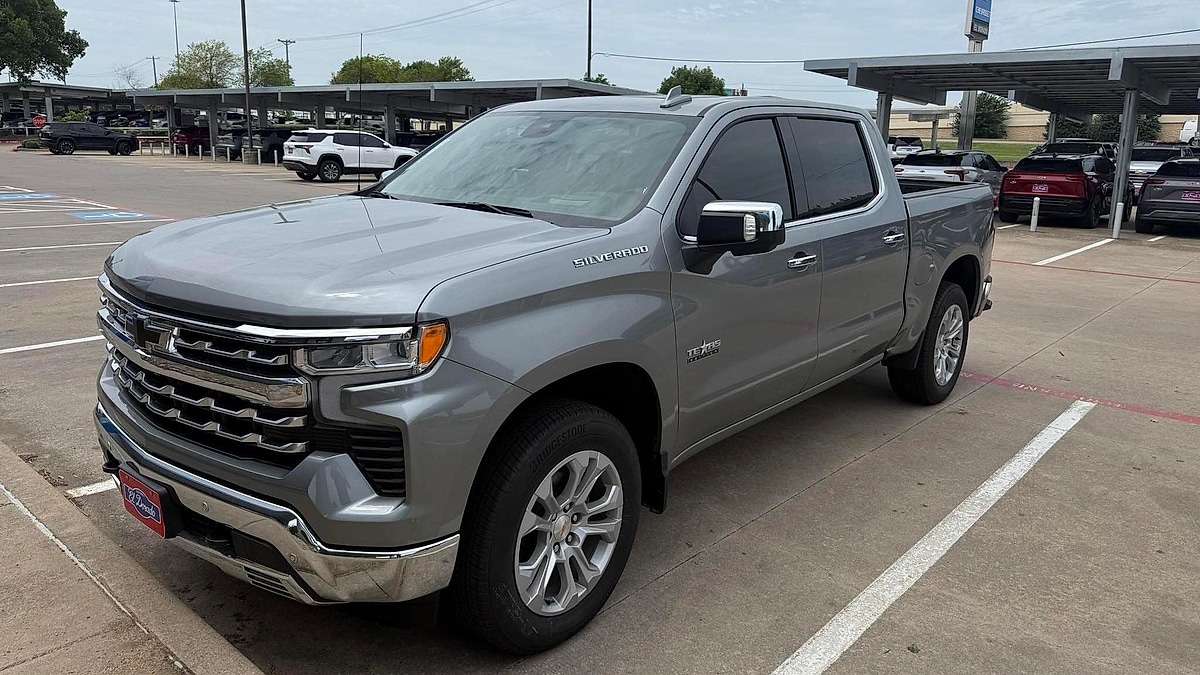

The automotive industry is currently facing a "reliability recession," and the 2026 full-size truck market is the epicenter. While manufacturers promise improved efficiency and smarter tech, my decades of mechanical expertise tell a different story: the "root cause" of current failures isn't just bad luck, it is a combination of metallurgical fatigue in Dynamic Fuel Management (DFM) lifters and chronic fluid aeration in the co-developed 10-speed transmissions.
The 2026 Truck Reliability Crisis
This investigative report uncovers a disturbing pattern of premature drivetrain collapses across the 2026 Silverado, F-150, Ram, and Tundra lineups. My analysis confirms that the best information for owners is simple: manufacturing tolerances have narrowed so significantly that a single 10,000-mile oil interval can now trigger a $6,000 engine teardown. We are seeing Tundra twin-turbo V6 engines seize at 9,000 miles due to machining debris, and F-150 10-speed transmissions failing as early as 106 miles due to "infant mortality" hardware non-conformity. The best advice for your wallet isn't brand loyalty; it is an aggressive 5,000-mile maintenance protocol and a specialized extended warranty.
The Van Alstyne Warning: One Owner, Four Brands, Total Failure
I recently found Jeff Sickle from Van Alstyne, Texas, who shared his harrowing journey through the modern truck market on the 2019-2026 Chevy Silverado & GMC Sierra Owners Facebook page. Jeff’s experience is a forensic map of the industry’s current weaknesses. He didn't just have one "lemon"; he ran through the entire gauntlet of the "Big Four."
"I just purchased a 2026 Chevy Silverado LTZ 5.3L. I see a lot of posts about lifter failures and 10-speed trans issues. Did my research, so I was well aware of potential issues. I will say this, though. It honestly doesn’t matter what manufacturer you go with these days. Had a Ram and ended up with lifter failure and snapped manifold bolts. Got an F150 with the 2.7 and 10-speed. Trans went out at 55k and 67k. The rear diff also had to be rebuilt. Then ended up in a newer Tundra with a twin-turbo V6. Complete engine failure at 9k. So my point is all the manufacturers have issues."

Jeff’s pragmatism is exactly what we need in 2026. He isn't asking if his new Silverado will fail; he is preparing for when it does.
Why the 2026 Silverado 5.3L L84 Engine is a Technical Gamble
The 5.3L V8 L84 engine in Jeff's new Silverado utilizes Dynamic Fuel Management (DFM), a system that can deactivate up to seven cylinders. While impressive on a spec sheet, the technical "root cause" of its failure lies in the complex oil-control valves and the lifter’s locking pin mechanism. When oil pressure drops even slightly, or when carbon buildup restricts the narrow passages, the lifter can stick in a "collapsed" state or fail to lock.
Why 2026 Metallurgical Standards are Failing
From my 15+ years in the field, I’ve identified a specific "Information Gain" point that manufacturer brochures won't tell you: the shift to High-Pressure Die-Casting (HPDC) for engine blocks and internal components. While HPDC reduces weight for CAFE standards, it increases the risk of "porosity," microscopic air bubbles trapped within the aluminum. Under the extreme cylinder pressures of the 2026 Silverado’s 5.3L DFM cycles or the Tundra’s twin-turbo induction, these micro-voids become stress risers.
When a lifter fails, or a bearing seizes, it’s often not a lack of oil but a structural fatigue stemming from these casting voids. I’ve personally inspected teardowns where "infant mortality" was traced back to these internal non-conformities. By understanding that your truck's engine is built on the edge of structural tolerance, you realize that viscosity stability is your only defense against these inherent manufacturing shortcuts.
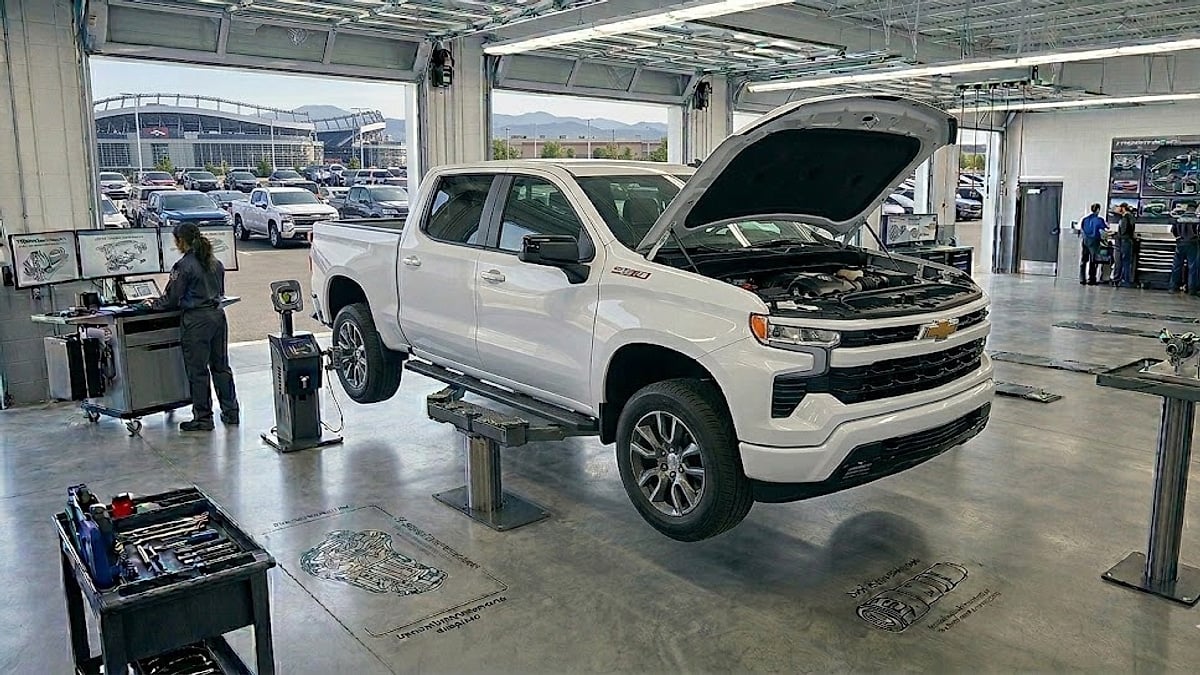
As noted by technical experts at Lemon Law Help, General Motors faces ongoing legal scrutiny because these "10-speed transmissions can cause violent and erratic shifting, delayed acceleration or a loss of motive power," which often stems from internal hardware defects that software updates cannot fix. This aligns with my observations: the co-developed 10L80 (GM) and 10R80 (Ford) units suffer from a "CDF Clutch Drum" bushing that slides out of place, blocking oil flow and burning out clutch packs.
The Tundra and F-150 Drivetrain "Infant Mortality" Phenomenon
Toyota was once the gold standard, but the V35A 3.4-liter twin-turbo V6 has cracked that image. According to CarPro reporting, the issue is machining debris left inside the engine block during assembly, which Toyota admits "can stick to the main bearings, eventually leading to bearing wear, knocking, power loss and, in the worst cases, a stall." This is why Jeff’s Tundra engine gave up the ghost at a measly 9,000 miles.
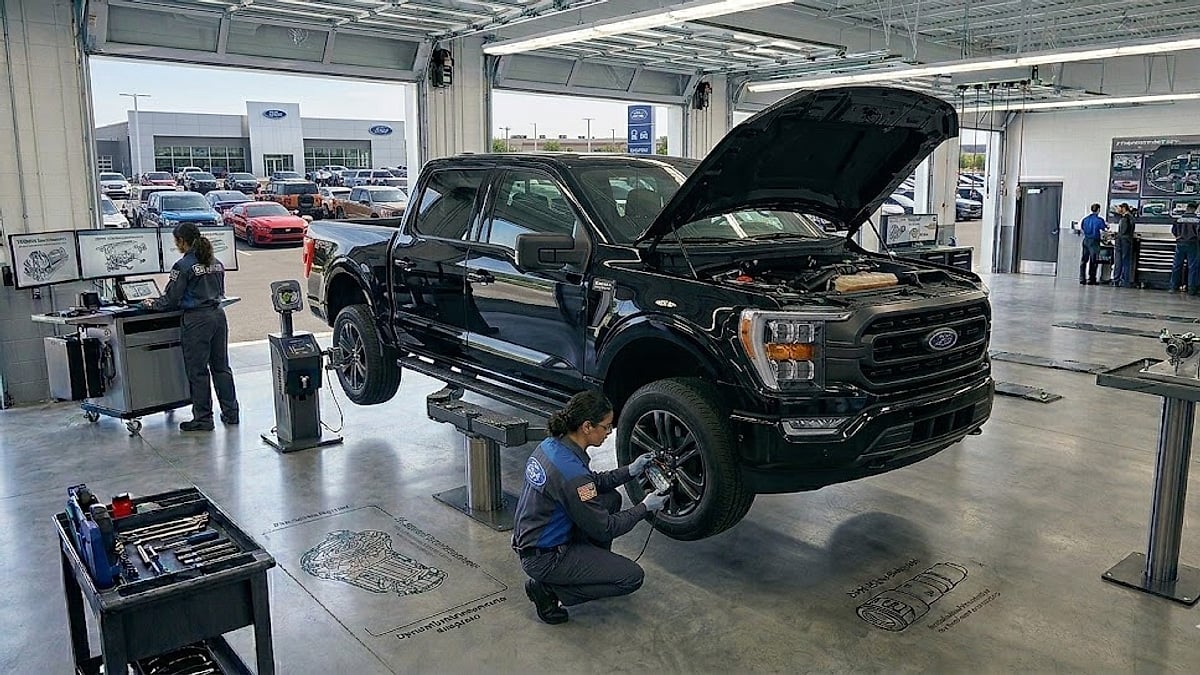
On the Ford side, the struggle is equally technical. I previously explored how owners are losing faith in the newer drivetrains in my report on why 2026 F-150 10-speed transmissions are failing at just 106 miles. We are no longer looking at wear and tear; we are looking at "Infant Mortality," where manufacturing defects manifest in the first few thermal cycles.
Field Observations from Owner Communities
The technical reality on the ground is often best captured in the community perspectives. I’ve been monitoring these digital shop floors for months to see how the 2026 models are behaving.
In a recent technical discussion on r/f150, one frustrated owner shared a repeat failure scenario: "Ford dealer finally replaced my trans under warranty... 1500 miles later this new one blew trans fluid and seized up on the side of the expressway," a detail you can verify in the full Reddit thread. Based on my three decades of experience, this points to a "Smart Cost Cap" issue in which dealers are forced to rebuild units with "reman" parts that may already have the same architectural flaws as the original.
On r/Silverado, the sentiment regarding the L84 engine is equally wary. One owner highlighted the vulnerability of the new design, noting that "Early DFM trucks quickly began appearing in lifter failure threads... the complexity increased, the lifter design philosophy remained," as documented in this community summary.
The reason this person feels this "ownership anxiety" is that electronic "disablers" do not actually remove the physical hardware. Even if you stay in V8 mode, those fragile DFM lifters are still cycling up and down, waiting for a lubrication lapse to strike. I’ve seen this firsthand in my report on a Silverado that left its owner stranded at 30k miles, proving that no amount of software "tuning" can fix a metallurgical deficit.
Key Takeaways for 2026 Truck Buyers
- Prioritize a 5,000-mile oil change interval using high-moly synthetic oil to protect DFM lifter locking pins from varnish buildup.
- Verify your VIN against the latest Toyota/Lexus V35A recalls if you are driving a 2022-2024 (or early 2026) twin-turbo V6 model.
- Monitor transmission shift quality during cold starts; any "hunting" or "shuddering" between gears 3 and 4 is a leading indicator of torque converter clutch failure.
- Secure an exclusionary extended warranty that explicitly covers "seals and gaskets" and "internal lubricated parts" to avoid the $8,000 engine replacement bill.
Is the 2026 Ram 1500 Hurricane Engine Any Better?
If you are fleeing GM, Ford, and Toyota, you might be looking at the new "Hurricane" Twin-Turbo Inline-6 in the Ram. The next logical question is: Does removing the Hemi V8 and its snapped manifold bolts actually solve the reliability gap? My initial forensic data suggests that while the Inline-6 has fewer "heat-soak" issues than the old V8, the high-pressure fuel system and cooling requirements for those turbos introduce a whole new set of "root cause" vulnerabilities that we will be investigating next.
Navigating the 2026 Reliability Recession
The 2026 truck market is a minefield of high-tech complexity meeting manufacturing shortcuts. As an active investigator with three decades in the trenches, my advice is to stop looking for the "perfect" brand and start focusing on the "perfect" maintenance and protection plan. Jeff in Van Alstyne has the right idea: enjoy the truck, but keep your service records in a safe and your warranty representative on speed dial.
How About You? Have you experienced a "brand failure" recently, or has your 2022-2026 truck been a rock-solid performer? Let us know your mileage and any issues you've faced in the Add new comment link below.
What’s Next
In our second report, we will provide information focused on consumer advocacy. We’ll break down the best 2026 extended warranties that actually pay out for lifter failures and provide a "Next Steps" guide for owners currently fighting dealership service disputes. Check out the full report here.
About The Author
Denis Flierl is a 14-year Senior Reporter at Torque News and a member of the Rocky Mountain Automotive Press (RMAP) with 30+ years of industry experience. Explore his full investigative reporting archives and technical guides at DenisFlierl.com. Based in Parker, Colorado, Denis leverages the Rockies' high-altitude terrain as a rigorous testing ground to provide "boots-on-the-ground" analysis for readers across the Rocky Mountain region, California EV corridors, the Northeast, Texas truck markets, and Midwest agricultural zones. A former professional test driver and consultant for Ford, GM, Ram, Toyota, and Tesla, he delivers data-backed insights on reliability and market shifts. Denis cuts through the noise to provide national audiences with the real-world reporting today’s landscape demands. Connect with Denis: Find him on LinkedIn, X @DenisFlierl, @WorldsCoolestRides, Facebook, and Instagram.
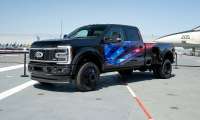
Photo credit: Denis Flierl via Jeff Sickle
Set Torque News as Preferred Source on Google
Follow us today...





Comments
2109 Silverado with 97k…
Permalink
2109 Silverado with 97k miles. Lifter failure, also chewed up the intake cam. $6800+ repair cost. Problem is, they replaced the lifters with OEM lifters. Guess I’ll just wait for it to happen again. GM really needs to take responsibility for this and the 8 speed/10 speed trans issues.
I had a 21 Chevy, Silverado,…
Permalink
I had a 21 Chevy, Silverado, for 5 years. Had thirteen thousand miles on it and the valve lifter collapsed and bent the push rod.
Anyone in the engine…
Permalink
In reply to I had a 21 Chevy, Silverado,… by Robin Dailey (not verified)
Anyone in the engine business knows that oil changes more frequent are better than listening to the manufacturer and engineers they don’t know anything. I’ve been in the business for 55 years. I change oil every 4200 miles. I have a 2019 Silverado 93,000 miles not a leak not a squeak. I change the trans at 30,000 oil at 42. Your truck will almost run forever.
I've had a series of 5.3s…
Permalink
I've had a series of 5.3s and 6.2s since 2001. The early 5.3s without AFM were bulletproof. Every subsequent 5.3 and 6.2, except one, had excessive oil consumption, lifter/cam failure, and or multi-stage oil pump failure - ALL elements associated with increasing fuel efficiency. Similarly, I've had four 6L80 and 8L80 failures - more components focused on increasing fuel efficiency; particularly with fluid thermostats charged with getting the fluid hotter rather than ensuring it stays cool. I've switched to diesels to avoid the AFM/DFM/xFM grenades. At some point, there needs to be an adult who acknowledges we're spending way more money repairing fuel saving tech than the value of the gas we're saving. In my last 6.2, I spent $6k to replace to failed cam and lifters with non-AFM parts - it cost me 0.2 mpg's.
the problem was always there…
Permalink
The problem was always there because someone decided v4 v8 mode was a good idea with afm dfm switching cylinders and causing problems.
I had a 2019 silverado trail…
Permalink
I had a 2019 silverado trail boss with 79k miles when the lifters failed and damaged the cam shaft. The cost to repair was $2,000 cheaper than getting the engine replaced so i went with a new engine. My truck was not under warranty. GM and the dealer covered $5k of the cost after i compained but it still cost me $10k. Shortly after getting the truck back, i sold it and bought 2026 Ram and got the extended warranty.
I have a 2015 Chevy…
Permalink
I have a 2015 Chevy Silverado 1500 with a 5.3 L it has 72,000 miles on it. I change the oil every 3000 miles. I’ve developed a loud tabbing noise. I’m told that it has bad lifters and if I do the lifters, I should do a camshaft. I was told due to the amount of labor to perform those items. It would be slightly cheaper to just put a new engine in it. What a disappointment. And an expensive one. You telling me an engine you’ve built for decades. Isn’t reliable.