
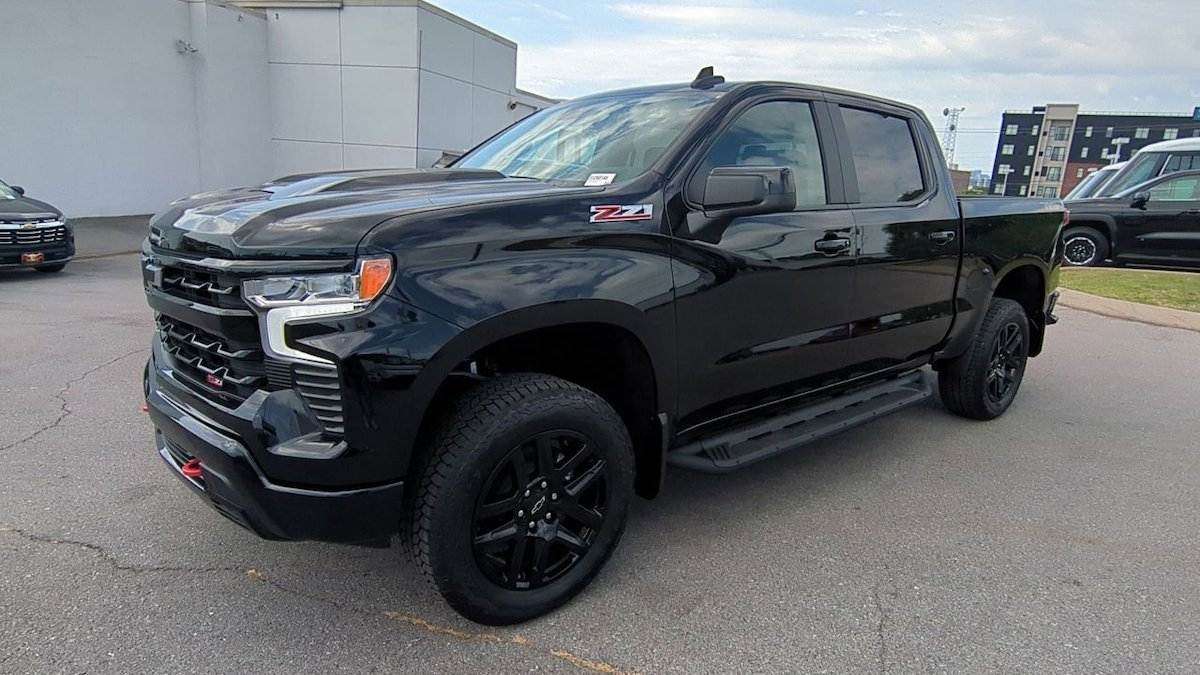

Sudden darkness on the touchscreen led to total truck death on a brand-new 2026 Chevy Silverado. Is this a common issue, or is there a simple fix?
Imagine the sinking feeling of stepping outside to your 2026 Chevrolet Silverado 1500—barely broken in with less than 5,000 miles—and finding it completely unresponsive.
It started with a glitch yesterday: the touchscreen went dark and locked up. Annoying, but today? Total power loss. Not even the keyless entry works. You try the door, climb in, and the dash is a black void—zero power. You check the battery; it looks fine.
The reality hits: your brand-new, expensive truck is stone dead in the driveway. It's too new for this kind of drama. It's a tow truck call, a frustrating dealership visit, and a loud "FUDGE!" moment all rolled into one helpless morning.
It happened to Adam Chitwood as he shared on the 2019 - 2026 Chevy Silverado & GMC Sierra Owners Facebook page. He says,
"I have a 2026 Silverado 1500 (less than 5k miles) and yesterday my touchscreen went dark and stopped working, it just locked up. Well, this morning, my entire truck is dead —like my keyless entry wouldn't even work. ZERO POWER. The battery looks good. Anyone else seen this? Ideas? Or am I about to call a tow truck to take it to the dealership? FUDGE!"
I've been covering Chevrolet and GMC for years here at Torque News, and I can tell you this scenario—the dark touchscreen followed by a total electrical collapse—is a recurring headache in the modern GM truck lineup. It's a classic case of a 2026 Chevy Silverado 1500 total electrical system failure diagnosis being complicated by the sophisticated electronics running the show. Adam is not alone, and we're going to walk through exactly why this happens and what your next steps should be.
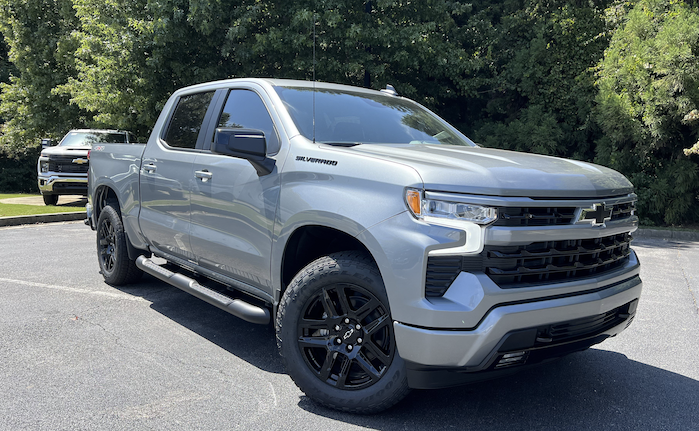
What is the Real Culprit?
He mentioned the battery "looks good." Here is the critical insight based on my experience reporting on these issues: in a truck as technologically complex as the 2026 Silverado, the battery doesn't have to be dead to cause chaos; it only needs to be under-voltage.
The infotainment system, which controls everything from the HVAC to the drive modes, is highly sensitive to voltage fluctuations. When the touchscreen went dark and locked up, that wasn't just a simple screen freeze—it was a deep system crash. The Human Machine Interface (HMI) module, the Body Control Module (BCM), or an associated sensor likely froze in an active state.
This leads us to the second, more destructive phase of your problem: the total power loss. A frozen module often creates what is known as a "parasitic draw." It remains partially active even after you turn the truck off, slowly but surely sucking the life out of your battery until it hits a critically low voltage, rendering the entire truck unresponsive. This is why Adam's new Chevy truck's infotainment screen suddenly went dark, and then completely killed the battery—the electronics effectively committed self-sabotage.
This high sensitivity confirms the principle: low battery voltage causes electrical gremlins in modern GM trucks. The truck's battery management system (BMS) is designed to protect key modules, but when the voltage dips too low, the system shuts down non-essential functions (like the touchscreen) and eventually everything else to protect the engine control unit.
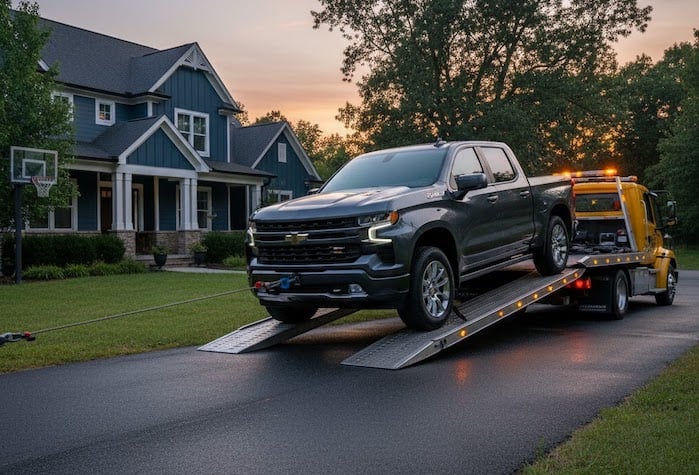
What to Check Before the Tow Truck
If you are a DIY person, before you call the dealer for a tow, try these two steps, which often resolve this specific type of electrical lock-up without a trip to the shop.
1. The Soft Reset: This is the equivalent of resetting your computer. This maneuver forces the modules to reboot:
- Turn the ignition completely OFF.
- Open the driver's side door.
- Leave the door open for a full 90 to 120 seconds. This allows the system's modules (BCM, HMI) to enter their power-down cycle and clear the software cache.
- Close the door and try to start the truck.
This is how to perform a soft reset on the Chevy Silverado infotainment system, and it often clears the frozen state, causing the parasitic draw.
2. The Hard Reset: If the soft reset fails, you need a complete hard reboot.
- Locate the negative battery terminal (usually marked with a '-').
- Using a 10mm wrench, carefully disconnect the negative cable.
- Wait at least 15 minutes. This ensures the residual charge in the capacitors of the BCM and HMI fully dissipates.
- Reconnect the negative cable securely.
- Try starting the truck.
Why the Dealership is Necessary
Since this is a 2026 model, the issue falls under the factory warranty. While the resets might get you running, they don't fix the underlying flaw that caused the system to crash in the first place. This requires dealer intervention.
The complex interplay of systems means only a dealer with a GM Techline Diagnostic System (TDS) can perform a deep system scan and apply a specific Technical Service Bulletin (TSB) software patch.
We're talking about understanding the complex wiring of the next-generation Silverado BCM. The BCM acts as the central hub, and a glitch here can spread rapidly. I've reported on similar module woes in the past, such as when I covered the frustrating electrical problems in older GMs in these Torque News articles on Silverado Electrical Problems.
- 2022 Chevy Silverado ZR2 Owner Says, "I Can't Feel the Power of the New 0W-40 Oil in my 6.2L, My ECM Update Failed, and Now the Truck Won't Start, You Can't Make This Stuff Up"
- I've Owned Toyotas For 30 Years With No Issues. I Took A Chance On a 2024 Chevrolet Silverado, and 5K Miles In, the Problems Begin
The most important recommendation here is to recognize the crucial warranty steps for new Chevrolet Silverado owners experiencing power loss. Document everything—the time, the ambient temperature, what accessories were running, and the error sequence (screen dark, then total death). This helps the technician pinpoint the exact module (HMI or BCM) that requires a flash or replacement. I also covered how GM's 120V outlet limitations stem from electrical architecture planning in this piece: Torque News: Silverado 120V Outlet Limitations.
What the Community is Saying
I've been scrolling through other owner forums and social media, and the sentiment is consistent:
- Software is Suspect: Many owners of 2024+ models report that the "90-second door trick" or a complete battery disconnect resolved the issue temporarily. They believe it's a buggy software routine causing the HMI or related module to fail to shut down, confirming the parasitic draw theory.
- HMI Module Failures: A significant number of owners who took their truck to the dealer had the dealer diagnose and replace the HMI module (which houses the "brain" for the screen), often fixed under warranty.
- Dealer Wait Times: Frustratingly, some owners have reported multi-week waits due to dealer service departments being backed up with electronic diagnostic issues.
Conclusion
Adam's situation with the 2026 Silverado is unfortunately typical of the learning curve manufacturers are experiencing with fully digitized vehicles. While it's alarming when your truck acts like a giant, dead smartphone, the cause is almost certainly a software glitch leading to a critical voltage drain.
The real question here is: Is the new Chevy Silverado 1500's electrical architecture reliable? Right now, it's undergoing refinement, and owners like Adam are providing the real-world data GM needs to fix these lingering issues via software updates.
Now, I want to hear from Silverado Owners.
After reading Adam's story, what is the strangest, most inexplicable electrical issue your modern GM truck has experienced that wasn't immediately solved by a battery replacement? Let me know in the comments below.
I'm Denis Flierl, a Senior Torque News Reporter since 2012, bringing over 30 years of automotive expertise to every story. My career began with a consulting role for every major car brand, followed by years as a freelance journalist test-driving new vehicles—equipping me with a wealth of insider knowledge. I specialize in delivering the latest auto news, sharing compelling owner stories, and providing expert, up-to-date analysis to keep you fully informed.
Follow me on X @DenisFlierl, @WorldsCoolestRides, Facebook, and Instagram
Photo credit: Denis Flierl
Set Torque News as Preferred Source on Google
Follow us today...







Comments
If it's gonna go, it's gonna…
Permalink
If it's gonna go, it's gonna go right away. My 2017 hd2500 had a similar story around 5k miles, some battery charge sensor died. Replaced. Not a problem since, has ~85k on it.
Oh wow! I had to do the same…
Permalink
Oh wow! I had to do the same thing on my 1996 Dodge Dakota! I hate it when my infotainment center goes out!!!
My 26 1500 is at 6000 miles…
Permalink
My 26 1500 is at 6000 miles and this is the 2nd time the battery has died. The first jump got it running for a few weeks and now it’s dead again. I’ll try the negative disconnect next.
My 2026 Chevy Silverado…
Permalink
My 2026 Chevy Silverado completely died three days ago. 5,300 miles. No blacked out dash, no warning. However, I had notification of a software update for two weeks prior. Did the first update and ignored the second one. Got a jump from AAA and made it home. Did the soft reset and all seemed back to normal. BUT, I took the truck in today for an oil change and had them run the codes. DTC codes that came up:
1) Heating & AC Interface Controls, U3003 - Battery Voltage, Circuit Low Voltage 2) BCM B19C7, Door unlatch, circuit short to ground 3) Undentified Ground Module 31 - U3003, see SI; 4) BCM B1038 Left Front Door Open Switch; 5) BCM U3501 Control Module Input Power 1 Circuit Low Voltage; 6) BCM U3505 Control Module Input Power 2 Circuit Low Voltage; 7) Restraints Control Module U3003, Battery Voltage, circuit low voltage; 8) BCM P2628 - Control Module Power Off Timer; 9) Unidentifiable Control Module - 28, - P0562 - System Voltage Low.
The mechanic said I need to bring it back in and they will investigate since they have not seen this on 2026 Silverados. I do not trust this truck at this point so I purchased my own jump box. Chevy needs to fix this or give me back my money...a brand new truck should NOT have these kinds of issues.