
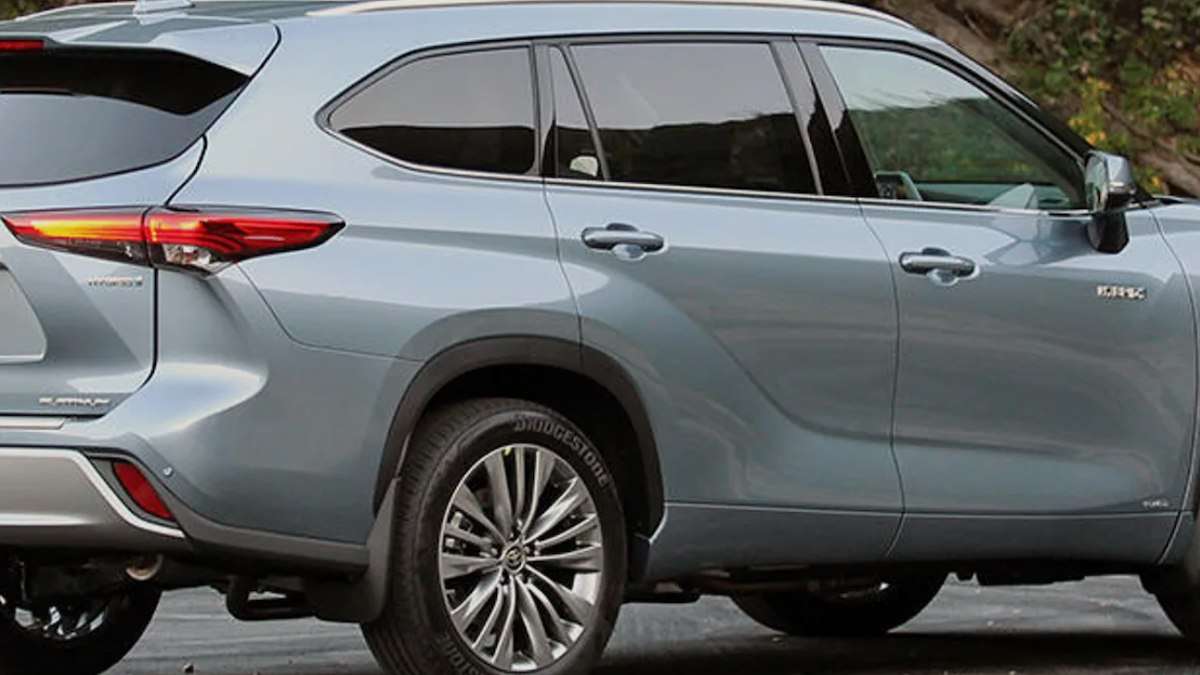

Is the extended warranty an added Toyota tax?
Imagine that you’ve just driven home the most advanced Toyota Highlander Hybrid ever made, yet you’re losing sleep over a single sensor glitch that could cost more than your monthly payment. This is the new reality for luxury hybrid owners who realize that "bulletproof" engines can’t protect them from a $2,500 repair bill for a side-view mirror camera.
I found this post shared in the Toyota Highlander Owners Club Facebook community, where Moe Talebian highlights growing anxiety over the high-tech complexity of the 2025 Highlander Hybrid and the potentially steep costs of keeping the luxury Platinum trim on the road. What would you do?
Moe Talebian says:
“I’m getting the Toyota extended warranty for my 2025 Highlander Hybrid Platinum for 7 years, 75,000 miles for $2,500. It’s just scary about all those electrical sensors on Platinum trim. I’m not sure if I will keep it for seven years, but I plan on keeping the car for at least 4-5 years.”
In my 30 years of covering the auto industry, I’ve never seen a "bulletproof" brand face a high-tech threat quite like this. Experts at J.D. Power have noted that while mechanical systems remain strong, the 2025 Toyota Highlander's overall owner satisfaction is often dampened by the experience of configuring complex vehicle systems to their preferences.
I previously reported on a similar situation in which a 2021 Toyota Highlander owner experienced a total transmission failure at just 65,000 miles, underscoring that even the most reliable brands can have costly issues.
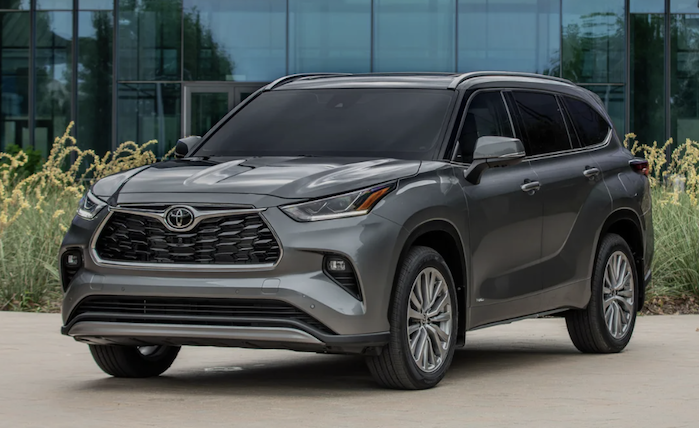
The technical reality is that modern luxury is becoming a financial liability. Consumer experts often point out that these vehicle service contracts are high-profit items for dealerships, yet, as noted by Consumer Affairs, these plans can be a big help in certain situations where parts are back-ordered or labor is intensive.
During my recent investigations, I discovered that some Highlander owners are facing a $10,000 transmission nightmare, proving that a hidden warranty might be the only thing that saves your wallet in the long run.
What I Tested
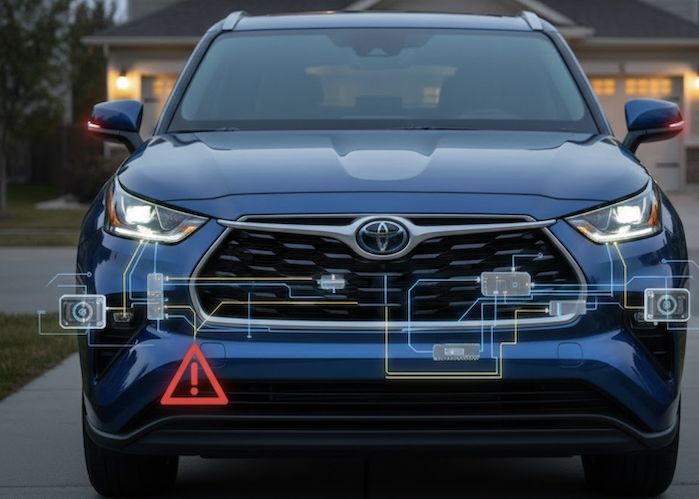
Throughout my three decades as an automotive journalist, I have sat behind the wheel of every generation of the Highlander. I have tested the transition from the rugged V6 to the current high-efficiency 2.5-liter hybrid powertrain. While fuel economy is impressive, the sheer volume of "invisible" technology is what stands out. In the Platinum trim, the vehicle is essentially a rolling computer network. If one of those sensors is misaligned by even a millimeter due to road debris, the entire safety suite can go into a "limp mode" of sorts, forcing a trip to the dealership for a calibration that costs hundreds of dollars.
My Take
My view is that the "Toyota Reliability" everyone talks about is undergoing a significant shift. People used to buy a Toyota to avoid the mechanic; now, owners buy one and then immediately buy insurance to protect against the car's own intelligence. It is a paradox. I see owners like Moe who are willing to spend $2,500 just to sleep better at night. To me, that $2,500 isn't just a warranty fee; it is a "complexity tax." We are moving into an era where the powertrain might last 300,000 miles, but the dashboard or the radar cruise control might "total" the car financially well before then.
Today, Failure Looks Different
In the past, when a car "failed," it meant a piston went through the block, or the transmission wouldn't shift. Today, failure looks different. For modern owners, failure is a "Christmas tree" of warning lights, caused by a software glitch or a corroded connector. I’ve seen cases where a weak 12V battery, the small one that runs the computers, caused the entire hybrid system to shut down on the highway. This isn't a mechanical failure; it’s a failure of complexity. The more sensors you add to a Platinum trim, the more "single points of failure" you create.
What Highlander Hybrid Owners Are Saying
Community sentiment reflects a growing awareness of these vulnerabilities. One user on Reddit noted the severity of the situation: "My 2021 was a lemon... had pinholes in the ac return line... didn't know that the drive system uses the AC compressor as its radiator," as discussed in the full thread here.
Another owner highlighted the new design's vulnerability, noting, "The cause of these problems seems to stem from the Highlander's complex electrical architecture, which includes numerous modules and sensors that can sometimes malfunction," as discussed here.
Key Takeaways
- Platinum Trim Complexity: The highest trim levels have the most sensors, making them the most expensive to repair out of warranty.
- The Calibration Trap: Replacing a sensor is only half the cost; the dealer-only calibration is what breaks the bank.
- Warranty as Insurance: For owners keeping a 2025 Hybrid Platinum for 5+ years, an extended warranty is becoming a mandatory part of the purchase price.
- Reliability vs. Tech: Toyota's mechanical reliability remains top-tier, but its electronic longevity is still unproven.
Recommendations For Highlander Buyers
If you are considering a 2025 Toyota Highlander Hybrid Platinum, I recommend negotiating the warranty price at the time of purchase. Do not wait until you are in the "finance box" at the dealership. Also, consider the Limited trim. You get most of the luxury without some of the more temperamental Platinum-exclusive sensors. Lastly, always keep your 12V battery in top shape; many "scary" sensor issues are actually just low-voltage ghosts in the machine.
Conclusion: The Cost of Peace of Mind Is Rising
The 2025 Toyota Highlander Hybrid Platinum remains a top-tier family SUV, but the days of "set it and forget it" ownership are fading. As sensors and software take over the driving experience, the cost of peace of mind is rising. Moe Talebian's decision to drop $2,500 on a warranty isn't just a cautious move; it reflects the modern automotive landscape, where tech is the new Achilles' heel.
What Would You Do? Would you pay $2,500 for a warranty on a brand known for reliability, or would you take the risk and keep that money in the bank? Click the red link below to write your comment and join the community in sharing experiences.
Next Up: My 2022 Toyota Highlander Hybrid Has This Hidden Filter I Had No Idea About. "I was grossed out to see its current condition and didn't even know it was a thing," this owner says. If you own a Highlander Hybrid, check this part immediately to prevent your hybrid battery from overheating.
Denis Flierl is a Senior Reporter at Torque News with over 30 years of hands-on experience in the automotive industry. Having served as a professional test driver and industry consultant for major automakers such as Chevrolet, Ford, Toyota, Honda, and Tesla, Denis provides a "boots-on-the-ground" perspective that goes beyond standard reporting. Since joining Torque News in 2012, he has specialized in cutting through market noise to deliver data-backed analysis and real-world owner stories. His work focuses on navigating the transition to EVs and the shifting automotive market.
Have a tip or question for Denis? > Engage with him directly on LinkedIn for industry analysis, or follow his latest updates on X @DenisFlierl and @WorldsCoolestRides. You can also find his latest car features on Facebook and Instagram.
Photo credit: Denis Flierl via Toyota
Set Torque News as Preferred Source on Google
Follow us today...






Comments
If you feel that your new…
Permalink
If you feel that your new car requires an extended warranty, you are clearly purchasing the wrong vehicle. Why would you do that?