
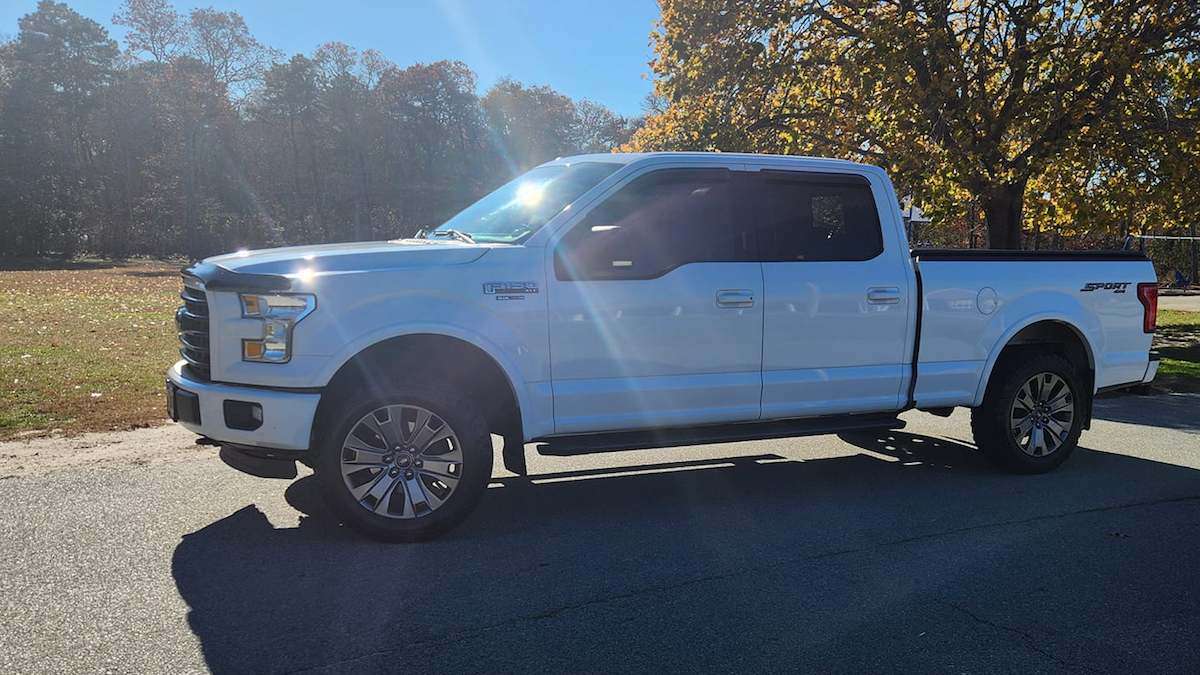

A 2017 Ford F-150 owner slams post-2017 F-150s, citing "junk" 5.0 engines, failing 10-speeds, and leaks at 20k miles. Is buyer's remorse inevitable or just bad luck? Here is the heated debate.
It's a bold challenge that struck a nerve with the Ford F-150 community, igniting a firestorm of debate over whether the brand's legendary reliability is becoming a thing of the past.
During my research into Ford's recent reliability struggles, I uncovered a pointed challenge from owner Chris Guyette, who claims post-2017 F-150s are plagued by "junk" 5.0 engines and failing 10-speed transmissions. As a Senior Torque News reporter with decades of automotive experience, I recognize this isn't just an isolated rant, but a reflection of specific mechanical gremlins I frequently analyze to protect potential buyers.
Chris Guyette on the Ford F-150 Owners Facebook page says,
"If you own any Ford F-150 post 2017 model year, I'm looking for an owner who has never asked themselves, 'wtf did I do when I bought this truck?" Junk 5.0s, junk 10 speeds, electrical problems, and seals leaking at 20k miles."
When you spend upwards of $60,000 on a truck, you expect it to work.
In my 30 years covering the auto industry, I have seen waves of quality-control issues, but the generation of trucks Chris is referencing marks a specific turning point in engineering complexity. The shift to the 10-speed transmission and updates to the 5.0L engine introduced new variables that have frustrated loyalists. As I detailed in a previous story, I Ditched My 2021 Ford F-150 For This Toyota Tundra. Now, All My F-150 Repair Problems Are Fixed Forever. Goodbye, I'm out. Reliability scores for these specific model years took a hit, validating the frustration many owners feel.
"Junk 5.0s": The Oil Consumption Issue
Chris continues his post by calling out "Junk 5.0s." He is likely referring to the 5.0L V8 Coyote engine updates that occurred around 2018. Ford switched from traditional iron cylinder liners to a plasma wire arc transfer spray liner. While this saved weight, it led to 5.0L V8 engine oil consumption issues affecting thousands of owners.
In my experience, if you are looking at a used 2018-2020 F-150 with the V8, you must ask for service records. I have spoken with mechanics who have had to replace entire long blocks because the oil consumption was so severe that it fouled plugs and damaged catalytic converters. I discussed the importance of choosing the right engine configuration in my article An F-150 Owner Won't Buy Another Ford, Says, "I Have Serious Buyers Remorse One Year In, Between the Transmission and the Underpowered Oil Burning Engine, Now I Owe More Than It's Worth", where I highlight that sometimes the older, proven tech outlasts the new "efficient" innovations.
"Junk 10 Speeds": The 10R80 Transmission Headache
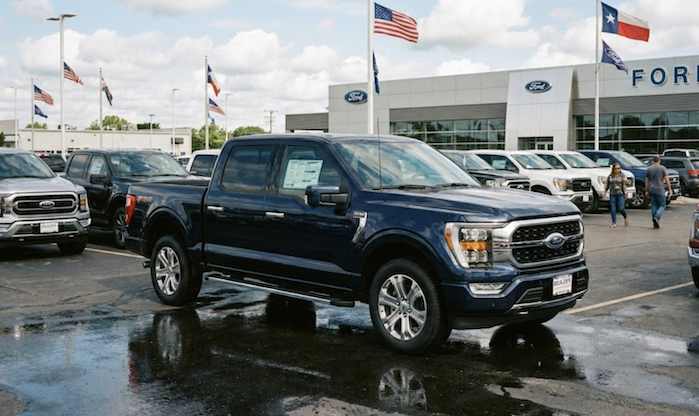
The second part of the owner's complaint targets "junk 10 speeds." The 10R80 transmission was co-developed with GM, but the Ford application has been notorious for clunky shifting, gear skipping, and hesitation.
The problem often lies within the CDF clutch drum, where a bushing can move, blocking oil flow and causing the transmission to hunt for gears or slam into engagement.
It's one of the most common 10-speed automatic transmission shifting issues I encounter in my reporting. It is not just an annoyance; it is a drivability hazard. In fact, the prevalence of these complaints led to class-action litigation, which I covered in my report. I Traded My Ford F-150 For This 2025 Chevy Silverado Z71 Trail Boss. I've Heard Lots of Negative things About New Chevys, but I got a Great Deal. I Hope I'm Not Sorry. If you test drive one of these trucks, ensure the transmission is cold; that is when the harsh shifts are most apparent.
Electrical Problems and Leaking Seals
Chris finishes his critique by listing "electrical problems, and seals leaking at 20k miles." Sadly, premature rear main seal leaks and plastic oil pan failures have been documented frequently in the forums. When Ford moved to composite oil pans to save weight, maintaining a proper seal became more difficult than with traditional stamped-steel or aluminum pans.
Furthermore, common Ford F-150 electrical system failures, including the Sync infotainment screen freezing, parasitic battery drains that leave trucks dead overnight, and phantom door latch alarms, are distinct possibilities. These issues suggest that quality control on the assembly line may have taken a backseat to production volume during those years.
What Should F-150 Owners Do?
If you currently own a post-2017 F-150 or are looking to buy one, do not panic, but be proactive.
- Check the TSBs: Before your warranty expires, have your dealer perform any software updates related to the transmission strategy.
- Watch the Oil: If you have the 5.0L, check your dipstick every 1,000 miles.
- Extended Coverage: Given the complexity of the 10-speed, extended warranty coverage for high mileage trucks is mandatory for peace of mind.
For those in the market for a used truck, I often point readers toward the 2015-2017 models with the 6-speed automatic, or I suggest looking at competitors if you want to avoid these specific headaches. I broke down the competitive landscape in my analysis: I’m a Lifelong Ford Fan, But My F-150 Crapped Out at 175K Miles, and I Decided To Get My Dream Truck, A 2025 Toyota Tundra. I hope I made the Right Choice, which offers a stark comparison for those tired of repair bills.
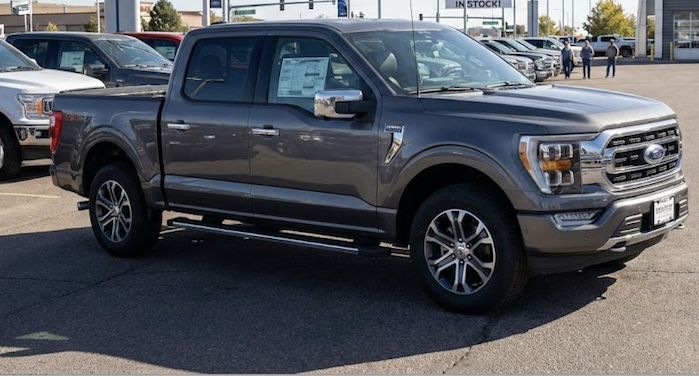
Finding the best used Ford F-150 model years to buy requires navigating around these 2018-2020 pitfalls. The 2.7L EcoBoost, surprisingly, has shown better long-term reliability in recent studies than the naturally aspirated V8 during this era.
What F-150 Owners Are Saying
I checked whether Chris Guyette was alone in his sentiment. He is not. Here is what other owners are saying:
"My 2018 5.0L sounded like a diesel at idle and drank a quart of oil every 1,500 miles. The dealer told me it was 'normal' until I pushed for an oil consumption test. They ended up replacing the short block." u/BlueOvalFan88 on Reddit.
"The 10-speed in my 2019 shifts so hard from 3rd to 5th, I thought I was rear-ended. I had the valve body replaced, and the adaptive tables reset, but it still feels clunky when cold." F-150 Owner forum member.
"I love the power of the Coyote, but the electrical gremlins are real. My Sync 3 system goes black randomly, and my battery died twice in a month with nothing left on." Commenter on YouTube (Ford Tech Makuloco Channel)
Key Takeaways
- Transmission Troubles: The 10R80 10-speed automatic is prone to harsh shifting and CDF drum failures.
- Engine Woes: The 2018-2020 5.0L V8 "Coyote" often suffers from excessive oil consumption due to plasma-arc cylinder liners.
- Electrical Gremlins: Owners report parasitic battery drains and Sync system failures.
- Action Plan: I recommend checking Technical Service Bulletins (TSBs) before purchase and considering a comprehensive extended warranty.
My Advice
While the Ford F-150 remains the best-selling vehicle in America, the post-2017 model years suffer from documented growing pains related to the 10-speed transmission and 5.0L engine updates. Chris Guyette's frustration regarding "junk" components and leaks is validated by data and technical service bulletins that every owner should be aware of. My advice is to thoroughly vet any used 2018+ F-150 for transmission updates and oil consumption history, or stick to the proven 6-speed models from prior years to ensure your truck stays on the road and out of the shop.
We Want To Hear From You
Do you agree with Chris that the post-2017 F-150s have taken a step back in quality, or has your experience with the 10-speed and 5.0L been trouble-free? Click on the red Add New Comment link below and let us know.
I'm Denis Flierl, a Senior Torque News Reporter since 2012, bringing over 30 years of automotive expertise to every story. My career began with a consulting role with every major car brand, followed by years as a freelance journalist, test-driving new vehicles, which equipped me with a wealth of insider knowledge. I specialize in delivering the latest auto news, sharing compelling owner stories, and providing expert, up-to-date analysis to keep you fully informed.
Follow me on X @DenisFlierl, @WorldsCoolestRides, Facebook, Instagram and LinkedIn
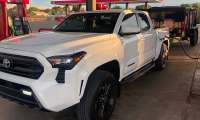
Photo credit: Denis Flierl via Chris Guyette
Set Torque News as Preferred Source on Google
Follow us today...





Comments
My Ford F 150 has the…
Permalink
My Ford F 150 has the electrical issues with draining the battery so you never know when the truck will start. The dealerships do not know how to fix the problem except give you a new battery and cross your fingers it works. Buying a warranty is useless since they have to diagnose the problem, which they cannot, before the company will pay for warranty. Piece of junk!!!!! Ford needs to let dealers know how to fix problem, if they even know how.