
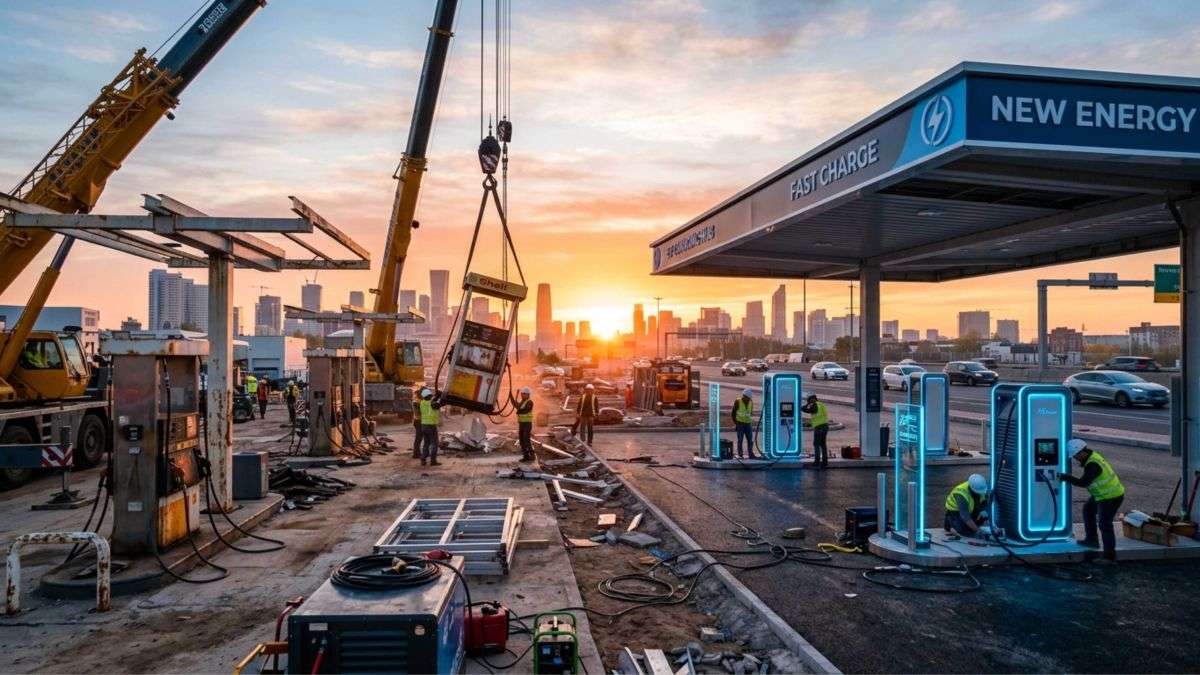

For decades, the transition from internal combustion engines (ICE) to electric vehicles (EVs) has been viewed as a gradual evolution—a slow-motion shift dictated by environmental policy and early-adopter enthusiasm. However, we have entered a period of "forced evolution." The primary catalyst isn’t just carbon consciousness anymore; it is the brutal reality of the fueling station. As gas prices climb to levels that threaten the stability of the average household budget, the economic argument for EVs has shifted from "long-term savings" to "immediate survival."
According to recent analysis from Business Insider, the current spike in fuel costs is driving a massive surge in EV interest, with consumer inquiries reaching levels never before seen in the automotive market. This isn’t just a temporary fluke; it is the beginning of the Great Decoupling, where the consumer finally breaks their dependency on the volatile oil market.
The Anatomy of the Price Hike: Why Gas is Skyrocketing
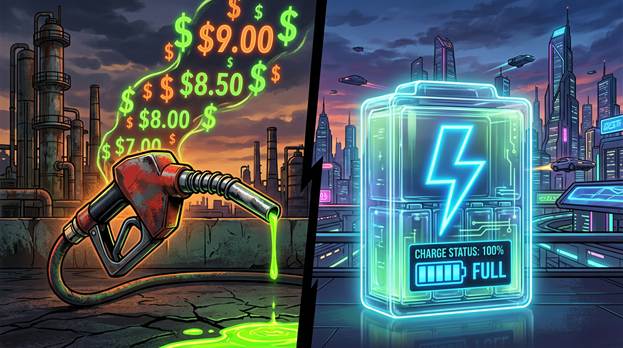
The current surge in gasoline prices is the result of a "perfect storm" of geopolitical instability, refining bottlenecks, and the aggressive decommissioning of fossil fuel infrastructure. As of March 2026, national retail averages are nearing the $4.00 mark, with states like California already averaging $4.67 per gallon. We are seeing a structural deficit in oil production that cannot be fixed by simply "turning on a tap."
Supply chain disruptions in the Middle East have removed millions of barrels of crude from the global market. Simultaneously, domestic refining capacity in the West has hit a ceiling. Many refineries that closed during the previous decade were never replaced, as investors are hesitant to pour billions into "stranded assets" that may be obsolete in twenty years.
We expect these prices to remain elevated for at least the next 18 to 24 months. While we might see seasonal dips, the "new normal" for a gallon of gas in the U.S. is likely to hover between $4.50 and $6.00 in major metropolitan areas. In Europe and parts of Asia, the equivalent of $10.00 per gallon is already becoming a reality. These aren't just spikes; they are the new floor.
The Battery Revolution: From Range Anxiety to Range Confidence
While gas prices provide the "push," battery technology is providing the "pull." We have moved past the early days of 100-mile ranges. Today’s standard EV offers between 250 and 350 miles of range, which covers the vast majority of consumer needs.
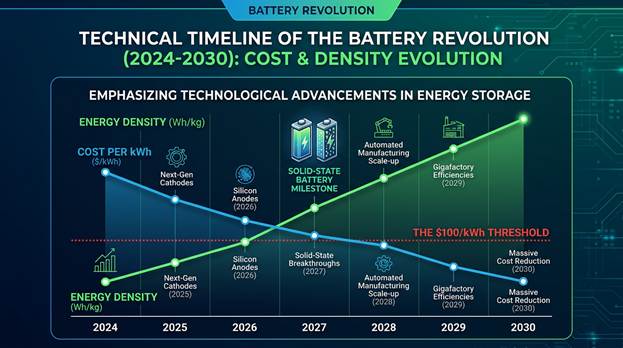
However, the next five years will bring the most significant leap in energy density yet. According to industry roadmaps for 2026, we are on the cusp of the commercialization of Solid-State Batteries (SSBs) and Silicon-Anode technology. These advancements promise to:
- Reduce Charging Time: Gaining 200 miles of range in under 10 minutes—comparable to a gas station stop.
- Increase Energy Density: Newer cells are targeting 300–500+ Wh/kg, potentially allowing for 500+ mile ranges in mid-sized SUVs.
- Enhance Longevity: Lithium Iron Phosphate (LFP) batteries are already showing the potential to last hundreds of thousands of miles, far outlasting the chassis of the car itself.
The Critical Mass Tipping Point
History shows that consumers switch technologies when the pain of the old becomes unbearable. The magic number for a "Critical Mass" shift in the U.S. is $5.00 per gallon. When gas stays at or above this level for more than six consecutive months, the math for the average commuter changes.
Recent data from BloombergNEF shows that battery pack prices have already dropped to a record low of $108 per kWh, with EV packs in some segments already dipping below the $100/kWh threshold. This brings the EV to price parity with ICE vehicles in many segments. We forecast that by 2028, the shift will become irreversible. At that point, the resale value of ICE vehicles will begin to crater, creating a "Death Spiral" for gas cars as buyers fear being stuck with an obsolete asset.
Winners and Losers on the Global Stage
Not all nations are prepared for this transition.
- The Winners: China remains the best-positioned, currently controlling 69% of the global EV battery market. Nations like Norway and the Netherlands are also leading, having already crossed significant EV market share thresholds.
- The Losers: Countries that rely heavily on oil exports without diversifying—such as Russia and several OPEC nations—face a grim fiscal future. Additionally, nations with "hollowed out" electrical grids, like parts of the U.S. and South Africa, are out of position. Without massive investment in grid resilience, these regions will struggle to support the load of millions of new EVs.
To Buy or Not to Buy?
The question facing every car buyer today is: Should I wait?
If you are a "Long-Haul" driver—someone who drives more than 15,000 miles a year—you should shift to an EV immediately. The fuel savings alone will likely cover a significant portion of your monthly car payment. If you are a "City Commuter" with access to home charging, there is no reason to buy another gas car.
However, for those who primarily use their vehicles for occasional long-distance towing or live in extremely remote areas with zero infrastructure, holding off for another 24 months might be wise. This will allow the next generation of NACS (North American Charging Standard) integrated vehicles and longer-range batteries to hit the secondary market.
Wrapping Up
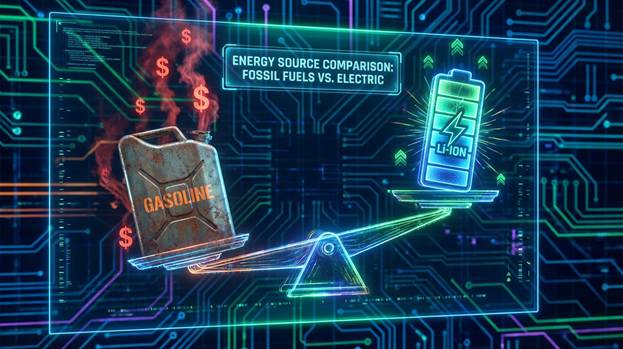
The era of cheap, reliable fossil fuels is over. The current gas price hikes aren't just a market fluctuation; they are a signal that the internal combustion engine has reached its economic limit. As evidenced by reports in Business Insider, the consumer appetite for EVs is no longer theoretical—it is an active search for relief.
Over the next five years, battery performance will continue to climb while costs fall. By the time we hit the 2028-2030 window, the choice to buy an ICE vehicle will likely be seen as a luxury or a hobby, rather than a practical transportation decision. The shift isn't coming; it’s already here. The only question left is how long you’re willing to pay the "gas tax" before making the jump.
Disclosure: Images rendered by Artlist.io
Rob Enderle is a technology analyst at Torque News who covers automotive technology and battery developments. You can learn more about Rob on Wikipedia and follow his articles on TechNewsWord, TGDaily, and TechSpective.
Set Torque News as Preferred Source on Google
Follow us today...




Comments
When will I be able to tow…
Permalink
When will I be able to tow 16,000 pounds with a tongue weight of 4,000 pounds? Is that still 5-10 years away?